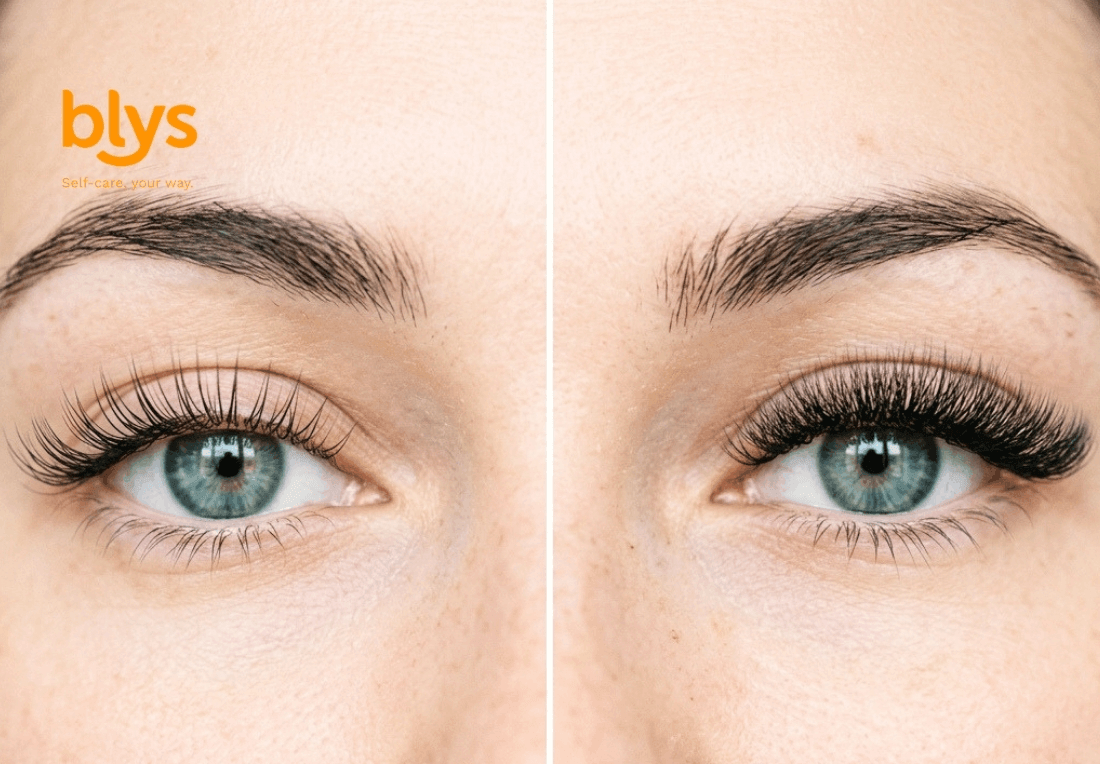
Choosing volume lashes purely because the word volume sounds like more value for money is not how any of this actually works. The two most common lash extension styles solve properly different problems, and which one actually suits a specific set of eyes depends on more than which name sounds more impressive. Here’s the real difference, and how to figure out which one’s actually right for you. If this is a first appointment, what to expect from an at-home lash session makes a good companion read alongside this one.
How Each Technique Differs
The two techniques look different because they’re built completely differently at the application stage.
Classic: One Extension, One Natural Lash
A classic lash extension is a single fiber applied straight onto a single natural lash, creating a clean, mascara-like enhancement without changing the overall lash density. This technique works with whatever natural lash count already exists instead of adding anything beyond it.
Volume: Multiple Fine Extensions Fanned Onto One Lash
A volume set fans several ultra-fine extensions, anywhere from two to six or more per fan depending on the style, onto a single natural lash. Each individual fiber in a volume fan is much thinner than a classic extension, so despite looking fuller overall, a properly applied volume set often feels lighter on the natural lash than expected.
Hybrid as the Middle Ground Between the Two
Hybrid sets mix classic and volume fans across the same set, sitting somewhere between the clean look of classic and the fuller density of volume. This works well for anyone who wants more fullness than classic offers without committing to a fully dramatic volume look.
Best Lash Style for Eye Shape: A Full Breakdown
Lash placement and length can properly change how an eye shape reads, not just how full the lashes look up close.
Round Eyes: Elongating With a Cat-Eye Placement
Round eyes paired with the wrong lash placement can occasionally read as perpetually startled rather than perfectly done, which a proper cat-eye placement fixes instantly. Concentrating extra length toward the outer corners rather than evenly across the whole lash line elongates a round eye shape rather than emphasizing its roundness.
Almond Eyes: The Shape Most Styles Actually Work On
Almond-shaped eyes generally suit both classic and volume styles well, since the natural shape already has enough length and lift that most placement approaches read nicely. This is often the eye shape where personal preference counts for more than technical necessity.
Hooded Eyes: Avoiding Extra Weight That Closes Up the Lid
Piling maximum length onto a hooded eye is how you end up hiding the very lashes you just paid for under your own eyelid. A slightly shorter length through the center of the lash line, with length building toward the outer corner rather than the middle, keeps lashes visible rather than disappearing under hooded skin.
Downturned Eyes: Using Length to Counter the Angle
Downturned eyes benefit from a lifting placement, concentrating length and curl toward the outer corners specifically to counter the natural downward angle. This creates a visual lift without needing any change to the natural eye shape itself.
Monolid Eyes: Creating Lift and Visible Definition
Monolid eyes generally show less lash length at rest compared to eyes with a visible crease, so a slightly more dramatic curl and consistent length across the lash line helps create visible lift and definition. Volume usually reads especially well here, since the fuller base gives more definition to work with.
Which Suits Which Natural Lash Density
Beyond eye shape, the natural lashes already in place play just as big a role in which technique actually works.
Sparse or Fine Natural Lashes: Why Volume Usually Wins
Natural lashes that are sparse or especially fine often can’t support a classic extension’s full weight without looking thin or uneven. Volume’s lighter individual fibers distribute the added weight across a fan instead of resting entirely on one already-delicate lash, which usually gives a fuller, more even result.
Naturally Thick Lashes: Classic Often Does the Job
Naturally thick, healthy lashes can comfortably support a classic extension’s slightly heavier single fiber, giving a clean enhancement without needing the extra fullness volume adds. Choosing volume on already-thick lashes can sometimes look overdone instead of adding any real benefit.
Maintenance Differences
Both styles need regular upkeep, but the actual maintenance experience differs in a few specific ways.
Why Gaps Show Differently on Each Style
Classic sets show gaps more obviously as natural lashes shed, since each lost natural lash takes exactly one visible extension with it. Volume sets usually hide early shedding a little better, since losing one natural lash within a fan still leaves several other fibers from nearby fans filling the gap visually.
Appointment Length and Fill Frequency
Volume application generally takes longer than classic, often two and a half to four hours for a full set compared to one and a half to two and a half hours for classic, since fanning multiple fine fibers by hand is a slower, more detailed process. Fill frequency sits close to the same for both, generally every two to three weeks, though volume sets sometimes stretch slightly longer before looking sparse thanks to how the fans distribute shedding.
Cleaning Considerations for Each Style
Volume sets have more total fiber surface area than classic sets, which means slightly more careful daily cleaning to prevent oil and makeup buildup from accumulating at the lash line. Neither style should skip cleaning entirely, but volume rewards a bit more consistency given the extra surface involved.
What to Tell Your Tech
A good consultation does more to determine the right result than any single technical decision made during the appointment itself.
Be Honest About Natural Lash Health and Density
Mentioning any naturally sparse areas, recent lash loss, or generally fine lashes upfront lets a technician recommend the style that’ll actually hold up well, rather than defaulting to whatever’s currently trending. This single piece of honesty affects the recommendation more than almost anything else discussed in the consultation.
Mention Lifestyle Factors That Affect the Right Choice
Frequent swimming, a high-sweat gym routine, or a job involving a lot of touching the face all affect how a set holds up over time, and mentioning these upfront helps a technician recommend a style suited to actual daily life instead of just aesthetic preference. A group lash appointment works well too if a few friends are all deciding on styles together before a big event.
Bring a Photo, But Trust the Consultation More
Bringing thirty reference photos to a lash consultation is admirable dedication and also slightly beside the point if none of those photos share your actual eye shape or natural lash density. A photo helps communicate a general style preference, but a technician’s read on your specific eyes counts for more than matching a stranger’s Instagram post exactly. Checking a technician’s reviews beforehand is a good way to gauge whose judgment actually deserves that trust on the day.
Understanding what actually separates classic from volume, and which lash extension style actually suits your specific eyes and lash density, turns a five-minute scroll through inspiration photos into an informed decision instead of a guess. A Blys gift voucher also lets someone else make the classic-versus-volume call themselves.
Book a Mobile Lash Technician →
Frequently asked questions
What’s the difference between classic and volume lash extensions?
Classic extensions apply one fiber per natural lash for a clean, mascara-like look, while volume extensions fan multiple ultra-fine fibers onto a single natural lash for a fuller result. Despite looking fuller, volume’s thinner individual fibers often feel lighter on the natural lash than classic’s single, slightly thicker fiber.
Which lash extension style suits round eyes?
A cat-eye placement, with extra length concentrated toward the outer corners rather than spread evenly, elongates round eyes rather than emphasizing their roundness. Both classic and volume can work with this placement, depending on natural lash density.
What’s the best lash style for hooded eyes?
Shorter length through the center of the lash line, with length building toward the outer corner instead of the middle, keeps extensions visible rather than disappearing under hooded skin. Piling on maximum length in the center often has the opposite of the intended effect here.
Should I get volume lashes if my natural lashes are sparse?
Generally, yes. Volume’s lighter individual fibers distribute weight across a fan rather than resting entirely on one already-delicate natural lash, which usually gives a fuller and more even result than classic on sparse lashes.
Do volume lashes take longer to apply than classic?
Yes, a full volume set typically takes two and a half to four hours, compared to one and a half to two and a half hours for classic, since fanning multiple fine fibers by hand takes considerably more time and precision.
Which lasts longer, classic or volume lash extensions?
Both generally need a fill every two to three weeks, though volume sets sometimes stretch a little longer before looking sparse, since the fanned structure hides early shedding a bit better than classic’s one-to-one ratio.
What should I tell my lash technician before choosing a style?
Mentioning natural lash density, any sparse areas, and lifestyle factors like frequent swimming or a high-sweat gym routine all help a technician recommend the style that’ll actually hold up well for daily life, not just the current trend.
Can I switch from classic to volume lashes later?
Yes, switching styles usually just means having the current set properly removed before starting fresh with the new style, rather than combining two different techniques on the same natural lashes. Discussing this with a technician before the appointment avoids any confusion about what’s actually being booked.
Is classic or volume better for thick natural lashes?
Classic generally suits naturally thick, healthy lashes well, since they can comfortably support a classic extension’s slightly heavier single fiber without needing volume’s extra fullness. Choosing volume on already-thick lashes can sometimes look overdone rather than adding real benefit.
Which lash style suits monolid eyes best?
Volume usually reads especially well on monolid eyes, since the fuller base gives more definition to work with when less lid space is visible at rest. A slightly more dramatic curl and consistent length across the lash line also helps create visible lift.