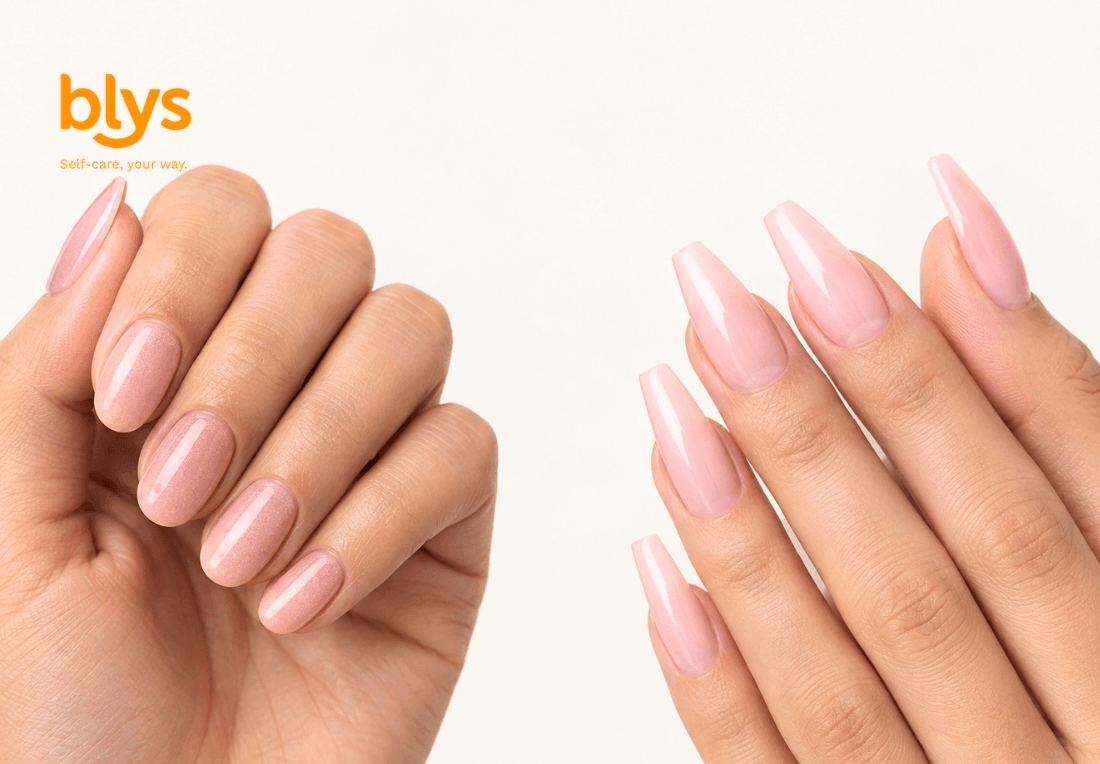
Dip powder nails suit anyone wanting a strong, chip-resistant finish on their natural nail without the fumes or mixing acrylic requires, while acrylic remains the better choice for anyone wanting real length and structural extensions. The real difference comes down to application, durability, and what each one actually does to the nail underneath.
Dip Powder vs Acrylic at a Glance
| Dip Powder | Acrylic | |
| Application | Nail dipped or brushed into colour powder, sealed with top coat | Liquid monomer and powder mixed into a bead, sculpted onto the nail |
| Odour during application | Minimal to none | Distinct chemical smell |
| Best for | Strength and colour on natural-length nails | Adding real length and extensions |
| Typical durability | Several weeks, chip-resistant | Several weeks, very strong for length |
| Removal | Acetone soak | Acetone soak, sometimes filing first |
| Key consideration | Hygiene of the powder application method | Chemical sensitivity to monomer |
Application: How Each One Actually Goes On
The actual process behind each technique explains most of the differences clients actually notice.
The Dip Powder Process
A base coat goes on first, then the nail is dipped into, or brushed with, coloured powder, repeated in layers to build colour and strength, before a top coat seals everything in. This dip nail powder process involves no liquid monomer to mix and no strong chemical smell during application, a difference most people notice immediately if they’ve had acrylic done before.
The Acrylic Process
Acrylic combines a liquid monomer with a powder polymer to form a workable bead, which a technician sculpts straight onto the nail, often to add real length beyond the natural nail edge. This requires real sculpting skill, since the bead needs shaping before it hardens, and the process does carry a distinct chemical odour most people recognize immediately.
Why SNS Became a Household Name for Dip Powder
SNS is actually a specific dip powder brand, one of the original and most recognized names in the category, and its popularity is exactly why some people say “SNS nails” when they mean dip powder generally, the same way some people say a specific tissue brand name when they mean tissues. Both dip powder and acrylic come in a wide range of colours and finishes, so colour choice alone doesn’t really factor into deciding between the two techniques. A broader comparison including gel as a third option helps too, for anyone not yet certain which of the three actually fits best.
Durability: Which One Actually Holds Up Better
Both hold up well for several weeks, but they’re actually built for slightly different jobs.
Acrylic Wins for Length and Extensions
Acrylic is the stronger, harder option specifically for adding real length, and that strength is exactly why it remains the standard choice for anyone wanting extensions rather than working with their natural nail length. The structural support behind extension length is exactly what acrylic does better than dip powder.
Dip Powder Holds Its Own on Natural Nails
Dip powder doesn’t typically add the same structural length acrylic can, but on a natural-length nail, it holds up just as well, chip-resistant and durable for several weeks at a time. Choosing between the two often comes down to whether length is actually wanted, not which one is objectively tougher in general.
How Natural Nail Condition Affects the Choice
Naturally weak or thin nails sometimes do better starting with dip powder, since it works with the existing nail rather than requiring the same level of sculpting and shaping acrylic extensions need. Acrylic extensions add real weight and length to a nail bed, which suits a strong, healthy natural nail better than one that’s already brittle or prone to breaking. A technician assessing actual nail condition before recommending either option counts for more than picking whichever one happens to be trending.
Nail Health: What Actually Matters Here
The real health considerations for each technique aren’t the same, and both deserve an honest look rather than a generic “they’re both fine.”
The Real Hygiene Question With Dip Powder
A real, worthwhile question to ask before a dip powder appointment is whether the salon uses a single-use application method, a fresh brush or a poured, single-serving amount of powder, rather than repeatedly dipping straight into one shared pot used across multiple clients. Double-dipping into a shared pot is a real hygiene concern the technique has faced criticism over, and a properly run salon should have an answer ready when asked outright. Checking a provider’s reviews beforehand sometimes surfaces exactly this kind of detail, since clients who’ve asked the same question often mention the answer in their own review.
The Real Chemical Consideration With Acrylic
Some people have a real sensitivity to the specific acrylate chemicals used in liquid monomer, which can show up as skin irritation around the nail or a reaction to the fumes themselves. This isn’t common, but it’s a real, documented consideration to mention to a technician upfront if it’s ever come up before, rather than discovering it mid-appointment.
Removal Counts for More Than the Application Method
The same removal principle that protects nails after any gel or powder application applies to both dip powder and acrylic equally: proper acetone soak-off protects the natural nail, while picking or peeling either one off damages the nail plate regardless of which technique was used in the first place. The actual technique matters less to long-term nail health than how it eventually comes off.
Cost Differences Between the Two
Acrylic generally costs a bit more than dip powder, reflecting the additional sculpting skill and time required to build real extensions rather than work with the natural nail length. Checking exact pricing on a specific booking page gives an accurate number, since rates vary by provider, location, and whether extensions are actually being added.
Common Misconceptions About Both
Assuming dip powder is automatically the “healthier” option purely because it lacks the chemical smell skips the real hygiene question that matters more for this specific technique. Assuming acrylic is inherently damaging skips the fact that the actual damage almost always comes from improper removal, not the application itself. Neither assumption holds up once the real, specific risk factors for each technique actually get examined.
Maintenance and Infill Differences
Both need regular maintenance as natural nail growth pushes the product away from the cuticle, though the specific maintenance process looks slightly different for each.
Dip Powder Infills Are Usually Quicker
A dip powder infill generally takes less time than an acrylic infill, since there’s no bead to mix and sculpt, just fresh powder applied to the regrowth area before sealing again. This makes dip powder a slightly easier technique to maintain on a tight schedule.
Acrylic Infills Involve Rebuilding the Structure
An acrylic infill involves filling in the regrowth area and rebuilding the shape of the extension itself, which takes more time and skill than simply reapplying powder. This is part of why acrylic maintenance appointments usually run a bit longer than dip powder ones.
Which One Should You Actually Choose
Choosing dip powder or acrylic comes down to whether length is actually wanted, whether chemical sensitivity has ever been an issue, and whether a specific salon can answer the hygiene question about their dip powder application method outright.
Choose Dip Powder If You Want Strength Without the Fumes
Anyone wanting a strong, chip-resistant result on their natural nail length, without the chemical smell acrylic involves, generally finds dip powder the better fit, provided the salon’s application method passes the hygiene question above.
Choose Acrylic If You Want Real Length
Anyone specifically wanting extensions beyond their natural nail length needs acrylic’s structural strength to actually support that length properly, which dip powder isn’t built to do in the same way.
If Cuticle Precision Matters More Than Colour or Length
Anyone whose actual priority is cuticle precision rather than colour or extension length is really asking a different question. That comparison runs on precision, longevity, cost, and pain, a cuticle-technique decision that sits separately from choosing a polish system at all.
Working out which one actually fits your specific situation, length, sensitivity, or salon hygiene practices, is what makes the final choice easy rather than guessing between two options that sound similar on the surface. Mentioning that priority when booking gets the right technique lined up from the start.
Book a Nail Appointment at Home →
Frequently Asked Questions
Are dip powder infills quicker than acrylic infills?
Yes, generally. A dip powder infill just needs fresh powder applied to the regrowth area, while an acrylic infill involves rebuilding the extension shape itself, which takes more time and skill.
Is one option better for weak or thin nails?
Dip powder often suits naturally weak or thin nails better, since it works with the existing nail rather than adding the extra weight and length acrylic extensions require. Acrylic suits a strong, healthy natural nail better than one already prone to breaking.
What’s the difference between dip powder and acrylic nails?
Dip powder uses coloured powder built up in layers with no liquid monomer or chemical smell, while acrylic combines liquid monomer and powder into a sculpted bead, typically used to add real length. Acrylic is stronger for extensions, while dip powder works well on natural nail length.
Do reviews help with the hygiene question specifically?
Sometimes, yes. Clients who’ve asked about single-use application versus a shared pot often mention the answer in their own review, which can save asking the salon directly first.
Should I consider a Russian manicure instead of dip powder or acrylic?
That’s actually a different decision, since a Russian manicure is a cuticle technique, not a polish system, and can be paired with either dip powder or acrylic afterward.
How does gel compare to dip powder and acrylic?
Gel sits as a third option alongside these two, with its own tradeoffs on application, durability, and nail health that deserve comparing separately from a straight dip powder versus acrylic decision.
Is dip powder the same as SNS nails?
SNS is actually a specific dip powder brand, one of the most recognized names in the category, and that recognition is exactly why some people use “SNS nails” to mean dip powder generally.
Which lasts longer, dip powder or acrylic?
Both typically last several weeks with good chip resistance. Acrylic is the stronger option specifically for supporting added length, while dip powder holds up just as well on natural-length nails.
Is dip powder or acrylic better for nail health?
Neither is automatically healthier. Dip powder’s real consideration is whether the salon uses a single-use application method rather than a shared pot, while acrylic’s real consideration is potential sensitivity to the monomer chemicals. Improper removal causes more damage than either application method on its own.
Does dip powder use a shared pot across multiple clients?
Some salons do dip straight into a shared pot, which is a real hygiene concern to ask about outright. A properly run salon should be able to confirm they use a single-use method, a fresh brush or a poured, individual amount of powder.
Can acrylic cause a chemical reaction?
Some people have a real sensitivity to the acrylate chemicals in liquid monomer, which can show up as skin irritation or a reaction to the fumes. This isn’t common, but it’s a detail to flag to a technician if it’s come up before.
Is dip powder or acrylic better for adding length?
Acrylic, since its structural strength is specifically built to support real extensions beyond the natural nail edge. Dip powder doesn’t typically add the same structural length.
Does removal damage the nail more with one technique than the other?
No, proper acetone soak-off protects the nail regardless of which technique was used, while picking or peeling either one off causes damage. The removal method matters more to nail health than which application was chosen.
Is acrylic or dip powder more expensive?
Acrylic generally costs a bit more, reflecting the additional sculpting skill and time needed to build real extensions. Checking exact pricing on a specific booking page gives an accurate number for a specific appointment.