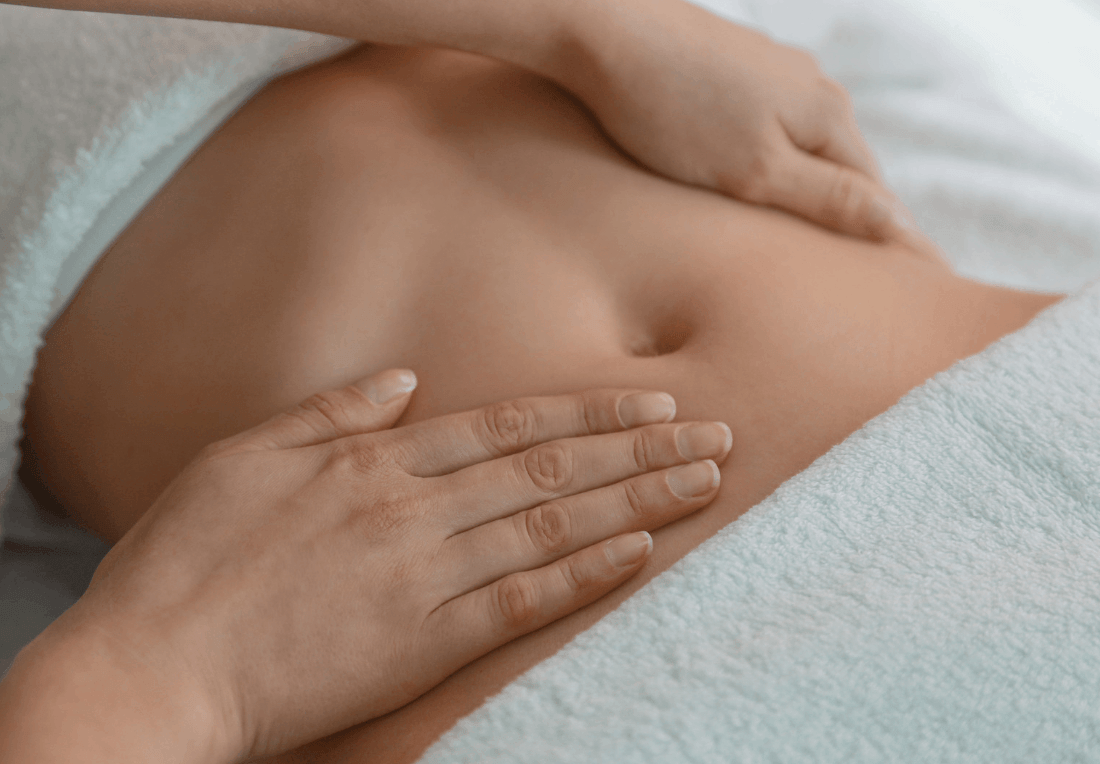
Fibrosis after lipo is firm, thickened tissue that forms under the skin as your body repairs itself, and hard lumps after lipo are a common thing to notice during recovery. Your surgeon promised a new shape, and somehow nobody mentioned the stretch where you feel like a bag of walnuts in a very tight outfit. Here’s what that firmness is, what surgeons usually expect, which signs mean a call to your surgeon and what post-op lymphatic drainage massage involves once your surgeon clears it.
| Question | Short answer |
| What is fibrosis after lipo? | Firm, thickened tissue that forms as the body repairs itself |
| Who decides if lumps are normal? | Your surgeon |
| When can lymphatic sessions start? | Only when your surgeon clears them |
| What does a session involve? | Light, rhythmic strokes aimed at moving fluid, with a gentle touch around firm areas |
| Can massage promise to soften lumps? | No |
What Is Fibrosis After Lipo?
Fibrosis has an intimidating name for something that’s really your body doing repair work, so here’s what it feels like, why it shows up and how it differs from swelling.
What Does Fibrosis After Lipo Feel Like?
Fibrosis after lipo feels firm or hard under the skin, often lumpy or uneven, and sometimes tender when you press on it. Depending on where it sits, it can feel like a cold stick of butter or a handful of small stones under the surface. The texture can also change the way your skin sits, with ridges or bumps that weren’t there before.
Why Do Hard Lumps Form After Lipo?
Hard lumps form after lipo because your body repairs the tissue the procedure disturbs, and the repair can leave firm, thickened areas. The cannula moves through the fat layer and leaves tiny channels, the area swells and your body lays down new fibrous tissue to patch things up. Think of it as a repair crew working overtime and leaving the site a bit lumpy.
How Do Fibrosis, Swelling and Fluid Pockets Differ?
Fibrosis feels firm, swelling feels puffy and tight, and a fluid pocket feels soft and sloshy, but only your surgeon can tell which one you have. The table shows how people usually describe each one, which helps you give your surgeon a clear picture.
| What you feel | Usually described as | Who can tell the difference |
| Fibrosis | Firm, hard or lumpy | Your surgeon |
| Swelling | Puffy, tight or full | Your surgeon |
| Fluid pocket | Soft, sloshy or squishy | Your surgeon |
Normal Healing vs Signs to Call Your Surgeon
Googling is this normal at 2am isn’t a medical test, so here’s a plain split between what surgeons commonly expect and what deserves a phone call.
What Counts as Normal Healing After Lipo?
Surgeons commonly expect firmness, swelling, bruising and an uneven feel during healing, and your surgeon sets what’s normal for your procedure. Surgeons plan a tummy tuck differently from liposuction, so lymphatic drainage massage for liposuction and tummy tuck depends on which procedure you had. Write down what you notice and when, with a quick photo if your surgeon likes them, so your next check-in has details instead of a vague it feels weird.
What Are the Signs to Call Your Surgeon?
Call your surgeon about a fever, redness or warmth that spreads, pus or a bad smell from an incision, pain that’s getting worse instead of easing, swelling that grows fast or sits on one side only, a lump that turns red, hot or very painful, or an incision that opens. Call emergency services on 000 for chest pain, sudden breathlessness or a swollen, painful calf.
Should You Wait for Your Next Appointment?
No, call your surgeon’s office when you notice a sign from the list above, and save routine questions for your next check-in. A phone call that turns out to be nothing costs you five minutes, and it’s better than sitting on a worry.
How Post-Op Lymphatic Drainage Massage Works
Post-op lymphatic drainage is a gentle style that most people picture as barely touching the skin, and that’s close to the truth.
What Is Post-Op Lymphatic Drainage Massage?
Post-op lymphatic drainage massage is a gentle style that uses light, rhythmic strokes aimed at moving fluid through the body after surgery. Your therapist keeps the pressure light and the rhythm slow, so it feels nothing like a deep tissue session. Plenty of people expect a pummelling and are surprised how little pressure it uses.
How Does a Therapist Work Around Firm Areas?
A therapist works gently around firm areas, keeping the strokes light and the pressure low. The same gentle approach applies after lipo and after a tummy tuck.
Does Lipo Fibrosis Massage Soften Lumps?
No massage can promise to soften lumps, and lipo fibrosis massage means gentle lymphatic work around the firm areas, not deep or forceful pressure. Lymphatic massage after lipo is something your surgeon has to clear first, and some people include sessions in their recovery routine once the surgeon agrees. Anyone promising a result is promising more than a massage can deliver.
Session Timing: When Sessions Can Start
Timing is the part where your friend’s recovery story stops being useful, because every procedure and every surgeon has a different plan.
Can You Start Lymphatic Drainage Without Your Surgeon’s Clearance?
No, sessions start only after your surgeon says yes. Surgeons set timing for each procedure and each person, so a friend’s start date isn’t yours, and clearance comes first, before anything goes in the diary.
What Should You Ask Your Surgeon Before the First Session?
Ask your surgeon six things before the first session:
- When can sessions start for my procedure?
- How often should they repeat?
- Should I wear my compression garment during a session?
- Is there anything the therapist should avoid?
- Which signs should make me call before a session?
- Can I have the clearance in writing?
How Often Do Sessions Repeat?
Your surgeon sets how often sessions repeat, and on Blys you can set a post-op lymphatic drainage massage booking to repeat so the schedule runs itself. That means one decision with your surgeon and then a calendar that takes care of the rest.
Week by Week: What Recovery at Home Looks Like
Every procedure and every surgeon is different, so treat these weeks as a home-setup calendar, with your surgeon’s plan deciding the medical side.
Week One: Set Up and Settle In
Week one is about making your bedroom work for someone who can’t reach, bend or hop up easily. Put water, your phone charger, tissues and snacks within arm’s reach of the bed, line up easy meals and loose clothes and ask a friend or family member to be on call. Follow your surgeon’s instructions for your compression garment from the first day.
Weeks Two and Three: Build a Routine
By weeks two and three, a simple daily routine takes over, with garment care, gentle activity as your surgeon allows and a note of anything you’d like to mention at your next check-in. A second garment helps, since wash day shouldn’t leave a gap, and a short notes app list beats trying to remember questions at the appointment.
Weeks Four to Six: Ask About Sessions
Weeks four to six are a good time to ask your surgeon whether lymphatic sessions suit you, and when they can start. If the answer is yes, set a recurring time, ask for the same therapist each time and keep your garment and your clearance note handy for the first visit.
After Week Six: Keep Checking In
After week six, keep your follow-up appointments and keep your notes going, since your surgeon’s schedule continues well past the point where friends stop asking how you are. Adjust your sessions to your surgeon’s advice, and keep your routine light and consistent.
At-Home Setup: Your Bed, Your Garment and Your Space
A comfortable setup at home makes recovery easier, and it’s all about pillows, a plan and a clear patch of floor.
How Should You Position Yourself on Your Own Bed?
Position yourself the way your surgeon tells you, and use pillows to make that position comfortable and easy to keep. Ask which positions your surgeon allows for your procedure, such as lying back, sitting up or resting on your side, and once you know, pillows do the rest. Pillows are the unsung heroes of recovery: you can never have too many until you try to get out of bed.
How Do You Wear a Compression Garment in Bed?
Wear your compression garment exactly as your surgeon instructs, including at night if they say so. Ask how to put it on and take it off, keep a spare so wash day doesn’t leave a gap and smooth the fabric before you lie down. It’s the one outfit you can’t skip, and the one nobody will ask to borrow.
What Space Does a Session Need?
A massage table needs about 2 x 2 metres, so clear a bedroom corner or a patch of the living room, and ask your therapist whether they’ll work on a table or on your bed. Either way, a clear path from the bed to the bathroom and to the front door makes the visit easier for both of you.
What Should You Have Ready Before Your Therapist Arrives?
Have six things ready before your therapist arrives:
- Your compression garment, plus a spare
- Your surgeon’s clearance note
- A glass of water
- Loose, easy-to-change clothes
- A clear path to the door and the bathroom
- Your questions, written down
Your therapist brings fresh linen and towels, so the only things to organize are yourself and the space.
Why a Home Session Suits Recovery
After surgery, getting to a clinic is hard, and the math of a clinic visit gets worse once you add the trip.
How Much Time Does a Home Session Save?
A 60-minute clinic session with 40 minutes of travel each way is a two-hour-and-twenty-minute commitment. A 60-minute session at home is 60 minutes. With mobile massage vs spa the same sum applies, and after surgery the saving is the sitting and the seat belt across a tender middle.
Can You Ask for the Same Therapist Each Time?
Yes, you can ask for the same therapist each time and set sessions to repeat, so the person arriving already knows your routine. A familiar therapist means less explaining at every visit, and that’s a small kindness during a recovery that’s already full of explaining.
What Should You Put in Your Booking Notes?
Put your surgery type, your surgery date, your surgeon’s clearance and your compression garment in your booking notes. The surgery type and date tell your therapist where you are in recovery, the clearance confirms your surgeon has agreed to sessions and the garment note tells them what to expect when they arrive.
Is a Gift Voucher a Good Idea for Someone Recovering?
Yes, a massage gift voucher lets the person choose a date once their surgeon clears sessions, and AU vouchers stay valid for three years, so there’s no deadline pressure. It’s a gift that waits for the green light instead of arriving before it.
When to Speak to a Clinician First
This page is general information about fibrosis after lipo and what post-op lymphatic drainage massage involves, and it isn’t medical advice. It doesn’t diagnose lumps, and it doesn’t promise any result from massage. Only your surgeon can tell you what’s normal for your body, whether sessions suit you and when they can start, so contact your surgeon with any concern and start sessions only with their clearance.
Once your surgeon gives the green light, getting the first session into the calendar is one less thing to organize from your sofa, and you can arrange post-op lymphatic drainage massage at home with a repeat time and the same therapist each visit.