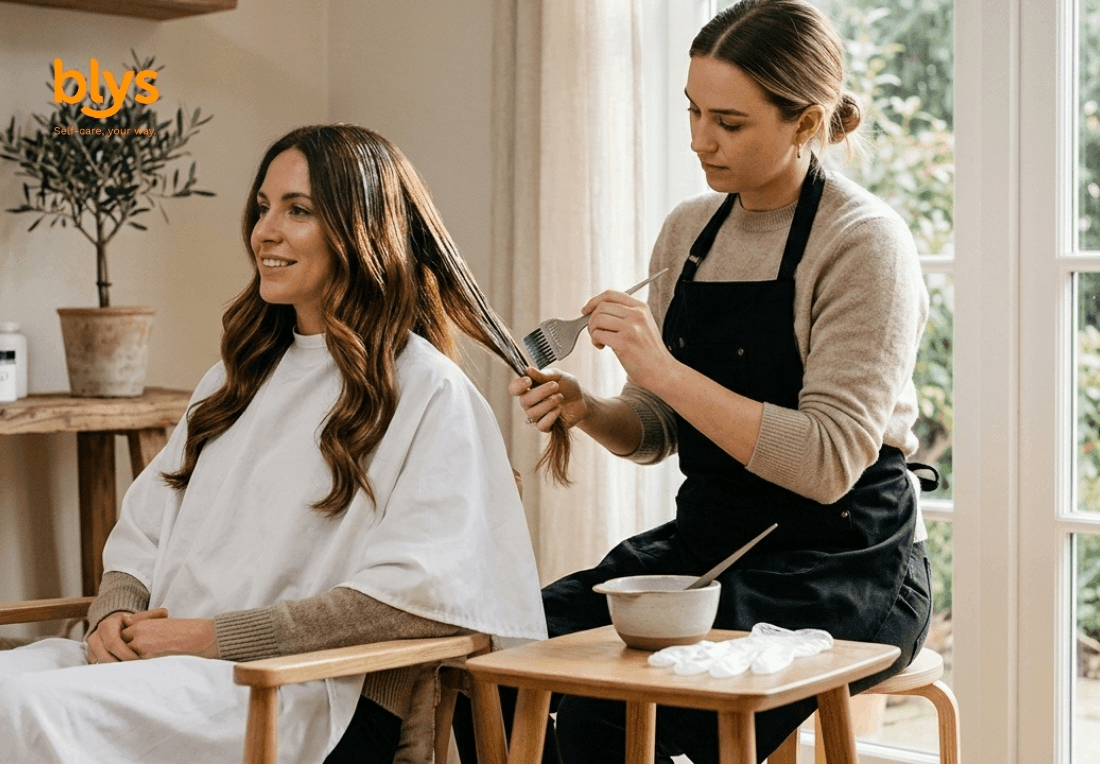
Ask ten people what a gloss treatment actually does and you’ll get ten different answers, most of them somewhere between it’s just shine spray and a blank stare. A hair gloss treatment does real work on both shine and tone, and understanding exactly what it is, and what it isn’t, makes it a lot easier to know whether it’s actually what you’re after.
Gloss vs Color vs Toner
Gloss, toner, glaze, these get thrown around fairly interchangeably online, which is exactly how someone ends up booking the wrong thing and wondering why their hair doesn’t look anything like the inspiration photo.
What a Gloss Treatment Actually Is
A hair gloss is a semi-permanent treatment that coats the hair shaft with a thin layer of pigment and conditioning agents, sealing the cuticle to boost shine and refine tone at the same time. Unlike permanent color, it doesn’t lift or lighten the hair, it works with whatever color is already there, adjusting and enhancing rather than starting from scratch.
How a Gloss Differs From Permanent or Semi-Permanent Color
Permanent color uses ammonia or similar agents to open the hair cuticle and deposit color deep into the hair shaft, and that’s exactly why it lasts until it grows out and gets cut. A gloss sits closer to the surface, adding shine and subtle tone without penetrating or lifting the hair’s natural or colored base. Booking a gloss expecting the same drama as a full color change is a bit like ordering a side salad and being surprised it didn’t come with a main course. It was never meant to be the whole meal.
Gloss vs Toner: How a Gloss Differs From a Toner Specifically
Toner and gloss are close cousins, and the line between them is properly blurry depending on which colorist you ask. Generally, a toner is used specifically to correct or neutralize an unwanted undertone, often after a lightening service, while a gloss is a broader shine-and-tone treatment that can be used on its own, with or without an underlying color correction need. Plenty of salons use the terms almost interchangeably in real bookings, so asking your colorist exactly what they mean by either term avoids any confusion before booking.
What It Does for Shine and Tone
The appeal of a gloss comes down to two separate effects working together, and it helps to understand both individually.
The Shine Effect: Sealing the Hair’s Cuticle
Hair looks shinier when its outer cuticle layer lies flat, reflecting light evenly rather than scattering it in different directions. A gloss treatment smooths and seals that cuticle layer, and that’s exactly why hair looks noticeably glassier and healthier immediately after treatment, even without any actual color change involved.
The Tone Effect: Neutralizing Brassiness and Correcting Undertones
Brassiness shows up uninvited, overstays its welcome, and somehow gets worse every time you wash your hair, which is exactly the problem a gloss is built to solve. Blonde hair often develops warm, yellow, or orange undertones over time, especially with sun exposure or mineral buildup from water, and a gloss with a cool-toned pigment neutralizes those unwanted tones. Brunette and red shades benefit too, with a gloss deepening or refreshing the tone without any lightening involved.
Clear Gloss vs Tinted Gloss
A clear gloss adds shine and conditioning without changing tone at all, useful for anyone who just wants the glassy finish without touching their actual color. A tinted gloss adds a specific pigment on top of the shine benefit, correcting brassiness, deepening a fading color, or subtly shifting a tone a shade or two in either direction. Choosing between the two comes down to whether tone correction is actually needed or shine alone is the goal.
How Long Results Last
Unlike permanent color, a gloss fades gradually rather than growing out, which changes how it should be planned for.
The Typical Lifespan of a Gloss Treatment
A gloss treatment generally lasts around four to six weeks, though this varies depending on hair porosity, how often hair is washed, and which specific product was used. Since it sits on the hair’s surface rather than penetrating deeply, it fades with every wash rather than persisting until new growth pushes it out.
What Speeds Up Fading
Frequent washing, hot water, and sulfate-heavy shampoos all strip a gloss faster than gentler alternatives would. Heat styling and prolonged sun exposure also accelerate fading, since both affect the hair’s cuticle in ways that let the gloss’s surface layer wear away more quickly. Spacing out washes, using lukewarm water, and switching to a sulfate-free, color-safe shampoo all help stretch the result closer to the six-week mark rather than the four.
Who Should Book One
A gloss isn’t the right fit for everyone, and knowing where it actually helps avoids paying for a treatment that won’t solve the actual problem.
Great for Color-Treated Hair Losing Its Shine
Color-treated hair loses natural shine faster than untreated hair, since the coloring process itself roughens the cuticle to some degree even with careful application. A regular gloss between full color appointments keeps hair looking freshly done without needing a complete recolor every time shine starts to fade.
Great for Grey Coverage Blending and Brassiness Correction
A gloss is also useful for softening the contrast between grey regrowth and existing color, or correcting the brassy tones that develop on lightened or grey-blending hair between full appointments. This makes it a popular low-commitment option for anyone maintaining a color they’re already happy with, rather than changing it.
Not the Right Fit for a Big Color Change
Anyone wanting to go noticeably lighter, darker, or a completely different shade needs an actual color service, not a gloss, since gloss can’t lift color or make a dramatic change on its own. A gloss works brilliantly as a finishing step after a color service, or as standalone maintenance, but it’s the wrong tool for starting from scratch on a new color altogether.
Professional Gloss vs At-Home Gloss Products
Drugstore gloss products exist, and understanding what they actually do differently avoids assuming they’re a substitute for a professional treatment.
What a DIY Gloss Product Actually Does
Store-bought gloss treatments, whether that’s a toning shampoo, a gloss mask, or an at-home semi-permanent kit, generally use much lower pigment concentrations than professional formulas, both for safety and because they’re designed to be applied without training. They can properly help maintain tone between professional appointments, especially for toning down mild brassiness, but they don’t offer the same level of custom color matching or cuticle-sealing treatment a professional gloss provides.
Why Professional Application Still Matters for Tone Correction
Mixing the exact right shade of gloss to correct a specific undertone is part science, part trained eye, since the same purple toning shampoo that neutralizes brassiness perfectly on one head of hair can turn another slightly too cool or grey-toned. A professional colorist can adjust the exact formula in real time based on how the hair is actually responding, something no pre-mixed drugstore product can replicate. DIY products work best as maintenance between professional treatments, not as a full replacement for one.
Building a Gloss Into a Regular Hair Routine
For a lot of people, a gloss stops being a one-off treatment and becomes part of a regular maintenance rhythm alongside other hair care.
How Often to Repeat a Gloss Treatment
Since a gloss fades within four to six weeks, repeating it on roughly that schedule keeps tone and shine consistent rather than letting brassiness or dullness creep back in between visits. Some people build it into the same appointment as a root touch-up or trim, while others book it as a standalone appointment purely for the shine and tone refresh.
Combining Gloss With At-Home Maintenance Products
Between professional gloss appointments, a purple or blue-toned shampoo (depending on whether the goal is cooling down yellow or orange tones) helps extend the result a little further, along with a proper color-safe conditioner and a weekly hydrating mask. None of these replace the professional treatment itself, but they slow down how quickly the effect fades, which matters most for anyone trying to stretch the four-to-six-week window as close to six as possible.
Booking a Gloss Treatment at Home
The appointment itself is fairly quick compared to other hair services, which makes it an easy one to fit into a mobile booking.
What a Mobile Gloss Appointment Looks Like
A gloss treatment typically takes 30 to 60 minutes, including application, processing time, and a rinse and blow-dry afterward, considerably shorter than a full color or balayage appointment. Since it doesn’t involve lightening chemicals, the appointment also needs less setup around ventilation compared to a full color service. This is really just how mobile wellness marketplaces work more generally, bringing the specialist to your own bathroom mirror instead of the other way around.
Pairing Gloss With Other Hair Services
A gloss works well as a finishing step after other treatments rather than standing alone. It’s common to book one straight after a balayage appointment to refine and correct any tone before the final result is judged, and some clients use a gloss between color appointments to keep tone looking fresh without booking another full color service on the calendar.
Understanding exactly what a gloss does, and doesn’t do, makes it a lot easier to book the right service instead of guessing based on a term used loosely online. If this is your first time booking a hair service at home rather than in a salon, checking a colorist’s reviews first is a solid habit to build early.
A Blys gift voucher also works well here if you’re treating someone else to a bit of shine rather than booking for yourself.
Frequently asked questions
Is a hair gloss the same as a shine treatment?
A hair gloss is one common type of shine treatment, though the term shine treatment can also refer to lighter, purely cosmetic products with no tone-correcting pigment at all. A proper gloss goes further than a basic shine product by also adjusting tone, not just adding surface gloss.
Are at-home gloss products as good as a professional treatment?
At-home gloss products use much lower pigment concentrations than professional formulas and can help maintain tone between appointments, but they don’t offer the same custom color matching or cuticle-sealing benefit as a professional treatment. They work best as maintenance rather than a full replacement.
How often should I repeat a gloss treatment?
Since a gloss fades within four to six weeks, repeating it on roughly that schedule keeps tone and shine consistent rather than letting brassiness creep back in. Many people pair it with a root touch-up or trim appointment rather than booking it separately.
What is a hair gloss treatment?
A hair gloss treatment is a semi-permanent service that coats the hair with pigment and conditioning agents to boost shine and refine tone, without lifting or lightening the hair’s existing color. It works with the hair’s current color rather than changing it dramatically.
What’s the difference between a gloss and a toner?
A toner is typically used to correct or neutralize an unwanted undertone, often after a lightening service, while a gloss is a broader shine-and-tone treatment usable on its own or alongside a color service. Many colorists use the terms fairly interchangeably, so confirming exactly what’s being offered before booking is a reasonable extra step.
How long does a hair gloss treatment last?
A gloss treatment typically lasts four to six weeks, fading gradually with each wash rather than growing out the way permanent color does. Washing less frequently, using lukewarm water, and switching to a sulfate-free shampoo all help the result last closer to six weeks.
Does a gloss treatment change my hair color?
A tinted gloss can subtly correct brassiness, deepen a fading color, or shift tone a shade or two, but it can’t lighten hair or create a dramatic color change. A clear gloss adds shine and conditioning without changing tone at all.
Can I get a hair gloss treatment at home?
Yes, a mobile gloss appointment typically takes 30 to 60 minutes including application, processing, and a rinse and blow-dry, and needs less setup than a full color service since no lightening chemicals are involved.
Is a gloss treatment good for grey hair?
Yes, a gloss is commonly used to soften the contrast between grey regrowth and existing color, or to correct brassy tones that develop on grey-blending hair between full color appointments. It’s a popular low-commitment option for maintaining rather than changing an existing color.
Should I get a gloss before or after a balayage appointment?
A gloss is typically done as a finishing step after balayage, refining and correcting the tone once the main color work is complete rather than beforehand. This helps neutralize any unwanted warmth and adds shine to the final result.
How much does a hair gloss treatment cost compared to a full color service?
A gloss is generally less expensive than a full color or balayage service, since it’s a shorter appointment that doesn’t involve lightening or a complete color change. Exact pricing varies by provider and location, so checking current rates before booking gives the most accurate figure.