Peeling gel off in one satisfying strip like it’s a sticker feels incredible for exactly four seconds and properly awful for the next four weeks. There’s an actual safe way to handle gel nail removal at home, and it has nothing to do with picking, prying, or a small victorious tug. Here’s exactly how to do it properly.
Why Peeling Damages Your Natural Nail
Understanding what peeling actually does underneath the gel makes it a lot easier to resist the temptation the next time a corner starts lifting.
What Actually Happens to the Nail Plate When Gel Gets Peeled Off
Gel bonds to the top layers of the natural nail, not just sitting on top of it like a coat of regular polish. Peeling gel off pulls away those bonded layers along with it, taking a piece of the actual nail plate with it every single time, not just the polish.
The Visible Damage: Thin, Rough, and White-Patched Nails
DIY gel removal has a way of turning into a stubborn standoff between a person and their own fingernails, and the fingernails usually lose. Nails that have been repeatedly peeled instead of soaked off usually look thin, feel rough or flaky, and sometimes develop visible white patches where layers have been stripped away, all of which take weeks or months to properly grow out.
The Safe Soak-Off Method
The actual safe method takes a bit longer than peeling, but it’s the only way to get gel off without taking the nail with it.
Step One: Buffing the Top Layer, Not the Whole Nail
Lightly buffing the shiny top layer of the gel breaks its seal enough for acetone to actually penetrate and start dissolving it. This step only needs to remove the glossy top coat, not grind down toward the natural nail itself, so a light touch works better than pressing hard.
Step Two: Soaking With Pure Acetone and Foil
Cotton balls or pads soaked in 100% pure acetone, pressed against each nail and wrapped in foil, is what actually softens gel enough to come off safely. Sitting there with ten foil-wrapped fingertips looking like you’re about to microwave your own hands is, somehow, the scientifically correct way to do this. Ten to fifteen minutes is the usual soak time, though thicker gel or extensions can take a bit longer.
Step Three: Gently Pushing Off Softened Gel
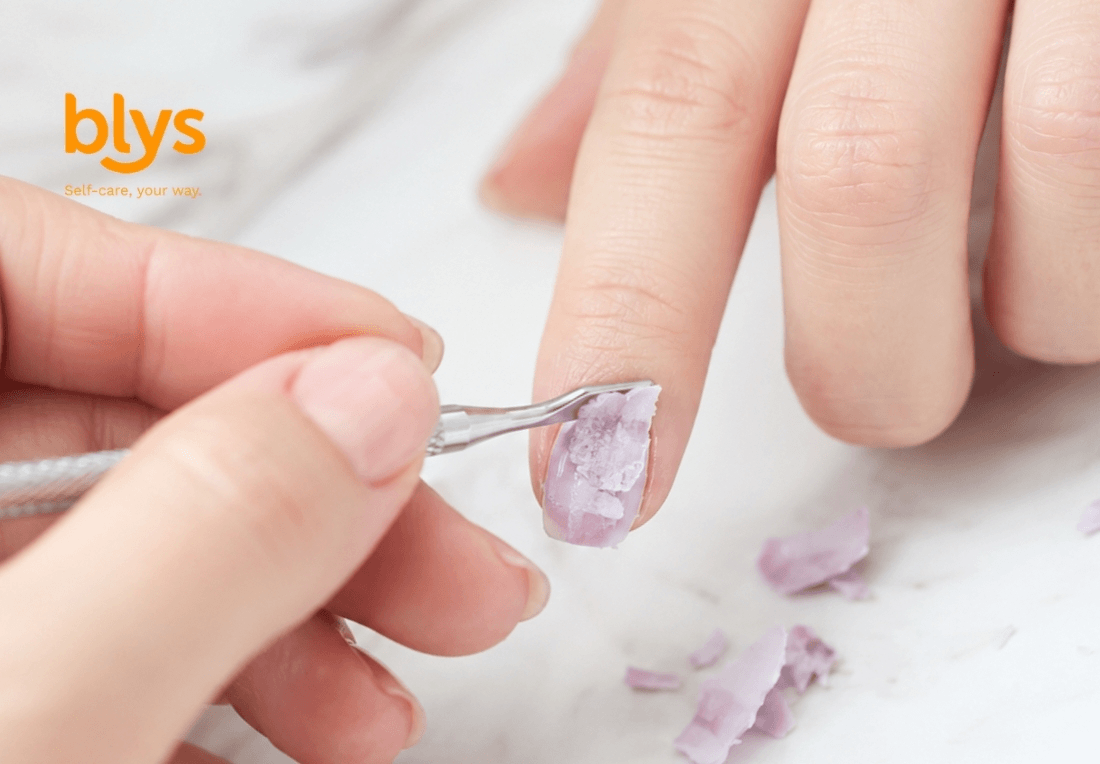
Once the foil comes off, softened gel should push away easily with a cuticle stick or wooden manicure tool, not scrape or force. Any gel that doesn’t lift easily needs another short soak rather than being pried at, since forcing it at this stage undoes the entire point of soaking in the first place.
What to Do Without the Right Supplies
Not having the exact right tools on hand doesn’t mean reaching for whatever’s nearby and hoping for the best.
If All You Have Is Regular Nail Polish Remover
Soaking gel in regular nail polish remover and wondering why nothing’s happening is a bit like trying to put out a bonfire with a spray bottle. Most standard nail polish removers have a much lower acetone concentration than what’s actually needed to break down gel, so waiting until pure acetone is available generally works out faster than persisting with the wrong product.
Improvising Without Foil or Proper Wraps
Small snack-size resealable bags or pre-made soak-off clips work as a reasonable substitute for foil, since the goal is simply holding the acetone-soaked cotton firmly against each nail. Foil usually retains warmth slightly better, which speeds up the process a little, but it isn’t the only option that actually works.
Why Rushing the Process Causes More Damage Than Waiting
Cutting a soak short because of impatience, then picking at whatever gel hasn’t fully softened, causes the exact damage the whole soak-off method exists to avoid. An extra five or ten minutes of patience costs far less than the weeks it takes damaged nails to properly grow back out.
When to Book a Removal
DIY removal works well for a simple gel polish job, but a few situations are properly better handled by a professional.
Gel Extensions or Sculpted Gel Are Trickier to DIY
Gel extensions or heavily sculpted gel take considerably longer to soak off safely and are much easier to damage with an at-home attempt, since there’s simply more product to fully break down. A professional removal is generally the safer call here rather than an extended DIY session with an uncertain result.
Already-Damaged Nails Need Professional Attention
Nails that are already thin, peeling, or damaged from a previous rushed removal benefit from a professional assessment before attempting another DIY soak-off. Piling more at-home removal attempts onto already-compromised nails usually makes recovery take even longer.
When It’s Simply Not the Right Call to DIY
Not having a spare thirty to forty minutes, or simply not wanting to deal with foil and cotton balls at the kitchen table, is a completely reasonable reason to book a professional removal instead. A mobile nail technician can remove gel properly in a fraction of the time an inexperienced at-home attempt usually takes.
Aftercare After Removing Gel
What happens in the days right after removal affects how quickly nails bounce back to normal.
Rehydrating and Strengthening Nails That Just Came Out of Gel
Nails and surrounding skin dry out noticeably from the acetone soak itself, regardless of how carefully the removal was done, so a proper cuticle oil and hand cream routine for the following few days helps rehydrate everything that just went through the process. Giving nails a short break before the next set, even just a few days, also helps them recover a bit of their natural strength before more product goes back on.
Getting gel off safely takes patience instead of force, and understanding the actual process removes most of the temptation to just pick at a lifting edge, the same edge that signals it’s time for a fill in the first place.
Checking a nail technician’s reviews beforehand helps plan the next set properly once the current one’s off, alongside a look at other nail options like acrylic or dip powder too.
A Blys gift voucher also covers a proper removal, if that’s the actual gift someone needs right now.
Frequently Asked Questions
How do you remove gel nails at home safely?
The safe method involves lightly buffing the top layer, soaking cotton pads soaked in pure acetone against each nail wrapped in foil for ten to fifteen minutes, then gently pushing off the softened gel with a cuticle stick. Picking or peeling at any point undoes the whole point of the soak.
What is the proper way to soak off gel nails?
Soaking involves acetone-soaked cotton held against each nail with foil or a clip for ten to fifteen minutes, giving the acetone enough time to fully break down the gel’s bond to the nail. Gel that hasn’t softened after one soak needs a second round rather than being forced off early.
Can I use regular nail polish remover to remove gel nails?
Not effectively. Regular nail polish remover generally has a much lower acetone concentration than what’s needed to properly break down gel, which usually means a longer, less successful soak than using pure acetone. Waiting for the right product usually works out faster overall.
Why does peeling gel nails damage them?
Gel bonds to the top layers of the natural nail rather than just sitting on the surface, so peeling it off pulls those bonded layers away along with the gel. This is what leaves nails thin, rough, or visibly patched afterward, not the gel itself.
How long does it take to soak off gel nails?
A standard soak-off usually takes ten to fifteen minutes, though thicker gel, extensions, or sculpted gel can take longer. Cutting the soak short and picking at remaining gel causes far more damage than waiting the extra few minutes.
What if I don’t have foil to remove gel nails at home?
Small resealable snack bags or dedicated soak-off clips work as a reasonable substitute, since the actual goal is holding acetone-soaked cotton firmly against the nail. Foil retains warmth slightly better, but it isn’t strictly necessary for the method to work.
Should I get my gel nails removed professionally instead of at home?
Gel extensions, sculpted gel, or nails already damaged from a previous rushed removal are generally safer left to a professional. A simple gel polish job on healthy nails is usually fine to remove at home with the proper soak-off method.
What should I do to my nails after removing gel?
Applying cuticle oil and hand cream regularly for the days right after removal helps rehydrate nails and skin dried out by the acetone soak. Giving nails a short break before the next set also helps them recover some natural strength first.