Neither is objectively better, since airbrush makeup generally wins on durability and camera-ready finish while traditional makeup wins on buildable coverage and everyday flexibility. Airbrush makeup is basically a vote of confidence in your own ability to cry happy tears without your face falling apart on camera.
Airbrush vs Traditional Makeup at a Glance
| Airbrush | Traditional | |
| Application | Sprayed on with a compressor | Applied with brush, sponge, or fingers |
| Finish | Thin, even, second-skin look | More textured, buildable depth |
| Coverage | Lighter, harder to build heavily | Easier to build full coverage |
| Longevity | Generally longer-wearing | Shorter wear, easier to touch up |
| Best for | Weddings, photography, humid events | Everyday wear, heavier coverage needs |
Finish: The Actual Visual Difference
The application method itself is what creates every other difference on this list.
How Airbrush Achieves That Second-Skin Look
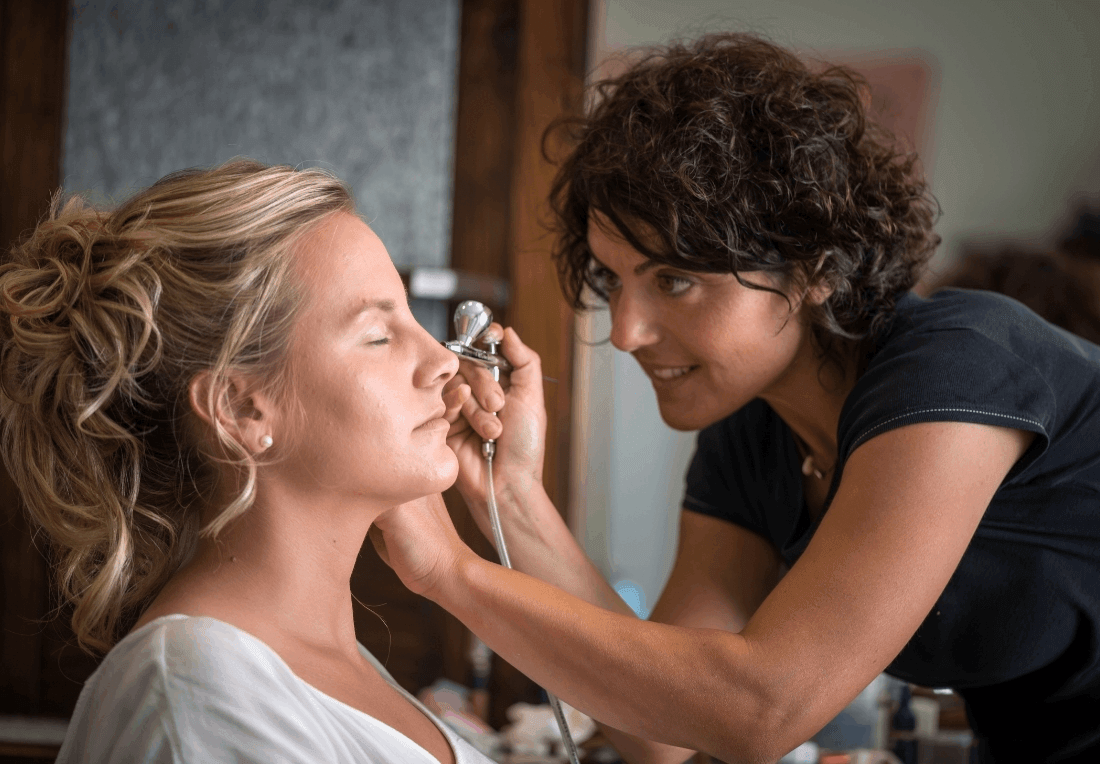
A small compressor mists a lightweight airbrush foundation formula in a fine, even spray directly onto skin, building a thin layer that photographs noticeably smoother than traditional application, reducing how visible texture and pores appear on camera specifically.
Why It Reads So Differently on Camera Specifically
Traditional foundation, even well-blended, can create tiny shadows and highlights across texture that a camera flash picks up and exaggerates, sometimes called “flashback.” Airbrush’s thinner, more even layer avoids creating as much of this texture-catching shadow in the first place, which is exactly why film and photography work adopted it so early on.
Why Traditional Offers More Buildable Coverage
Applying foundation with a brush, sponge, or fingers allows product to build up in layers far more easily than a fine mist does, which matters for anyone wanting to conceal scarring or real discolouration instead of simply evening out a generally clear complexion. This flexibility also means traditional application generally suits a wider range of skin concerns in a single technique, rather than needing a different approach for every specific issue.
Shade Matching Behaves a Little Differently Too
The thinner layer airbrush creates can read slightly differently against various skin undertones than a thicker traditional layer does, since less product means less room to correct an imperfect match once it’s actually on. Getting the undertone right from the start matters even more with airbrush specifically, given how little margin the technique leaves for adjusting afterward.
Longevity: Which Actually Lasts Longer
Needing an actual compressor and spray gun just to touch up your base makeup is a commitment level most skincare routines don’t even ask for.
Why Airbrush Generally Wins on Durability
Airbrush formulas, especially silicone or alcohol-based ones, usually bond more evenly to skin than traditional formulas do, resisting sweat, humidity, and the odd happy tear considerably better over the course of a long day. This durability advantage is exactly why photographers and film crews gravitated toward it long before weddings did.
The Honest Caveat About Formula and Skin Type
Alcohol-based airbrush formulas specifically can be more drying than a traditional cream foundation, which matters for anyone with naturally dry or mature skin. The same hydration-first approach covered for mature skin generally applies just as much when airbrush is the chosen method, since a drying formula applied over under-prepped skin settles into texture regardless of how it’s sprayed on.
What an Airbrush Appointment Actually Involves
Booking either technique for a mobile appointment follows a broadly similar structure, consultation, skin prep, application, and finishing touches, though airbrush specifically adds setup and cleanup time for the equipment itself. What to actually expect from a mobile makeup booking looks the same regardless of which specific technique ends up getting chosen on the day.
Best Occasions for Each
Traditional makeup has the specific reliability of a routine you could do half-asleep, which airbrush, for all its camera-ready glow, has never quite managed to offer.
When Airbrush Actually Makes Sense
Weddings, especially outdoor ones, professional photography or video, and anywhere heat or humidity is a factor all actually suit airbrush’s durability advantage, since the finish holds up through exactly the conditions that break traditional makeup down fastest. Booking makeup for a specific event is actually the right moment to raise this, since mentioning the occasion upfront, outdoor wedding, long reception, humid venue, lets an artist recommend the technique that actually suits the day instead of defaulting to whatever they usually do.
When Traditional Is Actually the Better Choice
Everyday wear, anyone needing heavier coverage for scarring or discolouration, and situations needing easy touch-ups throughout the day all suit traditional makeup better, since reapplying airbrush specifically requires the actual equipment rather than whatever’s already in a bag.
Not Every Artist Offers Both Equally Well
Owning an airbrush compressor and actually being skilled with it are two properly different things, so this distinction matters more than most people expect before booking. Checking a provider’s reviews for specific mentions of airbrush work, instead of general makeup compliments alone, gives a far clearer signal of who’s actually practised with this particular technique.
Cost Differences Between the Two
Airbrush generally costs more than traditional application, reflecting the specialized equipment, training, and often slightly longer setup time involved. Pricing still varies considerably by artist and location, so checking straight with a specific provider gives a far more accurate figure than any general estimate.
Skin Prep Still Matters for Both
Neither technique skips the need for proper skin prep beforehand, despite how differently each one actually applies.
Why Airbrush Doesn’t Forgive Unprepped Skin
A thin, even layer shows through to whatever’s underneath more than a thicker traditional layer does, so dry patches, flaking, or uneven texture read more obviously under airbrush specifically than they might under a heavier traditional application.
Traditional Offers More Room to Correct Unprepped Skin
Since traditional application allows building up coverage in layers, it can mask minor prep oversights a little more forgivingly than airbrush’s thinner finish typically allows.
Combining Both Techniques in One Look
Plenty of artists actually do mix the two, using airbrush for the base layer specifically to get that durable, even foundation, then traditional products for contour, eyes, and lips where more precise, buildable detail actually matters. This hybrid approach gets the durability advantage where it counts most while still allowing the detailed definition traditional tools handle better than a spray gun ever could.
Touch-Ups During the Day
How easily a look can be touched up partway through a long event matters just as much as how it looks at the start.
Airbrush Touch-Ups Need the Actual Equipment
Reapplying airbrush specifically requires the compressor and gun, which isn’t something most people carry around in a clutch bag, so a full touch-up mid-event generally isn’t realistic without planning ahead for it.
Traditional Touch-Ups Travel Easily
A compact powder or cream product does the job for traditional makeup touch-ups, fitting easily into a small bag and requiring no special equipment to apply on the go.
Sensitive Skin Needs a Specific Conversation
Anyone with properly sensitive or reactive skin should raise this outright with an artist before either technique, since specific formulas within both categories vary considerably in what ingredients they actually contain. A patch test beforehand, particularly for a big event like a wedding, protects against an unwelcome reaction showing up on the one day it absolutely can’t.
Is Airbrush Makeup Actually Better? The Honest Answer
Neither technique wins across every situation, which is exactly why the real question isn’t which one’s better, but which one actually suits the occasion and the skin involved. Airbrush makeup is its own specific, bookable service instead of a generic add-on, so mentioning which finish and occasion you’re actually working with when booking through Blys helps match you with an artist who actually suits the brief.
Get Airbrush Makeup Sorted at Home →
Frequently Asked Questions
Does airbrush makeup feel different on the skin than traditional foundation?
Yes, most people describe it as lighter and less noticeable, since the thin, misted layer sits differently on skin than a thicker, manually applied layer does.
Does airbrush makeup transfer onto clothing less than traditional makeup?
Generally yes, since the thinner, more set finish leaves less loose product sitting on the surface to rub off onto collars or fabric throughout the day.
Does airbrush makeup work well for oily skin specifically?
Often yes, particularly silicone-based formulas, since the thin, even layer doesn’t sit as heavily as traditional foundation can on skin that’s already producing more natural oil throughout the day.
Can airbrush makeup be applied over existing skincare treatments like chemical peels?
This needs a conversation with the artist outright beforehand, since freshly treated or sensitized skin may react differently to either formula than skin without any recent treatment.
Does airbrush makeup look obviously different in natural daylight versus indoor lighting?
Not dramatically, since the thin, even finish holds up consistently across different lighting, which is actually part of why it suits both outdoor ceremonies and indoor receptions on the same day.
How long does an airbrush makeup appointment typically take?
Similar to a traditional application overall, though the actual base application itself is often faster, with the time difference usually made up in detail work like eyes and contour regardless of technique.
Does airbrush makeup require special removal at the end of the day?
Not usually, a standard makeup remover or cleansing balm removes it the same way it would traditional foundation, despite how differently it goes on.
Does facial hair affect how airbrush foundation applies?
It can create slightly uneven patches around finer facial hair specifically, since the fine mist settles differently on hair than on bare skin, something a traditional brush or sponge can usually work around a little more easily.