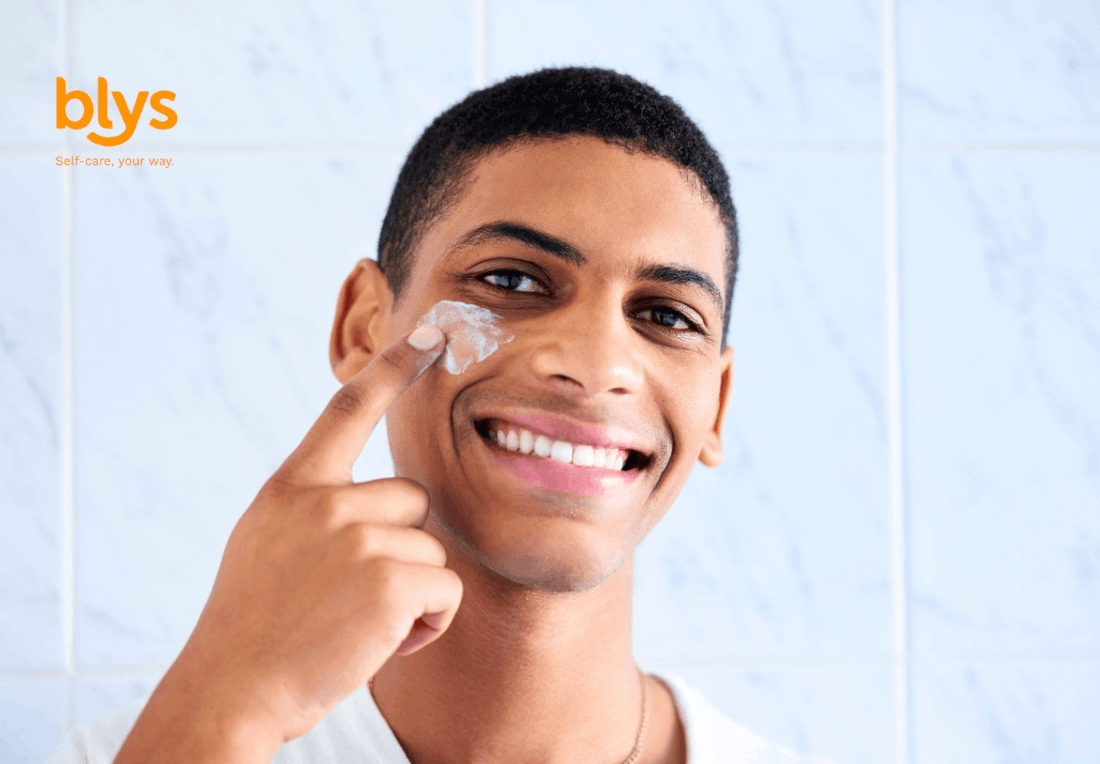
Men’s skin is thicker, oilier, and dealing with daily shaving-related irritation that most women’s routines never need to address, which means the actual products and steps really do need to adjust, even though the underlying goals of any good routine stay the same. Most men’s skincare journeys begin the exact same way, standing in a partner’s bathroom, wondering silently what seventeen unlabeled bottles are actually for. Here’s what’s actually different, what’s just clever branding, and how to build a routine that actually works.
What’s Actually Different
Men’s skin has a few measurable biological differences that change what a routine actually needs to do.
Skin Thickness and Collagen Density
Men’s skin is around 20 to 25 percent thicker than women’s skin on average, driven by higher testosterone, and holds a higher collagen density for longer, which is part of why visible signs of ageing often show up somewhat later. This doesn’t mean men’s skin ages better overall, just on a different timeline, and once ageing does become visible it often changes more suddenly rather than gradually.
Oil Production and pH Level
Men’s skin produces considerably more sebum on average and usually sits at a slightly more acidic pH than women’s skin, both driven by androgen activity. More oil means larger pores and a higher tendency toward congestion and blackheads, which changes what a cleanser and moisturizer actually need to do.
Shaving as Accidental Daily Exfoliation
Regular shaving strips the top layer of skin along with facial hair, functioning as a real daily mechanical exfoliation whether or not that’s the intention. This means many men are already exfoliating more than they realize, which changes routine advice in a specific way: less additional physical scrubbing is usually needed, while more attention to barrier repair counts for more, since shaving also strips protective lipids the skin needs to stay comfortable. Switching some areas to waxing removes this daily irritation cycle entirely, since hair stops growing back for weeks rather than needing a fresh shave every day or two.
What’s Marketing vs Real
A lot of what gets sold as gendered skincare is packaging, and only a real minority of it reflects an actual formulation difference.
Same Formula, Different Bottle
Grabbing the black bottle over the pink one because it feels more masculine is a choice based entirely on packaging, since the actual formula underneath is often identical. Basic cleansers and moisturizers rarely need a properly different formula between a “men’s” and “women’s” version of the same product line, and the price difference sometimes runs the other way, with identical formulas costing less once relabelled for a general audience.
Where Formulation Differences Are Actually Real
Post-shave specific products, formulated to calm the specific irritation shaving causes, and oil-control formulas actually suited to oilier skin are two categories where a real formulation difference exists, not just different branding. Seeking these out specifically makes more sense than assuming any product labelled for men automatically qualifies.
Common Skin Concerns and Whether They’re Actually Gendered
Acne, dryness, and general sensitivity aren’t inherently gendered conditions, though how often they show up and how they get treated can shift based on the biological differences already covered.
Acne and Congestion
Higher oil production means acne and blackheads show up more often in men on average, though the underlying mechanism, blocked pores and excess oil, is identical regardless of gender. Treatment approaches like salicylic acid and gentle exfoliation work the same way for anyone dealing with this specific concern.
Dryness and Sensitivity
Dryness and sensitivity affect any skin type regardless of gender, though shaving adds an extra irritation factor that specifically affects men who shave regularly. Barrier-repair ingredients like ceramides work the same way for anyone experiencing this, shaving-related or otherwise.
Understanding Basic Ingredients
A handful of ingredients do most of the actual work in any effective routine, regardless of who’s using them.
Cleansers, Moisturizers, and SPF: The Non-Negotiables
A gentle cleanser suited to skin type, a daily moisturizer, and sunscreen used every day regardless of weather cover what actually matters for long-term skin health. Nothing beyond these three is strictly necessary to see a real difference within a few months.
Applying Sunscreen Properly, Not Just Owning a Bottle
Most sunscreen underperforms simply because too little gets applied, not because the product itself is weak. A proper application for the face alone needs roughly a quarter teaspoon, noticeably more than the thin swipe most people actually use, and reapplication every couple of hours during real sun exposure counts for more than the SPF number printed on the bottle. A high SPF applied too thinly still leaves skin under-protected regardless of what the label promises.
Actives That Actually Matter: Retinoids and Niacinamide
Retinoids support cell turnover and collagen production over time, making them useful for early ageing concerns, while niacinamide helps with oil control and can calm inflammation, making it a reasonable fit for oilier or shaving-irritated skin. Both need to be introduced gradually rather than added all at once, since skin needs time to adjust to any new active ingredient.
Where a Facial Fits In
A professional facial addresses what daily products physically can’t, extractions, precise technique, and treatment depth a bathroom routine alone doesn’t reach. Facial for men adjusts for exactly the skin differences covered above, thicker skin, more oil, and shaving-related irritation, using firmer pressure and specific techniques a standard facial doesn’t apply.
Checking a provider’s reviews beforehand confirms real experience treating men’s skin specifically, since not every beauty therapist has it.
Building a Simple Routine
Buying ten products in one enthusiastic Sunday afternoon and abandoning all but one of them by Wednesday is a rite of passage nobody warns you about.
A Basic AM and PM Routine
| Time | Step | Purpose |
| Morning | Cleanser | Remove overnight oil buildup |
| Morning | Moisturizer with SPF | Hydrate and protect from sun |
| Evening | Cleanser | Remove the day’s oil, sweat, and buildup |
| Evening | Treatment product (if using one) | Address a specific concern, like an active ingredient |
| Evening | Moisturizer | Support the skin barrier overnight |
This five-step structure covers a properly complete routine without needing anything more elaborate to see results.
Introducing Actives Without Overdoing It
Adding one new active ingredient at a time, waiting a couple of weeks before introducing another, avoids overwhelming skin with too many new products at once. Combining several strong actives immediately, a retinoid and a strong exfoliating acid on the same night for example, is a common way a first routine goes wrong fast.
Common First-Routine Mistakes
Washing your face with the same bar soap that’s been sitting on the shower ledge since 2019 is doing more harm than the missed moisturizer ever could, since standard bar soap sits at a much higher pH than skin actually tolerates well. Skipping sunscreen entirely, and buying every product in a range at once instead of building gradually, round out the most common ways a first routine stalls before it has a chance to work.
Fitting Skincare Into a Broader Grooming Routine
A skincare routine doesn’t exist in isolation from the rest of a grooming routine, since shaving, a mobile haircut service, and other services all interact with skin health in some way.
Coordinating Skincare With Shaving and Other Services
Timing skincare products around shaving catches a lot of people off guard, since applying a strong active right after shaving on already-irritated skin often causes more sensitivity than either would alone on its own. A combined grooming session that includes both a haircut and a facial gives a provider the chance to coordinate timing properly, rather than each service happening in isolation without any communication between them.
When to Actually See a Dermatologist Instead
A basic routine and occasional facial handle general skin health well, but persistent acne, unexplained rashes, or any changing mole or skin growth need an actual dermatologist rather than more products. This isn’t medical advice, and any real skin concern beyond general maintenance deserves a proper medical opinion rather than trial and error with over-the-counter products. A Blys gift voucher also covers a first facial nicely, if it’s someone else who needs the push to actually start.
Building a routine around actual skin needs, rather than whatever’s in front of you at the pharmacy, is what makes the difference between a routine that sticks and one abandoned by the second week.
Find a Skincare Provider Near You →
Frequently Asked Questions
Should I time skincare products around shaving?
Yes, applying a strong active right after shaving on already-irritated skin often causes more sensitivity than either would cause alone. A combined session that includes both a haircut and a facial lets a provider coordinate this timing properly.
When should I see a dermatologist rather than relying on skincare products alone?
Persistent acne, unexplained rashes, or any changing mole or skin growth need an actual dermatologist rather than more over-the-counter products. This isn’t medical advice, and any real skin concern beyond general maintenance deserves a proper medical opinion.
How much sunscreen should I actually apply?
Roughly a quarter teaspoon for the face alone, noticeably more than the thin swipe most people use, with reapplication every couple of hours during real sun exposure. A high SPF applied too thinly still leaves skin under-protected regardless of the number on the label.
Do men need a different skincare routine than women?
Yes, to some degree. Men’s skin is thicker, produces more oil, and deals with shaving-related irritation that most women’s routines don’t need to address, which changes what products and steps actually help. The underlying goals of a good routine, cleansing, hydration, sun protection, stay the same regardless of gender.
What’s the actual difference between men’s and women’s skin?
Men’s skin is around 20 to 25 percent thicker on average, produces more sebum, and sits at a slightly more acidic pH, all driven by higher testosterone. Regular shaving also adds a daily mechanical exfoliation effect that most women’s skin doesn’t experience.
Is men’s skincare treatment actually different from regular skincare, or just marketing?
Both. Basic cleansers and moisturizers are often identical formulas regardless of gendered packaging, while post-shave products and oil-control formulas actually suited to oilier skin represent real, not just marketing, differences.
What does a basic men’s skincare routine actually need?
A gentle cleanser, a daily moisturizer, and sunscreen used every day cover what matters most for long-term skin health. A five-step AM and PM structure, adding one treatment product if needed, covers a complete routine without unnecessary complexity.
How does shaving affect a skincare routine?
Shaving strips the top layer of skin along with facial hair, functioning as a form of daily mechanical exfoliation. This means less additional physical scrubbing is usually needed, while barrier-repair ingredients matter more, since shaving also strips protective lipids skin needs to stay comfortable.
Can men use the same skincare products as women?
Generally, yes, for basic cleansers, moisturizers, and sunscreen, since the actual formulas are often identical regardless of gendered branding. The main exceptions are post-shave specific products and oil-control formulas actually suited to oilier skin.
What ingredients should men look for in a skincare routine?
Retinoids support cell turnover and collagen production for early ageing concerns, while niacinamide helps with oil control and calming irritation, making it useful for oilier or shaving-affected skin. Both should be introduced gradually rather than all at once.
How does a facial fit into a men’s skincare routine?
A professional facial addresses extractions and treatment depth that daily products can’t reach on their own, complementing rather than replacing a basic daily routine. Regular facials work best alongside consistent home care, not instead of it.
What’s the biggest mistake men make starting a skincare routine?
Buying too many products at once and abandoning most of them within a week is extremely common, along with skipping sunscreen and using standard bar soap on the face, which sits at a much higher pH than skin tolerates well.
Is acne different for men than women?
The underlying mechanism, blocked pores and excess oil, is identical regardless of gender, though higher oil production means acne and congestion show up more often in men on average. Treatment approaches work the same way for anyone dealing with the concern.