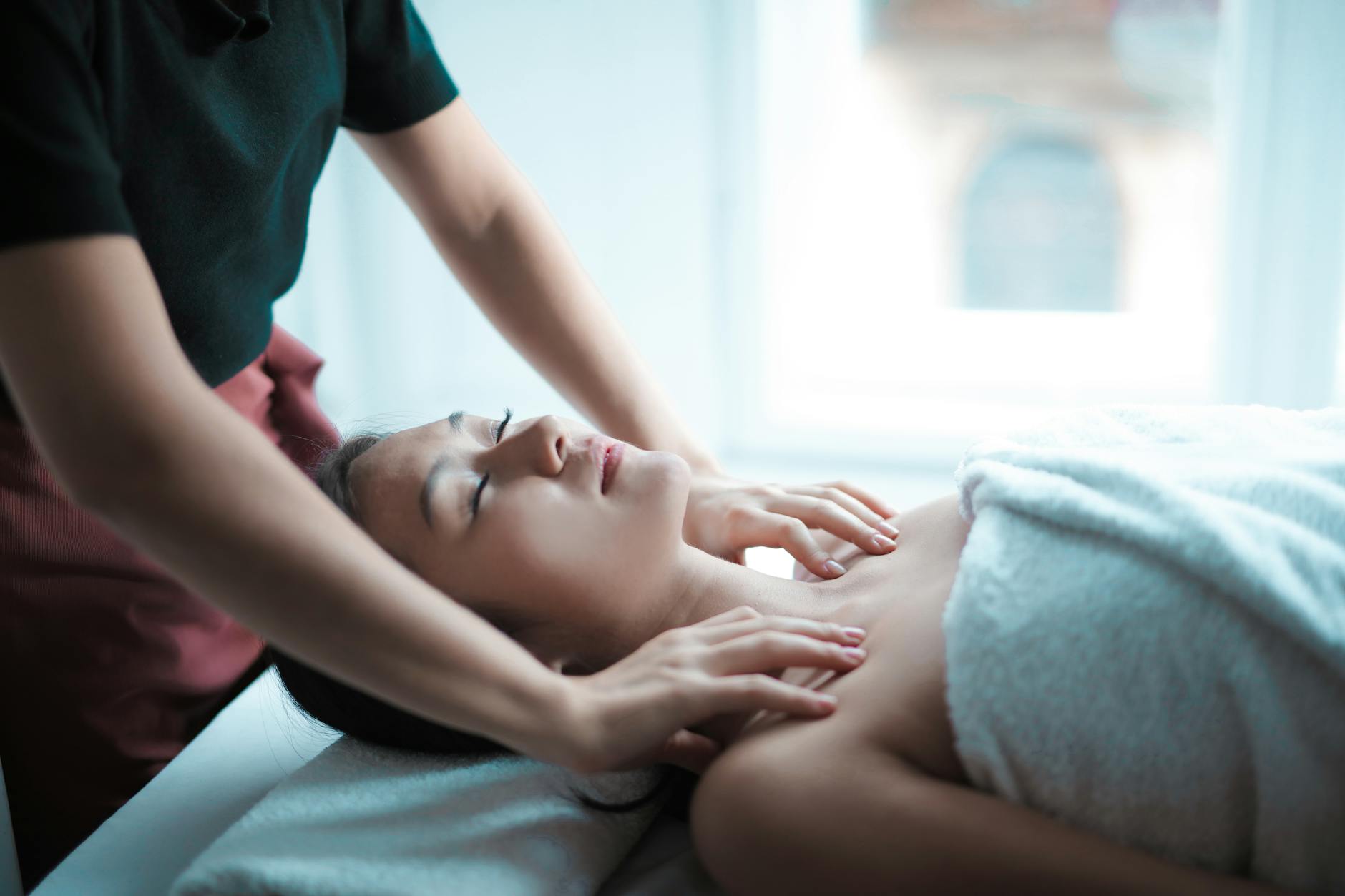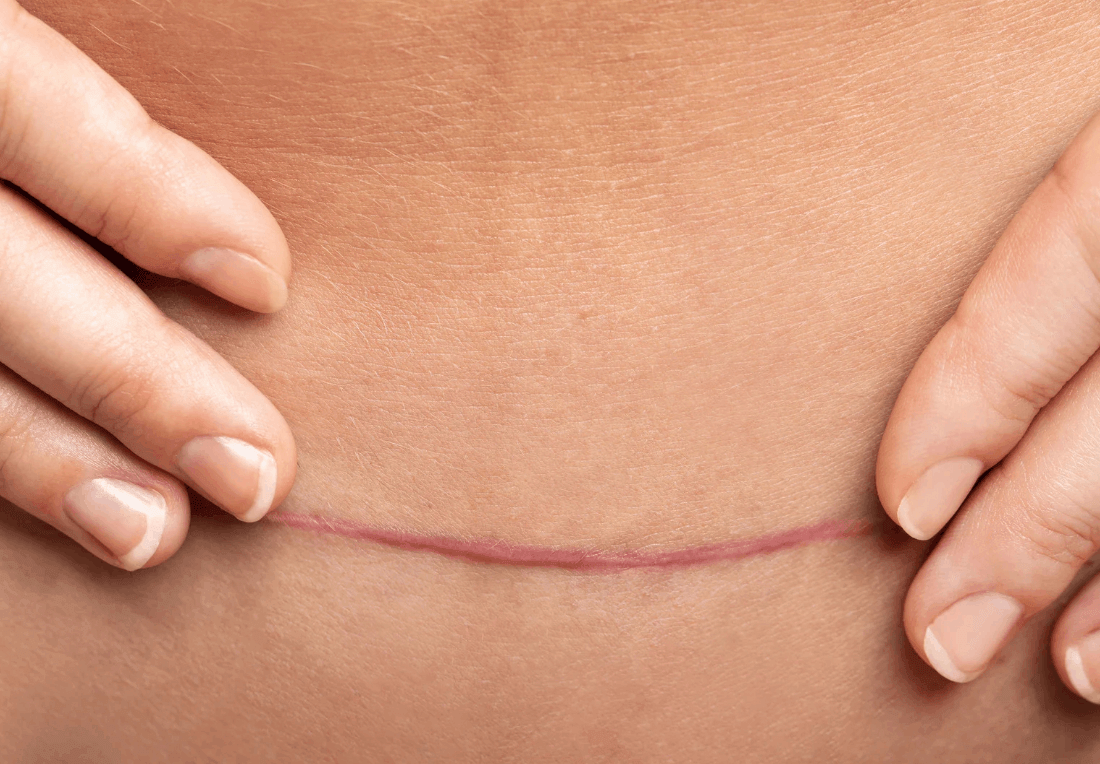
Scar tissue massage starts only once a scar has fully closed and healed and your doctor says it’s fine, and from there a therapist works gently around the scar and the tight tissue near it. Your scar is proof you did something brave, and it also has opinions about the top shelf. A local provider can bring myofascial release therapy to your home, so you can do the whole thing without a car, a waiting room or a pair of jeans with a zip.
Why Scars Feel Tight and Pull on Nearby Tissue
A scar can feel like a small, stubborn tug that follows you around, and knowing where the feeling comes from makes it less mysterious.
What Is Scar Tissue?
Scar tissue is the tissue your body lays down to repair a cut or injury, and it’s built from the same materials as the skin around it, arranged in a denser, less stretchy way. It’s a repair job, and a good one, even if it doesn’t always feel flexible.
Why Does a Scar Feel Tight or Pull?
A scar can feel tight or pull because scar tissue is less stretchy than the skin around it, and the connective tissue nearby can tighten to match. Fascia is the thin connective tissue wrapped around your muscles, like cling wrap, and when one patch tightens, the area around it can feel the tug. Myofascial release for tight tissue works on that layer.
Why Can a Scar Affect Movement Elsewhere?
A tight scar can make nearby areas feel restricted, because connective tissue links one region to the next. People describe a scar across the lower belly as a pull that shows up in the hips or lower back, and a scar near a joint as a limit on how far it bends. Your doctor or physiotherapist can tell you whether your scar is part of the picture.
When Is a Scar Ready for Massage?
A scar isn’t a deadline, and there’s no prize for starting early, so the question is whether yours is ready, not how soon you can begin.
When Can You Start Scar Massage After Surgery?
You can start scar massage after surgery only when the scar has fully closed and healed and your doctor says it’s fine. Your doctor or surgeon decides when that is for your procedure, and a therapist works only on a scar that has that clearance.
What Signs Say It’s Too Early?
It’s too early if any part of the scar is open, scabbed, red, hot, oozing or painful, or if your doctor hasn’t cleared it. Leave the scar alone until all of that has settled, and mention anything that changes to your doctor instead of waiting for a session.
Who Gives the OK?
Your doctor or surgeon gives the OK, and your physiotherapist can help you understand what it means for your recovery. Ask for the clearance in writing, since a short note saves explaining and gives your provider something to read before they arrive.
What Should You Ask Your Doctor First?
Ask your doctor five things before the first session:
- Is my scar fully healed and ready for massage?
- Is there anything about my surgery or my skin I should tell the therapist?
- Which areas near the scar should I avoid?
- How many sessions, and how far apart, make sense for me?
- Can I have your clearance in writing?
Write the answers on a single page, so your provider sees them as soon as they arrive.
Scar Massage After Surgery: Self-Massage vs a Therapist
Some of this you can do yourself and some of it you’d rather leave to someone with trained hands, and the table shows how the two compare.
| Detail | Doing it yourself | A therapist |
| Who it suits | A scar you can reach and see comfortably | Scars that are hard to reach, or tightness beyond the scar |
| Technique | Whatever your doctor or physiotherapist shows you | Myofascial release and gentle work around the scar |
| Beyond the scar | Limited to what you can reach | Nearby tight areas such as the hips or back |
| Feedback | Your own sense of comfort | A second set of hands that adjusts as you go |
| Time | A few minutes on your own schedule | A session you arrange, at home if you like |
What Can You Do Yourself?
You can do gentle self-massage on a fully healed scar once your doctor says it’s fine, and the safest start is to ask your doctor or physiotherapist to show you how. Keep the pressure light, stop if anything hurts and don’t push through discomfort, since a scar doesn’t respond to bravado.
What Does a Therapist Do Differently?
A therapist works slowly with myofascial release, using steady, gentle pressure on the connective tissue around the scar and the nearby tight areas, instead of rubbing the scar itself. They can reach areas you can’t, watch how your body responds and adjust as you go, which is the difference between a quick rub and a plan. A myofascial release therapy session is a gentle technique, and it needs patience more than force.
When Is a Therapist the Better Choice?
A therapist is the better choice when the scar sits somewhere you can’t reach comfortably, when the tightness spreads to nearby areas or when you’d like a guided technique instead of guessing. Some scars sit exactly where your arms can’t get to without a yoga class, and that’s when a second pair of hands earns its keep.
What a Scar Tissue Massage Session Covers
A session is calmer and slower than most people expect, and it covers more than the scar itself.
What Does Myofascial Release for Scar Tissue Involve?
Myofascial release for scar tissue is a slow, gentle technique that applies steady pressure to the connective tissue around a healed scar, aimed at easing the feeling of tightness. Your provider never forces anything, and no session can promise to change a scar.
Where Does Remedial Massage Fit In?
Remedial massage sessions work on the tight muscles near a scar, such as the hips, back or shoulder, with firmer pressure than myofascial work and away from the scar itself. Your provider can combine the two when your doctor agrees, with the gentle work around the scar and the firmer work on the muscles nearby.
What Happens at a First Session?
Expect questions first, covering where the scar is, your surgery date, your doctor’s clearance and anything that feels different on your skin. Your provider then explains what they’ll do and checks that you’re comfortable before any work near the scar, and you can ask them to stop or adjust at any point. Booking myofascial release therapy at home gives you that slow pace in your own space.
What Should You Put in Your Booking Notes?
Put your scar location, your surgery date and your doctor’s clearance in your booking notes. The location tells your provider where to be careful, the surgery date shows where you are in your recovery and the clearance confirms your doctor has agreed.
Surgery Types: What to Tell Your Therapist
Different surgeries leave scars in different places, and a short note about yours helps your provider plan the session.
| Surgery | Where the scar often sits | What to mention |
| C-section | Low across the belly | Surgery date, clearance and any pull in the hips or lower back |
| Abdominal or keyhole surgery | The belly, sometimes in several small places | Each scar’s location and your clearance |
| Tummy tuck or plastic surgery | Wherever the surgeon operated | Surgery date, clearance and any compression garment |
| Knee, hip or shoulder surgery | Over or beside the joint | Which joint, clearance and how you move on and off a table |
| Breast surgery | On or around the breast | Scar location, clearance and any tightness nearby |
C-Section Scar Massage
A C-section scar is one small part of recovery after a C-section, which also includes rest, help and your doctor’s plan, so the scar deserves patience and the rest of recovery deserves attention.
When Can You Have C-Section Scar Massage?
You can have C-section scar massage only when the scar has fully closed and healed and your doctor, obstetrician or midwife says it’s fine. The same rules apply as for any other surgery, and a therapist works only on a scar that has that clearance.
Why Do New Parents Choose Sessions at Home?
New parents choose sessions at home because it saves the travel, the parking and the juggling of a newborn, and a car seat isn’t required for this appointment. Your provider comes to you, so you can arrange a time around feeds and naps, and ask for the same therapist each time.
Arranging a Series at Home With Blys
Scar work often runs over more than one visit, and a series is easier to keep going when it comes to your door.
How Often Do People Arrange a Series?
Your doctor and your provider decide how many sessions make sense and how far apart, and on Blys you can set sessions to repeat so you keep a regular slot. Ask your doctor first, then set the repeat time once they agree.
How Much Time Does a Home Session Save?
A 60-minute clinic session with 30 minutes of travel each way is a two-hour commitment. A 60-minute session at home is 60 minutes, and the same sum applies to every visit in a series, which is the point of mobile massage vs spa.
Can You Ask for the Same Therapist Across a Series?
Yes, you can ask for the same therapist across a series, so the person arriving already knows your scar, your clearance and your pace. A familiar therapist means less explaining at each visit and a gentler start every time, and your therapist can notice how your scar and your comfort change from one session to the next.
Common Questions About Scar Massage
These questions come up once the clearance is in hand and the first session is on the calendar.
Does scar massage hurt?
Scar massage should feel gentle, and a stretching or pulling feeling is different from pain. Tell your provider about any sharp or growing pain straight away, and they’ll ease off or stop, since the aim is a slow, comfortable session and not a test of how much you can take.
How do you describe a scar to a therapist?
Say where the scar sits, when it pulls and what the feeling is, such as tight, tender, itchy or numb. Add what movements bring it on, for example reaching up or standing tall, because a specific description helps your provider plan the session around your scar and the areas near it.
How does scar massage fit around rehab?
Scar massage fits around your rehab plan, and it never replaces the exercises your physiotherapist sets. Share your exercise list and any rules from your doctor with your provider, and let your physiotherapist know when sessions start, so each of them knows what the other is doing.
What should you have ready for a home session?
Have your doctor’s clearance note, a clear patch of floor about 2 x 2 metres for the table and a sturdy chair nearby, and keep your questions written down. Your provider brings fresh linen and towels, so the only things to organize are yourself and the space.
When to Speak to a Doctor First
This page is general information about scars and massage, and it isn’t medical advice. It doesn’t diagnose any condition, and it doesn’t promise that massage changes a scar. Massage is only for fully closed and healed scars, with your doctor’s OK, so check with your doctor before you start, and call them about a scar that opens, turns red or hot, oozes, hurts more or comes with a fever.
Once your doctor has said the scar is ready, a series at home with the same therapist each time is a calendar decision, not a logistics project.