Most people could describe their split ends in forensic detail and couldn’t tell you the last time they thought about their actual scalp, which is a bit like obsessing over the paint job while ignoring a shaky foundation. The scalp is skin, and it gets neglected like no other skin on the body does. Here’s how to tell when it’s asking for help, and what a proper treatment actually does about it.
Signs Your Scalp Needs Attention
Nobody notices their scalp until it starts doing something alarming, itching, flaking, or gradually giving up on producing new hair at the rate it used to.
Persistent Itchiness or Flaking That Won’t Quit
An itchy or flaky scalp that doesn’t resolve with a regular shampoo change usually points to a buildup problem, product residue, dead skin cells, or excess oil sitting on the scalp rather than being properly cleared away. Dandruff shampoos can mask this for a while, but persistent flaking that keeps coming back despite trying a few different products is a sign the actual scalp needs more than a shampoo swap.
Excess Oil, or the Opposite, a Tight and Dry Feeling
A scalp that gets oily within a day of washing, or one that feels tight, dry, and almost sunburnt to the touch, are both signs the scalp’s natural oil balance is off in one direction or the other. Neither extreme is something to just live with, since both usually respond well to the right kind of treatment rather than more aggressive washing or heavier conditioner.
Slower Hair Growth or Increased Shedding
Hair grows out of the scalp, so a scalp that’s inflamed, clogged, or generally unhealthy makes it harder for hair to grow at its normal rate. Noticeably more hair in the shower drain, or a slowdown in how quickly hair seems to grow back after a cut, is often a scalp issue showing up as a hair problem rather than a hair issue on its own.
What Does a Scalp Treatment Actually Involve?
Dry shampoo is brilliant at hiding a scalp problem and completely useless at fixing one, which is exactly the gap a proper treatment is built to close.
The Assessment: What a Therapist Actually Looks For First
A proper scalp treatment starts with an actual look at the scalp itself, checking for visible buildup, redness, flaking, or oil levels before deciding on the right approach. This step matters because a scalp that’s oily and clogged needs a different treatment to one that’s dry and irritated, and starting with the wrong assumption wastes the whole appointment.
Exfoliation and Deep Cleansing
Much like the skin on your face, the scalp benefits from proper exfoliation to clear away dead skin cells, product buildup, and excess oil that a regular shampoo doesn’t fully remove. This step alone often accounts for most of the noticeable difference clients feel right after a treatment, since it clears the way for everything applied afterward to actually absorb properly.
Specific Serums, Oils, and Scalp Massage
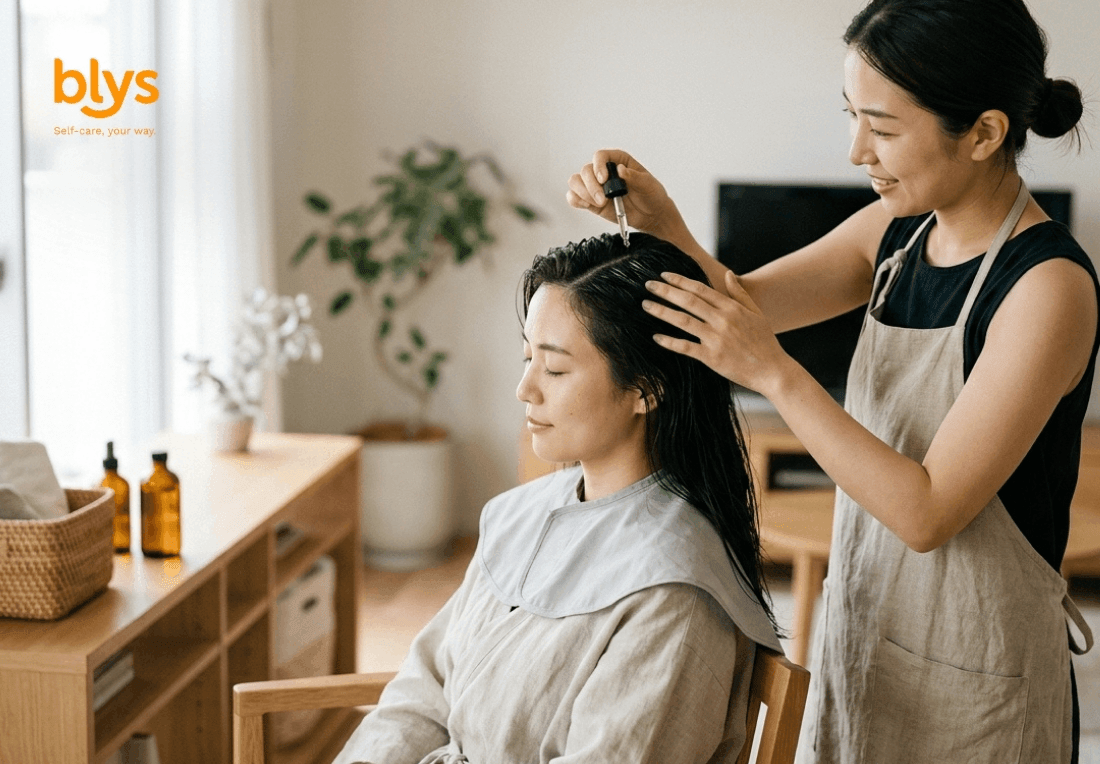
After cleansing, a treatment usually involves a specific serum or oil chosen for the scalp’s actual condition, hydrating for dryness, balancing for excess oil, or soothing for irritation, massaged into the scalp to boost circulation and help the product absorb. A scalp massage feels suspiciously like a treat rather than a treatment, which might be why so many people skip it despite the real scalp massage benefits it offers for both relaxation and blood flow to the hair follicles.
How It Pairs With a Wash or Blowout
A scalp treatment rarely happens in total isolation, and understanding how it fits around other services helps with planning the appointment properly.
Booking a Scalp Treatment Before a Color or Style Service
A scalp treatment done before a color, blowout, or style service means the scalp is properly prepped, and any product residue is cleared away before new product gets applied on top. Planning this ahead of a balayage appointment makes a real difference, since a freshly treated scalp gives color products a cleaner surface to work with.
The same logic applies to a hair gloss treatment, and this order also means styling happens on a scalp that’s already been treated, rather than treating a scalp that’s just been through a heat styling session.
Standalone Scalp Sessions vs Add-On Treatments
A scalp treatment can be booked entirely on its own, especially for anyone dealing with a specific ongoing issue, or added onto a regular wash and blowout as a periodic boost. An add-on session is usually shorter and more general, while a standalone appointment allows more time for a proper, condition-specific treatment plan.
How Often Should You Book a Scalp Treatment?
There’s no single right answer here, but a few general guidelines help set reasonable expectations.
A General Maintenance Schedule
For general scalp health without any specific ongoing issue, a treatment every four to six weeks keeps buildup from accumulating and gives the scalp a regular reset. This roughly mirrors how often most people are already getting other hair services done, which makes it an easy add-on to build into an existing routine.
When More Frequent Treatments Make Sense
Anyone dealing with a specific condition, persistent dandruff, noticeable shedding, or ongoing irritation, may benefit from more frequent sessions initially, every two to three weeks, before settling into a longer-term maintenance schedule once things improve. A professional can usually advise on the right frequency once they’ve actually seen the scalp’s condition firsthand.
Why Scalp Health Actually Matters for Hair Growth
Scalp health isn’t just a nice add-on to a hair routine. It’s closer to the foundation the rest of the routine is built on.
The Scalp Is Skin Too, and It Gets Neglected Like No Other Skin Does
Most people have a skincare routine for their face and never think to extend the same logic to the skin just an inch higher up. The scalp deals with product buildup, sweat, sun exposure, and pollution the same way facial skin does, just without the same attention or dedicated products most people already own for everything below the hairline.
The Connection Between Scalp Condition and Hair Thinning
A congested, inflamed, or chronically irritated scalp creates a poorer environment for hair follicles to function properly, which can contribute to thinning or slower growth over time, separate from genetics or other underlying causes. This doesn’t mean a scalp treatment fixes every case of hair thinning, but it does mean scalp health is a properly relevant factor instead of an unrelated afterthought.
DIY Scalp Care vs a Professional Treatment
Plenty of scalp care can reasonably happen at home, and knowing where the line sits helps avoid either overpaying or under-treating a real issue.
What You Can Reasonably Do at Home
A gentle scalp brush, a clarifying shampoo used occasionally, and a basic at-home scalp massage all help maintain general scalp health between professional treatments. These habits are useful maintenance, not a substitute for addressing an actual ongoing issue that hasn’t responded to simple changes.
Where a Professional Treatment Goes Further
A professional treatment uses stronger, more specific exfoliation and product formulations than most retail options, along with an actual assessment of what the scalp specifically needs instead of a generic one-size-fits-all approach. For anything beyond general maintenance, persistent flaking, ongoing irritation, or noticeable shedding, a professional treatment addresses the actual cause instead of just managing the symptoms at home indefinitely.
Understanding what’s actually going on with your scalp turns a vague feeling that something’s off into a specific, treatable issue. A mobile hairstylist can assess and treat it without needing to fit a salon visit into an already packed week. If this is your first time booking someone for scalp or hair work specifically, checking their reviews beforehand is a sensible habit either way.
A Blys gift voucher also works well if you’re treating someone else to a proper scalp reset rather than booking for yourself.
Frequently Asked Questions
What are the signs I need a scalp treatment?
Persistent itchiness or flaking that doesn’t improve with a shampoo change, a scalp that’s either excessively oily or uncomfortably dry, and noticeably slower hair growth or increased shedding are the clearest signs. Any of these lasting more than a few weeks despite trying simple fixes usually points to a scalp that needs proper attention.
What does a scalp treatment at home actually involve?
A mobile scalp treatment typically includes an assessment of the scalp’s condition, exfoliation to clear buildup, and a specific serum or oil massaged in to address the actual issue, whether that’s dryness, excess oil, or irritation. The whole appointment usually takes less time than a full color or styling service.
What are the benefits of a scalp massage?
A scalp massage boosts circulation to the hair follicles, helps active ingredients absorb more effectively, and is properly relaxing on top of any physical benefit. It’s a small part of a treatment that does noticeably more than its short duration suggests.
How often should I get a scalp treatment?
For general maintenance, every four to six weeks keeps buildup in check without over-treating a scalp that isn’t dealing with a specific issue. Anyone managing an ongoing problem like persistent dandruff or shedding may benefit from more frequent sessions until things settle.
Can a scalp treatment help with hair thinning?
A scalp treatment can improve the environment hair follicles are working in, which may support healthier growth, though it isn’t a guaranteed fix for thinning caused by genetics or other underlying factors. It’s a properly relevant piece of the picture instead of a complete solution on its own.
Should I get a scalp treatment before or after a haircut or color?
Before is generally better, since a scalp treatment clears away buildup and residue that a fresh color or style would otherwise be applied on top of. This also means styling happens on a scalp that’s already been properly treated rather than one still carrying old product.
Is a scalp treatment the same as dandruff shampoo?
No, dandruff shampoo manages surface symptoms at home, while a professional scalp treatment addresses the underlying buildup or imbalance causing those symptoms in the first place. Some people need both, ongoing shampoo maintenance alongside periodic professional treatments.
Can I do a scalp treatment myself at home?
Basic maintenance, a scalp brush, an occasional clarifying shampoo, a simple massage, works well as upkeep between professional sessions. A professional treatment goes further with stronger exfoliation and formulations suited to the scalp’s actual specific condition, which is harder to replicate accurately at home.