If you are researching how to start a massage business at home in Canada, the first thing to know is that rules vary by province. In British Columbia and Ontario, massage therapy is regulated with formal registration requirements and protected titles. In other provinces, regulation may be limited or handled more through associations, insurance, and local business rules.
Demand for mobile massage is strong in cities like Toronto, Vancouver, Calgary, Montreal, and Ottawa. Clients want trusted, insured, professional therapists who can deliver a high-quality session at home without the need to travel.
This guide covers the key steps for mobile massage therapists in Canada, including provincial registration, CRA obligations, insurance, and how working through Blys can support a more organised mobile practice.
Is Massage Therapy A Regulated Profession In Canada?
Yes in some provinces, and with meaningful differences between them. Canada does not have a single national standard for massage therapy regulation, which makes it one of the more complex markets to navigate for anyone planning to start a massage business at home in Canada.
Provinces Where Massage Therapy Is A Regulated Health Profession
British Columbia and Ontario both regulate massage therapy under provincial health profession legislation. In BC, massage therapists must be registered with the College of Massage Therapists of British Columbia (CMTBC) to practise legally. In Ontario, registration with the College of Massage Therapists of Ontario (CMTO) is required to use the protected title “Registered Massage Therapist” (RMT) and to provide massage therapy services for compensation.
Using the RMT title without CMTO registration in Ontario is a regulatory offence. Both colleges set education standards, require applicants to pass entry-to-practice exams, and mandate continuing competency requirements for ongoing registration, so staying current with your obligations is part of the professional commitment.
Newfoundland and Labrador, New Brunswick, Prince Edward Island, and Nova Scotia also regulate massage therapy to varying degrees. Requirements across the Atlantic provinces are subject to change, so if you are based in one of these provinces, contact your provincial college or relevant regulatory body directly for current registration requirements before offering services commercially.
Provinces Without Provincial Massage Regulation
Alberta, Manitoba, Saskatchewan, and Quebec do not regulate massage therapy at the provincial level. In these provinces, no government-issued licence is required to offer massage services. That said, municipal regulations, professional association standards, and insurance requirements still apply.
Operating in an unregulated province without any professional credentials puts you at a genuine disadvantage when it comes to insurance eligibility, client trust, and platform vetting. Even where regulation is absent, most professional mobile therapists in these provinces align with a recognised professional association to demonstrate their training and standards to prospective clients.
What Do You Need To Start A Massage Business At Home In Canada?
Regardless of which province you are in, starting a massage business at home in Canada means handling the business registration side correctly before you accept a single paid booking. Operating without the right registrations in place creates unnecessary legal and financial exposure from day one.
If you are operating as a self-employed sole proprietor, you will generally need to register with the Canada Revenue Agency (CRA) for a Business Number. This number is used for GST/HST reporting, payroll (if you hire anyone), and corporate tax accounts if you incorporate at a later stage.
GST/HST registration becomes mandatory when your annual revenue exceeds $30,000 below that threshold, you are considered a “small supplier” and registration is optional. Once you cross the threshold, you are required to charge and remit GST/HST on your services, and you may be eligible to claim input tax credits on eligible business-related purchases.
If you plan to operate under a business name other than your own personal name, you will also need to register that name with your provincial business registry. Requirements and fees vary by province, but the process is generally straightforward and completed online.
In regulated provinces, your registration with the relevant massage therapy college establishes your professional standing but it does not replace your CRA and provincial business registration obligations, which operate independently.
What Insurance Does A Mobile Massage Therapist Need In Canada?
Insurance requirements for mobile massage therapists in Canada vary by province and association but two core types of coverage apply nationally, regardless of where you are based. Every expert mobile therapist holds both, whether required by law or not.
Professional liability insurance also referred to as errors and omissions insurance or malpractice insurance covers you if a client claims your services caused harm or made their condition worse. In regulated provinces, your provincial college specifies minimum coverage requirements as a condition of registration and ongoing practice.
In unregulated provinces, professional associations set their own standards. Most responsible therapists carry this cover regardless of whether it is mandated, because the cost of a single claim without it can be financially devastating compared to the modest annual premium.
General liability insurance sometimes referred to as commercial general liability (CGL) covers bodily injury and property damage that occurs in connection with your services. As a mobile therapist visiting clients’ homes, offices, and other spaces, this protection is particularly important.
A client who trips over your portable table, or an item accidentally damaged during a session, falls under general liability rather than professional liability and having both types of cover ensures you are protected across all reasonable scenarios.
The Registered Massage Therapists’ Association of Ontario (RMTAO), the Massage Therapist Association of British Columbia (MTABC), and the Canadian Massage Therapist Alliance (CMTA) all facilitate access to insurance for members, often at rates that reflect the group buying power of their membership base.
What Does A Professional Mobile Massage Setup Look Like In Canada?
Meeting provincial registration and insurance requirements gives you the legal foundation when you start a massage business at home in Canada. But clients also pay close attention to the full experience, from your first message to how you set up, communicate, and leave their space.
Before each new appointment, use a digital or paper intake form. This should cover the client’s health history, current concerns, recent injuries, medications, areas to avoid, and session goals. In regulated provinces, your college may have specific standards for client records, so your intake process should match those expectations.
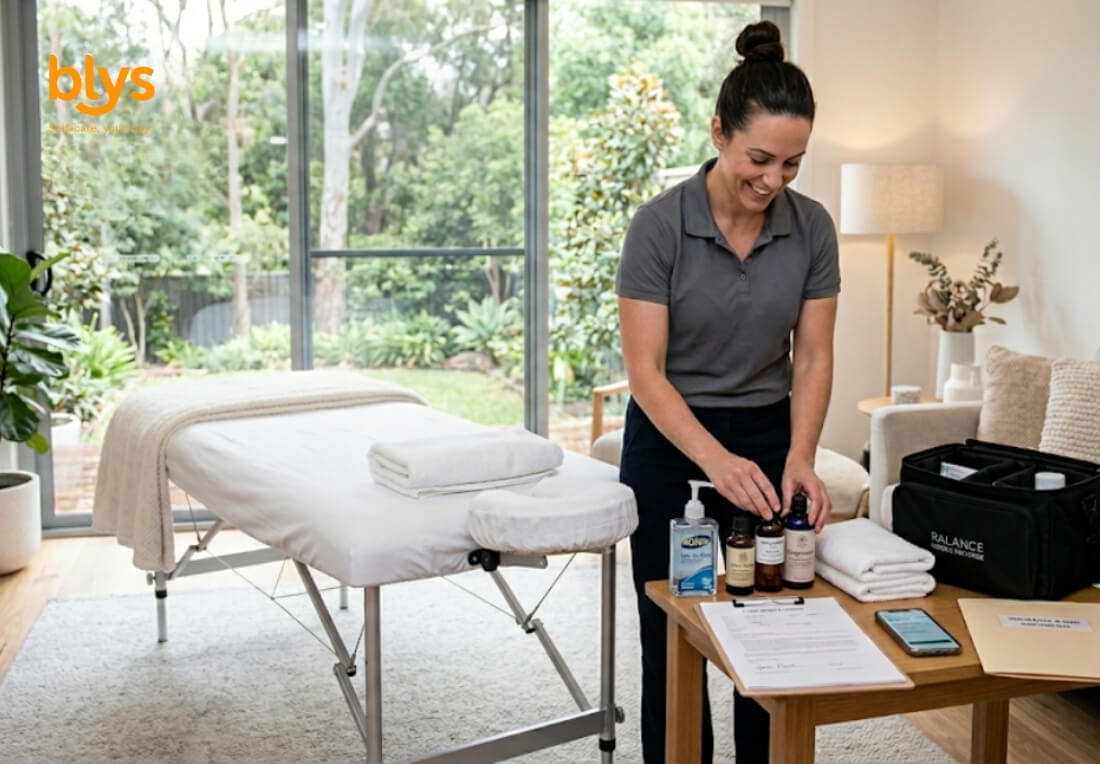
A professional mobile massage setup should include:
- Clean, well-maintained equipment that is easy to transport.
- Fresh draping, towels, and linens for every client.
- Professional-grade oils, lotions, or balms with allergy checks.
- A clear intake and consent process before the session starts.
- Secure client notes and session records for future reference.
When you arrive, your setup should feel organised, calm, and respectful of the client’s home. A brief verbal consultation before the session helps confirm pressure, focus areas, and any changes since the intake form. These small habits build trust, support compliance, and help turn first-time bookings into long-term mobile clients.
How Does Working Through Blys Support Mobile Therapist Compliance In Canada?
Working through Blys means holding current professional indemnity and public liability insurance and being registered with a recognised professional body. This process is what lets Blys connect clients with insured, professional therapists who’ve already met the platform’s standards, and meeting these requirements yourself is what gets a profile in front of actual bookings in the first place.
Knowing what clients typically expect from an at-home appointment helps in structuring sessions to meet that standard from the very first booking, and the full body massage guide breaks down how a mobile session is generally expected to run from start to finish.
Working through Blys can support mobile therapists with:
- Client connections for at-home massage bookings.
- Booking schedules and appointment details.
- Secure payment processing.
- Client communication before and after sessions.
- A more organised way to manage mobile work without building every system alone.
Working through Blys does not replace your own professional obligations. Your provincial registration, insurance, CRA reporting, and professional conduct remain your responsibility. But if you want to start a massage business at home in Canada and build your client base with less admin pressure, Blys gives you practical support for a more consistent mobile practice.
What Should You Have In Place Before Your First Mobile Booking In Canada?
Starting a massage business at home in Canada means getting clear on your provincial requirements first. In Ontario, BC, and several Atlantic provinces, that means registering with your provincial college and using the RMT title only once formally registered.
In unregulated provinces, secure your insurance, handle your CRA registration, and align with a recognised professional association. Wherever you are based, the trusted therapists who build strong practices are the ones who get their intake process, cover, and credentials in order before their first booking.
Providers working through Blys are held to consistent standards regardless of province, and the platform handles the client-matching and administrative side of mobile practice. Explore mobile massage near you to see how the platform works, or look into expanding your skillset with in-demand services like hot stone massage to broaden your appeal and differentiate yourself in a growing market.