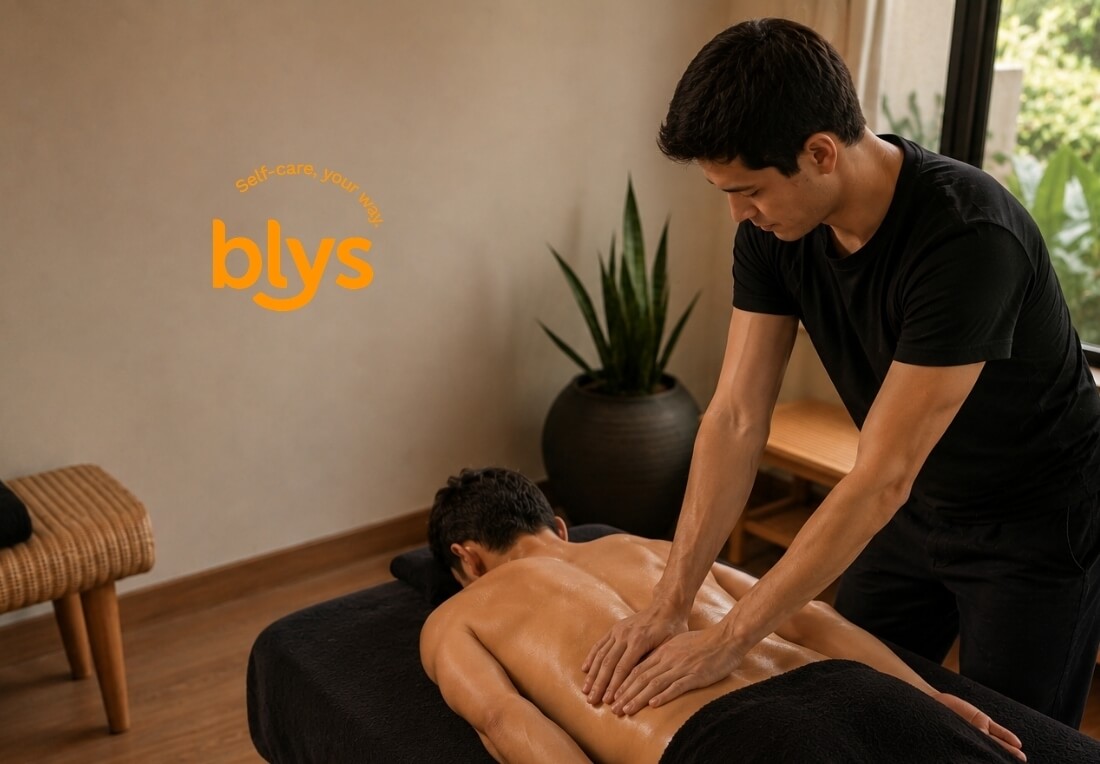
There is a specific reason lomi lomi massage techniques produce a different result in the body than regular massage, and it is not just that the strokes are longer. The forearm instead of the hands, the unbroken continuity of contact, the rhythmic breathing that most people do not notice until they realize they have been matching it for twenty minutes, and each of these is doing something specific to the soft tissue and the nervous system, and understanding what that something is makes the experience considerably less mysterious. It also makes it considerably more convincing as a reason to book one.
The Forearm Stroke: Why the Technique Uses the Arm, Not Just the Hands
The use of the forearm is the most distinctive physical feature of lomi lomi massage techniques, and the reason for it is mechanical rather than stylistic.
Why Forearm Lomi Lomi Contact Changes What the Tissue Receives
A hand applying pressure to muscle covers a relatively small surface area and concentrates force in a narrow zone. The forearm covers far more surface area, typically four to six times as much, and distributes the same force across a wider contact. This changes what the tissue underneath experiences in two important ways.
First, the broader contact prevents the nervous system from registering the pressure as a threat. Concentrated pressure on a tight muscle triggers a guarding response where the muscle braces before it releases, which limits how deeply the tissue actually lets go. Wider contact does not trigger the same response, which means the muscle releases more readily and at a greater depth than it would under hand pressure of equivalent force. This is one of the reasons people often describe lomi lomi as surprisingly deep despite the pressure not feeling aggressive.
Second, the forearm delivers pressure in a wave rather than a point, which means the tissue along the entire length of the stroke is responding at the same time rather than sequentially. The effect is more like being pressed through than being worked on, which sounds like a small distinction until you notice that one produces a completely different sensation in the body.
How Therapists Use the Forearm Differently Throughout a Session
The forearm is not used as a single rigid contact. Therapists shift between the inner forearm, the outer forearm, the back of the forearm, and the elbow depending on the area being worked and the depth required. The inner forearm is softer and more adaptable, suited to broader areas and lighter work. The outer forearm is firmer and more specific. The elbow, used carefully, delivers concentrated pressure to particular points without the prolonged load that can make pointed elbow work feel aggressive in other styles.
A skilled lomi lomi therapist is making these adjustments continuously throughout the session, which is part of why the technique looks simple from the outside and is considerably more demanding to execute well than it appears. This is also why watching someone receive lomi lomi from across the room and thinking you could replicate it is a reliable path to a much shorter session than anyone intended.
Why Continuous Movement Matters: The Mechanics of Unbroken Contact
Understanding how lomi lomi massage is done requires understanding what the breaks in a standard massage are actually doing, and why removing them changes the outcome.
What Happens When Contact Stops
In most massage styles, the therapist finishes one area, repositions, adjusts their draping, and begins the next area. The recipient’s body registers each of these transitions as a moment of completion, and the nervous system uses them to partially resurface. The muscle that was beginning to release tightens slightly during the gap before the next stroke begins, meaning the next stroke is starting partly from scratch rather than building on the release the previous one achieved.
Lomi lomi strokes flow from one area to the next without lifting contact, and the tissue response builds increasingly rather than resetting between strokes. By the time the session reaches an area for the third or fourth pass, it is not encountering the same muscle that was there at the beginning. It is encountering a muscle that has been progressively releasing for however long the session has been running, and which is equally more available to deeper work than it would have been if each pass had been preceded by a gap.
This is also why lomi lomi produces a different result at 90 minutes than it does at a 60-minute session, not just in coverage, but a qualitatively different depth of release available in the later part of the session that the earlier part made possible.
Lomi Lomi Stroke Techniques: How Direction and Pressure Vary Within Continuity
The continuity of lomi lomi does not mean uniformity. Within an unbroken sequence of strokes, a skilled therapist is varying direction, speed, pressure, and the part of the forearm in contact with the tissue, all without the recipient noticing a pause in the movement. The strokes follow the lines of the muscle, meaning along the length of a muscle rather than across it, which encourages the fibers to release in the direction they run rather than being compressed across their grain.
Pressure varies organically within each stroke based on what the therapist feels under their forearm. Areas of tension receive longer, more deliberate contact. Areas that have released receive lighter, integrating passes. The session is not following a fixed sequence but responding continuously to the tissue, which is one of the things that makes an experienced lomi lomi therapist’s session feel different from a newer practitioner’s even when both are applying the same basic technique.
How Lomi Lomi Therapists Use Rhythm and Breathing
The rhythmic quality of lomi lomi is not incidental to the technique but structural, and it produces specific effects in both the therapist and the recipient.
What the Rhythm Is Actually Doing
The tempo of lomi lomi strokes is typically slower than Swedish massage and more consistent throughout. Most experienced practitioners develop a rhythm that stays relatively constant across the session, varying slightly with the area being worked but maintaining an overall pace that the recipient’s nervous system can stop tracking because it stops changing.
This is the mechanism behind the flow state that lomi lomi reliably produces. The brain is attentive to variation, designed to notice what is different, because difference is what requires response. A consistent rhythm provides the brain with nothing new to attend to, and at some point the monitoring system stops actively monitoring and the body settles into a different kind of rest than is available through effort or intention alone. The rhythm does this without asking. You just end up there. Most people find this out approximately thirty minutes in, when they attempt to recall what they were thinking about before the session started and cannot. It is what the experience of a lomi lomi session consistently produces in people who come in expecting something like a regular massage.
Why Therapists Coordinate Their Breathing With the Strokes
Many lomi lomi practitioners time their breathing to the rhythm of their strokes, exhaling on the longer outward passes and inhaling on the return. This is not visible to the recipient, but its effects are. The therapist’s movement becomes more grounded and fluid when it is coordinated with the breath, and that quality transmits through the contact in ways that are difficult to describe precisely but that most recipients notice as a difference in the feel of the session compared to massage where the practitioner’s breathing and movement are unrelated.
It is the difference between being worked on and being moved with, and most people can feel it without knowing what they are feeling.
What Lomi Lomi Techniques Do to Muscle and Fascia Specifically
The physical effects of lomi lomi technique on the soft tissue are distinct from what regular massage produces, and worth understanding if you are trying to decide whether lomi lomi is the right approach for what you are dealing with.
How Lomi Lomi Releases Muscle Differently
The combination of broad forearm contact and continuous movement allows lomi lomi to release muscle tension through a mechanism that is closer to prolonged passive stretch than to the compression-and-release cycle of most massage techniques. The physical benefits of lomi lomi come from this mechanism more than from any other single feature of the technique.
The muscle is being held under broad, distributed load as the forearm travels along its length, and the nervous system eventually responds by reducing the protective tension that was keeping the muscle contracted.
This is why lomi lomi works well for the kind of muscle tension that has not responded to deeper, more focused work. The muscle was not releasing under direct pressure because the nervous system was preventing it. The forearm stroke gets around that by approaching from a different angle, one that is broader, less concentrated, and held for longer, and the tissue responds to the approach it was not braced against.
How Lomi Lomi Addresses the Fascia
The fascia, the connective tissue wrapped around and through the muscle, responds to slow, held load rather than rapid movement. The forearm strokes of lomi lomi, moving along the fascial lines at a consistent pace with consistent contact, create exactly this kind of held load across a broad area of the body in a single session.
This is one of the reasons lomi lomi is effective for people who carry tension not in one obvious problem area but distributed across the whole body as a kind of background tightness that never fully resolves. The technique is not addressing one tight spot at a time. It is working the whole fascial network with each stroke, and the cumulative effect of 90 minutes of that is considerably different from what a focused approach to individual tight spots achieves.
This distributed approach is also connected to why lomi lomi can produce an emotional response, the technique is not working on one problem area, it is working on the whole system. Most people who book for the first time because of one specific problem area leave having noticed six things they did not know were there.
What the technique is specifically doing to produce that experience is something most people understand better after the session than before it, and both are worth having.
Book a lomi lomi massage at home through Blys, available 7 days a week, 6 am to midnight across Canada.