Reflexology for stress is one of the most searched reasons people first look into reflexology, and it is also one of the areas where the question does reflexology work has a more satisfying answer than usual. Ask someone what it involves and you will usually get something along the lines of “feet, I think, and it is supposed to be relaxing.” Which is true, as far as it goes. But the reason it works for stress and tension is more interesting than that, and understanding it is often the difference between someone who tries reflexology once out of curiosity and someone who starts booking it regularly.
This is what reflexology actually is, what the research says about reflexology stress relief, and how to know if it is worth trying.
What Reflexology Is (Without the Jargon)
Foot reflexology is a therapy in which a practitioner applies firm pressure to specific points on the feet, and sometimes the hands and ears, with the aim of producing a response in the body beyond the foot itself. The theory is that the foot contains a map of the whole body, with each area of the foot connected to a specific organ, gland, or system. Pressing the right point is supposed to affect the related area of the body. This is what makes reflexology different from a foot massage, one works the muscle in the foot, the other uses the foot as a map to reach everything else.
This sounds implausible to most people before they try it, and convincing to most people after. That is not quite evidence, but it is consistent enough to be worth noting.
Why Stress Is the Most Common Reason People Book Reflexology
Stress affects the body in ways that are physical, not just psychological. It raises cortisol, tightens muscles, disrupts sleep, slows digestion, and keeps the nervous system running in a state of low-level alert that was designed for short bursts of danger rather than six months of a difficult year. Most stress treatment approaches the problem through the mind: therapy, mindfulness, breathing exercises. Reflexology comes at it from the other direction, working on the body’s stress response through the nervous system rather than through conscious thought.
For people who have tried the thinking-based approaches and found that knowing they should be less stressed does not actually make them less stressed, this is where reflexology opens doors.
The Theory Behind Reflexology Pressure Points
The framework underlying reflexology is called zone therapy, developed in the early twentieth century and later refined into the specific foot map that reflexologists use today. The body is divided into ten vertical zones running from the head to the toes, and any point within a zone can theoretically affect everything else in that zone. This is why pressing a point on the heel can be associated with the lower back, and why the big toe is the primary zone for the head and brain.
Does It Actually Work That Way?
The honest answer is that nobody has fully proved the exact physical pathway through which reflexology produces its effects. What has been shown, across a reasonable body of research, is that the effects themselves are real: measurable reductions in cortisol, heart rate, and self-reported stress and anxiety following reflexology sessions. Whether this is because the foot map theory is correct, or because the parasympathetic nervous system responds to firm pressure on the feet in ways that reduce the overall stress load, or some combination of both, is still being worked out.
The research is not conclusive enough to make strong claims. It is consistent enough to take seriously. A 2011 review of reflexology studies found positive results across a range of outcomes including anxiety and stress reduction, and subsequent reflexology benefits research has continued in the same direction.
What a Reflexology Session Actually Involves
For someone who has never tried it, the main thing to know is that a reflexology session is considerably more structured than a foot massage and considerably less medical than it sounds.
How It Starts
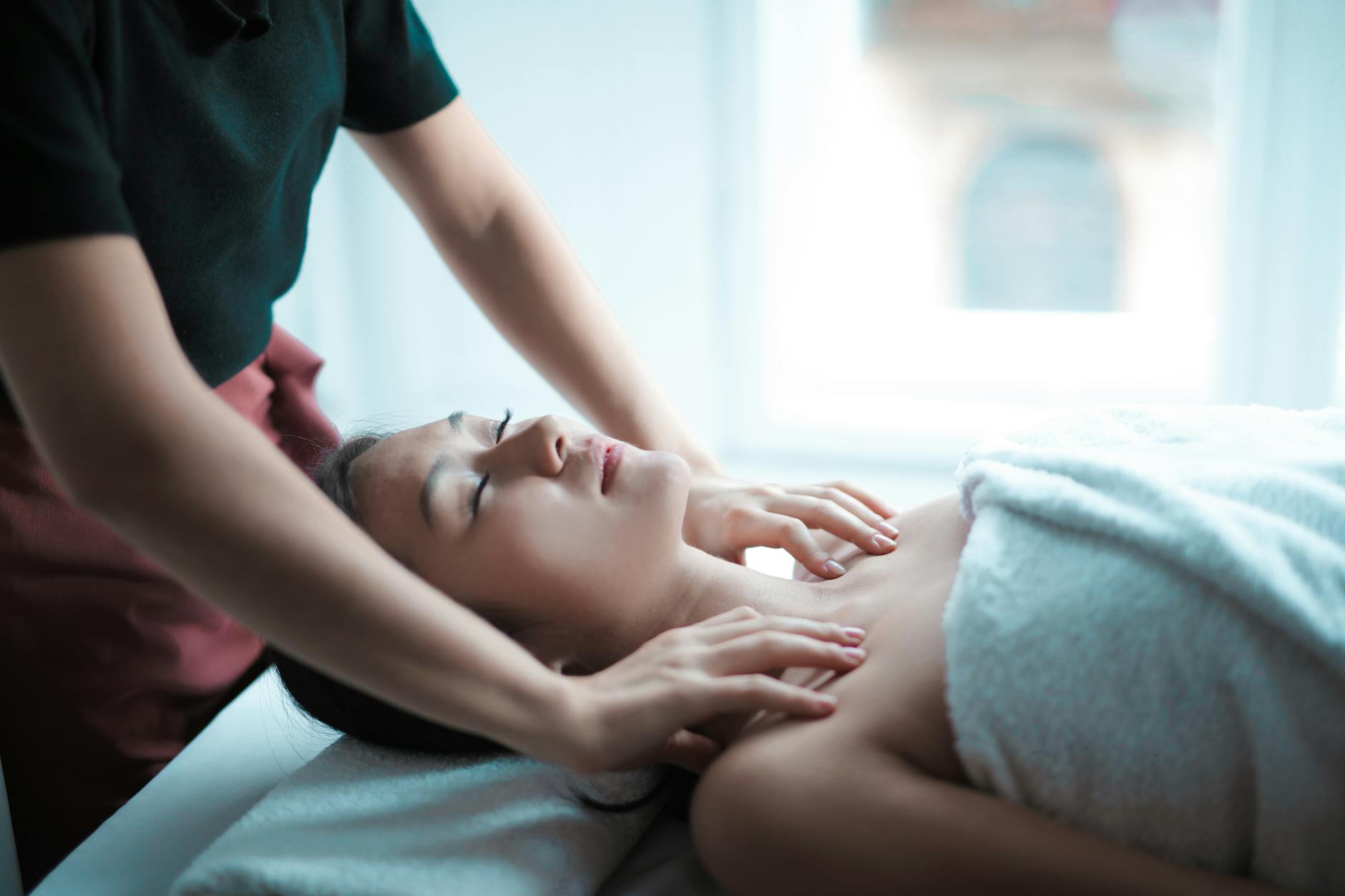
The session begins with the therapist asking about your health history and what you are hoping to address. For stress, the focus is usually the solar plexus point in the arch of the foot, the adrenal gland reflex, and the head and brain zones in the big toe, the areas most closely associated with the nervous system and stress response. You stay fully clothed except for the feet, lie on a massage table, and the therapist works through the full foot map while spending additional time on reactive areas.
What You Feel During the Session
The pressure is firm and specific rather than the broad strokes of a foot massage. Some points feel tender when pressed, which reflexologists call an “active” point, and that tenderness reduces during the hold in a way that most people find distinctly satisfying. The overall experience sits somewhere between focused bodywork and deep relaxation, and most people are surprised by how strongly they respond to something happening only in their feet.
What Happens Afterward
The most common post-session experience is a noticeable sense of physical looseness and mental quiet that most people describe as different from ordinary relaxation: heavier, slower, more complete. It is one of the clearest arguments for booking a session at home, the post-session state is considerably more useful when you do not have to immediately get in a car. Some people feel tired and benefit from resting rather than immediately returning to activity. This is the body’s parasympathetic nervous system doing what it was just encouraged to do, and it often lasts longer than the session itself.
What Reflexology Can Realistically Help With
Being honest about this matters, because reflexology has both enthusiastic advocates and enthusiastic sceptics, and neither group is always telling the whole story.
What the Research Supports
The strongest evidence for reflexology is in stress, anxiety, and sleep quality. Multiple randomized controlled trials have found that regular reflexology reduces anxiety scores, lowers cortisol levels, and improves self-reported sleep in people dealing with chronic stress. These results are consistent enough across different populations and study designs to be taken seriously as a real effect rather than placebo.
For stress specifically, the evidence suggests that a course of regular sessions produces a more durable shift than a single session, as the nervous system appears to respond to the repeated input by gradually lowering its resting alert level, which is exactly what chronic stress raises.
What It Cannot Do
Reflexology is not a medical treatment. It will not cure a diagnosed anxiety disorder, resolve the structural cause of chronic pain, or substitute for professional mental health support when that is what is needed. What it does is reduce the physical dimension of stress, the tight shoulders, the shallow breathing, the cortisol, in a way that can make everything else, including other treatments, work better.
Reflexology also has a well-researched case for migraine and headache relief, which often has a stress component that the same session addresses alongside the headache pattern.
Booking one session and expecting a transformation is also the wrong approach. The research on reflexology for stress consistently involves regular sessions over several weeks. A single session tells you whether it works for you. A course of sessions is where the results build.
Who Should Try Reflexology for Stress
The honest answer is: anyone who has been meaning to do something about their stress levels and keeps not getting around to it, because the options available either require effort they do not have or a scheduling commitment that does not fit their life.
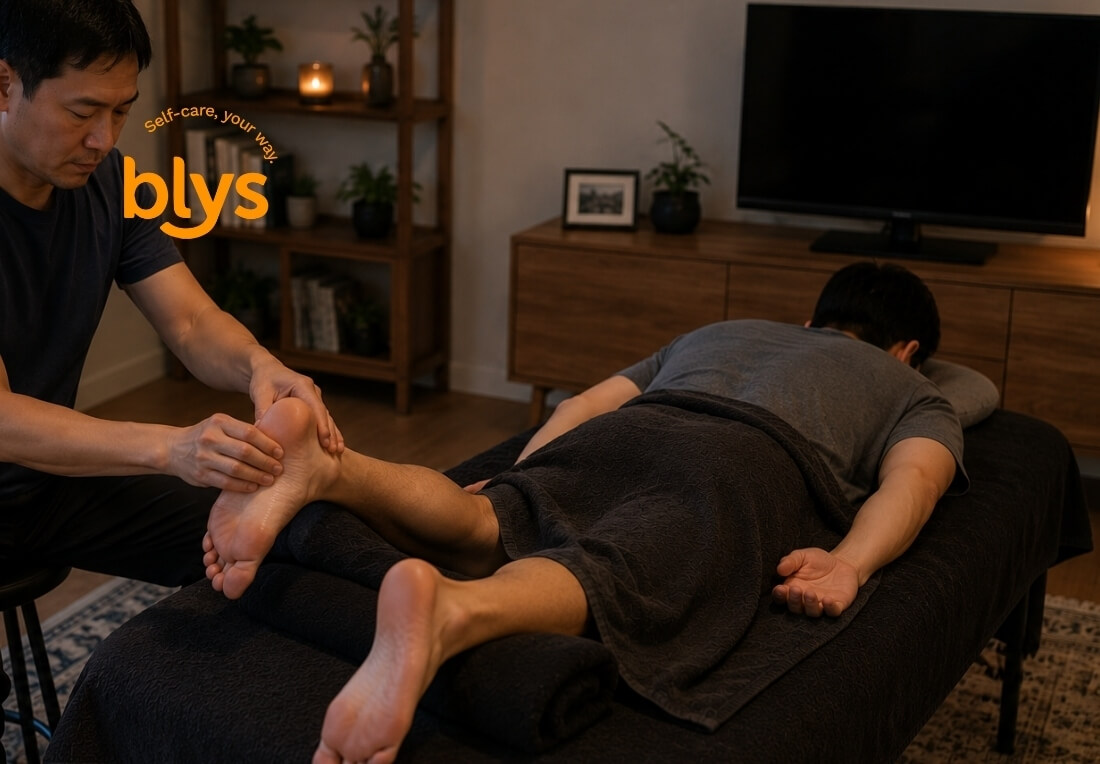
A trained therapist comes to you, sets up, works, and leaves. The post-session state, the slightly floaty and unusually quiet one, is yours to keep without first having to drive anywhere. For stress specifically, removing the logistical friction from the treatment is not a small thing. It is often the only reason the treatment actually gets booked.
The stress is going to be there either way. The question is whether the body gets any help carrying it. Book a reflexology session at home through Blys, available 7 days a week, 6 am to midnight across Canada.