 Self-care for nurses is one of those things that makes obvious sense until you actually try to fit it into a week. You finish a 12-hour shift, your lower back is sore, your shoulders are carrying tension that built over the course of the day, and you know recovery matters then the advice you find online tells you to join a morning yoga class or book a weekend wellness escape. As if the challenge were inspiration, not access.
Canadian healthcare workers operate under real pressure. Staffing shortages, long shift runs, and the physical and emotional demands of patient care create a recovery need that generic wellness content consistently underserves. The barrier is not motivation. It is that the options available rarely fit around how healthcare schedules actually work.
This post is built for that gap. Everything here is practical, home-based, and designed to work around irregular hours, unpredictable finish times, and the straightforward preference for staying put when you finally have time to yourself.
Why Self-Care Is Harder When You Work in Canadian Healthcare
It helps to be specific about the obstacles, because standard advice to “prioritize your wellbeing” consistently sidesteps them.
Rotating shifts disrupt the circadian rhythm, which affects sleep quality, mood, and physical recovery even on days away from work. Research published on PubMed connects chronic occupational stress in healthcare to burnout, poor sleep, and declining physical health outcomes especially when recovery strategies are difficult to access consistently. These pressures are felt across every province, with no sign of the underlying workload easing.
The physical dimension accumulates quickly. Sustained standing, patient repositioning, and repetitive movement load the lower back, hips, shoulders, and legs in specific ways that rest alone does not resolve. Active recovery and regular soft tissue work make a real difference but they require either the energy to go somewhere or a professional who comes to you.
Nurse wellbeing is not just a personal matter it has system-wide consequences. Nurses who recover well perform better, stay in the profession longer, and are more resilient across difficult shifts. Nurse self-care is occupational maintenance, and it deserves practical solutions to match.
Self-Care Ideas That Actually Fit a Nursing Schedule
The self-care ideas for nurses that work have one thing in common: low friction. Each option works at home, scales to short windows, and does not require advance planning or a specific energy level to access.
What Works in a 15–30 Minute Window
Short does not mean ineffective. These four techniques are evidence-backed and require nothing more than a shower, a floor, or a couch.
- Contrast hydrotherapy: Alternate warm and cool water in the shower to support circulation and reduce post-shift muscle soreness. Two minutes warm, 30 seconds cool, repeated two or three times. Free, no equipment needed, and works at midnight after a late shift just as well as any other time.
- Progressive muscle relaxation: Tense and release muscle groups deliberately from the feet upward. Sessions take around 15 minutes and evidence supports their effectiveness for reducing anxiety and improving sleep quality particularly valuable after night shifts when winding down is genuinely difficult.
- Box breathing: Four counts in, hold four, out four, hold four. This activates the parasympathetic nervous system and can be done anywhere: in the hospital car park before your shift, in a quiet moment before a shift ends, or lying on the floor at home. Under five minutes, free, and immediately effective.
- Targeted stretching: Ten focused minutes on the areas nurses load most lower back, hip flexors, calves, and upper trapezius adds up quickly when done consistently after shifts. A foam roller is helpful but not required. This does more for recovery than an hour of passive rest.
What to Do with a Few Hours at Home
When you have more time but still do not want to leave the house, the options expand considerably.
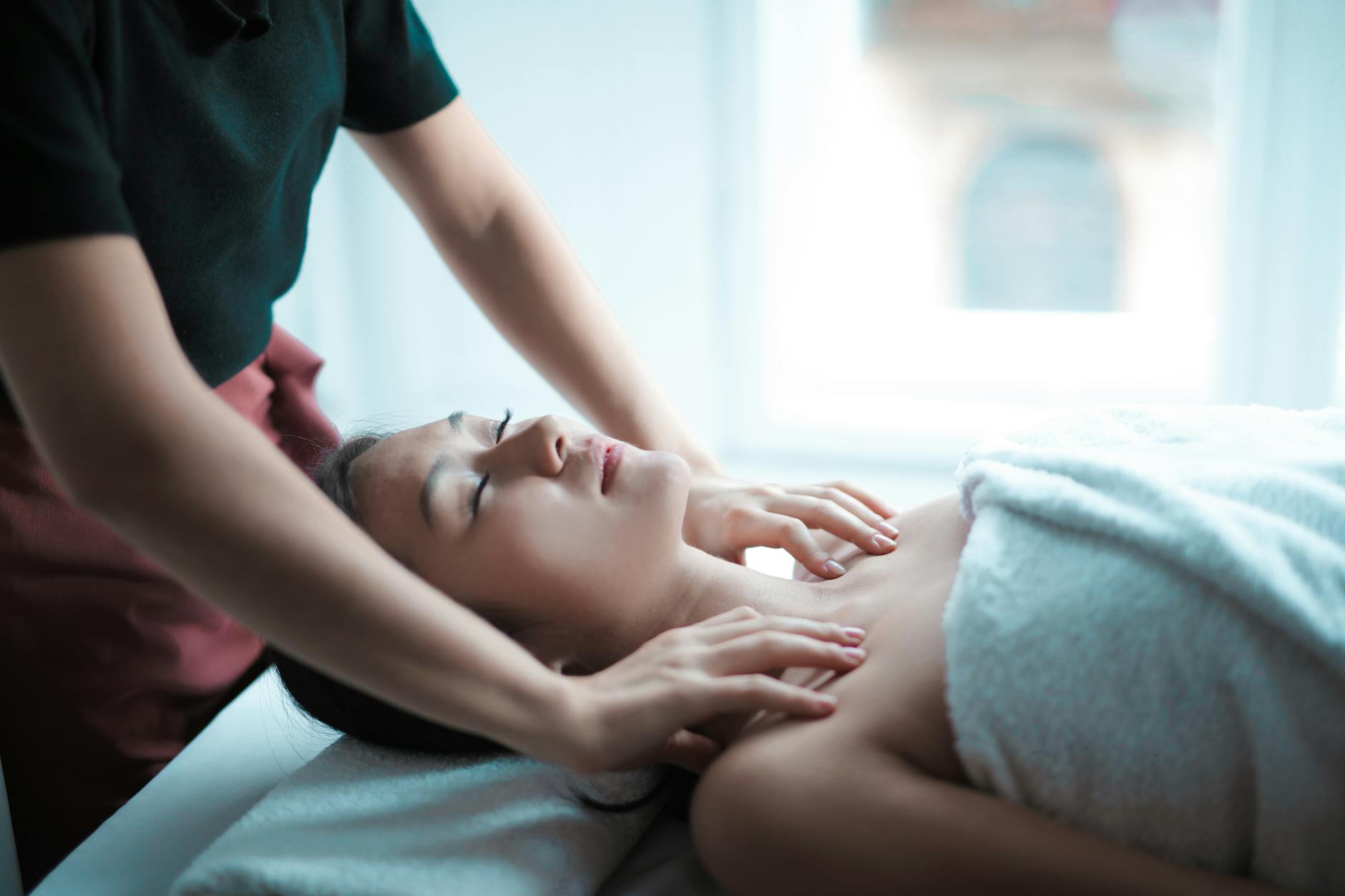
A home-based remedial massage booking targets the specific areas that shift work loads, rather than providing general relaxation. Providers you book through Blys are vetted, insured, and bring their own table, linen, and equipment directly to your door. No commute, no parking, no waiting room recovery in your own space, at a time that suits your schedule.
Proper hydration, nutrition, and time outdoors without a specific purpose are disproportionately valuable across a run of nights. Healthcare workers often manage other people’s recovery carefully while running their own energy low. Getting the basics right consistently may not be dramatic, but the compounding effect on how you feel is very real.
Why Getting Out to a Spa or Studio Rarely Works for Shift Workers
Traditional wellness venues are designed for people who know their schedule in advance. For nurses on rotating hospital rosters, the model breaks down at nearly every point.
Here is why that friction is real:
- Your shift finish time is not always predictable
- Your energy on a day off depends entirely on what the preceding shifts required
- Booking ahead assumes a predictable roster which most shift workers do not have
- Driving across the city after a night shift requires effort that is not always available
- Many venues close before your late shift ends
- Getting dressed, travelling there, and arriving on time each carry an energy cost that adds up fast after a heavy stretch
This is the barrier that underpins most of the reasons nurses skip self-care, and it is rarely addressed directly in wellness content. Understanding how burnout develops in healthcare workers makes it clear why reducing recovery friction matters more than adding new suggestions to a list you cannot practically access.
How At-Home Services Make Consistent Nurse Self-Care Possible in Canada
The insight most nurse self-care content misses is this: sustainability depends on friction, not motivation. When recovery is easy to access, available around unpredictable hours, and requires nothing except being at home, it actually gets done. When it requires planning, travel, and peak energy, it gets pushed to a better moment that rarely arrives.
At-home bookings through Blys flip the model: instead of you travelling to a service, a vetted, insured professional comes to you. Same-day and next-day availability exists across Canada, which suits the spontaneous free windows that shift patterns create. You finish earlier than expected, the evening is yours, and a trusted professional can be at your door within hours.
Providers you book through Blys bring everything they need. You set nothing up. The move from your uniform to a recovery session is as low-effort as it can be and that ease is exactly what makes a regular habit possible rather than an occasional intention.
For healthcare facilities and provincial health systems looking at structured wellbeing support for nursing staff, Blys corporate wellness programs bring expert providers to the workplace directly. The broader case for this approach is covered in the workplace wellness guide for healthcare workers.
Which Type of Massage Suits Nursing Recovery?
Not all massage works the same way, and for people doing sustained physical work, the distinction matters. Use this as a quick reference when deciding what to book.
| Massage Type | What It Focuses On | Best For Nurses Who… |
| Remedial | Specific areas of muscular tension and postural imbalance | Carry chronic tightness in the lower back, hips, or shoulders from sustained shift work |
| Deep Tissue | Deeper muscle layers and connective tissue | Have accumulated tension across multiple shifts that has not resolved with rest |
| Sports | Targeted therapeutic recovery and muscle function | Want focused work between physically demanding runs of shifts |
| Relaxation | Nervous system recovery and stress reduction | Need to decompress after sustained emotional and cognitive load on shift |
When you browse providers through Blys, you can filter by modality, read reviews from other local clients, and choose a professional who suits exactly what you need on a given day.
How to Make Nurse Self-Care a Habit, Not a One-Off
The most meaningful shift in self-care for nurses is not a new technique it is removing the barrier that makes practical options hard to use consistently. Short sessions done regularly outperform elaborate routines done occasionally. At-home access outperforms travel-dependent access for anyone working unpredictable hours, every single time.
Whether it is a ten-minute stretch after a shift, breathwork before sleep, or a remedial session booked for an evening that suddenly opened up these are the habits that hold. Not because they are elaborate, but because they are genuinely reachable on a nursing schedule.
When you are ready to make recovery a consistent part of your week, browse in-home wellness services near you and book around a roster that works for you.