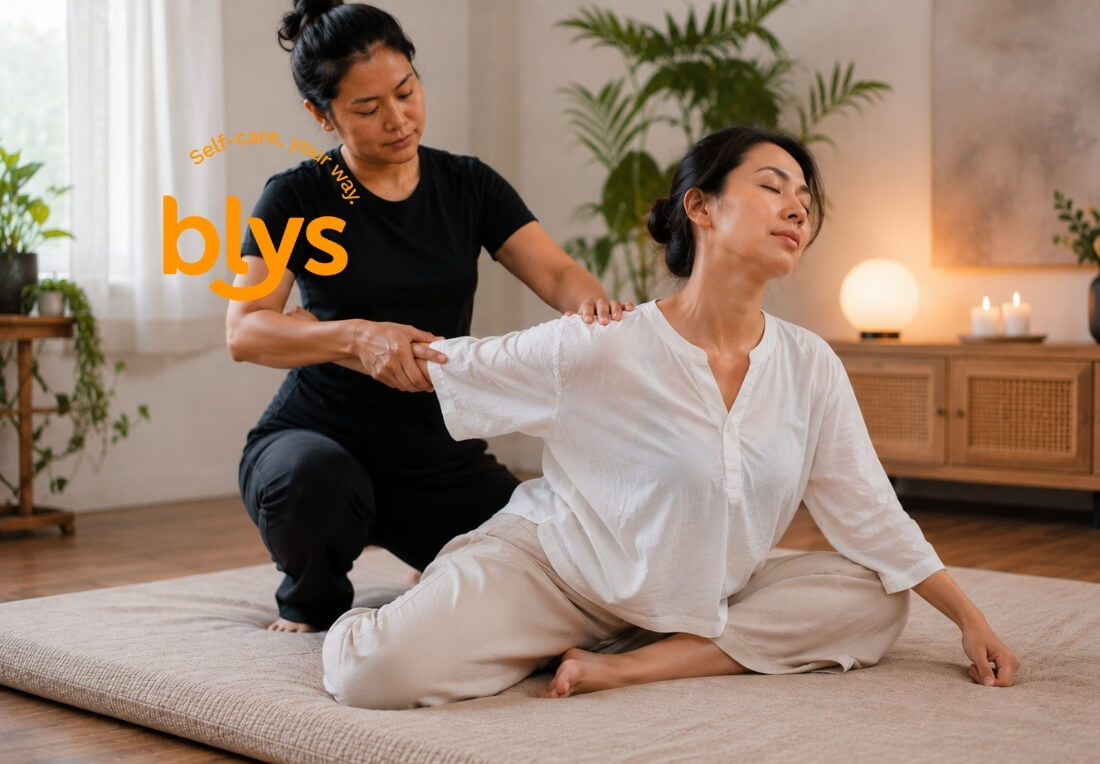
Both Thai massage and Shiatsu have been practiced for centuries, both work with the body’s energy system, and both are performed fully clothed on a floor mat. Beyond that, they work quite differently. If you have been trying to work out which one suits what you are looking for, here is a plain comparison of the two.
What is Thai Massage?
Thai massage is a full-body treatment that combines assisted stretching, joint mobilization, and acupressure along the body’s Sen energy lines, those traditional pathways through which energy is believed to flow, similar in concept to meridians in Chinese medicine.
Your therapist moves your body through a sequence of assisted stretches that take your hips, hamstrings, spine, and shoulders through ranges of motion that are difficult to reach independently, while applying rhythmic pressure along the energy pathways running through the same areas.
The experience is active. You move through multiple positions during the session: lying on your back, your front, on each side, and sometimes seated, with your therapist guiding every transition. Sessions are typically 60 to 120 minutes and cover the whole body systematically from feet to head. No oil is used, and you stay fully clothed throughout.
The result sits somewhere between a deep stretch, a yoga session, and a massage. People who have never tried it often describe it as unlike anything they expected, and then book again.
What is Shiatsu?
Shiatsu is a Japanese bodywork tradition that translates literally as “finger pressure.” Like Thai massage, it is performed fully clothed on a floor mat and works with the body’s energy system, in this case the meridian lines of traditional Chinese medicine rather than the Thai Sen lines. The two systems are different in their specifics but share the underlying idea that physical and emotional wellbeing depend on the free flow of energy through the body.
Where Thai massage is characterized by movement and stretch, Shiatsu is primarily a stationary pressure treatment. Your therapist applies sustained thumb, finger, palm, and elbow pressure to specific acupressure points along the meridians, holding each point until the tension releases. There is very little movement of the body compared to Thai massage, and no assisted stretching in the same active sense.
Shiatsu tends to produce a deep, meditative quality of relaxation, and practitioners often work with the emotional and energetic dimension of the body alongside the physical. It is a slower, quieter treatment than Thai massage, and the experience reflects that.
Key Differences Between Thai Massage and Shiatsu
The most practical way to understand the difference is through what each treatment actually does to the body.
Thai massage is movement-based. The stretch component takes joints and muscles through their full range, the mobilization work decompresses the spine and opens the hips, and the acupressure runs alongside rather than being the primary focus. If you leave a Thai massage session feeling physically longer and more mobile, that is why.
Shiatsu is pressure-based. The therapist works on specific points along the meridians, applying sustained pressure rather than guiding the body through movement. The result is a release of tension at those specific points and a calming of the nervous system, but without the mobility and flexibility gains that the active stretch component of Thai massage produces.
Both are clothed, both use floor mats, both work with energy pathways, and both can produce a profound sense of physical and emotional release. The difference is in the method and in what each is best suited to address.
When to Consider Shiatsu
Shiatsu tends to be the better fit when the goal is deep energetic or emotional release rather than physical mobility work, or when someone specifically resonates with the Japanese meridian tradition and the quieter, more meditative quality of the treatment.
It is also worth considering for people who have conditions that make joint movement or assisted stretching inadvisable.
Shiatsu is not currently available through Blys, so if it sounds like the right fit, you would need to find a practitioner through a Shiatsu association or directory in your area. If you are still undecided, the overlap between the two traditions is significant enough that most people who are drawn to Shiatsu also respond well to Thai massage, and the mobility benefits of Thai massage give it a practical advantage for most everyday concerns.
When is Thai Massage the Right Choice?
Thai massage tends to be the better fit when mobility, flexibility, or full-body tension are the primary concern.
If you spend most of your day sitting, carry stiffness in the hips or spine, want to improve your range of motion alongside the tension relief, or are an athlete looking to maintain flexibility as part of a regular routine, Thai massage addresses all of these more directly than Shiatsu does.
It also suits people who want an active, engaging treatment rather than a passive one. Thai massage requires nothing from the client beyond being present and breathing, but the experience is dynamic enough that people who find passive lying-still treatments difficult tend to prefer it.
You can book a mobile Thai massage session through Blys, with a local therapist coming to your home, hotel, or workplace fully equipped. Bookings are available 7 days a week, 6 am to midnight, so you really just have to choose a time that suits your schedule and relax right after, without having to go through the salon or clinic traffic.