First time booking a Thai massage? It helps to know what you’re walking into. Thai massage is one of the most distinctive bodywork experiences available, and it works almost nothing like the table massage most people are familiar with. This guide covers exactly what happens during a session, what to wear, how pressure works, and what a mobile session looks like at home.
What to Wear to a Thai Massage
Thai massage is performed fully clothed, which surprises most people who have only had table massage before. You do not undress, and no oil is used on the skin.
Wear loose, comfortable clothing that allows your body to move freely. Soft tracksuit pants, yoga pants, or shorts work well on the bottom. A loose t-shirt or long-sleeved top works on top. Avoid jeans, tight trousers, or anything with a stiff waistband, as these restrict the stretching that is central to the treatment.
What Actually Happens During a Thai Massage
A Thai massage session follows a systematic sequence that moves through the whole body from feet to head. Here is what to expect at each stage.
The setup
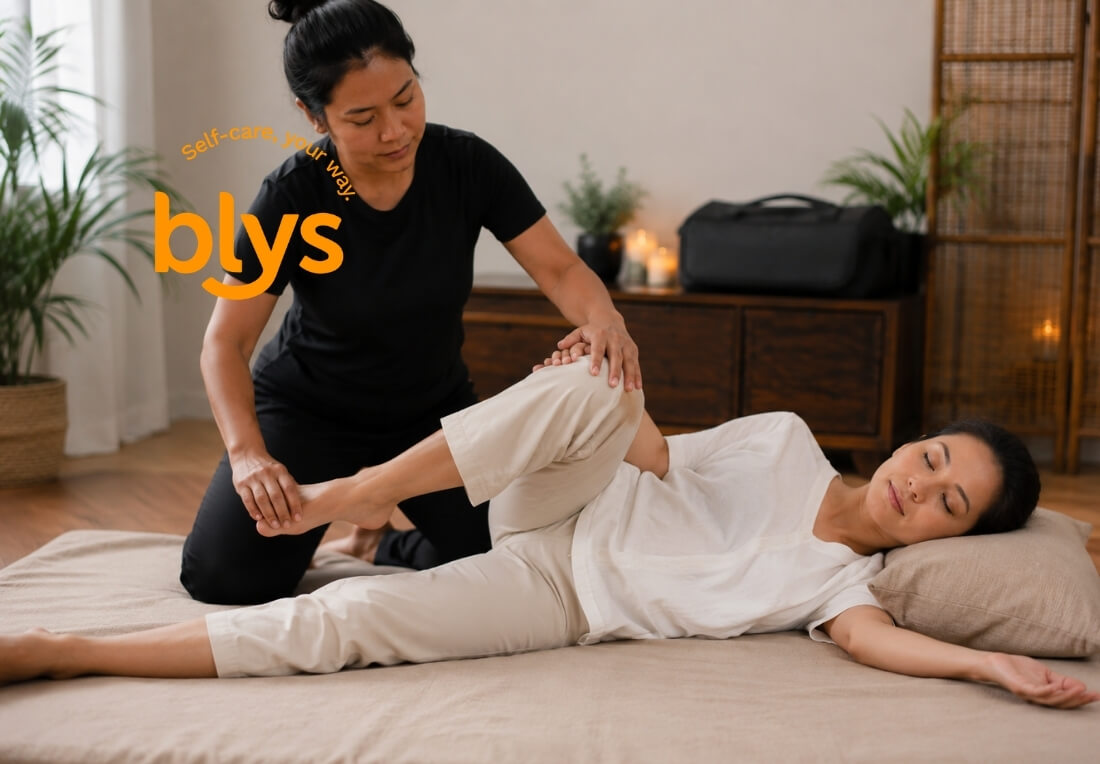
For a mobile session, your therapist sets up a professional Thai massage mat on the floor of your chosen room. You need a clear floor space of approximately 6.5 x 10 feet. Unlike table massage, the floor mat allows the therapist to use their body weight and position for the stretching and compression work throughout the session.
How the session progresses
The session begins at your feet. Your therapist applies rhythmic thumb pressure along the energy pathways of the legs, alternating between compression and gentle stretching of the feet, ankles, and calves. This opening sequence establishes the rhythm and pressure level of the session and gives your body time to begin releasing.
From the legs, the work moves upward through the hips, lower back, and abdomen, then to the upper body, shoulders, arms, and neck. At various points throughout, your body is guided into assisted stretches. These include hip rotations, hamstring and quad stretches, spinal twists, shoulder openers, and back extensions. In each stretch, your therapist holds the position while applying acupressure to the muscles being lengthened, then releases and moves to the next.
You will move through several positions during the session: lying on your back, lying on your front, side-lying on each side, and sometimes seated. Your therapist guides these transitions and positions your body throughout.
The session ends at the head and neck, where compression and gentle mobilization work is applied before the therapist signals the end.
How long does it take
A standard Thai massage session runs for 60, 75, 90, or 120 minutes. A 60-minute session covers the main areas of the body but moves through the sequence more quickly. A 90 or 120-minute session allows more time at each area and tends to produce a more thorough outcome, particularly if you carry significant tension or want the full stretch sequence.
How to Communicate During a Thai Massage
Communication is more active in Thai massage than in most other treatments, and it is genuinely useful rather than just polite.
Pressure
Thai massage pressure ranges from light to very firm. Your therapist will begin at a moderate level and adjust based on your feedback and the tension they feel in the tissue. If the pressure is too strong, please say so. If you want more, please say that too. Neither is unusual. The goal is pressure that feels productive, not pressure you need to endure.
Thai massage can be intense, particularly in the hip flexors, hamstrings, and areas of chronic tightness. There is a difference between the discomfort of pressure on a tight muscle that is releasing and pain that feels wrong. The first is expected and useful. The second is a signal to communicate immediately.
Stretches
If a stretch feels too strong or takes a joint further than is comfortable, please let your therapist know. They will ease off or modify the position. Your therapist will also cue you to breathe during stretches, as exhaling into a stretch allows the muscle to release further than holding the breath.
Anything your therapist should know
When you book through Blys, you can add notes about any injuries, surgeries, or areas of pain as part of the booking details. Your therapist reviews this before arriving, so they come prepared. Thai massage involves active stretching and joint movement, and conditions like hip replacements, recent knee injuries, herniated discs, or pregnancy affect how the session is approached. It’s worth being specific in your notes so your therapist can plan accordingly.
What a Mobile Thai Massage Setup Looks Like
Booking a Thai massage through Blys means your therapist comes to you with everything needed. Here is what to expect when they arrive.
Your therapist arrives with a professional Thai massage mat and any additional equipment needed for the session. They will assess the space and set up the mat in the clearest available area. The setup takes around two to five minutes.
You need a clear floor space of approximately 6.5 x 10 feet. A living room with furniture pushed back works well. A spare bedroom or study with the furniture moved to the sides also works. The room should be at a comfortable temperature, as your body will cool slightly during the session since no oil or draping creates warmth the way table massage does.
Once the session is complete, your therapist packs down and leaves, and amazingly for you, you are already home.
What to Do After a Thai Massage
Most people feel a combination of deeply relaxed and physically lighter after Thai massage, with an increased sense of movement through the body. Here is how to make the most of the session in the hours that follow.
First things first, please drink water. Thai massage increases circulation and stimulates the movement of fluids through the body, and staying hydrated supports the recovery process and helps reduce any residual soreness.
Then, take it easy for the rest of the day if you can. Avoid intense exercise in the hours immediately following a session. The muscles and connective tissue have been worked through their full range and benefit from rest rather than load.
Some people experience mild muscle soreness the following day, similar to how the body responds after a good stretch or yoga session. This is normal and typically resolves within 24 to 48 hours.
Book a Thai massage at home through Blys, available 7 days a week, 6 am to midnight across the US.