Prenatal clients across Canada are increasingly looking for massage at home and it makes complete sense. Getting to a clinic in the third trimester is physically demanding. Travelling across town for a 60-minute appointment can feel like more effort than it’s worth. And lying face-down on a standard table isn’t appropriate for most of pregnancy. As a mobile prenatal massage therapist, you’re offering something that genuinely fits what clients need and where they are most comfortable.
This guide is for Registered Massage Therapists and massage practitioners who want to build or grow a mobile prenatal and postpartum practice. We cover the portable equipment that actually works, what registration and insurance requirements apply to mobile work in Canada, how to handle pre-session communication, and how Blys connects professional mobile therapists with clients actively searching for at-home sessions.
If you’re still working through the broader career path, our prenatal massage therapist career guide covers training and scope before getting into the operational detail here.
What Equipment Does A Mobile Prenatal Massage Therapist Actually Need?
Setting up for mobile prenatal massage requires more planning than a standard mobile kit. The right gear protects your client, makes your work effective and comfortable, and signals expertise the moment you arrive.
Portable Table And Prenatal Bolstering
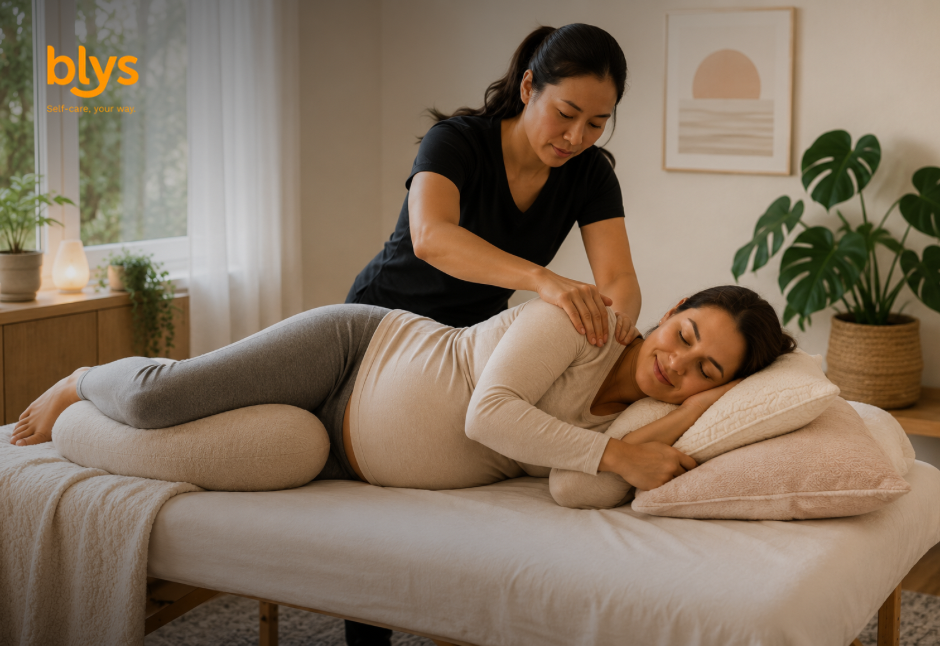
Look for a folding portable table that is lightweight (under 14 kg is a workable target), structurally sound under load, and fits comfortably in the trunk of a standard car. For prenatal massage, a proper side-lying bolster system is essential. A complete set includes a full-length body pillow or wedge bolster, a smaller pillow for between the knees, and ankle support.
Avoid tables that advertise a prone “pregnancy cut-out.” Positioning a client face-down places pressure on uterine ligaments and abdominal structures and is generally contraindicated from the second trimester onward. Side-lying is the current best-practice standard, and a good bolster set makes it genuinely workable and comfortable for both of you.
The Rest Of Your Mobile Kit
Beyond the table and bolsters, a few essentials round out a professional mobile kit, each one earns its place on every visit:
- Unscented or lightly scented massage oil. Several essential oils are contraindicated during pregnancy; when in doubt, use a plain carrier oil and let the client guide any fragrance preferences.
- Extra linens and a waterproof table protector. Non-negotiable for professionalism and hygiene.
- A bolster carry bag or integrated case so you’re not making three trips from the car.
- A digital or paper intake form that covers gestational age, pregnancy risk status, and relevant health history.
Your setup goal: clean, professional space ready within 10 minutes of arrival. Clients notice when a therapist arrives prepared. A tidy, well-organised kit sets the tone before the session has even started.
Do Mobile Prenatal Massage Therapists Need Registration And Insurance In Canada?
Canada has one of the most clearly defined regulatory environments for massage therapy in the world and it varies by province.
In British Columbia, Ontario, Newfoundland and Labrador, New Brunswick, and Prince Edward Island, massage therapy is a regulated health profession. RMTs in these provinces are regulated by bodies such as the College of Massage Therapists of Ontario (CMTO) or the College of Massage Therapists of BC (CMTBC). Working without registration in these provinces is not just unprofessional it is a legal issue. If you are practising in one of these provinces, ensure your registration is current and that your scope of practice explicitly covers prenatal massage.
In provinces where massage therapy is not regulated, professional association membership and insurance remain the expected standard.
For mobile prenatal massage specifically, confirm your insurance covers:
- Prenatal and postpartum massage (some policies carry explicit exclusions for these client groups)
- In-home and mobile sessions
- Public liability for property damage during a session
Public liability cover is particularly important when working in clients’ homes you are responsible for what happens in their space. Research published via PubMed supports the measurable benefits of prenatal massage for reducing anxiety and musculoskeletal discomfort, and thorough professional coverage is what lets you deliver those benefits confidently.
Providers who list on Blys go through a vetting process that confirms current registration and insurance before they are approved to take bookings.
How Should You Communicate With Prenatal Clients Before A Mobile Session?
Pre-session communication is where professional mobile practice is built and where you prevent problems before they arrive.
Thorough health screening in advance. Send a detailed intake form before the appointment, not on the day. You need to know gestational age, whether the pregnancy is high-risk, and whether there is any history of pre-term labour, placenta previa, preeclampsia, DVT, or clotting disorders. If anything in the intake raises a concern, consult with the client’s midwife or OB before proceeding. For RMTs, this is consistent with the standard of care expected under provincial regulation.
Research consistently supports the value of prenatal massage a study published on PubMed found meaningful reductions in anxiety and leg pain with regular prenatal massage. Thorough screening is what connects that evidence to safe, confident practice.
Practical logistics matter as much as clinical prep. Before you arrive, ask whether the client has a clear space of at least 3 x 2 metres, whether stairs are involved for carrying your table, and whether pets need to be secured. These questions signal professionalism and make the session go more smoothly for everyone.
Postpartum clients need their own approach. Most postpartum clients are ready for massage from around six weeks after a vaginal birth with healthcare provider clearance. Clients recovering from caesarean sections should always confirm timing with their surgeon or midwife. Postpartum clients often have limited time and fragmented sleep keep post-session communication practical and make rebooking frictionless.
How Does Blys Help Mobile Therapists Build A Prenatal Massage Client Base In Canada?
Building a mobile prenatal massage clientele from scratch takes real time and effort. Prenatal clients and postpartum clients returning to self-care are selective about who they invite into their home. Verifiable professionalism, appropriate registration, and insurance are the deciding factors, not just proximity or price.
Blys is a booking platform that connects vetted, insured mobile massage professionals with clients searching for at-home services. For therapists listing on the platform, this means immediate visibility to a client base that is already actively searching for mobile prenatal massage without the overhead of building a website from scratch, running ads, or chasing reviews from zero.
Providers you book through Blys have passed a credential check and carry appropriate insurance. For clients, that is the reassurance they need before inviting someone into their home. For therapists, it is an infrastructure that supports a steady, growing mobile practice without taking on the full cost of independent marketing.
The prenatal massage therapist salary guide covers how earnings compare between mobile and clinic-based work if you want to understand the financial picture. And the prenatal massage service page gives a clear view of how Blys presents this service to clients which tells you exactly who is searching and what they expect.
How To Reach Clients Already Looking For Mobile Prenatal Massage In Canada
Mobile prenatal massage is in genuine, growing demand across Canada and the gap between that demand and the number of registered, insured therapists genuinely set up for home visits is real.
Getting your equipment right, your registration and insurance confirmed, and your pre-session communication structured are the professional foundations. A consistent client pipeline is what turns that preparation into a sustainable practice.
If you’re ready to grow your mobile prenatal and postpartum client base, joining Blys as a provider puts you in front of the clients already searching for mobile services in your area.