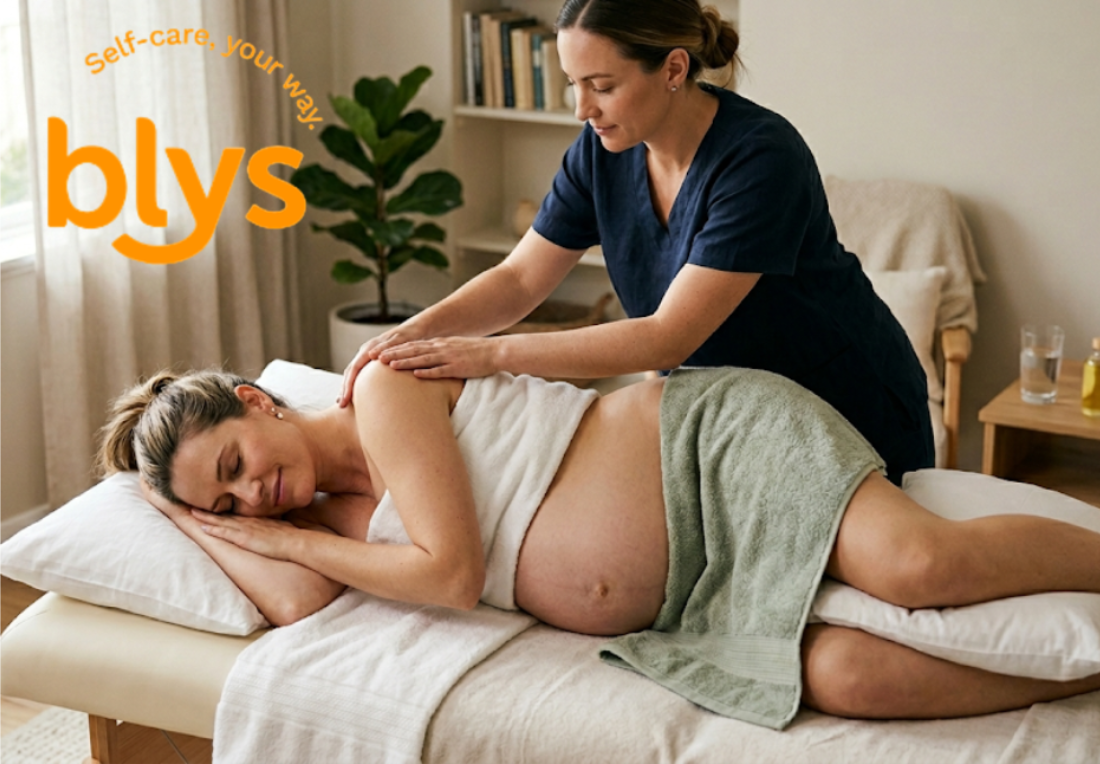
 Prenatal massage benefits go well beyond what most people associate with it. Yes, it helps with back pain. Yes, it can ease swollen ankles. But the fuller picture how it supports circulation, sleep, stress regulation and emotional wellbeing across every stage of pregnancy is where the real case for regular sessions is made.
Pregnancy puts your body through a sustained and demanding transformation. Your blood volume increases by close to 50 per cent. Relaxin loosens your joints across the pelvis and hips. Your posture shifts week by week as the belly grows. And your nervous system operates at a heightened level of alert for months on end managing both the physical demands and the emotional weight of what’s ahead.
This guide covers the evidence-backed benefits of prenatal massage, how they change meaningfully across each trimester, and why the way a session is structured and delivered matters as much as the techniques used. Whether you’re eight weeks in or thirty-six weeks and searching for relief, there’s something here that meets you where you are.
Why Back Pain And Postural Support Matter Throughout Pregnancy
Lower back pain is among the most common physical complaints during pregnancy and it tends to worsen progressively rather than resolve on its own. As the baby grows and the centre of gravity shifts forward, the lumbar spine absorbs load it wasn’t designed to manage alone. The pelvis tilts, the hip flexors shorten, and the muscles of the lower back and glutes begin compensating, accumulating tension that compounds week by week.
Prenatal massage addresses the soft tissues most directly affected by this postural shift. Focused work on the lumbar region, the piriformis, and the gluteal muscles helps release accumulated tension, restore range of motion, and reduce the nerve compression that contributes to the sciatic pain many women experience from mid-pregnancy onwards.
Research published on PubMed found that pregnant women who received consistent massage therapy reported significantly lower levels of back and leg pain compared to a control group with benefits that extended beyond the sessions themselves.
Why Proper Positioning Is Fundamental, Not Optional
Positioning is where safe prenatal massage starts. Every provider should follow these rules without exception:
- No face-down positioning unsafe and uncomfortable from mid-pregnancy; a well-trained provider will never offer this
- No lying flat on the back compresses the vena cava, reducing blood flow to both mother and baby
- Side-lying with bolster support the correct position; cushions maintain spinal alignment and take strain off the hips throughout the session
- Your home, your setup at-home sessions let you combine your own pregnancy pillows and wedges with what your provider brings, a flexibility clinic tables rarely allow
The vetted, insured providers you book through Blys are trained in pregnancy-specific positioning and adapt their technique at each stage of pregnancy. This is the foundation that makes every other benefit safe to deliver.
How Prenatal Massage Helps With Swelling And Circulation
Oedema the fluid retention that causes swelling is common from the second trimester onwards. It develops partly because increased blood volume and pressure from the growing uterus slows the return of blood from the lower limbs. For many women, especially in the third trimester, it shows up daily across several areas of the body:
- Ankles and feet the most frequent complaint, often worse after a day on your feet
- Hands and wrists typically most noticeable on waking, and a common reason rings become difficult to wear
- Lower legs a heavy, tight sensation that can affect both comfort and mobility
- Fingers mild but persistent swelling that can affect grip and dexterity
Prenatal massage supports lymphatic drainage and peripheral circulation through gentle, rhythmic strokes directed towards the heart. This encourages the lymphatic system to process excess fluid more effectively and reduces the heaviness and tightness that significant swelling brings.
Research cited on PubMed has highlighted improvements in peripheral circulation and reductions in lower-limb oedema among pregnant women receiving regular massage therapy throughout pregnancy.
One important boundary: deep pressure on the legs is not appropriate during pregnancy, particularly around varicose veins or areas of potential clot risk. The professional, experienced providers you book through Blys complete a thorough health intake before every session and adapt accordingly.
Sleep, Stress And What Your Nervous System Actually Needs
Sleep in pregnancy is one of the most talked-about challenges and, oddly, one of the least well-supported. Between the physical difficulty of finding a comfortable position, bathroom trips, pregnancy dreams, and the growing mental load of preparing for a new baby, sleep disruption is cumulative and it affects mood, pain tolerance, and immunity in ways that go well beyond ordinary tiredness.
Prenatal massage acts directly on the nervous system. Sessions have been shown to increase serotonin and dopamine the neurotransmitters most associated with calm and mood regulation while reducing cortisol, the body’s primary stress hormone. A nervous system running at a lower level of activation moves more readily into deep, restorative sleep.
A study from the Touch Research Institute at the University of Miami found that pregnant women who received bi-weekly massage over a five-week period experienced reduced anxiety and meaningfully improved sleep quality compared to a control group.
Here’s something the standard advice on prenatal massage doesn’t often address: when a provider comes to your home, there’s no journey to undo the benefit. You move from the session directly into your own space your own bed, your own quiet without the travel and effort that follows a clinic appointment. That continuity is genuinely part of the therapeutic value, and it’s one of the real, practical reasons at-home prenatal care delivers differently.
Emotional Wellbeing And The Mental Load Of Pregnancy
The physical benefits of prenatal massage command most attention, but the emotional dimension is equally significant. Pregnancy can carry deep anxiety about labour and parenthood, meaningful identity shifts, relationship changes, and for some women, symptoms of prenatal depression that go unaddressed because they’re attributed to hormones rather than recognised as something worth treating.
Regular prenatal massage provides a consistent, body-centred space for calm that supports mental health in a way that’s difficult to replicate through other means. Touch therapy has been shown in multiple studies to reduce anxiety markers and self-reported stress. For women who feel increasingly disconnected from their changing bodies, regular physical care can also rebuild a sense of comfort and body confidence that pregnancy gradually erodes.
This matters particularly for women in their first pregnancy where everything is entirely new and for those who’ve experienced previous pregnancy loss, where anxiety throughout a current pregnancy can be persistent regardless of how things are progressing.
Understanding that prenatal massage is safe when delivered by experienced, expert providers is itself reassuring and it removes one of the main barriers to booking.
How Prenatal Massage Benefits Change Across Each Trimester
The right approach to prenatal massage shifts substantially across the three trimesters. What your body needs at ten weeks is quite different from what it needs at thirty-five.
Here’s a clear overview:
| Trimester | Key Focus Areas | What To Expect |
| First (Weeks 1–12) | Relaxation, fatigue relief, nervous system support | Gentle technique throughout; providers take care around certain pressure points in the early weeks; always share exactly how far along you are. |
| Second (Weeks 13–27) | Postural correction, swelling management, hip and lower back support | More specific work as energy returns; a natural window to start building a regular session rhythm. |
| Third (Weeks 28–40) | Joint offloading, oedema reduction, sleep support | Most tangible and immediate relief; positioning is critical; at-home setup means no travel between session and rest. |
For a detailed walkthrough of what to expect at each stage, the complete prenatal massage guide covers positioning, session structure, and what to discuss with your provider before they arrive.
Building Prenatal Massage Into Your Pregnancy Care
Prenatal massage benefits compound over time. A single session brings genuine relief a consistent rhythm across the trimesters supports your body through each phase of change and builds resilience in the areas under the most strain.
When you’re ready to start, book a prenatal massage through Blys and a vetted, insured, experienced provider comes to you at home at a time that works for your schedule, without the logistics of a clinic visit when you’re already managing enough. Your body is doing something remarkable. Supporting it properly makes a real difference.