 You’ve booked your first prenatal massage and now the questions have started. What do you actually wear? How do you lie down with a bump? Is the pressure safe at this stage? Can the therapist reach the parts of your body that have been aching since the second trimester? If any of that is running through your head right now, this guide is for you.
A prenatal massage can do a lot for a body that’s carrying a significant amount of extra load lower back pain, hip tightness, swollen legs, broken sleep, that particular kind of exhaustion that rest alone doesn’t quite fix. Knowing what a session actually involves before you go in makes the whole experience more comfortable and more useful.
If you’re booking through Blys, the first thing worth knowing is that a therapist comes to you. No driving, no parking, no waiting room. They arrive at your home with everything they need, set up in your living room or bedroom, and when the session is done, you’re already where you want to be. Here’s a full walkthrough of how it all works from what to wear to what to do when it’s over.
What To Wear And What You Won’t Need To Stress About
Comfortable underwear is the norm. You’ll never be expected to remove more than you’re happy with, and the therapist uses draping throughout clean sheets and towels to keep you covered except for the area being actively worked on at any given moment.
Booking through Blys at home means you change in your own bedroom or bathroom. No clinic gown, no waiting area, no unfamiliar environment to navigate. You’re in your own space from the moment the therapist arrives to the moment they leave.
A few practical notes for before your session:
- Avoid tight waistbands or anything that leaves marks on your skin pressure-point indentations make the therapist’s work harder
- Remove jewellery from your neck and wrists ahead of time
- Loose maternity shorts or stretchy leggings make the side-lying position easier, particularly in the third trimester
How A Provider Sets Up For An At-Home Prenatal Massage
This is the section most prenatal massage guides skip entirely because most are written assuming you’re heading to a clinic or spa. The at-home experience is genuinely different, and worth understanding before your session.
When a provider you book through Blys arrives, they bring everything: a professional massage table, fresh linen, pregnancy-appropriate oils, and all the bolsters and pillows needed for safe positioning. Setup takes about ten minutes. You need a clear space a living room or bedroom works perfectly.
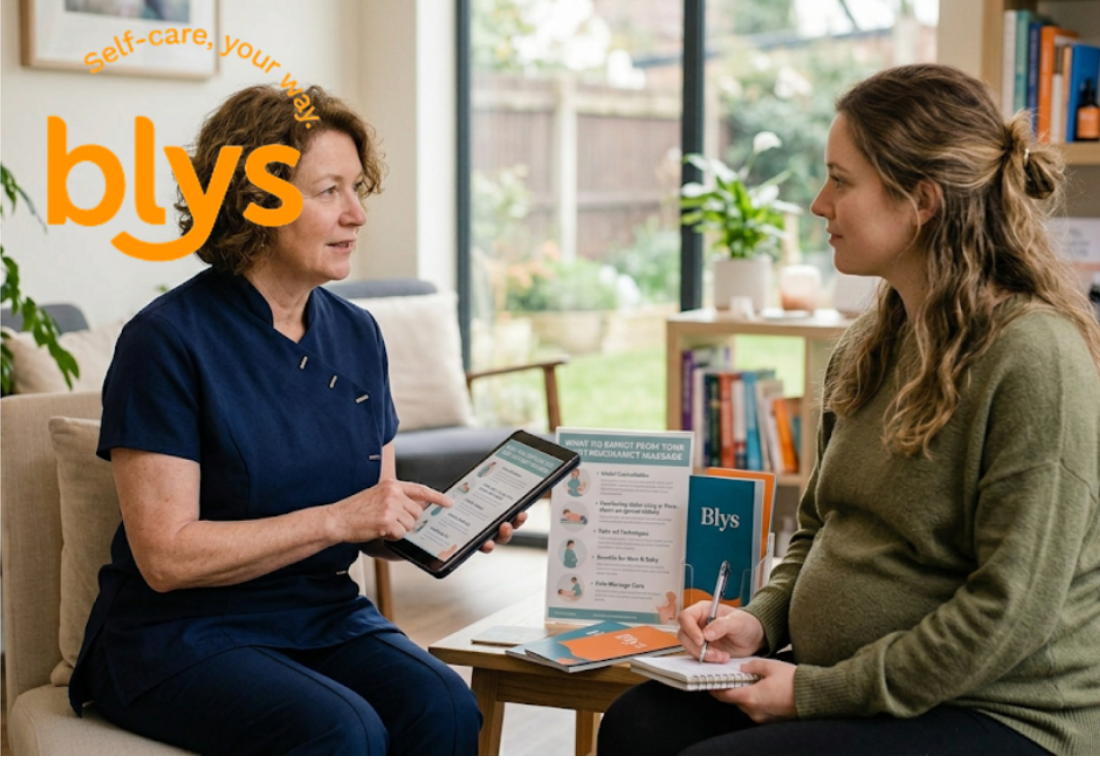
Before the session begins, the therapist will ask a few focused intake questions: how far along you are, which areas have been most uncomfortable, and whether your midwife, OB, or GP has flagged anything to be aware of. It’s brief and practical just the information needed to make the session as useful as possible.
Here’s the at-home insight that no clinic-based article will ever mention: when your prenatal massage is done, you don’t have to go anywhere. You move from the table to your couch. At 34 weeks, not having to drive yourself home after 90 minutes of quality bodywork is not a small thing it’s one of the most practical reasons to book at-home during pregnancy, and most people only realise it after their first session.
Before you book, is prenatal massage safe? covers the evidence by trimester and answers the questions most people are quietly wondering about.
What Positions Are Used During A Prenatal Massage?
Side-lying is the primary position throughout and it works better than most first-timers expect. You’ll lie on your left or right side with a bolster or pillow between your knees to keep your hips aligned and reduce strain on the lower back. From this position, the therapist can access your back, hips, glutes, legs, shoulders and neck effectively. You’ll switch sides partway through.
A semi-reclined position is sometimes used in the second trimester a wedge or table angle allows you to lean back at roughly 45 degrees rather than lying fully flat. This works well for most people and allows the therapist to work the front of the legs and, if you’d like it, a gentle abdominal section.
What you won’t do: lie face-down. After the first trimester, prone positioning isn’t part of prenatal massage. Therapists with proper prenatal training work with your body as it currently is they’re not trying to work around the bump; they’re working with it.
What Does The Pressure Feel Like And Why Do Some Areas Get More Attention?
Prenatal massage isn’t a single pressure setting applied to everything equally it shifts throughout based on the area, your trimester, and your feedback. It’s generally softer than a deep tissue or sports massage, but not passive. Think of it as intentional and adapted, not light for the sake of it.
Why your lower legs are handled with extra care
Certain acupressure points around the ankles and lower calf are avoided during pregnancy because of their potential association with uterine stimulation. This is standard practice for any experienced prenatal therapist you don’t need to ask about it. The Blys prenatal massage guide explains which areas are avoided and why, if you’d like the full picture.
Why your lower back gets regular check-ins
Moderate pressure on the lower back works well for most pregnant women, but it’s an area the therapist will return to and adjust rather than treating once and leaving. Communicate throughout it makes a real difference to what the session delivers.
Why hips and glutes usually get the most focused time
This is where the most impactful work tends to happen. Sciatic pain and hip tightness are among the most common pregnancy complaints from the second trimester onward, and targeted, sustained work here typically produces the most noticeable and lasting relief. If the therapist spends a significant amount of time in this area, that’s precisely why.
Research available through PubMed consistently shows that prenatal massage is associated with lower cortisol, improved sleep quality and reduced anxiety, particularly in the third trimester. A study in the Journal of Bodywork and Movement Therapies found meaningful reductions in both back and leg pain with regular prenatal massage sessions.
How Long Does A Session Take And What Should You Do After?
Most prenatal massage sessions run 60 or 90 minutes. For a first session, 60 minutes is the right starting point it covers the key areas (back, hips, legs, shoulders, neck) without overdoing it. If you’re managing something specific like significant sciatic pain or fluid retention, 90 minutes gives the therapist more time to focus on what’s most useful.
After your session, here’s what actually helps:
- Drink water: Massage improves circulation and helps move fluid through the body staying hydrated supports that process.
- Rest when you can: Even 20 minutes lying down after the session allows your body to settle into the work. Book a prenatal massage through Blys at home and this is immediately available your couch is right there. No drive, no stairs, no effort.
- Pay attention over the next 24 hours: Mild muscle fatigue is completely normal. Anything unusual cramping, changes in fetal movement, or unexpected swelling should be reported to your midwife, OB, or GP.
- Plan your next session: Many women find every two weeks suits the second and third trimesters. Others book monthly. Let your body and what it’s managing guide the frequency.
Ready To Book Your First Prenatal Massage?
Now you know exactly what a prenatal massage involves: the positions, how pressure adapts across different areas and trimesters, what gets the most attention, and why booking at home removes so much of the friction that makes clinic visits hard when you’re heavily pregnant.
Providers you book through Blys are vetted, insured and experienced in prenatal massage and they come to you with everything they need. Explore prenatal massage on Blys and book a trusted local therapist near you. One fewer thing to organise is exactly what you need right now.