 If you’ve been wondering what to expect from a sports massage before your first session, you’re already in a better position than most people who just book one and figure it out on the table. Sports massage is more targeted, more physical and more genuinely useful than a lot of first-timers imagine and going in with a clear picture of what’s coming makes the whole experience more effective.
When you know what’s happening and why, you communicate better, you stop bracing against the pressure and you actually let the session do its job. Book it as a mobile session, and you won’t even have to deal with getting yourself home afterwards.
This guide covers what you actually need before your first booking: what the provider works on, how pressure and soreness feel in practice, and why a mobile sports massage changes the recovery experience in ways most people aren’t expecting.
What Does A Sports Massage Session Actually Involve?
Sports massage is not a head-to-toe relaxation experience, and that’s entirely intentional. It’s focused, technique-driven work aimed at the specific muscle groups under the most load from your training, your sport or your daily movement. That targeted approach is what sets it apart and what makes it worth booking if you’re active.
Every session starts with a short intake conversation. Your provider will ask about injuries, areas of tension, recent physical activity and what you’d like to get out of the session. If you’ve booked someone to come to your home, this intake happens in your own space before you’re even on the table which means you’re already more relaxed and more willing to be specific. Give plenty of detail here; the more the provider knows, the better they can tailor the session to what your body actually needs.
From there, the session moves through several distinct techniques:
- Effleurage long, flowing strokes that warm the tissue and increase circulation. Comfortable and grounding, this is how every well-run session begins.
- Petrissage kneading and compression that works progressively deeper into the muscle. Pressure builds, but the pace stays controlled.
- Trigger point therapy direct, sustained pressure on specific points of tension. This is where you’ll feel the most intensity.
- Assisted stretching passive movement of your limbs to improve range of motion and release areas that are holding on too tightly.
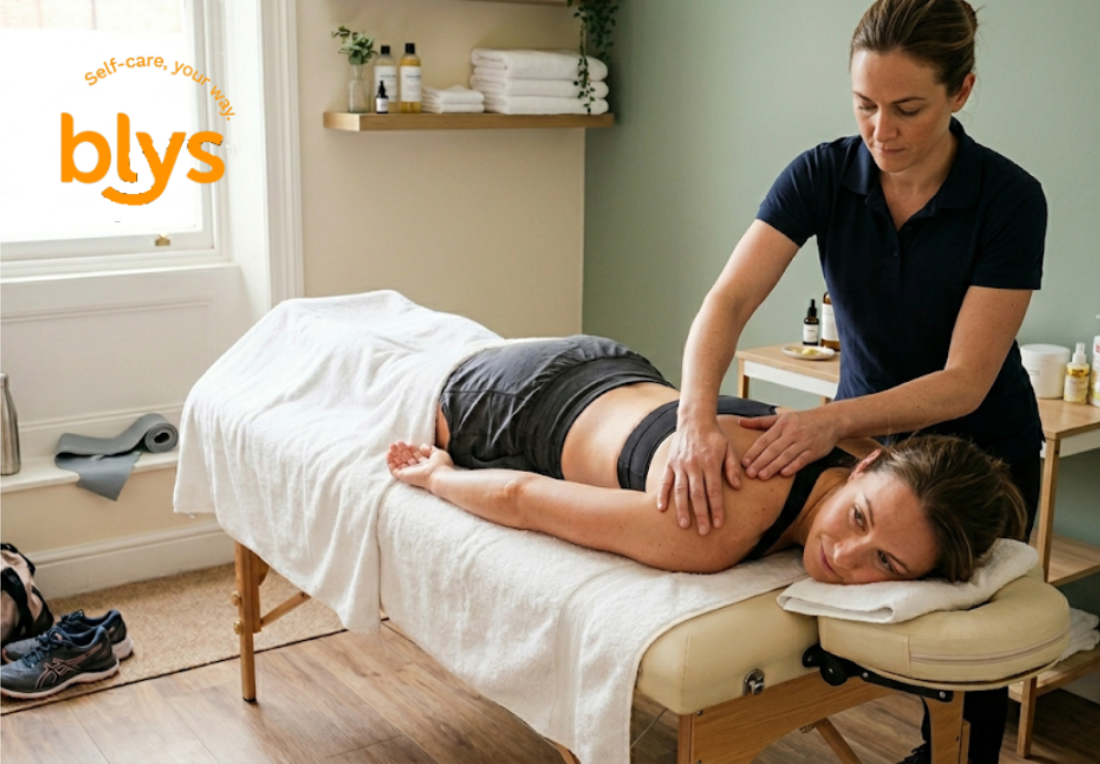
You’ll generally stay in shorts or athletic wear, with towels used for draping over areas not being worked. You don’t need to do anything except breathe and speak up. If the pressure is too much, say so. If you’d like the provider to focus more time somewhere specific, say that too. The session works best as a genuine dialogue.
For more on what to expect from a sports massage in terms of recovery and training support, this overview of what sports massage is and how it works is a solid read before you go.
Is Sports Massage Painful?
Almost everyone walks into their first session carrying this question but few people ask it out loud. The real answer: it can be uncomfortable, but it’s a productive, purposeful kind of uncomfortable.
Long-time clients will tell you about the “good hurt.” It’s intense pressure that feels like something is releasing underneath it where you can tell the work is happening. That sensation is exactly what sports massage is designed to deliver at its working depth. What it isn’t is sharp pain, or discomfort that makes you hold your breath and tense up instead of breathing through it.
Something worth knowing before your first at-home session: your environment genuinely affects this. Being in your own space at your own temperature, in a familiar room makes it easier to breathe into the pressure. You’re not in a clinic under fluorescent lights. You’re home. Most people find that comfort translates directly into how well they respond during the session and how much they get out of it.
What does soreness during the session mean?
Some areas will feel more tender than others especially trigger points, which are dense concentrations of built-up tension that respond strongly to direct pressure. That sensitivity is a sign the right spots are being addressed. Breathe through it, and let your provider know if it crosses from intense to sharp. Adjusting pressure is easy and completely standard.
What does soreness after the session mean?
Post-massage soreness appearing 12 to 24 hours after your session is completely normal and not cause for concern. It feels similar to the delayed muscle soreness that follows a hard training session and typically resolves within 48 hours. Research on PubMed links this response to increased circulation and the mechanical effect on adhesions within the soft tissue.
The College of Massage Therapists of Ontario recognises temporary post-treatment soreness as an expected response to deep soft tissue work that resolves naturally on its own. If it lingers beyond two days or feels more intense than expected, note it and raise it with your provider before the next session.
How Do You Know If The Pressure Is Right?
Deeper doesn’t automatically mean better and “firm” means something different on every body. Your muscle density, recent training load and how long it’s been since your last massage all factor into what the right pressure is for you in a given session.
The providers you book through Blys check in on pressure throughout the session. That’s professional, standard practice and it’s there so you actually say something rather than silently enduring more than you need to. Ask for adjustment in either direction without hesitation. A good provider responds right away.
Here’s what the pressure arc of a session typically looks like:
- Opening phase (first 5–10 minutes) lighter, warming strokes. You should feel settled and comfortable throughout.
- Working phase (the main body of the session) deeper, targeted work on the primary areas. This is where you’ll feel the most intensity, and it should stay in that productive zone.
- Closing phase (final 5–10 minutes) pressure eases back to flush the tissue and shift the body towards recovery. By this point you should feel noticeably different from when you started.
First session in a while or ever? Don’t push for maximum depth straight away. Progressive work produces better results, and there’s always the next booking to go deeper.
Why Does A Mobile Sports Massage Beat Going To A Clinic?
Most of what’s written about what to expect from a sports massage assumes you’re heading to a clinic. When you book through Blys, the experience looks completely different.
A vetted, insured provider comes to you. They arrive with a professional massage table, fresh linens and everything needed to deliver a full session. No commute, no waiting room, no shared changing area. You’re in your own home from the moment your provider arrives.
Here’s the piece most people aren’t expecting until they experience it: you’re still home when the session ends.
The post-massage window when your muscles are warm, your nervous system is winding down and your body is ready to absorb the work is genuinely valuable. In a clinic, it disappears. You’re getting dressed, checking out at the front desk and sitting in traffic before anything has had time to settle. At home, that window is completely yours.
You move straight from the table to rest and hydration, and let the session do what it’s supposed to do. That’s a real recovery advantage and one most top-ten guides won’t mention because they’re not thinking about what happens after you leave.
The at-home setup also helps with the intake side of things. Your conversation with the provider happens in your own space, at your own pace, without the low-level pressure of a clinical environment. That ease carries into the session itself.
For a full picture of how to prepare your space and what to have ready before your provider arrives, this guide to at-home sports massage covers it all clearly.
What Should You Do In The Hours After Your Session?
The session ending is not the finish line what you do next is part of the process.
- Hydrate: Sports massage increases circulation and supports the removal of metabolic waste from the tissue. Water helps that along aim for at least 500ml to 1L in the two hours after your session. At-home session? Your kitchen is right there.
- Skip hard training for 24 hours: Your body is doing active repair work after deep soft tissue treatment. Light movement is fine; a hard training session will work against the recovery you’ve just invested in.
- Use heat if you need it: A warm shower or heat pack is effective on areas that feel sore post-session. Avoid ice on deeply worked areas unless there’s acute inflammation heat keeps tissue responsive.
- Book your next session: Sports massage builds on itself over time. One session delivers real relief; regular sessions reduce the tension baseline your body carries into training and everyday life.
If you’re currently in a training period, booking consistently through Blys keeps recovery on track without it dominating your calendar.
Ready To Book With Confidence?
Knowing what to expect from a sports massage turns it from something you put off into something you look forward to. Some discomfort during the session is normal. Post-session soreness is expected. The provider works with you every step of the way and when they come to your door, there’s nothing to figure out once it’s over except where to rest.
Book your first sports massage through Blys, keep the evening free and let your body do what it does best.