If you have been doing the stretches, using the tools, and reading everything you can find about fascia, you probably already know that at some point the DIY work stops being enough. A professional myofascial release massage gets to places your foam roller cannot reach, addresses restrictions your hands cannot find, and produces results that no amount of self-care fully replicates. If you have reached the point where you are Googling “fascia release massage near me” at 11pm, you are probably there.
Here is what a professional session actually involves, how it differs from what you can do at home, and how to book one without leaving the house.
What a Professional Myofascial Release Session Involves
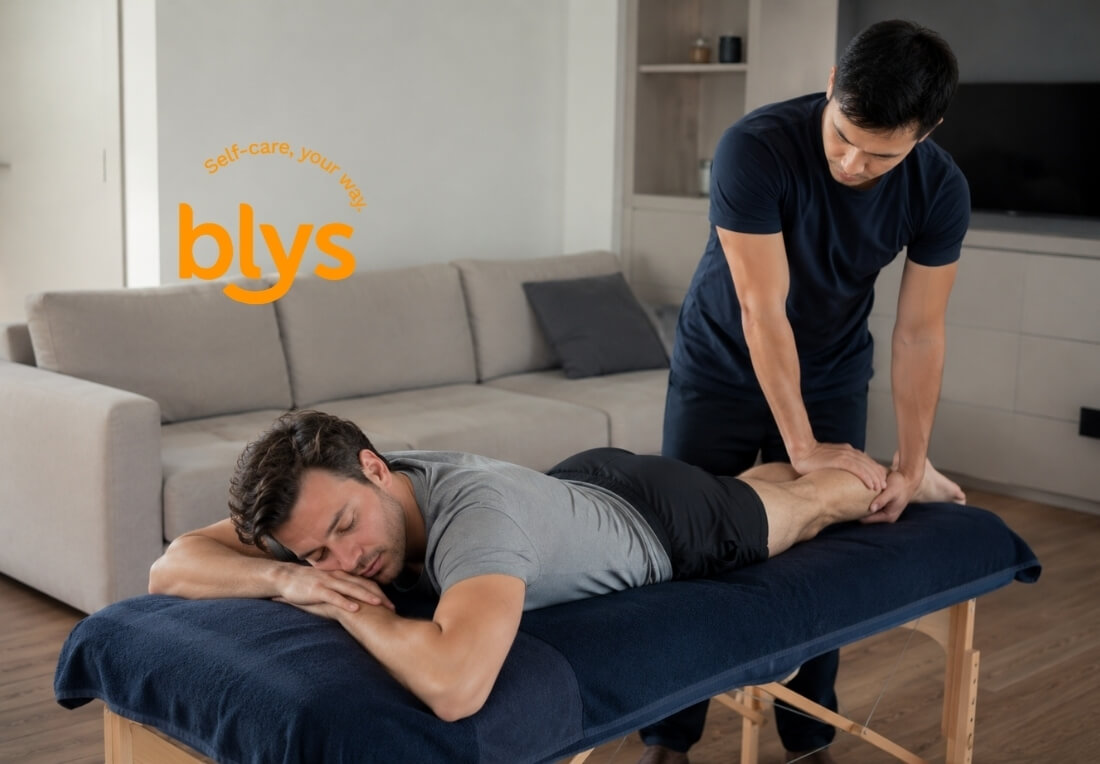
A professional myofascial release massage near you, delivered at home through Blys, is a full-body or targeted treatment where a trained therapist applies sustained manual pressure to restricted areas of fascia, follows the tissue as it releases, and integrates the work across multiple regions rather than addressing one spot in isolation.
Assessment first
Before touching anything, your therapist assesses your movement patterns, and the areas you have flagged in your booking notes. This is not just a formality, because it shapes the entire session. A restriction in the hip, for example, can drive tension in the lower back and even the neck, and a therapist who skips the assessment misses the connection between the two. Most people who come in for a sore lower back leave having had work done on their hips, their calves, or somewhere else entirely. That is not a detour, that is the point.
Sustained pressure, not speed
The defining characteristic of professional myofascial release is the quality of contact rather than the quantity of movement. Your therapist applies slow, sustained pressure to restricted tissue and holds it, sometimes for two minutes or more at a single point, waiting for the fascia to soften and release. This is the part that foam rollers and massage guns cannot replicate, not because they apply the wrong pressure, but because they cannot feel what is happening under the surface and adjust accordingly. In other words, a foam roller has no idea what it is rolling over, but a therapist does, and that difference is the whole ballgame.
Full-body integration
Fascia is continuous throughout the body, which means a restriction in one area affects the whole system. A skilled therapist does not just treat the area where you feel pain, but follows the restriction through its path and release the tissue at multiple points along the way. This is why a professional myofascial release session often produces relief in places you did not expect, and why the results feel more complete than targeted self-release.
How Professional Myofascial Release Differs from DIY
This is not a criticism of home practice. Fascia stretching exercises and self-release tools are genuinely useful for maintaining progress between sessions, and if you have been doing them consistently, you are already ahead of most people. The honest comparison is not DIY versus professional treatment, since they are not really doing the same job. It is closer to maintenance versus repair, and the differences between the two are real and worth understanding properly rather than glossing over.
What DIY does well
Home practice maintains the gains from professional treatment, manages daily tension before it builds up into something bigger, and gives you a way to address mild discomfort without booking a session every time something feels slightly off. A tennis ball under the foot, a foam roller on the calf, or a two-minute hold in a doorframe all contribute genuinely to fascial health over time, particularly when done consistently rather than in occasional bursts of motivation.
What home practice is particularly good at is catching small restrictions early, before they become the kind of entrenched pattern that takes months to unwind. Someone who rolls their calves twice a week is generally dealing with less by the time they book a session than someone who has been ignoring the same tightness for a year.
What only a professional can do
A therapist can feel the difference between restricted fascia and healthy tissue, which means they can find and address the specific points that are actually driving your symptoms rather than rolling over everything and hoping for the best. Which, to be fair, is also what most of us have been doing for years. They can apply pressure in a direction that follows the fascial restriction rather than across it. They can hold a release for as long as the tissue needs rather than the 30 seconds most people manage before getting bored. And they can connect the work across the whole body in a way that isolated home practice cannot.
For people dealing with plantar fasciitis, chronic back or neck tension, restricted hip mobility, or any condition where the restriction has not responded to consistent home practice, professional treatment is not just more effective but often what finally shifts the pattern.
What to Prepare for Your At-Home Myofascial Release Session
One of the advantages of a mobile myofascial massage at home is that the preparation is minimal. Here is everything you need to have ready before your therapist arrives.
| What to prepare | Details |
| Floor space | Approximately 6.5 x 6.5 feet of clear floor for a massage table, or 6.5 x 10 feet if your therapist is working on a mat |
| Room temperature | Slightly warmer than usual, as your body cools during a session and the fascia releases better in warmth |
| Clothing | Loose, comfortable clothing you can move in, or undress to your comfort level for table massage |
| Booking notes | Add your focus areas, relevant history, and anything that has or has not worked in the past, and your therapist reads this before arriving |
| Pets | Let your therapist know in the booking notes if you have pets, so that they can advise on the best setup for the session |
That is genuinely it. Your therapist brings everything else, including the table, linen, oils, and whatever tools they use for the session.
How Vetting Works for Myofascial Therapists on Blys
Before any therapist appears on the Blys platform, they go through a rigorous onboarding process, so the person showing up at your door is someone the platform has already checked properly. For myofascial release specifically, therapists are required to hold recognized qualifications in myofascial therapy and demonstrate the clinical knowledge needed to deliver sustained pressure work safely.
What this means for you
You are not taking a chance on an unknown. Every therapist who accepts your booking has been through the Blys onboarding process, holds their own professional indemnity and public liability insurance, and is covered by additional third-party liability through Blys for all bookings made and paid through it.
After your session
You can rate your therapist and leave a review through the platform. If you connect well with someone, you can rebook them directly for future sessions without starting the process again. Consistency with the same therapist tends to produce better results over time because they already know your history, your restrictions, and what works for you. Also, you stop having to explain your entire history from scratch every session, which is its own kind of relief.
How to Book a Mobile Myofascial Release Session Through Blys
Booking is simple and takes a few minutes. Download the Blys app or head to the website and place your booking. Enter your location, select massage as your service type, and choose myofascial release as your session type. Pick your session length, add notes about your focus areas and any relevant history, and select a date and time.
Once your booking request is submitted, a local therapist in your area picks it up and confirms. You are not charged until that confirmation comes through, and same-day bookings are available across Canada depending on therapist availability in your area.
What session length to choose
60 minutes works well for a targeted session focused on one or two specific areas. 90 minutes gives the therapist time to work through the full body and address the connections between regions rather than just the presenting symptoms. If you have been dealing with a chronic condition or widespread tension, 90 minutes is worth the step up.
Before booking, understanding what fascia actually is and why professional release works differently to anything you can do at home makes the session more useful from the start.
So when you are ready, book a myofascial release session at home through Blys, available 7 days a week, 6 am to midnight across Canada.