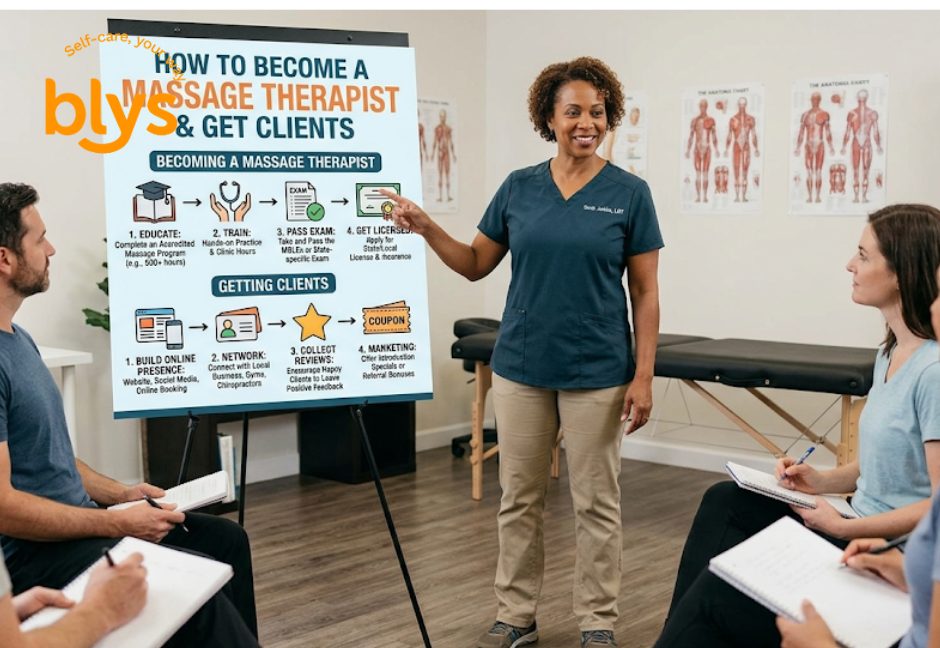
 So you have been thinking about a career in massage therapy. Whether you have experienced the benefits of massage yourself, or you are drawn to working in a health and wellness role that genuinely helps people, becoming a massage therapist is a practical, rewarding career path with real flexibility. You can work in spas, clinics, corporate settings, or as your own boss through a platform like Blys.
But how do you get a job as a massage therapist in the UK, and where do you even start? The path from interested beginner to practising therapist is more straightforward than most people expect. It involves completing the right training, understanding registration and insurance, and then learning how to build a client base once you are qualified.
This guide walks you through every stage, from choosing your course to finding your first clients and growing from there.
Understanding What Massage Therapists Actually Do
Before committing to a training pathway, it is worth getting clear on the scope of work. Massage therapists assess and treat soft tissue conditions, help manage pain and stress, and support recovery from injury. Depending on your specialisation, you might work with athletes, office workers, pregnant women, aged care residents, or people managing chronic pain.
In the UK, remedial massage therapists are among the most in-demand practitioners in the complementary health space. Remedial massage goes beyond relaxation: it targets specific muscular issues and is often used alongside physiotherapy and chiropractic care. If you are curious about the difference between modalities, it helps to read about different massage types and techniques before you settle on a training path.
Other common specialisations include sports massage, pregnancy massage, and relaxation or spa massage. Many therapists end up combining modalities as they gain experience and continue their education.
Completing Your Training and Getting Qualified
In the UK, massage therapy qualifications sit within the national vocational education and training (VET) framework. The minimum qualification most employers and insurance providers recognise is a Certificate IV in Massage Therapy. If you want to work in remedial massage or be eligible for private health fund rebates for your clients, you will typically need a Diploma of Remedial Massage.
What to Look for in a Course
Look for Registered Training Organisations (RTOs) that deliver the HLT52021 Diploma of Remedial Massage or the HLT42021 Certificate IV in Massage Therapy. Course lengths vary: a certificate course may take six to twelve months, while a diploma generally takes twelve to eighteen months. Blended delivery (a mix of in-person and online learning) is common and suits people who need flexibility.
Practical clinic hours are a core part of any accredited course, and this is where much of your real learning happens. Pay close attention to how many supervised hours are included and what clinical facilities are available to students.
What About Registration?
Massage therapy in the UK is not regulated by AHPRA (the Australian Health Practitioner Regulation Agency) in the same way that physiotherapy or nursing is. However, voluntary professional association membership through bodies like Massage and Myotherapy Australia plays a similar role.
Membership with a recognised association is often required to hold professional indemnity insurance and to allow clients to claim private health fund rebates, so it is worth factoring into your career planning from the start.
Getting Your First Job as a Massage Therapist
Qualifying is one thing. Actually getting hired, or building a client base, is a separate challenge, and it is where many new therapists feel stuck. Here is a practical breakdown.
Where to Find Massage Therapist Jobs
Massage therapist jobs are available through a mix of traditional employment channels and flexible self-employed options. Many new therapists start by applying for roles in established settings, while others explore platforms that help them build a client base sooner.
Common places to look include:
- Health clinics and allied health practices
- Day spas and wellness centres
- Gyms, fitness studios, and recovery clinics
- Corporate wellness providers
- Job boards such as Seek and Indeed
- Industry Facebook groups and professional association job boards
- LinkedIn and international job boards if you are open to overseas work
If you are considering opportunities abroad, countries such as New Zealand, the UK, and Canada may offer options where Brits qualifications are generally well regarded.
That said, many therapists choose self-employment or platform-based work for greater flexibility, stronger earning potential, and more control over their schedule. If that path appeals to you, the next section will help you understand how to start building your own client base.
Is It Hard Getting a Massage Therapist Job?
Entry-level positions in busy clinics and spas can be competitive, particularly in major cities. Employers often look for therapists who are already insured, have experience with a range of modalities, and can demonstrate good communication skills alongside their technical ability. Building your skills and professional reputation during and immediately after training puts you in a stronger position.
One of the fastest ways to gain practical experience is through placement hours, volunteer work with community organisations, or offering discounted sessions to friends and family in the early stages. Every positive client interaction builds confidence and your professional portfolio.
Building a Client Base as a Self-Employed Therapist
For many massage therapists, the goal is not a salaried role but a flexible self-employed career with the freedom to set your own hours and grow your income over time. Here is where platforms like Blys become genuinely valuable.
Blys connects qualified, insured therapists with clients across the UK who book in-home massage sessions on demand. For a new therapist, this removes one of the biggest barriers to self-employment: finding clients. Instead of spending months on marketing and waiting for referrals, you can start seeing real clients through the platform while you build your reputation.
Tips for Growing Your Client Base
Beyond booking platforms, there are several reliable ways to build trust, increase repeat bookings, and grow your client base over time. The goal is not just to attract new clients but to give people a reason to come back and recommend you to others.
- Ask for referrals and reviews: Happy clients can be one of your best marketing tools. A strong review or personal recommendation often carries more weight than paid advertising, especially when people are choosing a therapist for the first time.
- Build a professional online presence: A simple website, an updated social media page, and a Google Business Profile can help potential clients find you, learn about your services, and check that you are qualified and legitimate.
- Connect with other health professionals: Building relationships with chiropractors, physiotherapists, fitness coaches, and other complementary health providers can lead to steady referral opportunities over time.
- Keep building your skills: Short courses in areas such as pregnancy massage, cupping, sports massage, or myofascial techniques can make your services more appealing and help you meet a wider range of client needs.
- Stay in touch with past clients: A simple follow-up message, rebooking reminder, or occasional update about a new service can help you stay top of mind and encourage repeat visits.
Client growth usually happens through consistency rather than quick results. When people have a good experience, feel comfortable with you, and see real value in your treatment, they are far more likely to return and recommend your services to others.
What to Expect in Your First Year
The first year as a practising massage therapist is a period of rapid growth, not just in skills but also in confidence and professional identity. Most new therapists find that their technique improves significantly with every client and that the administrative and business side of self-employment becomes less daunting once they settle into a routine.
It is normal to feel uncertain about pricing in the early stages. Research what other therapists in your area are charging and price yourself in line with your experience level, adjusting upward as you gain confidence and a stronger client base. Underpricing is a common mistake that is easier to avoid if you set clear rates from the beginning.
Understanding how to choose the right massage therapist from a client’s perspective is also genuinely useful. Reading what clients look for helps you present yourself professionally and set realistic expectations from the first session.
For more detail on the full career landscape, the Blys massage therapist career guide covers income expectations, work settings, and how different therapists structure their careers over time.
From a health outcomes perspective, research consistently supports the benefits of massage for conditions including musculoskeletal pain, anxiety, and recovery from physical activity. The Better Health Channel provides a good overview of the evidence base for massage therapy that is worth familiarising yourself with as a practitioner.
Wrapping Up
Becoming a massage therapist in the UK is a genuinely achievable goal with the right preparation. Complete a nationally recognised qualification, align with a professional association, secure your insurance, and then focus on building client relationships through every channel available to you.
If you are ready to start seeing clients through a platform that handles the bookings so you can focus on the work, explore how Blys works for therapists. You can also browse all available Blys services to understand the kinds of treatments clients are looking for right now.
Your career starts with the right training. It grows with every client you help.