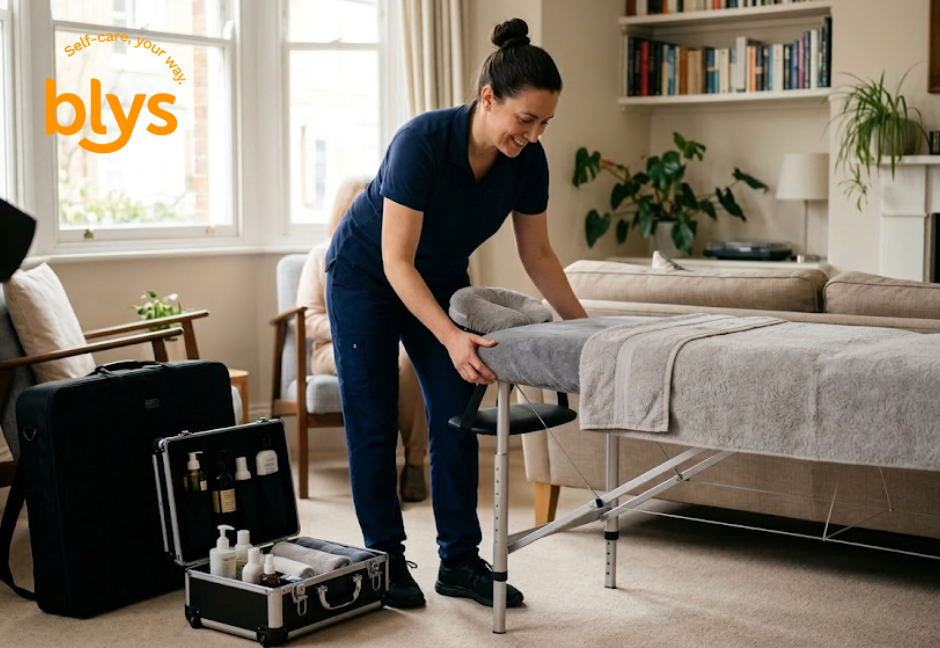
 The idea of being your own boss, setting your own hours and doing work you genuinely enjoy sounds appealing in theory. For many massage therapists, going mobile turns that idea into a practical reality.
Mobile massage is one of the fastest-growing segments in the wellness industry. Clients want convenience, and more than ever, they want professional treatments in their own homes, offices, or hotel rooms. That shift in demand has created real opportunity for therapists who want to move away from clinic-based work and build a practice on their own terms.
If you’re ready to make the move, or you’re still working out how to become a mobile massage therapist from scratch, this post covers what you need to know: the qualifications required, the equipment to get, how to find clients, and how joining a platform like Blys can help you start earning faster.
What Does a Mobile Massage Therapist Do?
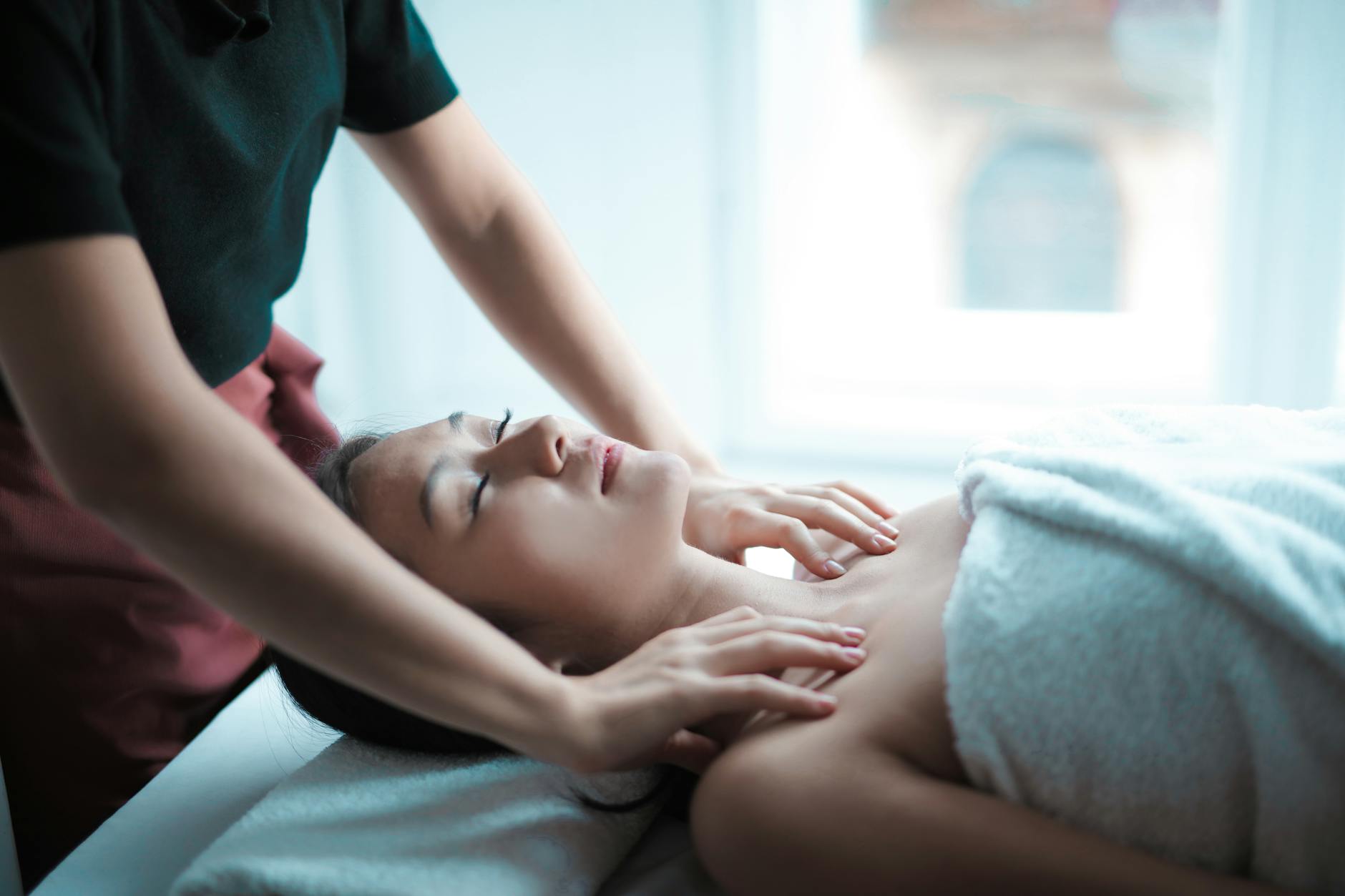
A mobile massage therapist travels to the client instead of working only from a fixed clinic or studio. That can mean providing treatments in homes, offices, hotels, or at events. The setting changes, but the level of care should stay the same. The Bureau of Labour Statistics notes that massage therapists may travel to clients’ homes, workplaces, or other locations, and that many are self-employed.
Mobile work also gives therapists more control over their schedule. You can choose your hours, accept the bookings that suit you, and build your work around your lifestyle. The trade-off is that you also manage the practical side of the job, including travel, setup, client communication, and equipment.
For many therapists, that flexibility makes mobile massage an appealing path.
Qualifications and Requirements to Get Started
Before you start working independently, you need to understand the professional requirements that apply where you plan to practise. Massage therapy is not regulated the same way everywhere, so the exact pathway can vary depending on your local area.
In some places, you may need formal licensing, approved training hours, or a certification exam. In others, recognised qualifications, insurance, and professional membership may be the main standards clients and platforms look for.
Complete a Recognised Massage Qualification
Start with a recognisable massage course that matches the services you want to offer. Entry-level training often includes a certificate, diploma, or supervised vocational programme, while more treatment-focused work may require extra study or specialised training.
It is also worth checking whether your course provider is recognised by a professional association, training body, or accepted industry pathway. This can help when applying for insurance, joining a platform, and showing clients that your training meets professional standards.
| Training Stage | What It Usually Covers | Why It Helps |
| Entry-Level Massage Course | Core theory, anatomy, massage techniques, and supervised practice | Gives you the base skills to work safely and confidently |
| Recognised School or Provider | Training delivered through an accepted school or approved pathway | Makes your qualification easier to verify with clients, insurers, and platforms |
| Supervised Practical Hours | Hands-on practice completed during training | Helps you feel more prepared before working with paying clients |
| Advanced or Specialised Study | Extra training in areas like sports, pregnancy, deep tissue, or remedial massage | Lets you offer more targeted services and support a wider range of client needs |
| Continuing Education | Short courses, workshops, and ongoing learning after qualification | Keeps your skills current and helps you grow over time |
Choosing the right course from the start can make the next steps easier. It gives you a stronger foundation, helps build client trust, and supports a smoother move into paid mobile work.
Professional Insurance and Association Membership
Before you take your first booking, make sure your cover and professional support are already in place. Insurance helps protect your work, while association membership can give you access to ethics guidance, education, and practical business resources.
Professional groups such as AMTA highlight liability cover, continuing education, and member support as key parts of building a safe and sustainable massage career.
What to have in place before your first booking:
- Professional indemnity insurance so you are covered if a client claims financial loss, negligence, or harm linked to your treatment.
- Public liability insurance to help protect you if an accident happens during a booking, such as damage to property or injury in the treatment space.
- Membership with a recognised professional association, which can strengthen your credibility and often includes access to insurance options, ethics guidance, and career resources.
- A clear client intake and consent process so you can record health history, check for contraindications, and show that you are working professionally and within scope.
- Ongoing education and professional support to keep your skills current, maintain standards, and grow your services over time.
Having these basics sorted from the start helps you look more professional, work with more confidence, and build trust with clients from the first appointment.
Equipment You’ll Need for Mobile Massage Work
Your equipment travels with you, so the kit needs to be practical, durable and manageable. The good news is that a solid mobile setup does not require a huge upfront spend.
Your core kit will typically include:
- A portable massage table, lightweight but sturdy, with an adjustable face cradle.
- A quality carrying bag or hard case for the table.
- Multiple sets of clean linen: fitted sheets, flat sheets, face cradle covers and towels.
- Massage oils, waxes or creams suited to your modalities.
- A bolster and supportive cushions for positioning.
- A small kit bag for hygiene supplies, hand sanitiser, and a client intake and consent form.
Reliable transport is also a practical requirement. Most mobile therapists need a car with enough boot space for the table and supplies, particularly if you’re doing back-to-back bookings across a suburb or city. Some therapists working in dense inner-city areas manage with a trolley and public transport, but this is less suited to a full appointment schedule.
Start with a solid core kit and build from there. You do not need to spend thousands before your first booking.
How to Find Clients as a Mobile Massage Therapist
You can start with the usual channels, such as referrals from friends and family, local community groups, social media, and word of mouth. These can help, but they often take time to build into steady work. For many new therapists, the greatest challenge is filling the calendar consistently while also managing the practical side of running a business.
That is where a platform like Blys can help. Blys connects qualified massage therapists with clients who are already looking for at-home massage services. Instead of starting from zero, you can join the platform, set your availability, accept the bookings that suit your schedule, and focus more on the treatment itself.
Common ways mobile therapists find clients include:
- Asking happy clients for referrals and repeat bookings
- Creating a professional social media presence and local online profile
- Building word of mouth through reliable service and good reviews
- Partnering with a platform like Blys to access ready-made booking demand
- Staying visible through local networking, wellness events, or community groups
This model can suit therapists at different stages. If you are just starting out, it can help you get bookings faster. If you already have experience, it can be a flexible way to add more work without having to handle all of the marketing on your own.
You can also read more in this guide on how to become a massage therapist and get clients on the Blys blog.
What to Expect From Working as a Mobile Massage Therapist
The lifestyle appeal of mobile massage work is real, but it helps to go in with clear expectations.
Income varies depending on your hours, your modalities and your location. Mobile therapists working through Blys access a steady flow of bookings without the overhead costs of running a clinic. You are not paying rent on a treatment room or giving a percentage to an employer. That said, you do have running costs: fuel, linen, oil, equipment maintenance and your own insurance and association fees. These need to be factored into your session pricing from the start.
The physical side of mobile work is also worth thinking about. Carrying and setting up your table, working across varied environments and packing down between bookings means your body is doing more than just the massage itself. Building your own recovery routine, including regular stretching, strength work and getting your own treatments done, is part of making this a sustainable long-term career.
If you’re still weighing up whether this is the right direction for you, our guide on whether massage therapy is a good career covers the question honestly from both sides.
The broader picture is encouraging. Demand for at-home wellness services continues to grow as clients prioritise convenience, privacy and comfort. As a mobile therapist, you’re meeting clients exactly where they want to be met, which is a strong position to build a practice from.
Ready to Start Offering At-Home Massage Services?
Going mobile takes preparation, but the path is clear. Get your qualification, get insured, build a practical kit, and put yourself in front of clients who are already looking for what you offer.
Platforms like Blys take a lot of the friction out of finding clients, giving you the infrastructure to focus on the work you trained to do. If you’re ready to get started, register as a Blys provider and see what bookings are available in your area. You can also explore the full range of Blys services to see the treatments clients are already searching for.