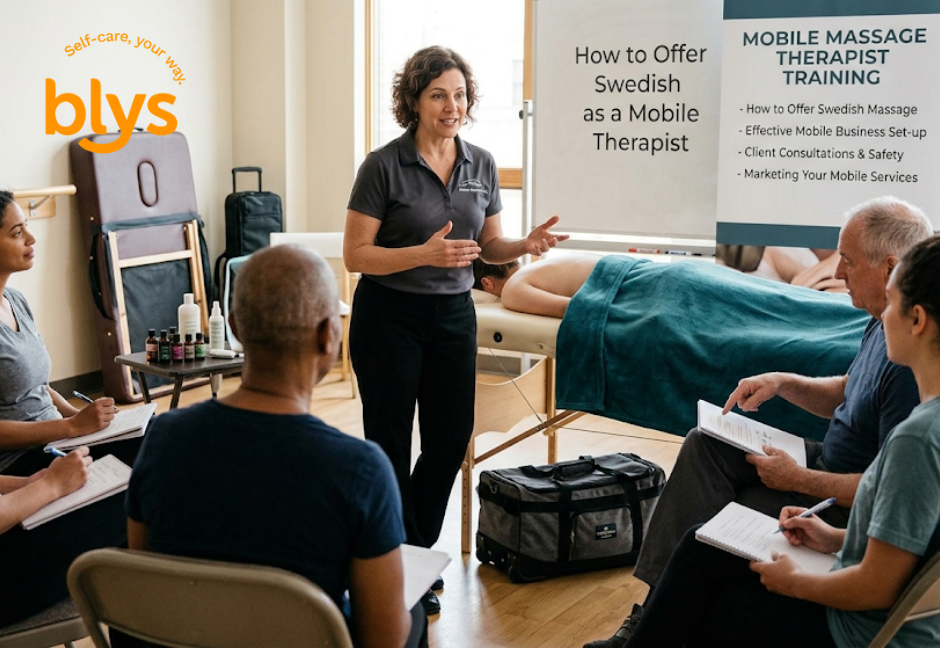
 Starting out as a massage therapist is exciting, but mobile work comes with extra demands. Instead of clients coming to you, you travel to them, which changes how you plan, what you carry, and how you promote your services. Swedish massage is a strong treat to build a mobile practice around because it is widely recognised and commonly used for relaxation, stress relief, and easing muscle tension. This guide covers the practical steps, from qualifications to client bookings.
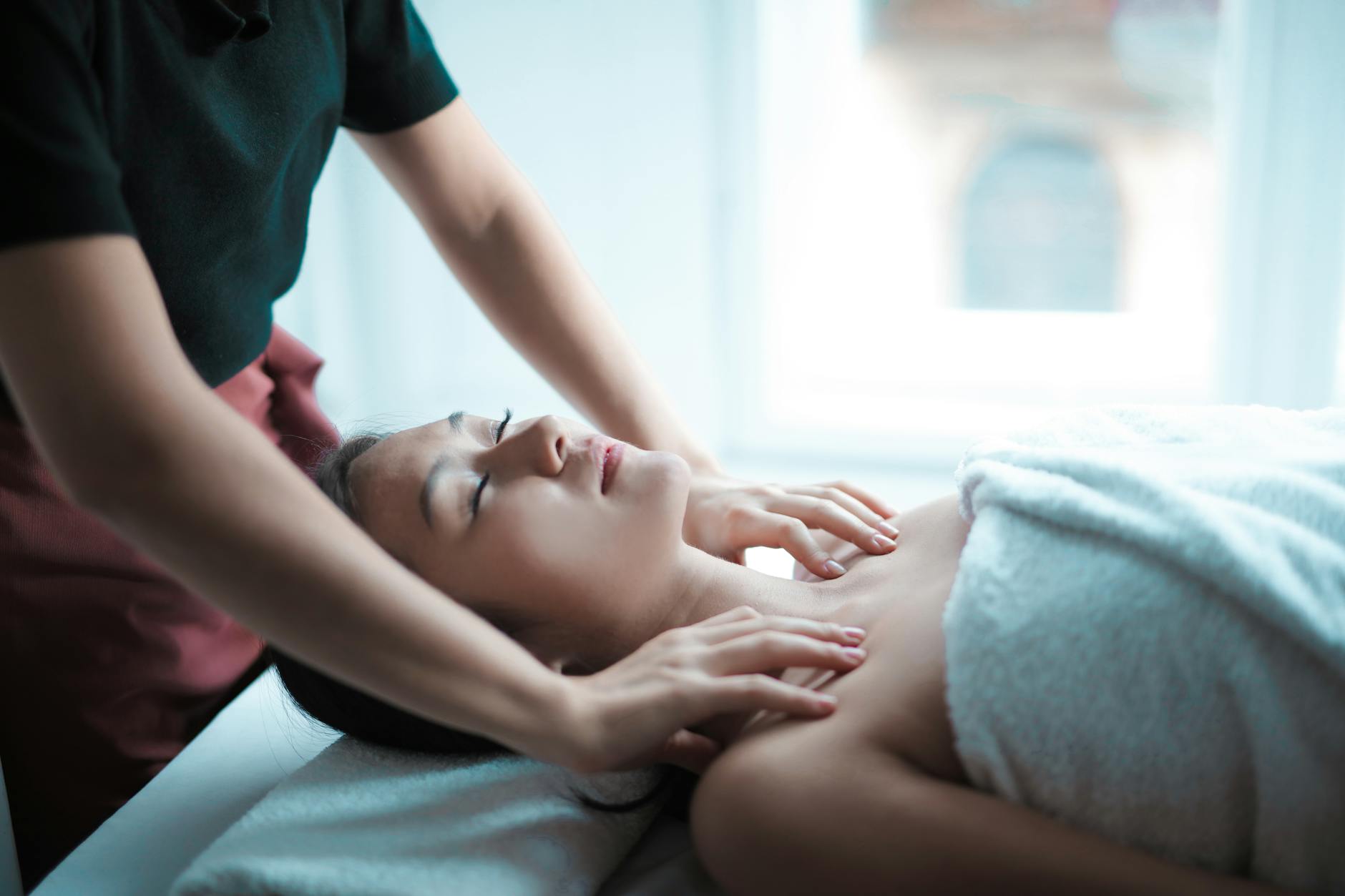
Swedish massage is one of the most common types of massage therapy. It uses techniques such as long strokes, kneading, stroking, and gentle pressure to help relax muscles and support stress relief. Understanding how to deliver this treatment well outside a clinic can give you a solid foundation, whether you are new to mobile work or growing your existing practice.
Below, you will find a clear breakdown of what Swedish massage involves, the qualifications and equipment you need, how to attract clients, and how joining an established platform can make the process easier. From the client side, Blys presents Swedish massage as a mobile service delivered by qualified therapists to homes, hotels, and workplaces across the UK.
What Swedish Massage Actually Involves
Before you can confidently offer it, you need to understand what your clients are booking. Swedish massage is a full-body treatment built on five core techniques: effleurage (long gliding strokes), petrissage (kneading and lifting), friction (circular pressure), tapotement (rhythmic tapping) and vibration. Together, these techniques improve circulation, ease muscle tension and promote deep relaxation.
A typical session runs between 60 and 90 minutes. You will work across the back, shoulders, neck, arms, legs and feet, adapting pressure and pace to what the client needs that day. Some people want firm strokes to release tension across the upper back; others prefer a lighter touch focused purely on relaxation. Good Swedish technique means reading what the body is telling you and adjusting in real time.
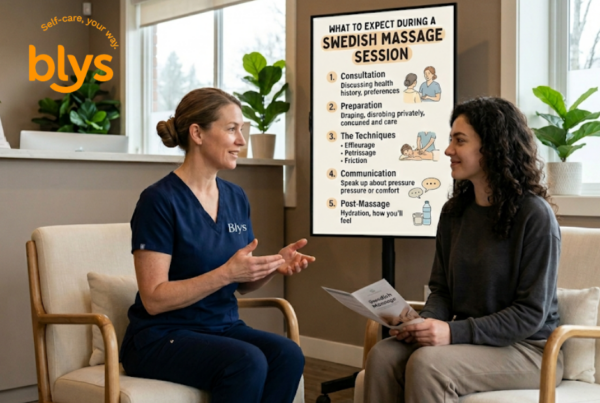
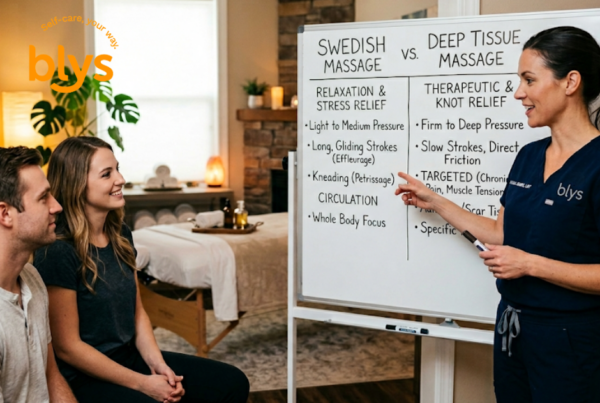
For clients who have never had a professional massage before, a Swedish session is usually the recommended starting point. It is non-invasive, generally comfortable and offers a clear therapeutic benefit without the more targeted pressure of remedial or deep tissue work. You can read more about the science behind Swedish massage benefits and what clients can expect during a Swedish session to get a fuller picture of what you will be delivering.
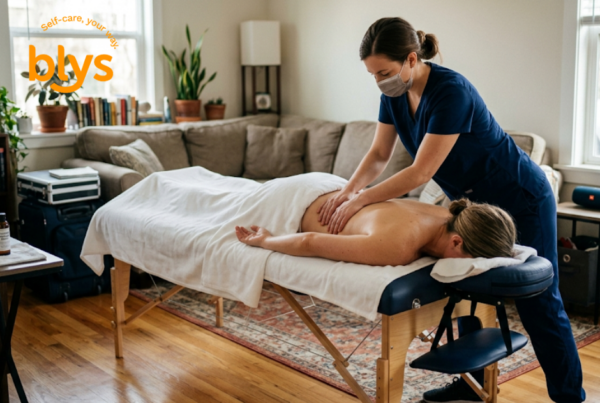
As a mobile therapist, you are also responsible for setting the environment. You cannot rely on a clinic’s ambient lighting, music system or pre-warmed room. Part of your role is bringing the experience with you, so clients feel just as relaxed in their own home as they would in a wellness centre.
Swedish Massage Therapist Requirements: What You Need Before You Start
Before you begin offering Swedish massage, you need the right training, insurance, equipment, and a clear understanding of how mobile practice works. Getting these essentials in place helps you work safely, build trust with clients, and start on a more professional footing.
Qualifications and Registration
In the UK, massage therapists do not need a national government licence, but professional standards still matter. Research says that clients should look for therapists who are properly trained, insured, and linked with a recognised professional association, which helps build trust and credibility in practice.
For most therapists, the usual starting point is a Certificate IV in Massage Therapy, while some go on to complete a Diploma of Remedial Massage. Your training should cover anatomy, physiology, consultation, assessment, hygiene, and massage technique, ideally through a registered training organisation.
Before taking clients, you should also have professional indemnity and public liability insurance in place. This is especially important for mobile massage, where you are working in a client’s home rather than under a clinic’s cover. It is also worth checking any state or territory requirements that may apply and keeping a trusted health resource on hand for client questions.
Equipment and Setup for Mobile Massage
A mobile massage therapist setup requires more thought than working from a fixed location. Every session you deliver relies on what you have brought with you, so your kit needs to be well organised, lightweight enough to carry and complete enough to deliver a professional service.
The core tools you will need include:
- A portable massage table: Look for one that is lightweight (ideally under 14kg), adjustable in height and strong enough to hold a range of body types. Aluminium frames are generally lighter and more durable than timber.
- Carry bag or case: A padded carrying case makes it easier to transport your table and protects it between sessions.
- Quality linens: Bring at least two sets of sheets and a face cradle cover per session. Clean, fresh linens signal professionalism and care.
- Massage oil or lotion: A neutral carrier oil like grapeseed or sweet almond works well for Swedish technique. Carry a small amount for each session and check for allergies during your client consultation.
- Bolsters and support pillows: A knee bolster is particularly useful for clients lying prone or supine. These add comfort and reduce strain on the lower back.
- Portable speaker and ambient supplies: A small Bluetooth speaker, a flameless diffuser and a simple eye pillow can elevate the experience considerably.
Some therapists also carry a small hand trolley to move their table between car parks and apartments where there are stairs involved. It is worth testing your full setup before your first booking to make sure you can set up and pack down efficiently.
How to Get Massage Clients as a Mobile Therapist
Building a consistent client base is one of the biggest hurdles for any new mobile therapist. Word of mouth is still the most powerful form of referral in this industry, but it takes time to gain momentum. In the early stages, you need to create visibility and trust through other channels.
A few practical strategies to consider:
- Create a professional online presence: Even a simple website with your qualifications, areas of focus, service area and a clear booking process gives potential clients confidence. Include your insurance status and professional memberships.
- List on wellness directories: Brits directories like Natural Therapy Pages, Localsearch and BookWell allow therapists to list their services and pick up enquiries from people searching in their area.
- Leverage social proof early: Ask your first clients for honest reviews and post them where potential clients will see them. A handful of genuine reviews on Google or Facebook can significantly improve conversions from people discovering your service.
- Network with complementary practitioners: Physiotherapists, chiropractors, yoga studios and personal trainers often refer clients for massage. Introduce yourself and leave cards or brochures.
- Join an established platform: This is often the fastest way to access consistent bookings, particularly when you are new.
You can also explore our complete guide to Swedish massage techniques and benefits for content ideas that can support your marketing, whether you are building a blog, posting on social media or writing copy for a booking page.
Why Joining a Platform Like Blys Simplifies the Process
Starting a mobile massage business on your own can take time, especially when you are trying to find clients, manage bookings, and handle the admin side at the same time. Joining an established platform like Blys can make that process much easier. It gives qualified therapists a more direct path to paid bookings while removing many of the barriers that come with building a client base from scratch.
1. Access Ready-to-book Clients
One of the biggest advantages of joining Blys is access to clients who are already looking for mobile massage services. Instead of spending months trying to market yourself, you can connect with people across the UK who want to book a massage at home, in a hotel, or at their workplace.
2. Spend Less Time On Admin
Blys handles much of the admin that can slow new therapists down. The platform manages bookings, payment processing, scheduling, and client communication, so you can spend more time focusing on treatments and less time trying to run every part of the business yourself.
3. Keep Control Of Your Availability
Even with platform support, you still have flexibility. You can choose when you want to work, which areas you want to cover, and how your profile presents your training and services. This gives you more control while still helping you build your mobile practice.
4. List Your Massage Services Clearly
If you offer Swedish massage as well as remedial, pregnancy, or sports massage, you can include these on your profile. Clients can search by treatment type and location, which means your services are shown to people who already know what they want to book.
5. Start In A More Practical Way
To get started, you will usually need to provide proof of qualifications, current insurance, a valid ABN, and a police check. Once approved, your profile can go live and you can begin accepting bookings. For therapists who want to understand how to get massage clients without relying fully on self-promotion, joining a platform like Blys is one of the most practical ways to begin.
Wrapping Up
Offering Swedish massage as a mobile therapist is a genuinely viable and rewarding way to build an independent practice. The demand is real, the barrier to entry is manageable if you are properly qualified and insured, and the flexibility suits therapists who want control over their schedule and income.
What makes the difference between a slow start and a steady one is often less about your technique and more about how you set yourself up: the right equipment, a clear professional profile and a reliable source of bookings.
If you are already qualified or close to completing your training, now is a good time to get your setup in order and consider joining a platform that can connect you with clients from day one. Blys makes that process straightforward for therapists across the UK. Register as a Blys provider today and start building a mobile practice on your terms.