 Most pregnancy massage advice treats every stage of pregnancy the same. You get a list of precautions, a reassurance that it’s generally safe, and not much else. What you don’t get is a clear picture of how everything changes from what’s appropriate in week eight to what your body genuinely needs at week thirty-four.
Pregnancy massage by trimester is the map most guides miss. This one covers what shifts in technique and positioning across each stage, what to avoid and when, and how to make sure you’re getting the most from each session whether you’re newly pregnant or rapidly approaching your due date.
If you want the broader safety context first, the complete pregnancy massage guide covers the foundations. Otherwise, this guide goes trimester by trimester.
First Trimester Massage: What’s Safe And What Needs Careful Thought
The first trimester spans weeks one to thirteen. It’s a time of enormous physiological change that’s almost entirely invisible from the outside which can make it feel strange to talk about what your body needs. Many women are not yet sharing their pregnancy publicly and are quietly navigating nausea, fatigue and a fair amount of uncertainty.
What’s Generally Appropriate In The First Trimester
For low-risk pregnancies, relaxation-focused massage on the back, shoulders, neck and legs is widely considered safe from early in the first trimester. The tension headaches and upper back tightness that accompany early hormonal shifts respond well to gentle, skilled touch. Breathwork-integrated techniques and slow, calming strokes can also help regulate the nervous system at a time when anxiety is understandably elevated.
Research published in the International Journal of Neuroscience found that regular massage during pregnancy reduced anxiety and lowered cortisol a finding that carries real weight in those first uncertain weeks.
What To Avoid During The First Trimester
Here’s a clear breakdown of what experienced therapists consistently leave out of first trimester sessions and why:
- Deep abdominal massage not appropriate at any point from week one; no exceptions regardless of how the pregnancy is progressing.
- SP6 and lower calf acupressure points traditionally avoided due to theoretical association with uterine stimulation; observed as standard practice by most prenatal therapists.
- Deep tissue pressure overall pressure stays light throughout the first trimester; heavy remedial techniques are inappropriate.
- Prone (face-down) positioning becomes unsuitable earlier than many expect; a knowledgeable provider won’t ask you to lie on your front.
- Extended time lying flat on your back the supine position should be minimised even in early pregnancy to avoid vena cava compression.
Some therapists prefer not to work with clients before week thirteen, particularly those with a history of pregnancy loss or a high-risk classification. If this applies to you, a conversation with your midwife or GP before booking is sensible. The right provider will ask how many weeks you are but raise it yourself if they don’t.
Second Trimester: Why Weeks 14–26 Are The Most Workable
The second trimester is widely considered the most comfortable window for pregnancy massage, and for good reason. Nausea has often eased, energy returns, and the belly is not yet large enough to create significant positioning challenges. If you’ve been holding off, this is the trimester to start.
How Positioning Changes From Around 20 Weeks
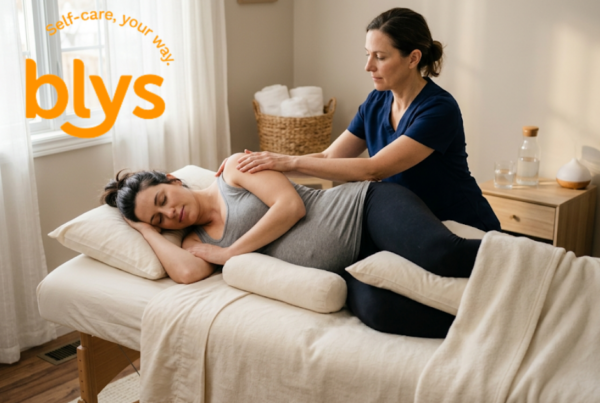
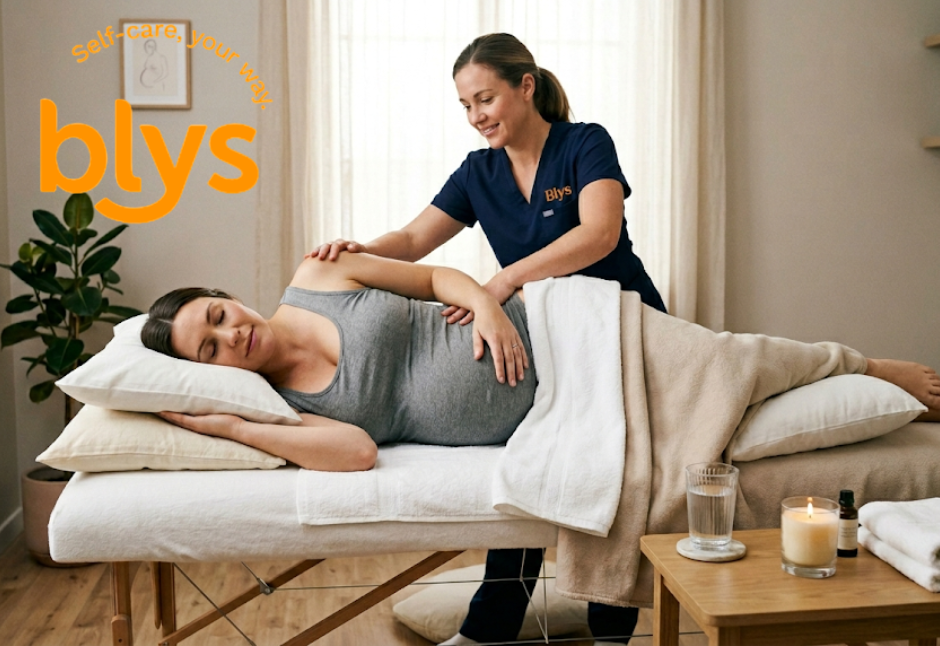
Side-lying becomes standard from around 16–20 weeks. Lying prone is no longer appropriate, and extended time on the back becomes inadvisable from roughly 20 weeks due to the pressure the growing uterus can place on the vena cava, which can reduce circulation. Side-lying with good pillow support under the head, between the knees, supporting the belly becomes the norm from here on.
This shift is one reason why having a professional come to your home is so practical during pregnancy. You’re already in a familiar environment with your own pillows and space. There’s no travelling across town, no clinic chair, no rushing back to work afterwards. Providers you book through Blys are experienced in working with pregnant clients at home and arrive prepared to adapt around you.
What The Second Trimester Calls For In Terms Of Focus
As your posture begins to shift and your pelvis tilts forward to accommodate the growing bump, the glutes, hip flexors and lower back take on considerably more load. Round ligament discomfort, early sciatic irritation and leg cramps often appear for the first time in the second trimester all are well addressed with focused massage work on the posterior chain and hips.
Pelvic girdle pain (PGP) affects roughly one in five women in the UK and frequently begins in the second trimester. It requires specific modification during massage, so flag it to your therapist before any session begins.
Third Trimester: Keeping Up Support When It Counts Most
From week twenty-seven through to birth, the physical demands of pregnancy are at their peak. The lower back is under sustained pressure, the hips ache, sleep is disrupted, and swelling in the legs and feet becomes a daily reality for many women. This is when consistent support makes the greatest difference and when many women find it hardest to get to a clinic.
Positioning For Late Pregnancy Sessions
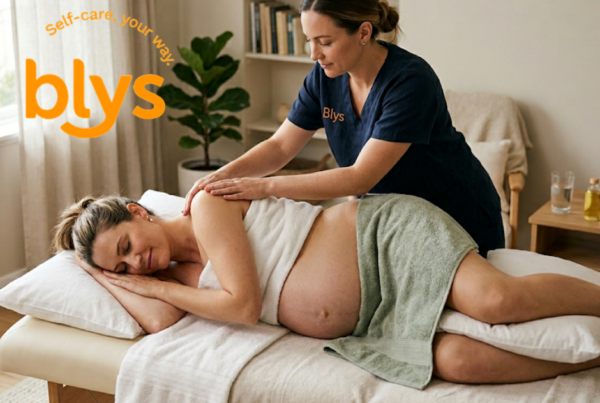
Full side-lying is the standard approach throughout the third trimester. At a home visit, your therapist will work with whatever space and supports you have available pillows along the back, under the bump and between the knees. Some therapists carry pregnancy bolsters, so it’s worth confirming when you book.
The Research Case For Third Trimester Massage
A 2012 study published in the Journal of Perinatal Education found that massage in the third trimester was associated with reduced back and leg pain, measurably lower anxiety and improved sleep quality. Sleep disruption in the final trimester is one of the most widely reported complaints and one of the most under-addressed. That finding alone makes a compelling case for regular sessions in the final weeks.
Where To Focus In Late Pregnancy
The lower back, hips and glutes continue to carry the most load. Gentle lymphatic drainage techniques help manage oedema in the lower legs and feet, which typically builds from around weeks 28–32. The upper back and neck, often strained from the forward postural shift, are also valuable to address consistently from this point.
From around 36–38 weeks, many therapists take additional care around acupressure points associated with labour stimulation. The evidence base for this is limited, but it’s a sensible precaution worth discussing openly with your provider.
Trimester-By-Trimester Quick Reference
Use this table as an at-a-glance guide before you book or to share with your partner or midwife so they understand what changes at each stage.
| First Trimester (Wks 1–13) | Second Trimester (Wks 14–26) | Third Trimester (Wks 27–40) | |
| Positioning | Semi-reclined or side-lying; no prone | Transitioning to full side-lying from ~wk 20 | Full side-lying only |
| Pressure | Light throughout | Moderate; firmer on posterior chain | Moderate; gentle on lower limbs |
| Key Focus Areas | Shoulders, neck, upper/lower back, legs | Glutes, hip flexors, lower back, sciatic region | Lower back, hips, glutes, legs, ankles, upper back |
| What To Avoid | Deep abdomen, SP6, deep tissue, extended supine | Deep abdomen, SP6; caution with PGP/placenta praevia | Deep pressure; caution with labour acupressure points from ~wk 36 |
| Session Length | 45–60 min | 60–75 min | 60–75 min |
| Suggested Frequency | Occasional, as needed | Fortnightly from ~wk 16 | Fortnightly → weekly from wk 36 |
When To Start Booking And How Often To Go
The right frequency shifts across each trimester. Here’s a practical guide alongside the key questions to ask before you book:
- First trimester: Possible for low-risk pregnancies. Keep sessions to 45–60 minutes with light pressure. Choose therapists with prenatal experience and be clear about your gestational age at the point of booking.
- Second trimester: The ideal window to begin regular sessions. Fortnightly appointments from around weeks 16–20 suit most women. Use this period to find a provider whose approach works for you before the physical demands of the third trimester set in.
- Third trimester: Fortnightly is common through to around week 36, with many women shifting to weekly in the final month. If you’re managing specific symptoms sciatica, oedema, disrupted sleep more frequent sessions are often justified.
- Before every session: Confirm your therapist understands your current gestational age, any conditions flagged by your midwife or GP, and how they plan to adapt their technique for your trimester.
One thing most guides overlook: pregnancy itself makes accessing care logistically harder. Getting into a car, finding parking, sitting in a waiting room all of it carries a real friction cost at 33 weeks that it simply doesn’t at twelve. Having a vetted, insured professional come to your home removes that friction entirely. With providers you book through Blys, you stay where you’re comfortable and let the therapist come to you.
Explore pregnancy massage through Blys to find a trusted local provider near you. And if you have questions about whether massage is right for your specific situation, is pregnancy massage safe? addresses the key clinical scenarios in plain language.
The Trimester Shapes Everything: Match Your Care To Where You Are
A week-eight session and a week-35 appointment share a name and not much else. The technique is different. The positioning is different. The focus is different. Getting consistent, meaningful benefit from pregnancy massage means working with a provider who understands those differences and adjusts at every visit.
Wherever you are in your pregnancy, you don’t need to push through the aches or wait until things are bad enough to feel justified. And you certainly don’t need to leave home to access skilled, professional support.
Book a pregnancy massage through Blys and connect with an expert, insured provider who comes to you.