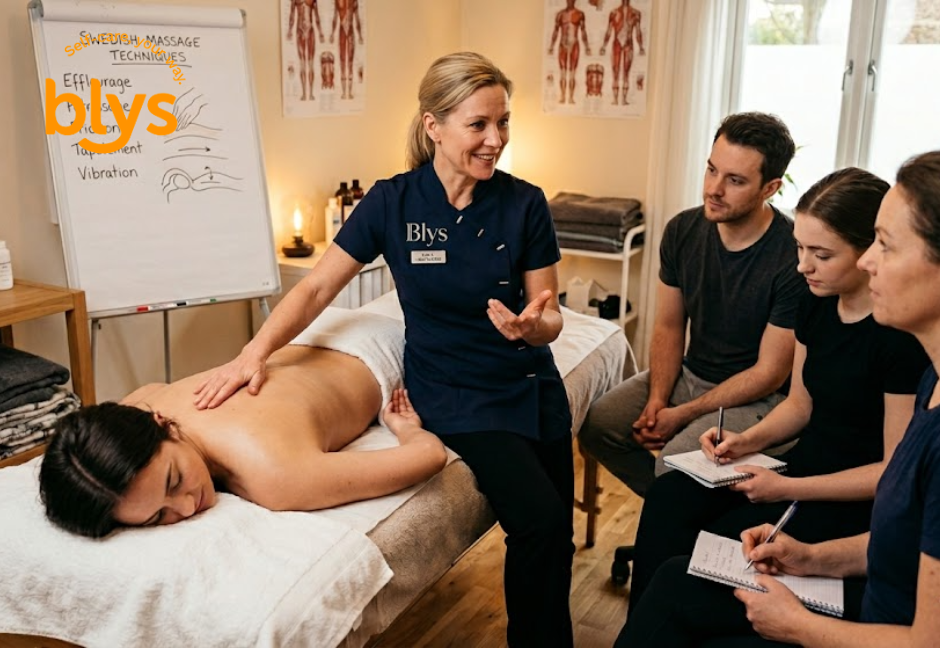
 You’ve probably heard of Swedish massage; it’s one of the most popular massage styles in the world. But if you’ve ever wondered what actually happens during a session, or why your therapist uses different strokes on different parts of your body, you’re not alone. Most people book a massage wanting to relax and unwind, without necessarily knowing what’s going on beneath the surface.
Swedish massage techniques are a set of five distinct movements, each designed to work the muscles and soft tissue in a specific way. Together, they form the foundation of the most widely practised Western massage style, and they’re what gives a good session that combination of deep relaxation and physical relief. Understanding what each technique does can help you communicate better with your therapist and get more out of every booking.
This post breaks down each of the core Swedish massage techniques, explains how they feel and what they’re doing for your body, and covers what to expect from a typical session.
What Is Swedish Massage, and Where Did It Come From?
Swedish massage was developed in the 19th century and remains the benchmark style for relaxation-focused bodywork. It uses a combination of long flowing strokes, kneading, tapping, and friction to warm up muscles, improve circulation, and calm the nervous system.
Unlike remedial or deep tissue massage, which targets specific injuries or chronic tension, Swedish massage is designed to work the whole body in a flowing, connected way. It tends to use lighter to medium pressure and is particularly well suited to people who are new to massage, managing everyday stress, or simply looking to reset.
According to the Better Health Channel, massage therapy can help reduce muscle tension, promote relaxation, and improve overall wellbeing. Swedish massage, with its methodical full-body approach, is one of the most accessible ways to access those benefits.
Research also supports its effectiveness. A range of studies published on PubMed has found Swedish massage to be associated with reduced cortisol levels, lower heart rate, and improved mood. That science is built on the five techniques your therapist uses every session.
The Five Core Swedish Massage Techniques
Each Swedish massage technique has a French name, which reflects the European origins of the style. Here’s what each one involves and what it’s doing for your body.
1. Effleurage (Gliding Strokes)
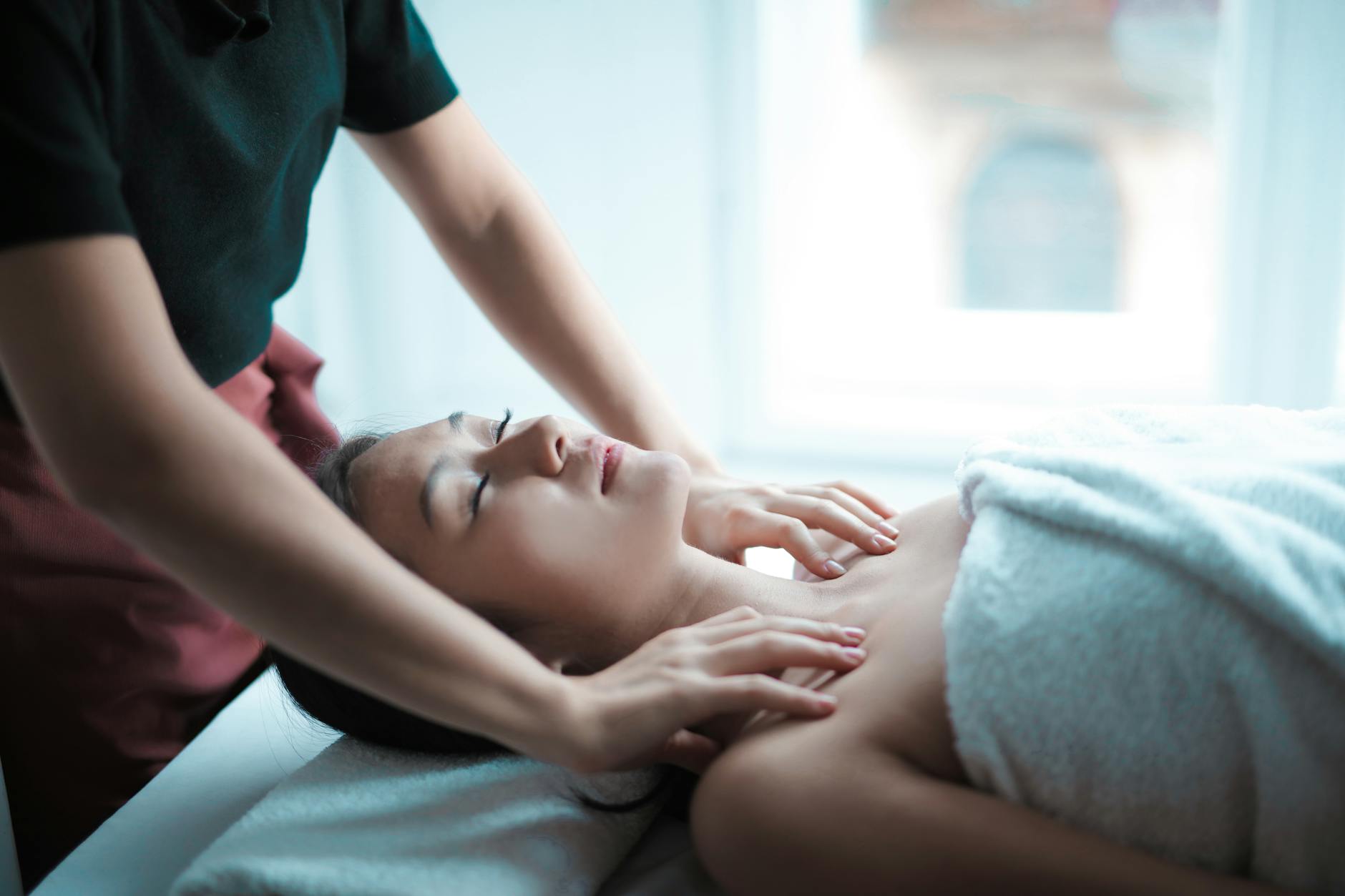
Effleurage is one of the foundation techniques in Swedish massage. It uses long, smooth strokes that glide along the length of the muscle, usually with the palms, fingers, or thumbs. Therapists often use it at the beginning and end of each body area and return to it throughout the session to connect the different techniques.
What it does:
- Gently warms up the muscles and soft tissue.
- Encourages blood flow to the area.
- Helps identify tight or tender spots.
- Promotes relaxation through steady, calming movement.
Because the strokes are slow and continuous, effleurage helps the body ease into treatment without feeling rushed or intense. It also creates the flowing rhythm that makes Swedish massage feel calming, supportive, and easy to settle into from the start.
2. Petrissage (Kneading)
Petrissage is the kneading technique many people picture when they think of massage. It involves lifting, rolling, squeezing, and gently compressing the muscle tissue in a steady rhythm. Compared with effleurage, it works further into the muscle and gives more attention to areas where tension has started to build.
This technique is often used on fuller muscle groups such as the shoulders, upper back, calves, and glutes. If you tend to carry stress through your neck and shoulders, petrissage is often one of the techniques that brings the most noticeable release.
| What petrissage does | How it helps |
| Works deeper into the muscle | Targets built-up tension more directly. |
| Encourages circulation within the tissue | Supports better blood flow through the area. |
| Helps loosen tight or stuck muscle fibres | Can improve movement and ease that knotted feeling. |
| Works well on fleshy areas of the body | Makes it especially useful for the calves, shoulders, glutes, and upper back. |
Because petrissage uses a more active lifting and squeezing motion, it often feels more focused than effleurage. When used well, it adds depth to a Swedish massage while still keeping the session balanced and relaxing.
3. Friction (Deep Circular Pressure)
Friction is a more targeted Swedish massage technique that uses small, controlled movements over one specific area. Instead of gliding along the muscle, the therapist applies focused pressure with the fingertips, thumb, or heel of the hand.
| What friction does | How it helps |
| Applies focused pressure to one spot | Targets stubborn areas of tension more directly. |
| Generates heat within the tissue | Helps soften dense or tight muscle fibres. |
| Works around joints and tendons | Useful in smaller, more localised areas. |
| Addresses chronic tightness | Can help ease fibrous bands and lingering knots. |
Because it is more concentrated than other Swedish massage techniques, friction can feel more intense for a short period. When used carefully, it helps loosen problem areas without disrupting the overall relaxing flow of the session.
4. Tapotement (Rhythmic Tapping)
Tapotement is the rhythmic tapping technique used in some Swedish massage sessions. It may involve light hacking, cupping, tapping, or patting movements, usually applied with the sides of the hands, cupped palms, or fingertips.
What it does:
- Stimulates the muscles and surrounding tissue.
- Encourages circulation in the treated area.
- Activates the nervous system more than slower techniques.
- Can help wake up softer or sluggish-feeling muscle groups.
- Adds a more energising effect to the session.
Because tapotement feels more brisk and invigorating than the other techniques, it is often used in the middle of a massage rather than at the end. Some therapists leave it out entirely when the goal is deep relaxation, which is why not every Swedish massage includes it.
5. Vibration (Oscillating Pressure)
Vibration involves rapid, fine trembling or shaking movements applied with the fingertips or whole hand. It’s the most subtle of the five techniques and is often used on nerves and areas where gentle stimulation is needed.
What it does: vibration helps relax muscle spasm, ease nerve tension, and loosen stiff tissue. It’s commonly used along the spine or on areas where deeper pressure would be uncomfortable. Not all therapists use vibration in every session, but it’s an important part of the full Swedish toolkit.
How These Techniques Work Together in a Session
A skilled therapist doesn’t randomly apply one technique after another. The flow of a Swedish massage follows a loose but deliberate structure: effleurage to warm up and connect, petrissage and friction to work into the tissue, tapotement to stimulate where needed, and effleurage again to finish and settle the area.
The pressure is adjusted throughout the session based on what your body needs. Lighter effleurage at the start eases you in; deeper petrissage mid-session works into stubborn knots; the return to long strokes at the end gives the nervous system time to process and relax.
If you want to go deeper into how Swedish massage produces its therapeutic effects, our post on the science of Swedish massage benefits covers the research in more detail.
It’s also worth knowing that everybody is different. If you’re particularly sensitive in certain areas, or if you have a condition that affects how your muscles or nerves respond, your therapist will modify the techniques accordingly. Communication before and during your session is always encouraged.
What to Tell Your Therapist Before You Start
Knowing what the techniques are gives you a better way to describe what you’re looking for. Instead of just saying, “I want a relaxing massage,” you can be more specific:
- If you want the session to stay light and calming, ask your therapist to focus on effleurage and skip tapotement.
- If you have specific knots or tight spots, let them know so they can spend more time on petrissage and friction in those areas.
- If any pressure feels too intense, say so. A good therapist will adjust in real time.
- If you’re pregnant, recovering from an injury, or have a health condition, mention it upfront so your therapist can adapt the approach safely.
For a broader look at what Swedish massage can do for your body and mind, our guide to Swedish massage therapeutic benefits is a good place to start.
You can also explore how these techniques are specifically used for relaxation in our detailed breakdown of Swedish massage techniques for deep relaxation.
Wrapping Up
You can also explore how these techniques are used more intentionally in our detailed breakdown of Swedish massage techniques for deep relaxation. That guide takes a closer look at how therapists adjust pressure, rhythm, and sequencing when the goal is to calm the nervous system and help the body fully switch off.
Swedish massage is more than just a relaxing treatment. The five core techniques effleurage, petrissage, friction, tapotement, and vibration each serve a different purpose within the session. Some help warm the tissues and improve circulation, while others focus on easing tight muscle fibres, stimulating the body, or creating a stronger sense of physical release. A well-combined application of these techniques results in a smooth and calming massage that still delivers more targeted benefits beneath the surface.
Understanding how each technique works can help you get more value from every appointment. It gives you a better sense of what your therapist is doing, why certain movements feel different, and how Swedish massage supports both relaxation and muscle relief.
If you are ready to experience these techniques for yourself, you can book a Swedish massage through Blys and have a qualified therapist come to you anywhere in the UK.