 The UK’s beauty and wellness industry is worth billions, and demand for skilled facial therapists continues to grow across salons, spas, clinics, and the mobile therapy market. Whether you’re drawn to the science of skin, the artistry of facial massage, or the satisfaction of genuinely improving how clients feel in their own skin, a career as a facial therapist offers real flexibility and long-term opportunity.
What makes facial therapy particularly compelling in the UK right now is the convergence of two trends: growing consumer interest in skin health as part of everyday wellness and the continued expansion of the mobile and freelance beauty sector. Clients are more educated about their skin than ever, and they are seeking therapists who can meet that standard.
This guide covers what a facial therapist actually does, which qualifications UK employers and insurers expect, how to register with professional bodies, the skills that make therapists stand out, and where the career can realistically take you. If you’ve been wondering how to become a facial therapist in the UK, here’s everything you need to make an informed start.
What Does A Facial Therapist Do?
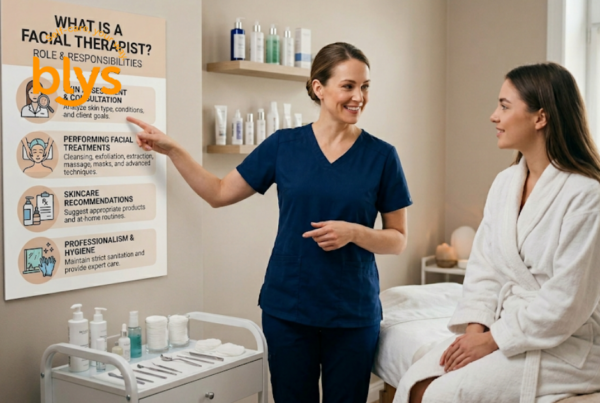
A facial therapist specialises in skin care treatments for the face cleansing, exfoliation, extractions, masks, facial massage, and the application of targeted serums and moisturisers. Every treatment is built around the individual client’s skin type and primary concerns, whether that’s dehydration, congestion, sensitivity, hyperpigmentation, or premature ageing.
A common question worth addressing directly: can a massage therapist give a facial? While there is some crossover in manual techniques, a dedicated facial therapist brings specific training in skin analysis, cosmetic chemistry, and facial treatment protocols that goes well beyond what a standard massage qualification covers. That expertise is what clients are paying for and what insurers and professional employers typically require before they will engage a practitioner.
A related question that often comes up is: what facial cream do beauty therapists use? In a professional setting, therapists typically work with clinical or cosmeceutical-grade product ranges brands like Elemis, Dermalogica, IMAGE Skincare, Medik8, or Environ that are formulated specifically for professional use. Product selection is based on the client’s skin analysis, not a one-size-fits-all approach. Understanding how to choose and apply products correctly is a core part of the training.
Facial therapists work across a wide range of settings in the UK: day spas, high street salons, dermatology clinics, hotel wellness facilities, and mobile therapy services. Advanced practitioners may also offer treatments like chemical peels, microdermabrasion, LED light therapy, dermaplaning, or high-frequency facials all of which require additional certification beyond the standard beauty therapy qualification.
Training And Qualifications In The UK
There is no single mandatory licence for facial therapists in the UK, but reputable employers and insurers will expect you to hold a recognised beauty therapy qualification from an accredited awarding body.
The main awarding bodies operating across the UK are VTCT (Vocational Training Charitable Trust), ITEC (International Therapy Examination Council), and CIBTAC (Confederation of International Beauty Therapy and Cosmetology). Qualifications from these bodies are widely recognised across the industry.
Level 2 Certificate/Diploma In Beauty Therapy
This entry-level qualification is the starting point for most new therapists. It covers foundational skills including basic facial treatments, waxing, manicures and pedicures, skin analysis, and client consultation basics.
Courses are typically available full-time at further education (FE) colleges or through private training academies and take roughly six to twelve months to complete. Upon finishing, you’ll have the core competencies to work in a supervised environment and begin building practical experience.
Level 3 Diploma In Beauty Therapy
The Level 3 Diploma is the industry-standard qualification for a fully trained beauty or facial therapist in the UK. It builds substantially on Level 2, covering advanced facial techniques, electrical facial treatments, full skin analysis, detailed client care protocols, and salon management fundamentals.
Most salons, spas, and wellness employers expect at least a Level 3 when hiring therapists for client-facing roles. Full-time study typically takes twelve to eighteen months, though part-time routes are available and commonly used by those who are already working in the industry in a junior capacity.
Advanced And Specialist Qualifications
After qualifying at Level 3, many facial therapists go on to complete advanced training in specific treatments. Common areas include dermaplaning, microneedling, LED light therapy, chemical peels, and cosmeceutical facials all offered through product brands, specialist training academies, and awarding bodies like VTCT and CIBTAC at Level 4 and above.
For therapists interested in clinical skin treatments, the VTCT Level 4 Award in Laser and IPL is an option, though this crosses into the regulated medical aesthetics space and requires working within appropriate clinical oversight. As the industry continues to professionalise, holding a Level 4 qualification increasingly differentiates therapists in competitive markets.
Professional Bodies And Registration
While professional registration is not legally mandated for facial therapy in the UK (unlike tattooing, which requires local authority licensing), joining a professional association is strongly advised. It supports insurance access, enables ongoing professional development, and signals to clients that you operate to recognised standards.
- BABTAC (British Association of Beauty Therapy and Cosmetology) the UK’s leading professional body for beauty therapists, offering professional indemnity and public liability insurance, a therapist directory, and continuing education resources.
- HABIA (Hair and Beauty Industry Authority) sets the national occupational standards for the UK hair and beauty sector and advises on training, qualifications, and career development.
- CIBTAC (Confederation of International Beauty Therapy and Cosmetology) an international awarding body with strong UK representation; membership supports global recognition of your qualifications, useful if you plan to work abroad.
BABTAC membership is particularly well-regarded by employers and enables self-employed therapists to access the insurance they need to work independently. If you plan to go freelance or offer mobile treatments, this is an essential step before you take on your first paying client.
Most insurance providers in the sector will ask for proof of both qualification and professional body membership before issuing cover.
Skills That Make A Great Facial Therapist
Technical training gives you the foundation. What you build on top of that determines the quality and longevity of your career.
- Skin analysis: reading skin accurately identifying type, condition, and underlying concerns rather than just responding to what’s visible is the basis of every personalised and effective treatment.
- Manual skill and precision: consistent, confident technique in facial massage and extraction work is what clients notice and what keeps them loyal. This develops with repetition and quality supervision.
- Client consultation: the ability to ask the right questions, listen carefully, and translate what you hear into a tailored treatment plan is a skill that makes a real difference to client outcomes and retention.
- Ingredient literacy: understanding how active ingredients work, how to layer products correctly, and which ingredients are contraindicated for certain skin conditions is increasingly expected at every level.
- Professionalism and self-management: especially important for freelance and mobile therapists managing bookings, maintaining client records, and delivering a consistently high standard of treatment builds the reputation that sustains a career.
If you’re comparing career options within the beauty industry and want to understand earning potential, our guide on the highest-paying jobs in the beauty industry provides useful context on where facial specialists sit relative to other roles.
Career Pathways For UK Facial Therapists
The UK market offers genuinely varied employment options for qualified facial therapists. Most therapists begin in a salon or spa to gain structured client experience, build confidence in their technique, and establish a professional reputation before moving toward greater independence.
Mobile and freelance facial therapy is increasingly popular across the UK, allowing therapists to take their services directly to clients at home. This model suits therapists who value flexibility and direct client relationships. It also tends to attract a client segment that prioritises convenience and personalised service both areas where a skilled independent therapist can genuinely compete with salon environments.
Clinic-based roles in dermatology practices, cosmetic medicine clinics, or high-end skin studios represent another strong pathway typically requiring additional qualifications in clinical skin treatments and a comfort level with a more results-driven, medically adjacent environment. Our guide on how to become a beauty therapist and get clients covers how to approach building a client base from scratch, whether you’re working independently or in a clinic setting.
Hotel and resort-based roles offer another avenue often with attractive packages, the opportunity to work in premium environments, and exposure to an international clientele. For therapists who are looking to combine their career with travel or who thrive in high-service hospitality environments, these positions can be very rewarding.
Brand education and teaching are long-term options for those who have accumulated significant practical experience and want to shape the next generation of therapists.
What To Expect In A Facial Therapy Session
If you’ve only experienced facials as a client, understanding what goes into delivering a professional facial gives you a clear picture of the skill involved. A standard session begins with a thorough skin analysis and consultation, followed by a double cleanse, exfoliation (manual, enzymatic, or both), extractions if appropriate, a targeted mask, serum and moisturiser application tailored to the client’s skin, and facial massage using manual or tool-assisted techniques.
What distinguishes a great therapist from a competent one is the ability to approach every session as a fresh assessment. Skin changes with the season, with stress, with hormonal shifts and the best therapists read those changes and adjust their approach accordingly. That responsiveness, combined with clear communication about what you’re doing and why, is what clients respond to and what drives return bookings.
For therapists who want to ground their practice in evidence, research available through PubMed/NCBI covers topics including the physiological effects of facial massage on microcirculation and lymphatic drainage, the mechanisms of common active ingredients, and the evidence base for various skin treatment modalities. Engaging with this material regularly keeps your practice current and gives you the confidence to explain the rationale behind your treatments.
Wrapping Up
Becoming a facial therapist in the UK follows a clear and well-supported training path: a Level 2 to build foundational skills, a Level 3 to reach fully qualified status, and specialist short courses to expand your scope as your career grows. Joining BABTAC or a comparable professional body is an important practical step not just for credibility, but for the insurance access it provides.
Whether you plan to work in a spa, go freelance, build a clinic-based practice, or combine facial therapy with other wellness services, the investment in proper training pays real dividends. Clients are more informed and discerning than ever, and therapists who can demonstrate genuine expertise in their qualifications, their product knowledge, and their consultation skills are the ones who build careers that last.