 Valentine’s week doesn’t have to mean romance at work. It is already a cultural moment for appreciation, which makes it a smart time for HR teams to run a Love Your Team Week that feels inclusive, practical, and genuinely uplifting. Instead of awkward couple themes, focus on recognition that everyone can get behind, with simple team wellness ideas that help people reset during a busy stretch.
February is a natural pressure point. The post-holiday dip is real, back-to-school routines can still feel messy, and Q1 ramp-up often brings heavier workloads and tighter deadlines. A small, well-timed wellbeing push can lift morale without turning into another big project.
This guide gives you a ready-to-run plan you can copy, including a simple corporate massage booking setup, a clear cost comparison (including hotel spa vs mobile massage cost), and an easy way to track impact through team wellness signals like participation, sentiment, and retention risk.
What Love Your Team Week
Keep love your team week workplace-safe by framing it around appreciation and wellbeing, not romance. Use language like recognition, recharge, thanks for the effort, and team wellbeing. Avoid romantic themes, couple jokes, date night references, or anything suggestive that could make people feel singled out or uncomfortable.
This approach also matches respectful workplace guidance on preventing sexual harassment, including avoiding unwelcome conduct that may be brushed off as humour.
For HR, the goal is to deliver a reset people feel immediately, without disrupting the workday. Keep it simple to run with sign-up slots, minimal space, and ideas that work in short blocks, then treat the week as a launchpad for a year-round team wellness habit.
The 5-day Love Your Team Week Plan
This is a simple five-day rollout you can run with minimal planning. Each day is designed to fit into normal workflows, keep participation fair, and make it easy to continue as an ongoing team wellness habit.
Day 1: Kick-off and Sign-up Link
Send a two-minute launch note that frames the week as team appreciation and a mid-quarter reset. Include a simple sign-up link with pre-set booking slots so people can choose a time without back-and-forth. If you have a hybrid team, set one office day for in-person wellbeing and offer a voucher option for remote staff so nobody misses out based on location.
Day 2: On-site Chair Massage Rotations
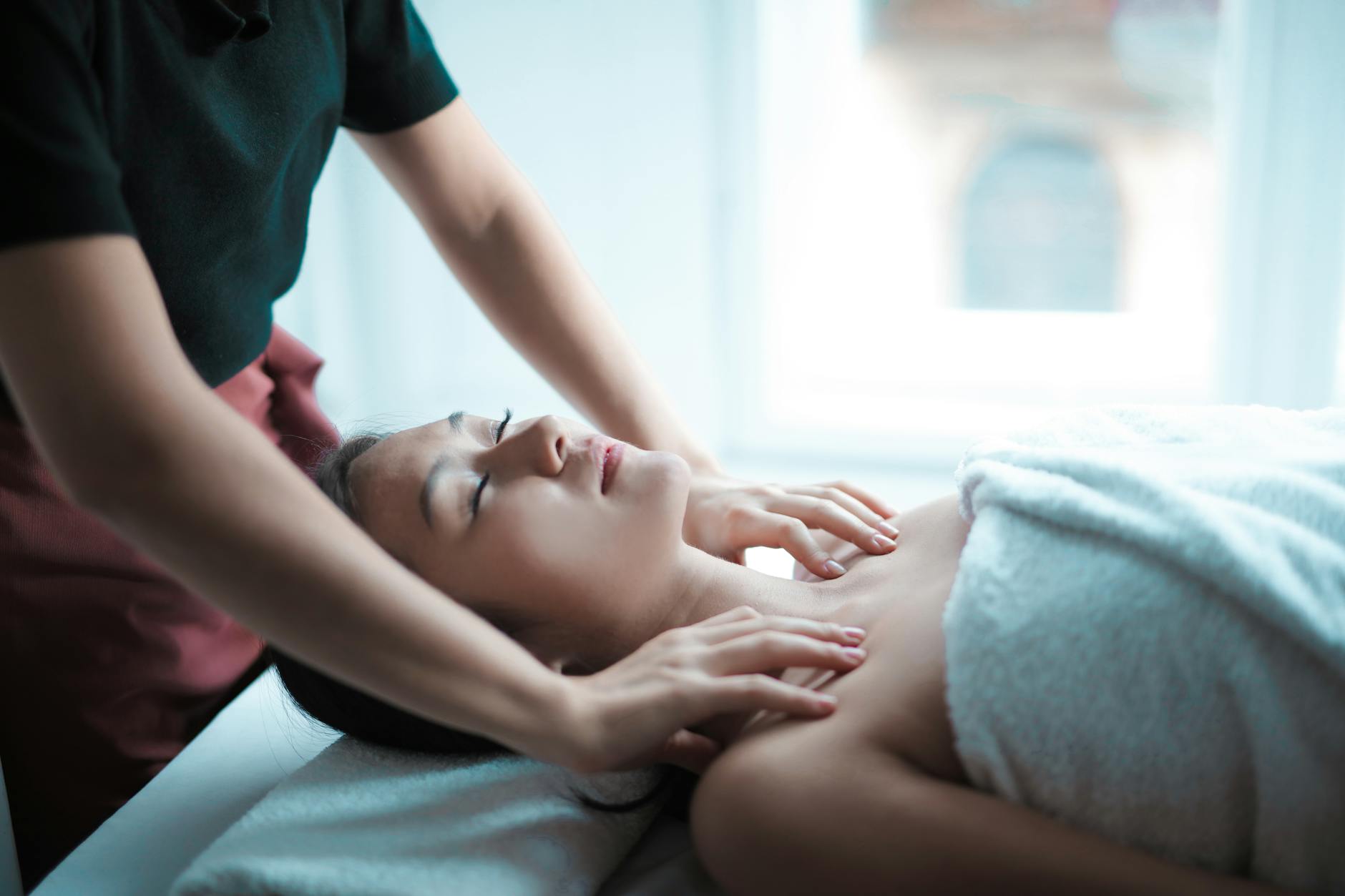
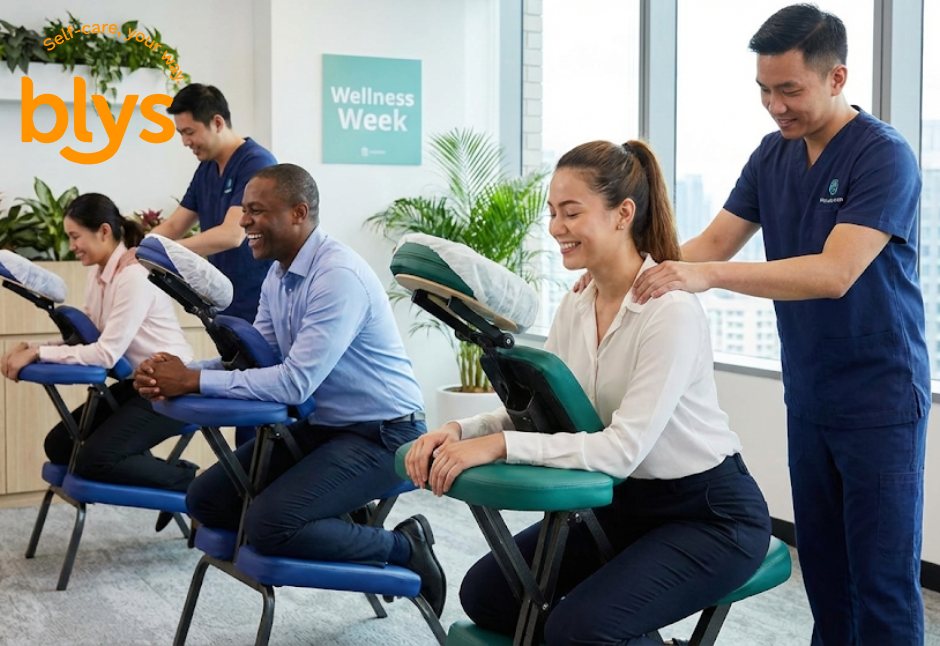
Run on-site chair massage in short 10–15 minute sessions. It stays fully clothed, feels relaxing fast, and needs only a small quiet corner, which keeps the logistics light. Schedule by pods or teams rather than first come, first served, so coverage feels fair and managers can protect the time without disrupting workflows.
Day 3: Micro-break menu
Share a three-part micro-break menu people can do at their desk: five minutes of neck and shoulder mobility, five minutes of calm breathing, and five minutes away from screens. The key is making it automatic. Add two optional micro-break blocks to calendars so it actually happens, instead of becoming another wellbeing idea that gets skipped.
Day 4: Team Thank-you Rewards
Use wellness vouchers as a clear thank-you for Q1 performers, quiet achievers, and high-load customer-facing teams. Keep it choice-based so it suits different comfort levels and schedules, such as massage, beauty, or other wellbeing services. This also works as an inclusive reward for staff who cannot attend the in-office day.
Day 5: Keep It Going
Close with a quick pulse check and one decision. Lock in a simple rhythm you can repeat, such as monthly chair massage rotations or a quarterly voucher drop tied to peak workload periods, so Love Your Team Week becomes a habit.
Need more options beyond Love Your Team Week? Our guide on office wellness ideas that boost morale and focus is a handy add-on for your ongoing plan.
Why Corporate Massage Is The Anchor Idea
If you only pick one love your team week activity to anchor the whole week, make it a corporate massage. It is simple to run, it fits into the workday, and it gives people a real reset instead of just another social obligation.
- Immediate payoff in the workday: People feel the benefit straight away. A short chair massage can ease tension and lift energy without needing a long event or a full afternoon off.
- Works for every personality type: A team lunch can feel social and loud, which suits some people and drains others. Massage is one-on-one and optional, so introverts do not have to perform socially to feel included.
- Better coverage than a single lunch booking: Lunch happens once, at one time, and not everyone can make it. Massage rotations let people take turns in short slots, which makes participation fairer across teams and shifts.
- Easier to run than most wellbeing events: Blys therapists come to your workplace, bring the equipment, and work to a schedule you set. You choose the session length and the booking window, then run it in a quiet corner with minimal disruption. See Corporate Massage and Corporate Wellness for the practical setup.
Once it lands well, it is also easy to repeat. Many teams use the same rotation format monthly or quarterly, which turns a Valentine’s week morale boost into a steady team wellness habit.
Corporate Massage Booking, Made Simple
If you want a corporate massage booking process that runs smoothly, keep it to three decisions: format, schedule, and space. This playbook is designed to minimise admin while making the experience feel organised and fair for the whole team.
Step 1: Pick The Format
Choose what fits your team and your goal. Chair massage rotations are best for fast coverage because sessions are short and people can rotate through with minimal time away from desks. Table massage blocks suit smaller teams when you want longer, quieter sessions with more privacy.
Step 2: Build A Schedule That Reduces Friction
Use clear booking slots, not informal sign-ups. Add small buffers between sessions and set a simple no-show plan, like a standby list or easy swaps within the same pod. Ask managers to approve the time upfront and protect the break so staff can step away without guilt.
Step 3: Set Up The Space In Minutes
Use a quiet corner with enough space for the therapist to work comfortably, plus a basic chair or open area depending on the format. Keep it simple with a sign-in sheet, sanitiser, and water. If your team is travelling or running an offsite, Blys can also deliver to hotels, similar to how couples massages can be delivered to homes, hotels, or offices.
Cost Comparison HR Can Actually Use
When you compare options, look beyond the headline price. For HR, the real budget impact usually comes from time away from work, admin load, and how many people can actually participate.
- Team Lunch: Lunch is an easy thank-you, but the real cost is often time. It pulls teams offline at once, and not everyone enjoys a social meal.
- Hotel Spa / Offsite Massage: Offsite massage adds travel, staggered bookings, and extra admin. Per-head pricing is often higher too.
- Mobile Corporate Massage Onsite: Onsite massage is more controllable. You set session length, therapist numbers, and the booking window, so coverage and disruption stay predictable.
Bottom line: the best-value option is usually the one that protects time first, keeps participation broad, and stays simple to organise.
| Option | Direct Cost Drivers | Time Cost | Inclusivity | Admin Effort |
| Team Lunch | Food, drinks, dietary needs | High (everyone off at once) | Medium (not for everyone) | Medium |
| Hotel Spa / Offsite | Higher per-head pricing, travel | High (travel + staggered) | Medium (access varies) | High |
| Mobile Massage On-Site | Session length, therapists, window | Low–Medium (short slots) | High (opt-in, rotates) | Low–Medium |
Bottom line: if you want a morale boost without losing half a day of productivity, prioritise the option with the lowest time cost and the widest participation.
Making The Business Case: Morale, Retention, And The February Slump
The logic is straightforward: stress down, focus up, better days at work, and less attrition risk. In a month where teams often feel stretched, small wellbeing supports can reduce friction day to day and help people stay steady through the Q1 push.
If you need evidence to support the conversation, keep it tight and credible. Short workplace chair massage sessions have been linked with reductions in blood pressure in a workplace study, which supports the idea of a fast physiological downshift during the day.
Broader evidence reviews also suggest massage can support stress and anxiety outcomes for some people, which aligns with morale and wellbeing goals. Then anchor it in the real HR problem: turnover pressure and job movement trends remain a live issue in the UK, so retention-focused initiatives matter.
To show ROI without overcomplicating it, run a simple 2–4 week check. Track a quick pulse score (one question, 1–10), participation rate, and eNPS comment themes for signals like feeling valued, less tension, or better focus.
Add one operational metric, such as sick-day trend or short-notice leave. If you see participation plus a boost in sentiment and fewer negative themes, you’ll have enough to justify repeating the programme monthly or quarterly.
Want more team wellness ideas you can reuse after Valentine’s week? Our guide to corporate wellness events gives you simple options to keep the momentum going.
Make It Year-Round: Turn Love Your Team Week Into A Programme
Treating Love Your Team Week as a launch, rather than a one-off, is the easiest way to ensure its success. When the first rollout lands well, you already have the format, the comms, and the schedule template to repeat without extra planning.
For a simple monthly rhythm, run one on-site massage day with short rotations, then offer a voucher option for remote staff so the benefit stays fair across locations. On a quarterly cadence, tie wellness vouchers to performance recognition, for example, Q1 delivery, customer impact, or quiet achievers who keep things moving. It tends to land better than cash or generic gift cards because it feels intentional and supports wellbeing.
Finally, use it strategically during peak stress periods. End-of-financial-year pressure, major project launches, and onboarding waves are the moments where a small reset can protect morale and reduce burnout signals before they turn into disengagement.