 February is the hidden slump month in many Brits’ workplaces. The summer break feels close, the Valentine’s buzz has passed, and the calendar suddenly looks like a long run until Easter. That’s when the drop shows up as slower mornings, tighter shoulders, and early Q1 burnout across teams.
This article focuses on the Feb–Mar corporate wellness window, when a small, low-admin change can lift morale without interrupting the workday. We’ll cover three options that are simple to roll out: chair massage pick-me-up days, a massage gift voucher UK teams can redeem when it suits them, and recurring bookings that make support consistent.
You’ll also learn how to track results, so each corporate massage booking links back to real outcomes, not just a nice day.
Why February March Hits Morale And Output
In real offices, the Feb–Mar dip is subtle. It shows up as shorter tempers, slower mornings, micro-absences that never quite become sick leave, and low-energy meetings where everything takes longer. You also feel it physically, with more neck and shoulder tightness as people settle back into long sitting days and full workloads.
It often gets missed because it is not a crisis; it is a drag, and that is where performance quietly leaks. This is why corporate wellness works best as prevention in this window, not perks. In the UK, psychosocial hazards and sustained stress are treated as a work health and safety issue, so early action helps reduce risk before it turns into longer absences or wider disengagement.
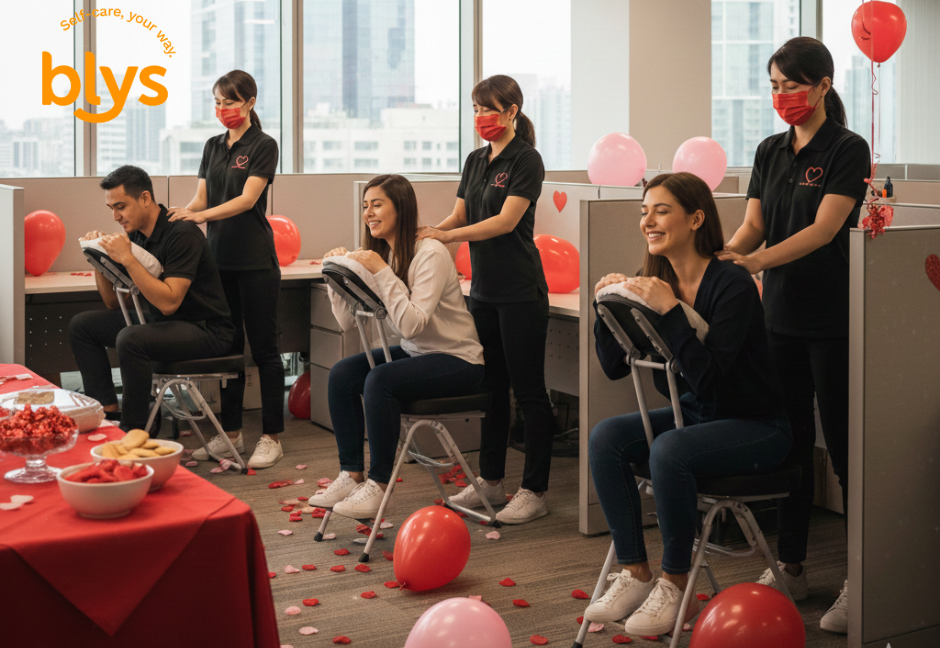
A simple corporate massage booking, such as short chair sessions that rotate through the team, can be one practical reset that fits a normal workday.
The Business Cost Of Q1 Burnout In Plain Numbers
In Q1, the real cost line is absenteeism plus presenteeism. February and March are when teams show up but run flat, and that quiet drag hits output first.
- Absenteeism costs more than wages: Missed deadlines, delayed approvals, rework, and extra coverage load for the rest of the team.
- Presenteeism is the hidden leak: People are present but slower, more error-prone, and less responsive, which shows up in delivery metrics and client experience.
- Evidence puts scale behind it: Safe Work estimates depression costs. Brits employers lose about $6.3 billion per year through presenteeism and absenteeism.
- Mental health time away can be much longer than physical injury time loss: The 2022–23 median time lost was 35.7 working weeks for serious mental health condition claims versus 7.4 weeks across all serious claims.
- A practical ROI check for leaders: Estimate the cost per absence day (salary and backfill/overtime and delays and rework), then compare it to your Feb–Mar prevention spend, such as a chair massage day or a recurring corporate massage booking.
If you want the results to be actionable, pick one team to pilot first, set a simple baseline (sick days, output delays, or a quick pulse check), then track the same markers in March and April. That way, your wellness decision is tied to what leaders care about: fewer disruptions, steadier delivery, and a team that can keep pace without burning out.
What Makes A Feb Wellness Program Actually Work
A February–March wellness initiative works when it is built for real workdays, not ideal ones. In Q1, the goal is a fast reset that protects output and helps ease Q1 burnout without turning into another HR project. With Blys, that often looks like a corporate massage booking that runs in short rotations and then repeats on a simple rhythm.
Here are the design rules that tend to stick:
- Fast to deliver: Something you can book and run within days, like chair massage sessions on an anchor office day.
- Minimal disruption: Opt-in time slots, 10–20 minute rotations, and a clear start and finish window so teams can plan around it.
- Inclusive for different comfort levels: Give people choice, including chair massage, a quieter space, or a massage gift voucher UK staff can redeem later.
- Easy to repeat: A simple monthly rhythm beats a one-off event because it becomes part of the calendar.
- Low admin: One booking link, reminders, and a quick way to capture feedback so it stays easy.
Please note that workplace wellness outcomes are influenced by programme design and participation, so it is advisable to track your results rather than assume them.
Get instant pricing and a corporate wellness quote and line up a chair massage day in February or March, vouchers, or recurring bookings in minutes, with a plan you can repeat monthly.
Solution 1: Chair Massage Pick-Me-Up Days That Fit A Workday
Chair massage is a simple Feb–Mar reset because it boosts energy without pulling people out of the day. It is suitable for early Q1 burnout when you need a practical lift quickly.
Best Fits
This works well for sprint teams, customer support and sales fatigue, hybrid anchor days, and post-event recovery after travel or conferences. To include remote staff, pair the on-site day with a massage gift voucher UK employees can redeem when it suits them.
Setup
Keep it predictable. Ten minutes is best for quick resets and higher throughput, 15 minutes suits most teams, and 20 minutes fits smaller groups or high-stress roles. Blys notes one therapist can see up to 6 staff per hour, so you can plan capacity quickly. Space is usually easy too, with the chair setup needing around 1 m x 1.5m.
Blys Admin
The Q1 win is low admin. Share one scheduling link and staff choose their slots, with email confirmations and reminders to reduce no-shows. Pricing can start at as little as $20 per staff member, depending on the setup, and you can repeat it monthly with automated recurring bookings.
Evidence
Workplace-style research links chair massage with improvements in perceived stress and pain-related measures, without needing to overpromise outcomes. Reviews also note massage can support short-term downshifts in some stress markers, with mixed longer-term findings, which is why timing and consistency matter.
Solution 2: Gift Vouchers As A Q1 Performance Bonus People Use
Vouchers are the easiest Q1 morale lift because they do not require an onsite event. A massage gift voucher that UK teams can redeem themselves also keeps things fair for hybrid and remote staff.
Blys vouchers are delivered digitally, and the recipient chooses their own date and time when they redeem. Vouchers are valid for three years from purchase. For workplaces, corporate vouchers can be customised and used for staff rewards, prizes, onboarding, and client gifting.
To avoid unused credit, add one simple system: include a suggested booking week in the email, then send one reminder about two weeks later.
| Use Case | What To Send With The Voucher | Suggested Booking Week | Follow-Up Nudge |
| Q1 performance bonus | Note it is for recovery and focus | Within 14 days | Manager reminder at 2 weeks. |
| Hybrid fairness reward | Same benefit, no onsite requirement | Any week in Feb–Mar | One-line team reminder. |
| Onboarding welcome | Helps new starters settle in | Weeks 2–4 of employment | Quick check-in message. |
| Spot prize after a sprint | Reward for a specific win | Next available week | Reminder after 10–14 days. |
If you want stronger uptake, make the suggested booking week land in Feb–Mar by default. It keeps the reward tied to Q1 burnout prevention, and it gives you a clearer story when leaders ask what the bonus achieved.
Want a few extra quick wins for the Feb–Mar slump? Our guide on office wellness ideas that boost morale and focus pairs well with chair massage days, vouchers, and recurring bookings.
Solution 3: Monthly Recurring Bookings For Steady Morale
One-off wellness days are nice, but Q1 burnout returns quickly. Recurring bookings work better in Feb–Mar because they create a predictable reset teams can plan around.
When sessions repeat, people start to expect them and protect the time. HR also avoids planning fatigue because you are not rebuilding the schedule each month. With Blys, you can set automated recurring bookings, use co-pay if budgets are shared, add multiple account managers, and rebook favourites for consistency. Recurring discounts are available on corporate massage bookings too.
A simple decision guide: monthly suits most offices, fortnightly suits high-load teams during peak periods, and quarterly “big day” plus monthly micro-sessions suits larger teams that want one anchor event and steady support between.
ROI Without Fluff: How To Prove Feb-March Impact In Your Numbers
If you want budget approval, you need more than good vibes. This section shows how to track simple markers so your Feb–Mar wellness spend links to real business outcomes.
Start With A Credible ROI Frame
If leaders ask, will this actually pay off? Start with the honest version. In a PwC analysis for beyondblue, organisations that successfully implement an effective action to create a mentally healthy workplace can expect an average return on investment of $2.30 for every $1 spent, but results vary by the action chosen and how well it is implemented.
Keep Your Pilot Metrics Simple
For a Feb–Mar pilot (chair sessions, vouchers, or a mix), pick 2–3 metrics only. More than that and you will not use the data.
| Metric To Track | What It Tells You | Simple Way To Measure | What To Look For In March–April |
| Sick leave days per head | Absence pressure | Compare March–April vs your baseline (or last year). | Fewer days or fewer repeat absences. |
| Engagement pulse or eNPS | Morale and retention risk | 1–2 questions before and after the pilot. | Small upward movement, fewer negative comments. |
| Utilisation rate | Whether people actually used it | Sessions filled, voucher redemptions. | Steady uptake, fewer no-shows. |
| Turnover risk signals | Early retention cracks | Exit notes, manager flags, retention in key teams. | Fewer flight-risk mentions, steadier retention. |
Use A Six-Week Design Leaders Trust
Run a 6-week Feb–Mar pilot, then review what changed in March–April. If you can, compare to the same period last year. Also segment results by teams with high uptake vs low uptake, because that is often where the story becomes clear.
Be Careful With Claims
Do not promise a guaranteed drop in sick leave or turnover from any single corporate massage booking. Instead, prove whether your Feb–Mar investment reduced March–April disruption in your own context using the 2–3 metrics above, then scale what works.
Book a corporate massage day for your team and run a six-week Feb–Mar pilot with simple tracking, so you can show leaders what changed by April.
A Ready-To-Run Feb-March Rollout Plan
The months of February and March are ideal for implementing a small wellness initiative, as it allows you to address Q1 burnout at an early stage, while teams are still in motion. It also gives you enough runway to measure results before March–April sick leave shows up.
- Week 1: Choose your format and lock dates: Pick one primary option: a chair massage day, massage gift voucher UK rewards, or monthly recurring bookings. Choose an anchor day with the highest onsite attendance, then set session length and a clear booking window so capacity is obvious.
- Week 2: Send one simple invite: Keep it opt-in, explain it as a short reset, and share a single scheduling link. If you are using vouchers, include a suggested booking week so people book rather than save it for later.
- Weeks 3–6: Deliver and collect light feedback: Track utilisation (filled sessions, redemptions, no-shows), then ask one pulse question at the end of week 6: Did this help you feel more able to focus this week?
- End of March Send a one-page leader update: Include total cost, uptake, and 2 early signals (e.g., fewer short-notice absences, a small pulse lift, or fewer workload complaints in 1:1s). Finish with a recommendation: repeat, expand to another team, or adjust timing before April.
That is enough structure to defend the spend and improve the next corporate massage booking without adding admin. Keep it small, prove it, then scale the parts people use.
Need a fast Q1 reward? Our guide on an instant Valentine’s massage gift voucher in the UK fits perfectly with Feb–Mar bonus vouchers.
February Wellness Is A Performance Move
February wellness is not about perks; it is a performance move. If your team needs a fast lift, a chair massage pick-me-up day fits into a normal workday and supports focus without disruption. If you need something fair for hybrid and remote staff, massage gift vouchers in UK allow people to book at their convenience. If you want steady morale through Q1, recurring bookings create a predictable reset that people start to protect.
The next step is simple: choose one Feb–Mar action, run it for six weeks, and track 2–3 markers in March–April (uptake, a quick pulse score, and sick days per head). Then keep what works and scale it, whether that means repeating monthly, adding another team, or upgrading from a one-off day to a regular corporate massage booking.