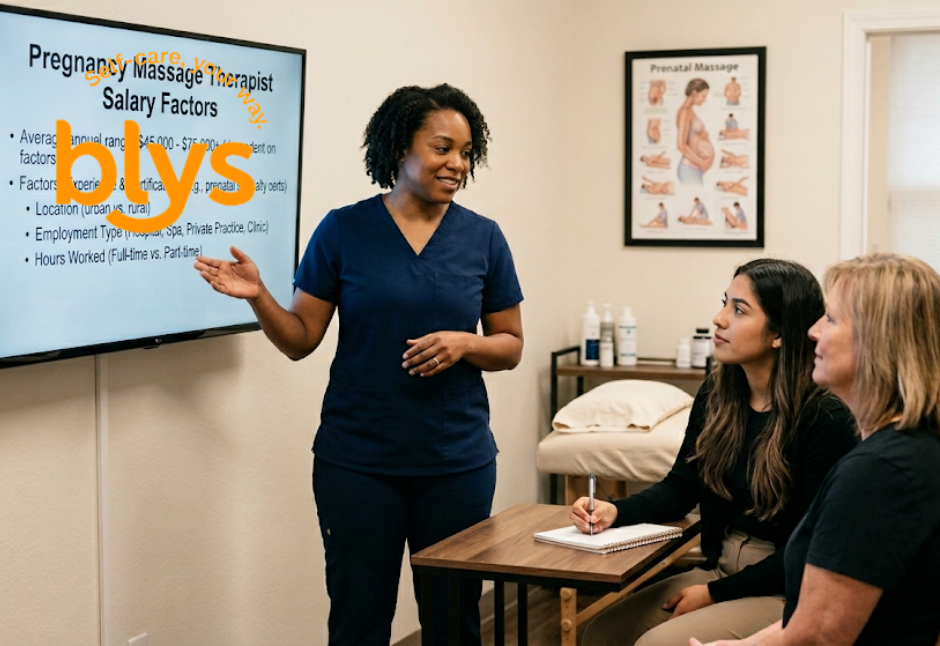
 Considering a move into prenatal massage but wondering whether the specialist route actually changes what you earn? It’s worth working through the numbers before you commit. Pregnancy massage therapist salary figures in the UK vary considerably depending on your setting, how much you work, and whether you’ve built a mobile client base or tied yourself to one location.
The difference between a generalist and a specialist isn’t automatic but for therapists who position themselves well, it’s real and it compounds over time.
This article covers what pregnancy massage specialists earn in the UK at entry, mid, and senior levels. It looks at employed versus self-employed income, how offering at-home sessions affects your earning potential, and whether specialising is financially worth it so you have a clear picture before you make the call.
What Pregnancy Massage Specialists Earn In The UK
General massage therapists in the UK earn an average of around £22–£25 per hour according to Indeed UK, which translates to a full-time employed salary of roughly £25,000–£35,000 depending on location and setting.
London rates sit at the higher end, typically £25–£30 per hour for employed positions, while therapists in smaller cities and towns earn closer to the national average. Part-time working is common across the profession, which means headline annual figures can understate the hourly rate a well-positioned specialist can command.
Specialising in pregnancy massage allows therapists to charge meaningfully above standard rates typically 15–25% more per session. The additional scope of knowledge involved, working safely across all three trimesters, understanding contraindications, managing positioning, and often extending into postnatal recovery, is recognised by clients and justifies a higher rate.
Here’s how earnings look at each career stage:
| Experience Level | Employed Salary (per year) | Self-Employed Rate (per session) |
| Entry (0–2 years) | £22,000 – £28,000 | £55 – £75 |
| Mid (3–6 years) | £28,000 – £38,000 | £80 – £110 |
| Senior (7+ years) | £35,000 – £50,000+ | £90 – £130+ |
Self-employed practitioners with strong referral networks in London, Manchester, Bristol, or Edinburgh can push well beyond those session rates as their reputation builds.
Research published through PubMed has documented measurable reductions in pain, anxiety, and cortisol in pregnant women receiving regular massage which has increased client awareness and willingness to invest in specialist care. More on the evidence is covered in our pregnancy massage safety guide.
Employed Vs Self-Employed: Which Works Out Better?
Both routes have genuine advantages, but self-employment consistently offers a higher income ceiling for pregnancy massage specialists.
Working In A Clinic Or Wellness Centre
Employed roles offer a steady salary, PAYE simplicity, and no marketing costs. The trade-off is that you’re working within a fixed pricing structure, and your specialist skills may not always be reflected in your pay.
If you’re employed with prenatal training, it’s worth raising that explicitly with your employer the additional professional responsibility and demand for pregnancy-specific knowledge is a legitimate basis for a higher rate, and most employers respond well when the case is put to them clearly.
It’s also worth understanding how your clinic structures specialist appointments. Some practices charge clients a premium for prenatal sessions and pass a portion of that through to the treating therapist. Others maintain a flat wage regardless of service type. Knowing which model applies to you is the first step in assessing whether your employed income is keeping pace with your skill level and the value you bring to the practice.
Going Self-Employed
Self-employed pregnancy massage therapists in the UK typically charge £80–£130 per session in urban areas. Running a solid weekly schedule at those rates can generate substantial gross revenue from which you’d subtract professional insurance, any room rental costs, and continuing education. Most experienced therapists work fewer hands-on hours than a theoretical maximum, balancing income against physical sustainability over the long term.
The real advantage of self-employment for prenatal specialists is client loyalty. Pregnant women who find a therapist they trust tend to book consistently throughout pregnancy often every two to four weeks from the second trimester onwards and many continue into postnatal recovery.
Our postnatal massage guide explains what that follow-on work involves and why it naturally extends the client relationship well beyond birth.
How Mobile And At-Home Work Affects Your Income
This is where pregnancy massage specialists have a genuine structural advantage that most salary breakdowns overlook entirely.
Pregnant women particularly in the third trimester often find travelling to a clinic physically difficult and tiring. Removing that barrier by offering sessions in the client’s home doesn’t just improve their experience; it allows you to charge a premium for the convenience and significantly increases retention.
Working mobile through a booking platform like Blys compounds those advantages further:
- No room rental costs a greater proportion of each session rate stays with you rather than going to a clinic or spa.
- Reduced admin time scheduling, payment processing, and client matching are managed at the platform level, freeing more time for clinical work.
- Higher retention rates clients booking at-home care do so with clear intent, making rebooking natural and consistent.
- Geographic flexibility clustering bookings by area reduces unpaid travel time and improves your effective hourly rate.
- Steady client flow the platform actively supports demand, smoothing out the quiet periods that affect independent self-employed therapists.
Providers you book through Blys are vetted, insured pregnancy massage specialists who connect with clients across the UK wanting professional care in their own homes. Mobile pregnancy massage specialists in London and other major UK cities typically charge £90–£130 per at-home session. Explore what the experience looks like from the client side with Blys pregnancy massage.
Is Specialising In Pregnancy Massage Worth It Financially?
For most therapists who approach it with genuine expertise: yes, clearly.
The upfront investment in prenatal training in the UK typically costs between £200 and £800 for a recognised short course, depending on the provider and depth of the programme. That cost is usually recoverable within a few months once you’re working at specialist rates, particularly if you’re self-employed or mobile.
Three factors drive the long-term financial case:
- Repeat bookings prenatal clients return regularly throughout pregnancy and often continue into postnatal recovery, creating consistent, predictable income that general massage rarely sustains with the same frequency.
- Referral networks midwives, health visitors, GPs, antenatal yoga teachers, and NCT group leaders all interact regularly with exactly the clients you want to reach; building even a few of those professional relationships substantially reduces your client acquisition costs.
- Specialist positioning holding higher rates in a market where general massage is increasingly competitive is only possible when there is a documented clinical reason behind the premium, which prenatal specialisation provides.
The honest caveat is that the premium only holds when the expertise is real. Clients seeking prenatal care are often well-informed and sometimes anxious about safety.
Those who feel genuinely supported by a professional, knowledgeable therapist become loyal advocates who refer within their networks NCT groups, antenatal classes, and social channels move recommendations quickly. The financial reward of specialisation and the professional responsibility that comes with it are, in practice, inseparable.
Find Pregnancy Massage Work That Reflects Your Expertise
If you’re a pregnancy massage specialist in the UK looking to build or grow a mobile client base, working through a platform that manages the business side frees you to focus on what actually builds your reputation: consistent, expert care for clients who genuinely need it.
The salary data tells a consistent story. Specialisation pays and for therapists who combine prenatal expertise with mobile, at-home delivery, the income ceiling is meaningfully higher than what a fixed clinic role offers. The infrastructure to do it professionally is already in place.
Explore how Blys works for at-home pregnancy massage across the UK. Providers you book through Blys are vetted, insured professionals with verified training because who you welcome into your home matters, and that standard applies equally to clients and the therapists who serve them.