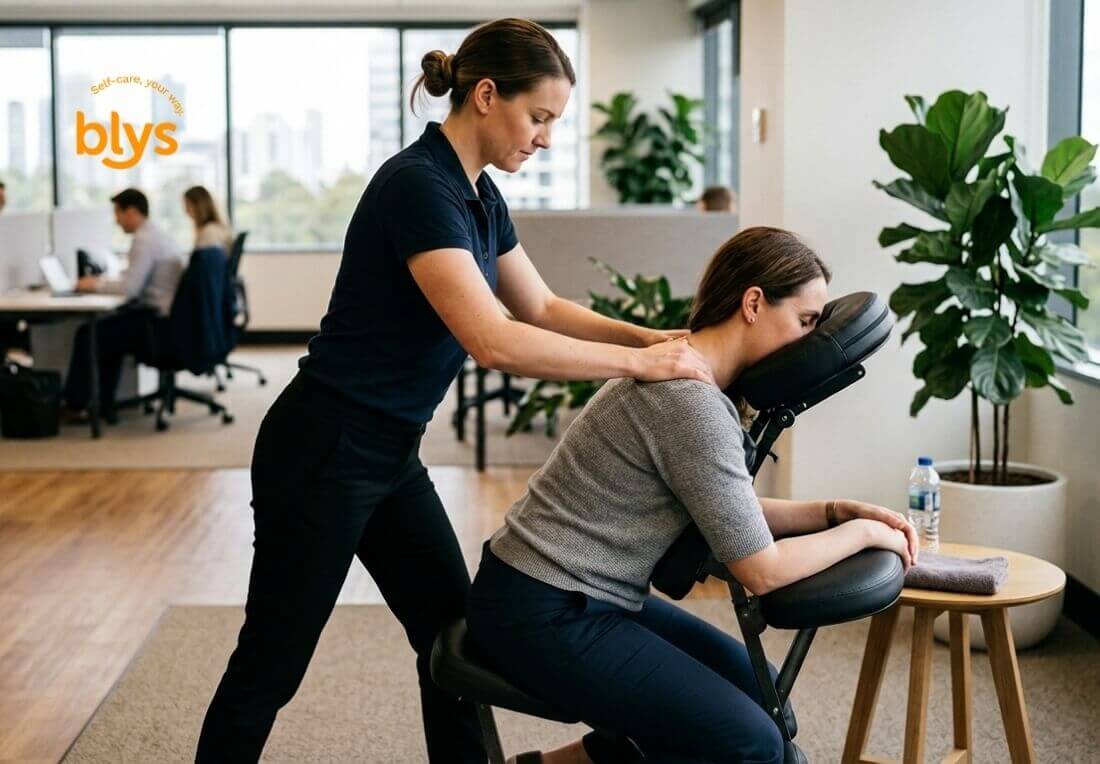
Whether corporate massage is tax deductible in the US or qualifies as a de minimis fringe benefit massage, and whether it creates a taxable benefit for employees, depends on which IRS rules apply to your program. The short answer on whether corporate massage is tax deductible in the US, or whether employee massage is a taxable benefit, is that the treatment varies by how the benefit is structured, how often it’s provided, and whether it qualifies under one of the IRS’s fringe benefit exemptions.
Here’s the honest breakdown on corporate massage tax deductible US questions, without the oversimplification. For the setup side of corporate massage in the US, types and costs are covered separately.
Corporate Massage IRS Treatment: How It Works as a Fringe Benefit
When a US employer pays for employee massage, the IRS workplace massage fringe benefit rules determine whether it’s a taxable employee massage benefit, it’s providing a fringe benefit. The IRS taxes most fringe benefits as ordinary income to the employee unless a specific exemption applies. If the benefit is taxable, the value gets added to the employee’s W-2, and both the employee and employer pay the relevant payroll taxes on it.
The good news is that two exemptions cover most corporate massage scenarios: the de minimis fringe benefit exclusion and, in more limited circumstances, the working condition fringe benefit.
The De Minimis Fringe Benefit Exclusion
Under IRS Section 132(e), a benefit is excludable from an employee’s income if it’s so small in value that accounting for it would be too small to reasonably track, and it’s provided infrequently. The IRS hasn’t set a specific dollar amount for de minimis benefits. The test is whether the value is low enough that tracking it isn’t worth the administrative effort. For most one-off wellness days, that threshold is met.
For a one-off corporate wellness day where each employee receives a short chair massage, this exclusion is likely to apply. The value per person is low, it’s not a recurring benefit, and the administrative burden of tracking and taxing it would outweigh the value.
When De Minimis Doesn’t Apply
A regular weekly or monthly corporate massage program won’t qualify as de minimis. The IRS specifically states that benefits provided frequently to the same employee lose their de minimis character. A structured recurring program, even if each session is low in value, is likely to be treated as a taxable employee massage benefit that needs to be reported on W-2s.
The Working Condition Fringe Benefit
Under IRS Section 132(d), a benefit is excludable if the employee could have deducted the cost as a business expense had they paid for it themselves. For most employees receiving massage as a general wellness perk, this won’t apply, personal massage expenses aren’t deductible for employees under current IRS rules.
Where it might apply is in narrower circumstances: a massage therapist treating an employee’s work-related repetitive strain injury under a doctor’s recommendation, as part of a formal workplace health program. But this is a specific factual situation rather than a general rule, and it requires proper documentation.
What the Employer Can Deduct
Regardless of whether the benefit is taxable to the employee, the employer can generally deduct the cost of providing corporate massage as an ordinary and necessary business expense under IRC Section 162, provided the expense is reasonable and has a legitimate business purpose. Employee wellbeing, retention, and workplace productivity are accepted business purposes under IRS guidance.
This means that even when the benefit is taxable and payroll taxes apply, the employer’s cost isn’t entirely unrecovered, the deduction against taxable income partially offsets the outlay.
For businesses running corporate massage US programs, the net after-tax cost depends on the company’s effective tax rate and whether the program qualifies for any exclusion.
What This Means for Your Program
One-Off Wellness Day (Low Value Per Person)
A one-off wellness event where each employee receives a short chair massage of low per-person value is likely excludable as a de minimis fringe benefit, which means no W-2 reporting is required. It’s worth keeping records of the cost per person per session in case the IRS asks, but for most one-off wellness days the paperwork burden is minimal.
Regular Weekly or Fortnightly Program
A recurring program almost certainly creates a taxable fringe benefit that needs to be reported. The value of each session gets added to the employee’s W-2, and payroll taxes apply for both the employer and employee on that amount. The employer can deduct both the cost of the sessions and the payroll tax expense, which reduces the net outlay. It’s worth structuring the program carefully with your accountant or benefits administrator before launch so the reporting is set up correctly from the start.
Monthly Sessions
Monthly sessions sit in a grey area. Whether the IRS treats them as de minimis depends on the frequency and value, and there’s no bright-line rule that resolves it cleanly. The safer approach is to treat monthly recurring sessions as a taxable employee massage benefit, report them on W-2s accordingly, and get a specific tax opinion if you want to take a different position.
State Tax Considerations
Some states have their own rules on employee fringe benefits that don’t follow the federal IRS framework. California, for example, has its own income tax rules that don’t always conform to federal exclusions, which means a benefit that’s non-taxable at the federal level might still be taxable in California. If your business operates across multiple states, confirming the state-level treatment alongside the federal analysis is worth doing before you finalise the program structure.
Always Check With Your Tax Advisor
The framework here reflects US federal tax law as at mid-2026, but tax rules change and individual circumstances vary. The IRS hasn’t issued specific guidance on massage as a fringe benefit, which means the analysis relies on general fringe benefit principles applied to this specific situation. A tax advisor familiar with your business and the specifics of your program is the right person to confirm the treatment before you structure your program around it.
Corporate massage through Blys US is available for one-off wellness days and regular programs across the US. Blys provides per-session invoicing broken down by employee if you need it for payroll tax reporting.
Enquire about corporate massage for your team through Blys, a qualified therapist comes to your office with everything needed.