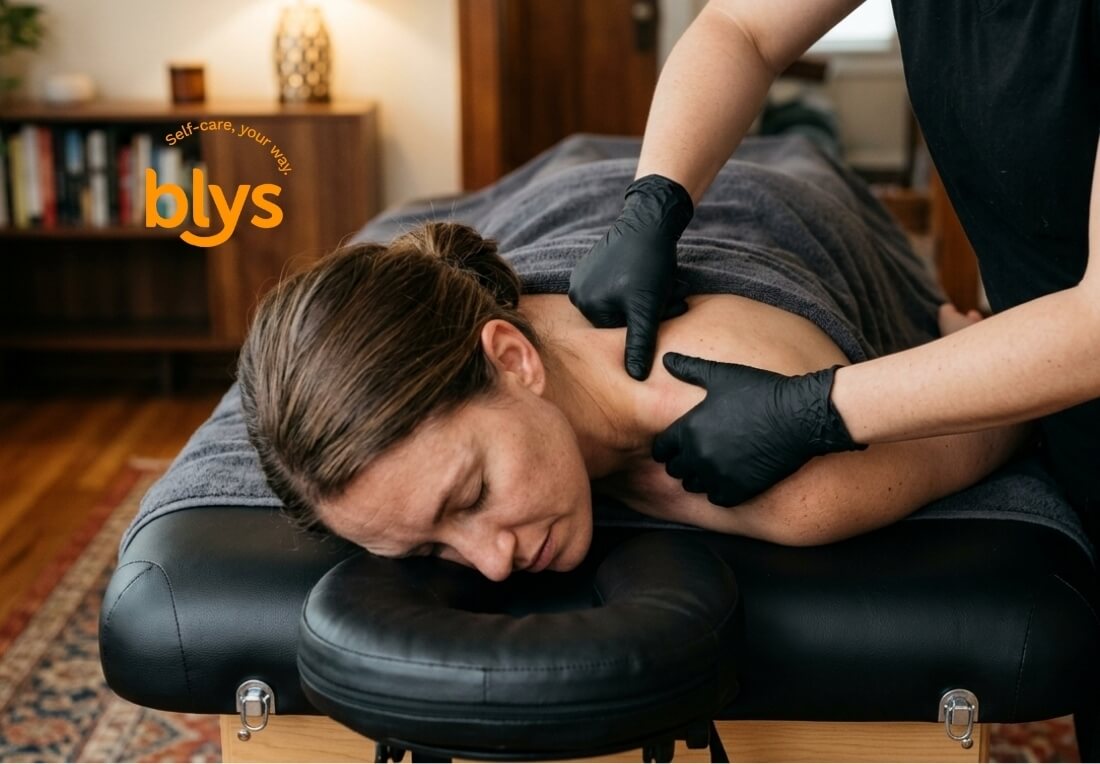
If you’ve ever had a migraine, you already know that “have you tried drinking more water” is not the advice you were looking for. Migraines are a neurological condition that can last anywhere from a few hours to a few days, and managing them well usually involves a combination of approaches rather than any single fix. Migraine relief massage is one of the more useful tools in that combination, not because it cures migraines, but because it addresses several of the physical factors that trigger or prolong them. Migraine relief massage is one of the more useful tools in that combination
The techniques matter, and not all of them are equally useful for migraines, so here’s what a session focused on migraine relief actually involves and why each technique earns its place.
Why Massage Helps With Migraines
Most migraines don’t appear from nowhere. They build from a combination of triggers, and muscular tension in the neck, shoulders, and base of the skull is one of the most consistent ones. Tight muscles in this area compress blood vessels and restrict blood flow, which creates the physical conditions for a migraine to take hold.
Trigger points in the neck and head region are also associated with dizziness, disturbed sleep, and a general sensitivity to light and sound that migraine sufferers will recognize as part of the same picture. Once a migraine starts, these tight spots make it worse too, because the body’s natural response to pain is to tighten the surrounding muscles further, and that loop is as predictable as it is unpleasant.
Massage interrupts that loop by releasing the muscular tension, reducing the compression on blood vessels and nerves, and shifting the nervous system away from the high-alert state that both triggers migraines and makes them harder to recover from.
For people who want to extend that approach beyond the session itself, reflexology for migraines uses pressure points in the feet that map to the same head, neck, and sinus zones a therapist works directly on. Because it works through the nervous system rather than the muscle tissue, it reaches a different layer of the migraine picture that massage alone doesn’t always fully address.
What a Migraine Massage Session Targets
Suboccipital Release: The Most Important Technique
The suboccipital muscles are a group of four small muscles sitting at the base of the skull, between the skull and the top of the neck. They’re responsible for the fine movements of the head, they carry trigger points that refer a deep, diffuse ache into the back of the head and behind the eye, and they’re almost certainly involved in most tension-type headaches and many migraines.
Most people have never heard of them, and most people with chronic headaches have been living with their trigger points for years without knowing it.
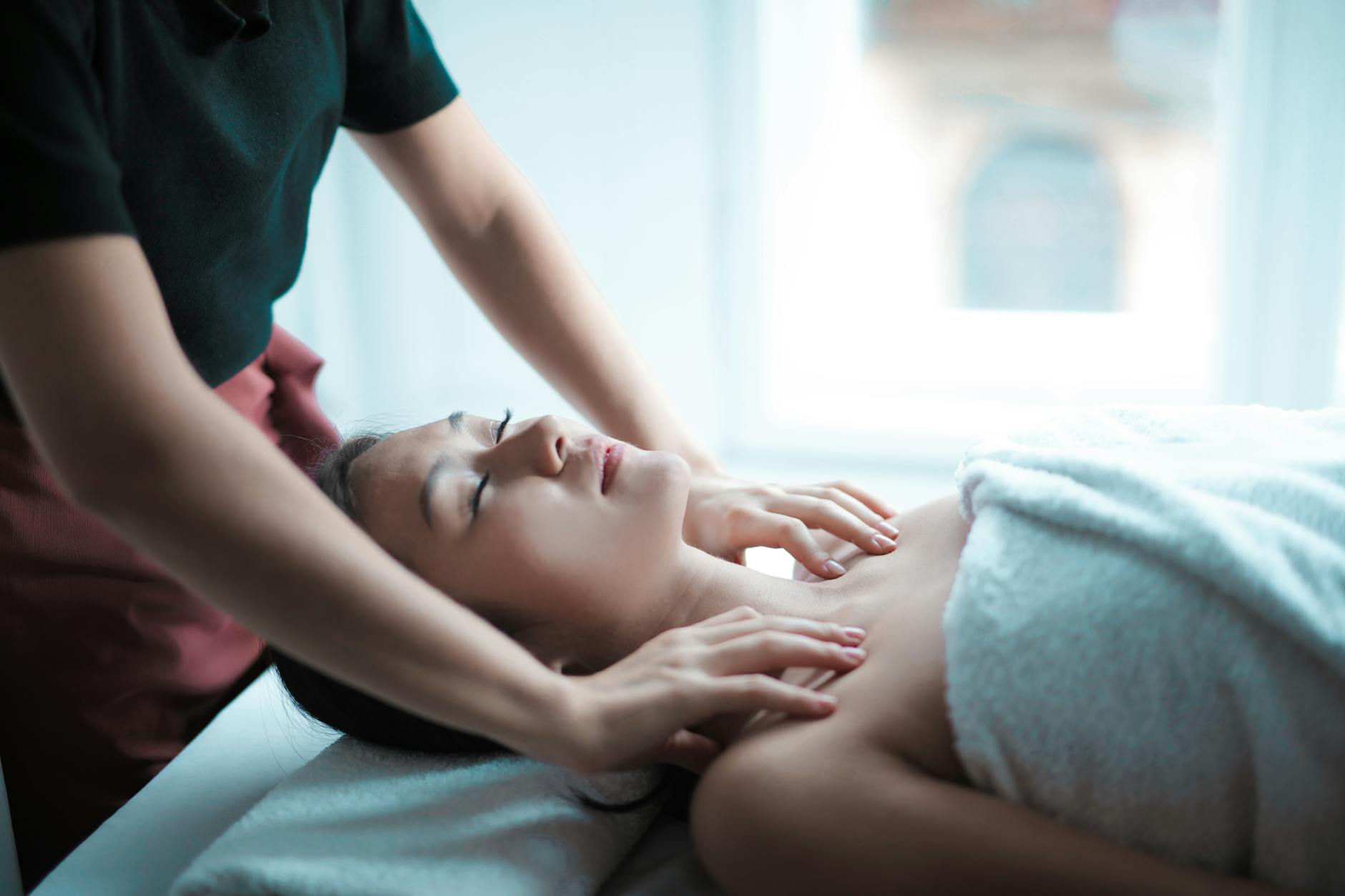
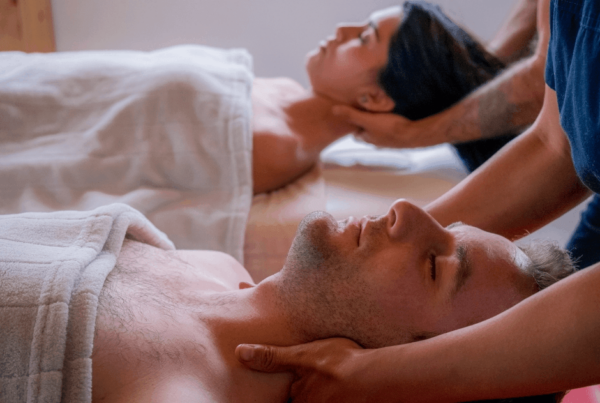
A suboccipital release involves the therapist placing their fingertips at the base of the skull and applying firm, careful pressure while the head rests fully in their hands, allowing gravity and the therapist’s hold to gradually create traction at the base of the skull.
It doesn’t feel like much while it’s happening: the pressure is subtle and the position is passive, but the response for most people is a gradual unwinding of tension that extends from the base of the skull up through the back of the head, often accompanied by a warmth or heaviness that signals the area letting go. For people who get migraines, this is frequently the most effective single technique in the session.
Scalp Massage for Migraine Relief
Scalp massage for migraines works partly through the same trigger point logic, where the temporalis muscle covering the side of the skull and the frontalis across the forehead both carry tension that contributes to headache pain, and partly through a more direct effect on circulation and nervous system state.
The scalp has a dense network of nerve endings and blood vessels, and firm, rhythmic pressure on the scalp reduces muscle tension in the area, increases local circulation, and activates the parasympathetic nervous system in a way that’s larger than the simplicity of the technique would suggest.
Most people find scalp massage deeply relaxing regardless of whether they have migraines, and massage therapy for migraines consistently shows positive results for both frequency and intensity across most approaches. It addresses the temporal and frontal tension that contributes to the characteristic band of pain around the head, and it does it in a way that’s gentle enough to use even during a moderate headache when deep pressure elsewhere would be too much.
The Neck and Shoulder Muscles That Feed Migraines
The upper trapezius runs from the base of the skull across the top of the shoulder, and its trigger points refer pain up into the side and back of the neck and sometimes into the temple, which is the same location where migraine pain often lives. The levator scapulae runs from the top of the shoulder blade to the upper neck, and its trigger point produces a sharp, concentrated pain at the angle of the neck that feeds into the headache picture.
Working these muscles is standard in any massage session focused on migraines, because they’re almost always contributing to the tension load that makes migraines more frequent and more severe.
The pressure used here is moderate rather than deep, since the goal isn’t to work through maximum muscle tension but to reduce the overall tension load on the neck and head structures, which means a lighter, held approach that the nervous system can actually receive rather than guard against.
Pressure Points for Migraines
Several acupressure points have been used specifically for migraine relief, and a therapist trained in this area will include them alongside the manual techniques in a migraine-focused session.
The most consistently used points are GB20 at the base of the skull, LI4 in the webbing between the thumb and index finger, and direct pressure on the temples and forehead. GB20 and the temples are accessible enough to work yourself between sessions, while the suboccipital and deep neck points are better left to the therapist. How each headache pressure point works and how much pressure to apply varies enough that it’s worth understanding before you start.
What to Expect From a Migraine-Focused Massage Session
A typical session runs 60 minutes, with most of that time spent on the neck, suboccipitals, scalp, and upper trapezius rather than moving through the full body. The pressure is generally lighter than a deep tissue session, because the goal is to calm the nervous system rather than work through heavy muscle tension, and because the nervous system of someone who gets regular migraines is often running hot, so aggressive pressure can trigger a headache response rather than preventing one.
Most people feel noticeably better during and immediately after the session, and many report that the relief extends for several days, most consistently when sessions are booked regularly rather than only during or after a migraine episode.
The most effective approach is preventative: booking a trigger point massage at home in the days before a known trigger period, whether that’s a stressful week at work or the premenstrual phase for people whose migraines are hormonally linked, rather than waiting until the migraine has already arrived.
When to See a Doctor Instead
Massage is a complementary therapy for migraines, not a medical treatment, and there are situations where a doctor needs to be involved rather than a massage therapist.
See a doctor if your migraines have changed in character or frequency, if a headache is the worst of your life, if headaches come with fever, stiff neck, confusion, vision changes, or any neurological symptoms, or if you’ve never had your migraines properly assessed and are managing them entirely through self-treatment. These presentations need medical evaluation before anything else, and massage can support medical care but doesn’t substitute for it.
For migraines with a strong muscular component but without the acute sensitivity that makes lighter pressure necessary, deep tissue massage can also be effective between trigger point sessions, since it clears the broader neck and shoulder tension that feeds into the headache picture when the nervous system is calm enough to handle deeper work.
For people with a well-established migraine history who are looking to reduce frequency and severity as part of their management approach, booking through Blys is a good option that fits more easily into a regular schedule than a clinic visit. The at-home setting is itself a better environment since it’s quiet, familiar, and free of the travel and waiting room stress that a nervous system already prone to overload doesn’t need.
The migraine will probably still come, but regular trigger point massage is one of the better arguments for making it come less often. Book a trigger point massage at home through Blys, available 7 days a week, 6 am to midnight across the US.