Fascia is one of those things the body has always had and was largely ignored by medicine until relatively recently. It does not show up well on an MRI, and it is not a single structure you can point to on a diagram. And yet it is everywhere, wrapping around every muscle, connecting every joint, and running through every organ, and when it goes wrong, it tends to go wrong in ways that are frustrating to diagnose and slow to resolve. If you have ever had persistent pain, restricted movement, or tension that does not respond to the usual approaches, fascia is probably worth understanding.
What Is Fascia in the Body?
Fascia is a network of connective tissue that runs continuously throughout the body. It is made primarily of collagen, and its job is to connect, support, and separate the structures it surrounds while also allowing them to move freely relative to each other. Think of it less as a single thing and more as a three-dimensional web that holds everything together without fixing anything rigidly in place.
What does fascia do exactly?
Fascia tissue is not passive. It has its own nerve supply, which means it can generate and transmit pain signals. It responds to mechanical load, which means how you move and how long you stay still both affect how it behaves. It holds a lot of water, which means how much you drink and how much you move both directly affect how well it functions, which is the least exciting sentence in wellness but also one of the most consistently true ones. And it is continuous throughout the body, which means a restriction in one area creates tension in areas that can feel completely unrelated.
Muscle fascia: the layer most treatments miss
The most practically relevant part of the fascial system for most people is the muscle fascia, the layers of connective tissue that wrap individual muscle fibers, groups of fibers, and whole muscles, and then connect those muscles to the surrounding structures. When this tissue is healthy, muscles slide freely and generate force efficiently. When it tightens or develops restrictions, muscles move less freely, generate force less efficiently, and often hurt, both locally and in areas the restriction refers to. This is the layer that fascia release therapy is specifically designed to address.
Why Fascia Tightens: Fascia Explained
Understanding why fascia tightens is useful because it explains why the usual approaches often fall short, and why targeted treatment tends to work better than trying harder with the same things that have not worked so far.
The sitting problem
Sustained posture is the most common driver of fascial restriction for most people, and the most common sustained posture is sitting. When the body holds the same position for hours at a time, the fascia adapts by shortening in the directions it is being compressed, and then stays short even when you stand up. Your body thinks you live in that chair, which is not entirely wrong. The hip flexors, the tissue across the chest and front of the shoulders, and the fascia along the back of the neck are the areas most affected. If you spend most of your day at a desk and most of your tension is in these areas, you have just identified the mechanism.
Previous injuries
Any significant injury leaves behind changes in the fascial tissue as part of healing. The tissue that forms during the repair process is denser and less organized than the original, and it can create restrictions that persist long after the injury itself has resolved. This explains why people often develop tightness in areas near old injuries years later, even though the original problem seemed to fully heal. The fascia did not fully heal, it adapted, in the way that causes problems rather than the way that makes you stronger.
Chronic stress
The fascia has a significant relationship with the nervous system. Chronic stress keeps the body in a state of low-level physical tension, and over time this shows up as fascial tightness, particularly through the chest, neck, and hips. Most people in this situation blame their posture or their mattress, but posture and mattresses are rarely the whole story. Stress gets blamed for a lot of things it is not fully responsible for. This is one of the things it actually is.
Dehydration and inactivity
Healthy fascia is hydrated and mobile. When water intake is low and movement is limited, the tissue becomes sticky and less able to glide freely. This contributes to the kind of general stiffness that is not in any one muscle but affects the whole body’s ease of movement. Drinking more water and moving more regularly both genuinely help, which again, is not exciting advice but it is accurate.
How Tight Fascia Causes Pain
Fascia and pain have a more direct relationship than most people realize, and understanding it explains why so much pain treatment produces temporary relief rather than lasting resolution.
Direct pain from fascial restriction
Because fascia has its own nerve supply, restricted fascia can generate pain directly. This tends to produce a deep, persistent ache rather than the sharp localized pain most people associate with an injury, which is partly why it gets misidentified for so long. If you have ever woken up stiff and uncomfortable and felt progressively better as you moved around, that pattern is consistent with fascial restriction. It is also consistent with being a person who sits for a living, which is an uncomfortable overlap.
Referred pain from trigger points
A myofascial trigger point is a tight, irritable spot within the fascial and muscular tissue that sends pain to a different location. This referral pattern is one of the most common reasons pain treatment fails, because the treatment addresses the site of the pain rather than the source of it. A trigger point in the glutes referring pain into the lower back, for example, will not resolve with lower back treatment. Understanding this pattern is the first step toward actually fixing it, and the myofascial trigger points and back pain connection is one of the most well-documented examples.
Restricted movement and compensation
When fascia restricts movement in one area, the body does what it always does: finds a workaround. It starts moving differently to avoid the restricted area, and the structures taking on the extra load gradually develop their own restrictions and pain. This is why chronic pain tends to spread over time rather than staying politely in one place, and why treating only the most painful spot often produces results that do not last. The pain moves because the problem moved. The problem moved because nobody addressed what caused it in the first place.
What This Means for Recovery
Understanding fascia changes what good recovery looks like, and it explains why some of the things most people do for recovery work better than others.
Why stretching helps but has limits
Stretching reaches the muscle but often does not reach the fascia effectively, particularly when the holds are brief. Sustained fascia stretching of 90 seconds or more begins to engage the fascial tissue rather than just the muscle, which is why longer holds tend to produce more lasting change than quick repetitions. The difference between a 20-second stretch and a 90-second hold is not just the extra time, because it is a different tissue responding.
Why tools help but have limits
Foam rollers, massage balls, and fascia guns all contribute to fascial health when used consistently and with the right technique. Fascia release tools are genuinely useful for maintenance and for extending the benefit of professional treatment. What they cannot do is replicate the sensitivity and specificity of a trained therapist who can feel the difference between restricted fascia and healthy tissue and follow the restriction through its path across the body.
Why some conditions respond better to fascial treatment
Plantar fasciitis, chronic lower back pain, persistent neck tension, restricted hip mobility, and recurring headaches all have significant fascial components that standard treatment often misses. This is not a criticism of physiotherapy or regular massage, and both have their place. It is an observation that adding a fascial lens to assessment and treatment tends to produce better outcomes for these conditions than treating the muscle and bone alone.
How Professional Fascia Release Helps
Home practice has real value. Fascia stretching exercises and self-release tools both make a genuine contribution to fascial health between sessions. But there is a gap between what you can do independently and what a trained therapist can do with their hands, and for chronic or complex restrictions, that gap matters.
What a therapist can reach that tools cannot
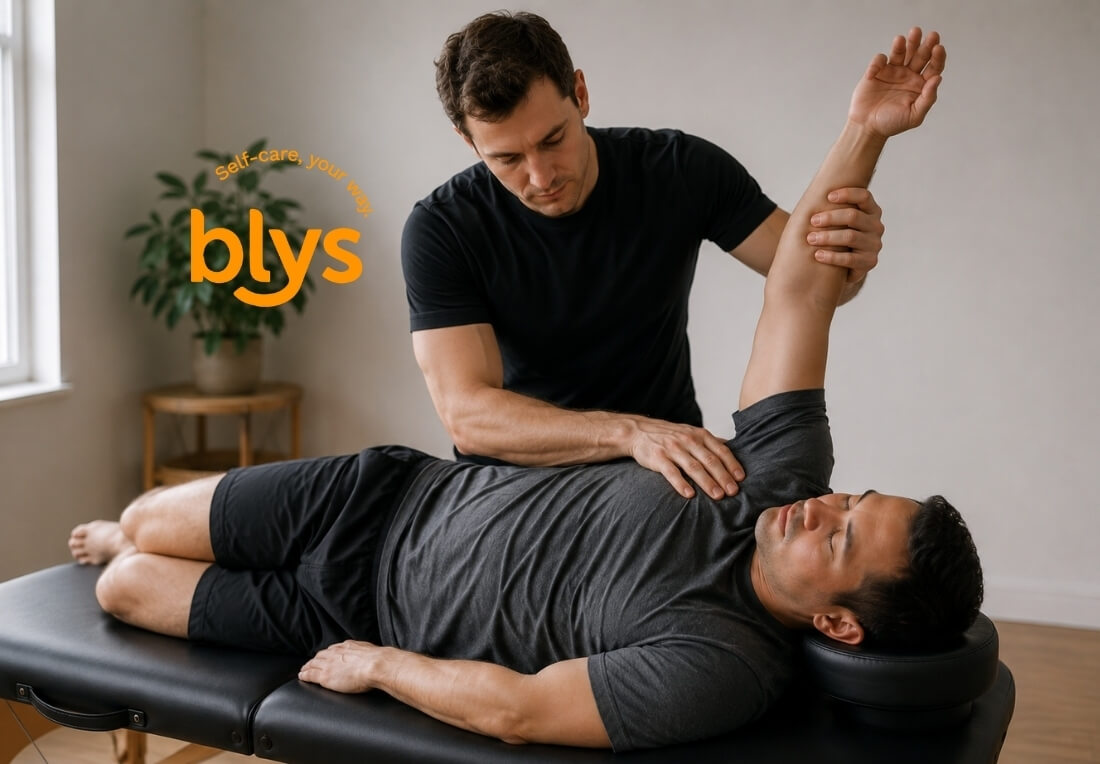
A trained therapist applies slow, sustained pressure to restricted fascia and follows the tissue as it releases, adjusting direction and depth based on what they feel under their hands rather than following a fixed sequence. A foam roller has no opinions. A therapist has both. This is what myofascial release actually involves, and it produces a quality of release that foam rollers and massage balls cannot replicate because they cannot feel the tissue and cannot respond to it in real time.
What to expect from a course of sessions
The before and after myofascial release experience varies depending on what is being treated and how long the restriction has been there. Most people notice something after a first session, not always dramatic, but different. The area that was worked on feels different, the body feels more settled, or a pattern of tension that has been there for a while has quietly softened. The more significant changes tend to come after three to five sessions as the restriction pattern progressively resolves, with each session building on the last rather than starting from scratch.
How often to book depends on the goal. Acute pain calls for more frequent sessions in the short term. Chronic tension tends to respond best to weekly sessions for the first month before tapering. Athletic maintenance and general wellbeing both work well on a monthly schedule once a baseline has been established. The right frequency is the one that gives the tissue enough time to remodel between sessions without losing the momentum of the previous one.
Booking a session at home
Mobile myofascial release through Blys means a local therapist comes to your home with everything needed for a full session. There is no commute, no waiting room, and no trying to hold onto the post-session calm on the way home. Your therapist reads your notes before arriving, so the session is focused from the first minute rather than spending the first ten minutes establishing what the problem actually is, which, if you have ever had to re-explain your entire history to a new practitioner, you will appreciate more than most.
At some point, reading stops being the most useful thing you can do. So, book a myofascial release session at home through Blys, available 7 days a week, 6 am to midnight across the US.