Is dry needling the same as acupuncture? Not quite, though they share the same thin needles. Acupuncture comes from traditional Chinese medicine and aims at broad goals like pain, stress, sleep and nausea, while dry needling is a modern, muscle-focused technique that aims at tight spots called trigger points. People argue about whether dry needling is its own thing or acupuncture in a lab coat, and the short answer is that it depends who you ask. Both involve tiny needles and a stranger saying little scratch, which is the least reassuring phrase in the English language. Acupuncture is available through Blys, and acupuncture at home is one way to try it. Dry needling isn’t a Blys service, and trigger point massage is the no-needle option aimed at the same sore spots.
The Short Answer: Same Needles, Different Playbooks
Dry needling vs acupuncture comes down to the thinking behind the needle, and acupuncture vs dry needling is a fair fight on tools, not the needle. The table gives you the quick version.
| Acupuncture | Dry needling | Trigger point massage | |
| Needles | Yes | Yes | No |
| Roots | Traditional Chinese medicine, also used with modern ideas | Modern anatomy and pain science | Manual therapy |
| Main goal | Broad: pain, stress, sleep, nausea and more | Narrow: tight muscles and trigger points | Tight muscles and trigger points |
| Usually done by | Acupuncturists | Physiotherapists and some other health professionals | Massage therapists |
| Feels like | A mild prick, a dull ache, heaviness | A prick, then sometimes a muscle twitch and cramp | Firm pressure that can feel intense |
| On Blys | Yes | No | Yes |
Is Dry Needling the Same as Acupuncture?
Is dry needling the same as acupuncture? The tools match, and the training, theory and goals differ. Acupuncturists work from a wider framework, and dry needling practitioners usually focus on muscle and pain.
Is Dry Needling Acupuncture?
Is dry needling acupuncture? Some acupuncturists say it’s acupuncture without the theory, and many physios say it’s a separate technique built on anatomy. Both views exist, so if you’re curious, ask your practitioner how they see it.
Why People Mix Them Up
In the dry needling vs acupuncture debate, the overlap is the problem. Both use fine, solid needles, both can leave you with a little ache and both get called needle therapy in casual chat. It’s like two cousins at a wedding: same nose, different job.
Dry Needling vs Acupuncture: Who Does Each?
The person holding the needle matters as much as the technique. Training and rules differ, so know who you’re seeing.
Who Does Acupuncture?
In Australia, acupuncture comes from acupuncturists, who hold registration as Chinese medicine practitioners, and some other registered health professionals also offer it with extra training. Acupuncturist is a protected title, so a registered practitioner should be easy to look up.
Who Does Dry Needling?
Dry needling is most often offered by physiotherapists, and some other health professionals, like certain doctors and chiropractors, offer it with extra training. It’s often part of a physio session, alongside exercises and hands-on work. So, is dry needling acupuncture? In day-to-day practice it’s usually treated as something separate, even though the needles match.
Checking Registration
Whoever holds the needle, check their registration. For acupuncture and many health professions in Australia, you can search the public register on the Australian Health Practitioner Regulation Agency website. Ask about training, and don’t be shy about it.
What About Blys?
Blys lists acupuncture, and you can see the details on the acupuncture page. Blys doesn’t offer dry needling, so if that’s what you want, a physiotherapist is the usual person to see. The difference between physiotherapy and remedial massage is handy for working out who does what.
What Is the Difference Between Dry Needling and Acupuncture?
What is the difference between dry needling and acupuncture? Mostly the thinking, the goal and the session around the needle. Nobody has ever walked out of a clinic saying wow, great meridian, but the theory does shape what happens.
The Goal
Acupuncture vs dry needling is mostly a question of goals. Acupuncture often aims at the whole picture, like pain, stress, sleep, digestion or nausea, depending on what you came for. Dry needling usually aims at one thing: easing a tight, tender muscle knot, and the pain it causes.
The Thinking Behind It
Acupuncture vs dry needling splits here, in the theory. Traditional acupuncture works with the idea of energy pathways, often called meridians, and points along them, and many practitioners also use modern ideas about the nervous system. Dry needling works from anatomy and pain science, aiming at muscle knots, and it doesn’t use the traditional theory.
Where the Needles Go
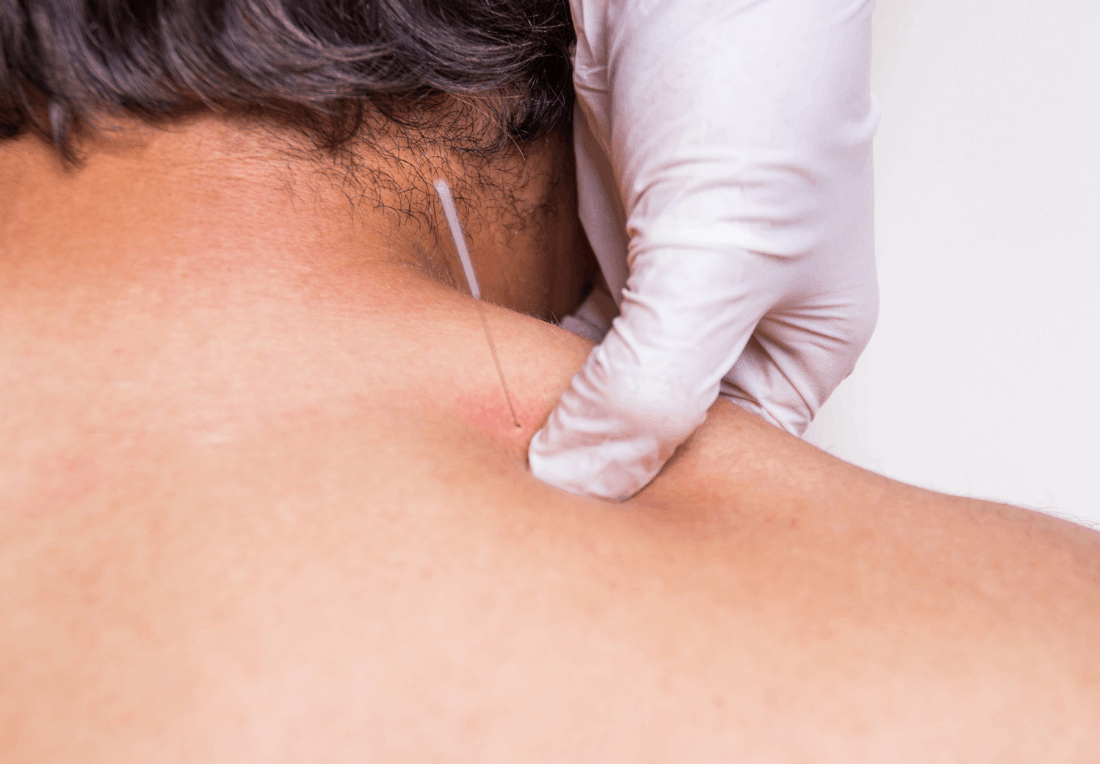
What is the difference between dry needling and acupuncture in placement? Acupuncture points are chosen from a traditional map and may be far from where it hurts. Dry needling goes into or near the sore muscle itself, often right into the knot. Sometimes the two overlap, since a trigger point and an acupuncture point can be in the same spot.
Why Is It Called Dry?
It’s called dry because nothing’s injected: the needle is solid, with no medicine in it. It’s not about the weather, and it’s not a rain check.
Session Length and Number
Acupuncture sessions often run 30 to 60 minutes, with needles resting in for 15 to 30 minutes of that, and many people have a series over weeks. Dry needling is often shorter and may be one part of a physio appointment, with a few sessions at most to see if it helps.
How Each One Feels
Both involve needles, and neither feels like a flu shot. Here’s what people usually describe.
The First Needle
Most needles are very thin, and many people barely feel the entry, maybe a tiny prick or a tap. It’s nothing like the needles at the doctor, though your brain might disagree until the first one’s in.
The Dull Ache and Heaviness
In acupuncture, you might feel a dull ache, warmth, tingling or heaviness around the needle, which practitioners often take as a sign it’s working. It’s usually mild, and you can say if it’s too much.
The Twitch
Dry needling often triggers a local twitch response, where the muscle jumps or cramps for a second. It feels odd, and you may say a word you’d rather not repeat in front of your physio. Many practitioners look for that twitch, and it passes quickly.
Lying Still
Acupuncture often includes a rest period, so a lot of people end up dozing. Dry needling is more of a quick pit stop, with the needle in and out in seconds or minutes.
Afterwards
Soreness after dry needling feels like the I did legs yesterday kind, and it can last a day or two. Acupuncture can leave a light ache or tiny bruise at a needle spot, and some people feel relaxed or sleepy. Mention anything unusual to your practitioner.
What Does the Research Say?
Research on needling is real and messy, so treat big promises with a squint. It’s one of the most-studied hands-on treatments, and results vary a lot by condition.
Acupuncture
In the dry needling vs acupuncture research, acupuncture has the longer track record, and acupuncture sessions with Blys follow the traditional approach. Studies suggest acupuncture may help with some types of pain, tension-type headaches, migraine prevention and nausea, and results look mixed for many other conditions. Many studies are small, and some find little difference from sham treatment, so it works for some people and not others.
Dry Needling
On the dry needling side of dry needling vs acupuncture, research suggests it may ease muscle pain and tenderness in the short term for some people, mostly in the neck and shoulders. Quality varies, and long-term benefits are less clear, so it’s best seen as one tool next to exercise and hands-on care.
The Sham and Placebo Debate
In studies, fake needling sometimes helps nearly as much as the real thing, which is a puzzle researchers still argue about. The honest takeaway is that some people feel better, and no one has a perfect explanation yet.
How to Read the Claims
Be wary of anyone promising a cure, or claiming needles fix anything and everything. A good practitioner talks about what might help, what might not and when to try something else.
Which One Might Suit You?
Which one suits you depends on what’s bothering you, what you’re comfortable with and who you can see. The table is a rough guide, not a prescription.
| What’s bothering you | Might suit |
| A tender knot in a shoulder, neck or calf | Dry needling or trigger point massage |
| Tension headaches or migraines | Acupuncture, or gentle massage |
| Stress and sleep trouble | Acupuncture, or relaxation massage |
| Ongoing aches in several places | Acupuncture or massage |
| A sports niggle | Dry needling, trigger point massage or sports massage |
| You’re not keen on needles | Trigger point massage |
A Stubborn Knot
For one tender spot, dry needling and trigger point massage both aim at the same thing, one with a needle and one with firm pressure. QL pain and one sided lower back pain is a common example of a knot that keeps coming back.
Headaches
Acupuncture has research behind it for some headaches, and gentle neck and shoulder massage helps others, so headache massage for tension is the gentler route. Mention how often they come, what sets them off and any warning signs, and see a doctor for sudden, severe or unusual headaches.
Stress and Sleep
Acupuncture is popular for stress and sleep, and relaxation massage is another route. Massage for anxiety looks at the calm side of things, and neither replaces professional help if you need it.
Ongoing Aches
Acupuncture is often used for chronic pain, with a series of sessions over weeks. Check with your doctor first if the pain is new, severe or unexplained.
Needle-Shy?
Fear of needles has a real name, trypanophobia, and you’re in plenty of company. If it’s a no from you, trigger point massage reaches many of the same sore spots with no needles at all.
The No-Needle Option: Trigger Point Massage
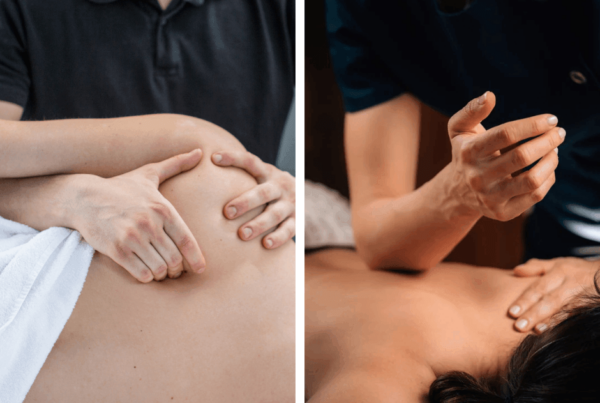
Trigger point massage uses hands, thumbs and elbows to press on the same tight knots dry needling aims at, minus the needles. Your elbows aren’t required.
Same Knots, No Needles
A trigger point is a small, tender knot in a muscle that can refer pain elsewhere. Trigger point massage uses firm, steady pressure on those spots, and it can ease tightness for many people, though it’s not a cure.
What It Feels Like
The pressure can feel intense, a good-sore ache that eases as you breathe, and it shouldn’t be sharp. You can ask for more or less pressure at any point, and your therapist should keep checking in.
How to Ask for It
When you arrange a session, say where the knots are, how long you’ve had them and what pressure you like. Mention any health conditions in your notes, so your therapist can adjust.
Can You Combine Them?
Many people use massage alongside other care, and some see both an acupuncturist and a massage therapist. Tell each provider what you’re doing, and check with your doctor if you have health conditions.
Who Should Be Careful With Needles?
Needling is generally safe in trained hands, and some people need extra care. The general rules live in who shouldn’t get a massage, and needles add a few of their own.
Blood Thinners and Bleeding Disorders
If you take blood thinners or have a bleeding disorder, tell your practitioner, since needles can cause bleeding and bruising. Check with your doctor first, and expect extra caution.
Pregnancy
Practitioners usually avoid some acupuncture points in pregnancy, so tell your practitioner if you’re pregnant or might be. Many people have acupuncture in pregnancy with a practitioner who knows what to do, so check with your doctor or midwife.
Pacemakers and Electrical Stimulation
Some needling uses a gentle electrical current, which isn’t suitable with a pacemaker or certain heart devices. Tell your practitioner about any implant before the session.
Infection, Immune Conditions and Skin Problems
Skip needling over infected or broken skin, and check with your doctor if you have a weakened immune system or a condition like lymphoedema. Practitioners should use sterile, single-use needles, and you can ask about that.
Fainting and Needle Fear
Some people feel faint with needles, so eat beforehand, and tell your practitioner about it so you can lie down. Many people who dread needles find the thin ones easier than expected, and you can stop at any time.
Chest and Upper Back
Needling near the chest and upper back carries a rare risk of puncturing the lung, so training matters. Any chest pain or shortness of breath afterwards needs urgent care.
After a Needling Session: What’s Normal and What’s Not
A little soreness is common, and a few signs need a doctor. Here’s the line.
Normal
A mild ache, a small bruise, a bit of tiredness or feeling relaxed are all common. They usually settle within a day or two.
Call a Doctor If
See a doctor if a needle spot becomes red, hot, swollen or leaks pus, if you have a fever, if soreness gets worse after a couple of days or if a bruise grows large.
Call 911 If
Call 911 if you get chest pain, shortness of breath, difficulty breathing or feel very faint after treatment, especially near the chest or upper back. Don’t wait for an appointment.
A Quick Reality Check
This is general information, not medical advice. It doesn’t replace your doctor or physiotherapist, and no treatment can promise results. If you’re unsure whether needling suits you, ask your doctor first.
Questions to Ask Before Your First Session
A few good questions make any first session easier. Practitioners expect them.
Ask About Training and Registration
Ask what training they’ve had, what they’re registered as and how long they’ve done this. A good practitioner is happy to answer.
Ask What to Expect
Ask how many needles, how long they stay in, what it feels like and what you can do if it’s too much. You can stop at any time.
Ask About Hygiene
Ask whether the needles are sterile and single-use, and how they prepare the skin. It’s a normal question.
Ask About Your Health
Mention medicines, conditions, pregnancy and any past reactions, and ask whether needling suits you. If in doubt, check with your doctor first.
Booking Acupuncture or Trigger Point Massage With Blys
When you’d rather not trek to a clinic, a practitioner who comes to you takes out the hardest part.
Why Home Works
With a home visit, you skip the traffic and the waiting room, and you can relax in your own space afterwards, which suits acupuncture especially, since many people feel sleepy. Blys lists acupuncture and trigger point massage, and you can book from 6 am to midnight, seven days a week. You pick the service and time, a provider accepts, and you’re not charged until they confirm.
What to Put in Your Notes
Say what you want help with, how long you’ve had it, your medicines, any conditions, pregnancy and whether you’ve had needling before. If you’re needle-shy, say so, and ask about the no-needle option. Same-day times depend on availability, and your practitioner will tell you what space they need.
Pick Your Method: Arrange Acupuncture or Trigger Point Massage at Home →
Dry Needling vs Acupuncture Questions, With No Jargon
These are the questions people type into search before they pick a needle or a thumb.
Acupuncture vs dry needling: which is better?
Neither wins outright. Acupuncture suits broader goals, dry needling suits tight muscle knots, and the best choice depends on you and your practitioner.
Does dry needling hurt more than acupuncture?
They feel different. Dry needling can cause a twitch and a cramp, and the soreness can last a day or two, while acupuncture is often a dull ache and a lot of lying still.
Is dry needling safe?
In trained hands it’s generally considered safe, though side effects like soreness and bruising are common, and rare serious risks exist near the chest. Check training and registration.
Can I get dry needling on Blys?
No, Blys doesn’t offer dry needling. Acupuncture and trigger point massage are available, and a physiotherapist is the usual person for dry needling.
Is trigger point massage a good alternative?
Many people find it a good no-needle option for knots, since it aims at the same spots. It can feel intense, and you can ask for lighter pressure.
Can a practitioner come to my home for acupuncture?
Blys lists acupuncture, and availability varies, so book early and put your health details in your booking notes.
Why Choose Blys Mobile Massage for Your Next Session?
Blys is a mobile wellness and beauty marketplace: local providers come to your home, office or hotel for massage, nails, hair, makeup, waxing and more, plus physiotherapy. You pick the service and time, a provider accepts, and you’re not charged until they confirm, with bookings from 6 am to midnight, seven days a week. Whether you pick a needle or a thumb, you can add health notes when you book, and you can see the full range on the Blys services page.