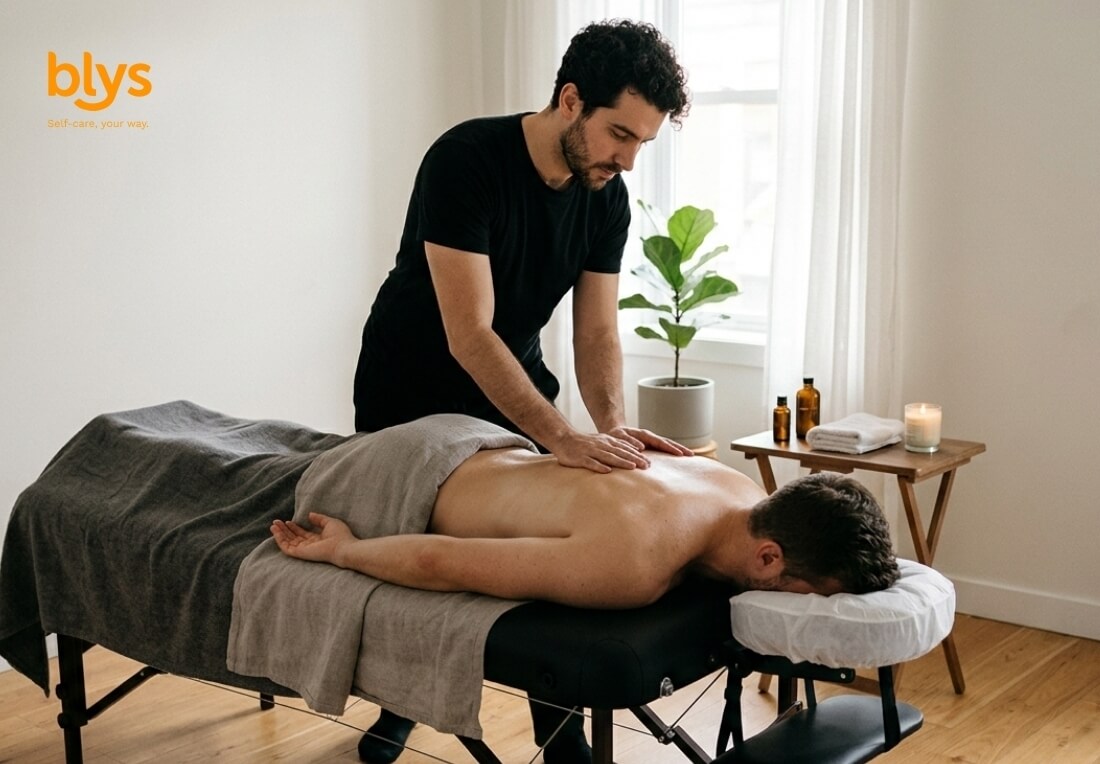
A bad massage at a spa means an awkward walk past reception, hoping nobody asks how it was. A bad mobile massage means the provider’s already left, and it’s properly unclear what happens next, which is exactly the hesitation this piece is here to clear up.
This one sits alongside how mobile wellness marketplaces actually work, since knowing what recourse actually looks like is the natural next question once the model itself makes sense. Here’s what real recourse actually looks like if a mobile massage or beauty session doesn’t go the way it should.
What You Can Do During the Session
The best time to fix a problem is while it’s actually still happening, not three days later in a review nobody else will read carefully.
Speaking Up Before the Session Ends, Not After
Pressure too light, too heavy, focused on the wrong area, most of these issues are fixable in the moment with one direct sentence, and a professional provider expects and welcomes that feedback rather than treating it as a complaint. Waiting until the session’s over to mention something that could have been adjusted five minutes in wastes the one chance to actually get it right.
Ending a Session Early If It’s Properly Not Working
If something feels off well beyond a pressure adjustment, unprofessional conduct, a treatment that isn’t matching what was booked, or anything that just doesn’t sit right, ending the session early is always allowed. Nobody has to sit through the full booked time out of politeness, and a provider worth trusting won’t push back on a client choosing to stop.
How to Give Feedback Afterward
What happens after the session is where a single bad experience either gets addressed properly or fades away unnoticed, and the difference comes down to whether feedback actually gets left.
Leaving an Honest Review, Not Just a Polite One
Massage therapist reviews online only work as a trust signal if people actually write the honest version rather than a softened one out of guilt. A specific, accurate review, whether that’s five stars or one, helps the next client make a better decision and gives the platform something real to act on rather than a vague shrug. It’s the same review system that feeds into how providers get verified and screened on an ongoing basis, not just at sign-up.
Filing a Mobile Massage Complaint When Something Actually Went Wrong
For anything beyond a below-average session, poor conduct, a safety concern, a treatment that wasn’t delivered as booked, filing an actual complaint through the platform’s support channel counts for more than a review alone. A review shapes what future clients see. A formal complaint is what actually triggers a review of the provider and the booking itself.
What Blys’s Policy Covers
This is the part most people want a straight answer on, so here it is without the marketing softening.
Discretionary Refunds and Credits, Explained Plainly
Blys can issue refunds, credits, or other compensation at its own discretion to resolve a dispute or address a bad experience, and this is offered as a goodwill gesture rather than an automatic entitlement or an admission that anything specific went wrong. That distinction matters: it means outcomes can vary based on the situation, rather than every complaint triggering an identical, guaranteed refund regardless of circumstances. Wanting to change or end a booking itself, rather than dispute how a session went, is a separate situation, and the cancellation and rescheduling policy is the one that actually applies there.
The Review Buffer Before Anything Gets Finalized
Disputed or cancelled bookings go through a review period, typically up to 48 hours, before refunds or provider payouts are finalized. This buffer exists specifically so a real complaint gets looked at properly rather than resolved instantly and incorrectly just to close the ticket faster. It also means an outcome might not be instant, and knowing that upfront avoids the frustration of expecting an answer within minutes of raising something.
How This Compares to a Traditional Spa’s Recourse Options
Understanding how this stacks up against the traditional alternative puts the whole system in perspective.
A Spa Manager You Can Flag Things to On the Spot
A physical spa has an obvious advantage in one specific way: there’s a manager on-site, and a problem can be raised immediately, in person, often resulting in an instant response. That immediacy is properly useful, and it’s the one thing a mobile booking structurally can’t replicate in the exact same way.
Why a Platform’s Version of This Looks Different, Not Worse
What a marketplace platform offers instead is a documented process, a review system that follows a provider across every future booking, and a formal complaints channel that doesn’t rely on catching the right person at the right desk. It’s a different shape of accountability, not a weaker one, and it’s worth understanding both models rather than assuming the in-person option is automatically the safer bet.
None of this is worth much if it’s not actually used when something goes wrong, so treating feedback and complaints as a normal part of the process, not an overreaction, is what keeps the whole system honest for the next client too. Knowing the recourse exists is usually enough to make booking that first session feel a lot less like a gamble.
Frequently Asked Questions
What Should I Do If I’m Unhappy With My Massage Service?
Speaking up during the session about anything fixable, like pressure or focus area, is the fastest way to resolve a minor issue on the spot. For anything more serious, ending the session early, leaving an honest review, and filing a formal complaint afterward are the next steps, in roughly that order.
How Do I Find Trustworthy Massage Therapist Reviews Online Before Booking?
Checking a provider’s visible review history before confirming a booking gives a clearer picture than a profile bio alone, since reviews reflect real previous client experiences rather than marketing copy. Specific, detailed reviews are usually more useful than a string of generic five-star ratings with no context.
How Do I File a Mobile Massage Complaint?
A complaint can be filed through the platform’s support channel, separately from leaving a review, and it’s the step that actually triggers a review of the provider and the specific booking. This matters most for anything beyond a simply underwhelming session, poor conduct, safety concerns, or a treatment that wasn’t delivered as booked.
What Is Blys’s Beauty Service Refund Policy?
Refunds and credits are issued at Blys’s discretion to resolve disputes, offered as a goodwill gesture rather than a guaranteed entitlement for every complaint. Disputed bookings go through a review period, typically up to 48 hours, before a refund or provider payout is finalised.
Can I End a Mobile Massage or Beauty Session Early If I’m Not Happy?
Yes, always. Nobody is required to sit through a full booked session out of politeness, and a professional provider won’t argue with a client choosing to stop a session that isn’t working for them.
Is It Harder to Get a Refund for a Mobile Massage Than at a Spa?
Not necessarily, just different. A spa offers an in-person manager who can respond immediately, while a platform offers a documented complaints process, a review system, and a formal dispute review period. Neither model is strictly better, though the platform version usually leaves a clearer record of what actually happened.
Does Leaving a Bad Review Actually Do Anything?
Yes. Reviews inform other clients straight away, and repeated low ratings trigger review of a provider by the platform’s own team, which can affect whether that provider keeps taking bookings at all. A specific, honest review carries more weight than a vague one either way.