 If you’ve ever walked away from a massage feeling genuinely better not just relaxed, but like something has actually shifted there’s a good chance you experienced what is a therapeutic massage in action. Not all massages are built the same.
While some sessions are designed to help you switch off, therapeutic massage has a different goal: it works on the structures beneath the surface to address real muscular and soft tissue problems. If your neck has been tight for weeks, your lower back keeps flaring up, or stress has taken up permanent residence in your shoulders, this kind of bodywork is worth understanding.
Therapeutic massage is the term most commonly used across the US to describe massage that has a rehabilitative or health-focused purpose goal-directed work that goes beyond surface relaxation. Whether you’re dealing with desk-job tension, a sports injury, or a body that’s been absorbing stress for months, therapeutic massage gives you a structured, hands-on way to address it.
In this guide, you’ll get a clear picture of what therapeutic massage actually involves, how it differs from other popular styles, who it suits best, and how booking a vetted provider through Blys means you can access a professional session without leaving home.
The good news? You don’t need a doctor’s referral, a clinic waiting room, or a complicated booking process. Therapeutic massage has never been more accessible and we’ll show you exactly why.
What Is Therapeutic Massage, And What Makes It Different?
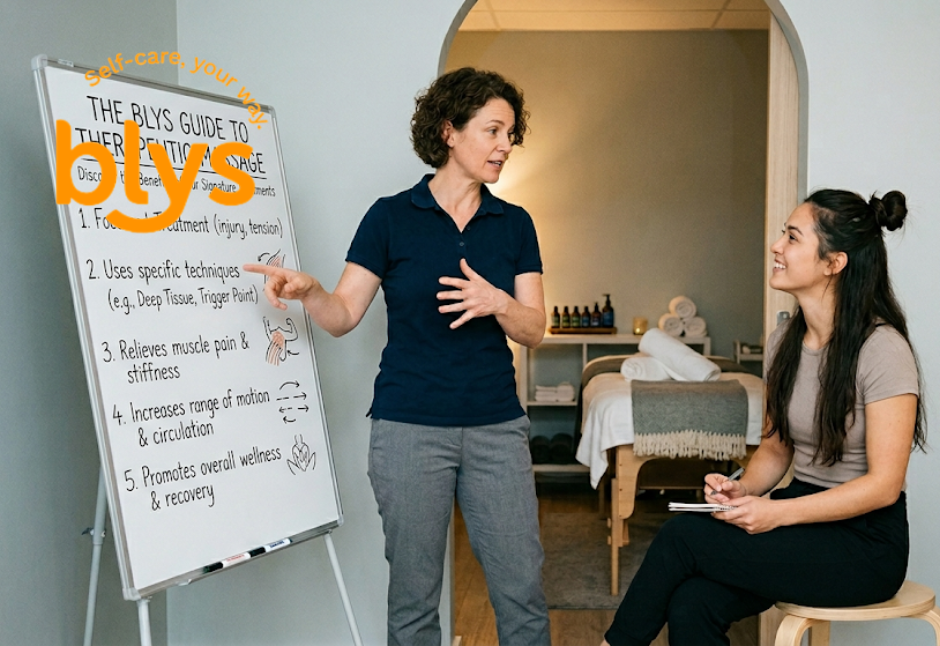
Therapeutic massage is massage applied with a specific health outcome in mind. The provider assesses what’s going on with your body where tension is held, which muscles are overworked or shortened, how your movement patterns might be contributing to discomfort and then uses targeted hands-on techniques to address those findings.
That’s the key distinction from a general relaxation session. A soothing Swedish massage uses long, flowing strokes to calm the nervous system and improve circulation. It’s wonderful for stress relief and gentle recovery. Therapeutic massage, by contrast, is more purposeful. The provider might work deeply into a specific muscle group, use sustained pressure on a trigger point, or mobilize a joint that’s been locked up. The session is shaped around your body, not a standard sequence.
It’s also worth separating therapeutic massage from deep tissue massage, which is one technique within the therapeutic category. Deep tissue work uses slow, firm pressure to reach deeper layers of muscle and fascia. Therapeutic massage may include deep tissue techniques, but it also draws on trigger point therapy, myofascial release, joint mobilization, and stretching whichever combination best addresses your needs.
Think of it this way: deep tissue is a tool. Therapeutic massage is the approach that determines which tools to use, and when.
Who Benefits Most From Therapeutic Massage?
Therapeutic massage has a wide reach. You don’t need to be a high-performance athlete or have a formal diagnosis to benefit but it works best when there’s something specific you’re trying to address. Here’s who tends to get the most out of it:
- People with chronic muscle tension or postural pain: If you spend most of your day at a desk, hunched over a screen, you’re likely carrying tension in your neck, shoulders, and upper back without even realizing it. Therapeutic massage works directly on the muscles and soft tissue that tighten through repetitive posture. Over a series of sessions, it can help break the cycle of chronic tightness that builds up from modern work life.
- People recovering from injury or overuse: A strained calf from running, a sore rotator cuff from the gym, or a lower back that locked up after lifting therapeutic massage supports the recovery process by improving circulation to affected tissue, reducing muscle guarding, and working on surrounding areas that compensate for an injury.
- People carrying stress in their bodies: Stress doesn’t just live in your head. It tightens your jaw, elevates your shoulders, shortens your breath, and creates a physical holding pattern that accumulates over time. Therapeutic massage addresses that physical dimension releasing muscular tension and giving your body a genuine chance to reset.
- People managing tension headaches or referred pain: Tension headaches are frequently linked to tightness in the upper trapezius, suboccipital muscles, and the base of the skull. Therapeutic massage that targets these specific areas rather than simply relaxing the whole body can meaningfully reduce both headache frequency and severity.
- People with an active lifestyle: Athletes, weekend warriors, and anyone who trains regularly accumulate muscular load that doesn’t always resolve on its own. Regular therapeutic massage helps flush that build-up, supports faster recovery between sessions, and reduces the risk of overuse injury over time.
Research published through PubMed supports massage therapy as an effective complementary approach for musculoskeletal pain, tension headaches, and stress-related conditions.
What Does A Therapeutic Massage Session Actually Involve?
One thing that sets therapeutic massage apart is the intake process. Before the hands-on work begins, a good provider will ask about your current concerns, areas of pain or restriction, your activity levels, and your health history. This shapes the entire session it’s not a one-size-fits-all routine.
During the session, the provider draws on a range of techniques depending on what your body needs. Here’s a quick reference to the most common ones:
| Technique | What It Does | Best For | Pressure Level |
| Trigger point therapy | Sustained pressure on hypersensitive muscle knots to release referred pain | Chronic tightness, headaches, neck/shoulder tension | Firm, targeted |
| Myofascial release | Gentle, sustained pressure on the connective tissue (fascia) to restore movement | Stiffness, restricted range of motion, post-injury recovery | Slow, sustained |
| Deep tissue massage | Slow, firm strokes reaching deeper muscle layers to break down adhesions | Chronic muscle pain, injury recovery, postural tension | Deep, moderate-to-firm |
| Passive stretching | Provider moves your limbs through range of motion to lengthen shortened muscles | Tight hips, hamstrings, shoulders any area with reduced flexibility | Gentle, controlled |
| Swedish techniques | Long, flowing strokes that warm up tissue and support circulation | Opening and closing a session, general tension relief | Light to medium |
Sessions typically run 60–90 minutes. Afterward, it’s normal to feel some soreness in the areas that were worked this usually fades within 24–48 hours and is a sign that the tissue has been meaningfully engaged, not damaged.
Therapeutic massage also pairs well with other approaches. Many people use it alongside physical therapy, chiropractic care, or regular Swedish massage for maintenance and relaxation. Rather than a one-off fix, it works best as part of an ongoing approach to physical wellbeing.
Why Getting Therapeutic Massage At Home Changes The Equation
Here’s something the top search results rarely mention: where you receive a therapeutic massage actually matters for the outcome.
When you travel to a clinic finding parking, sitting in a waiting room, navigating a busy front desk you arrive with your nervous system already activated. You spend the first portion of your session just decompressing from the commute. That’s not ideal when the goal is therapeutic work that requires your body to be as receptive as possible.
Booking a vetted provider through Blys to come to your home removes all of that. Your environment is already familiar. There’s no transition out of the session; you can rest, hydrate, and let the work settle in without immediately jumping back into traffic.
For people with mobility issues, injuries that make travel uncomfortable, or simply packed schedules, home-based therapeutic massage isn’t a luxury alternative. It’s a smarter logistical choice.
Blys is a booking platform that connects you with trusted, insured, professional massage providers across the US. Every provider you book through Blys has been vetted meaning you’re not rolling the dice on experience or professionalism.
You choose your preferred time, your location, and the specific service you need. A deep tissue massage or a Swedish session can both be booked directly through the platform, with providers available across major cities and metro areas nationwide.
The table, the oils, the professional setup providers you book through Blys bring everything. You just need to be home.
How Often Should You Get Therapeutic Massage?
Frequency depends on what you’re working on. For acute issues a recent strain, significant tightness after a long event more frequent sessions in the short term can accelerate recovery. Weekly or bi-weekly sessions for four to six weeks is a common approach when there’s something specific to address.
For maintenance managing chronic postural tension, supporting an active lifestyle, keeping stress from building up monthly sessions are often enough to sustain the benefits. Your provider is the best person to help you figure out a rhythm that suits your body and your schedule.
The key insight backed by clinical research: therapeutic massage is most effective as a regular practice, not a one-off response to crisis. Waiting until you’re in significant pain means you’re always playing catch-up. Building it into your routine even once a month means you’re managing the load before it becomes a problem.
Ready To Book A Therapeutic Massage At Home?
Therapeutic massage isn’t complicated. It’s skilled, purposeful bodywork that addresses what’s actually going on in your body not just a surface-level response to stress. Whether you’re working through a persistent injury, breaking the cycle of desk-job tension, or simply tired of feeling physically wound up, the right session with the right provider makes a real difference.
With Blys, that session comes to you. Browse vetted, insured, professional providers and book a therapeutic massage at home on your schedule, in your space, without the clinic waiting room.