Ask ten different websites whether an esthetician and a beauty therapist are the same job, and you’ll get eleven different answers, most of them written like the SEO strategy and the actual facts agreed to disagree. If you’re US-based and trying to figure out which title fits your training, your license, or the job you’re about to apply for, esthetician vs beauty therapist is an oddly confusing search to land on, mostly because the confusion is real and not just a content problem.
Here’s the short version before the long one: in the US, the two terms often describe the same day-to-day work, but only one of them is the term your state licensing board actually uses. Get that part wrong and it causes more trouble than a typo on a resume. If you want the deeper dive on salary, growth, and what the career actually looks like day to day, the Beauty Therapist Career Guide covers that ground. This piece exists purely to sort out the naming mess first.
Where the terms overlap
Strip away the job title and the actual work is close enough that it’s easy to see why people use the words interchangeably. Here’s how both “esthetician” and “beauty therapist” are similar:
Facials, skin treatments, and waxing sit at the core of both
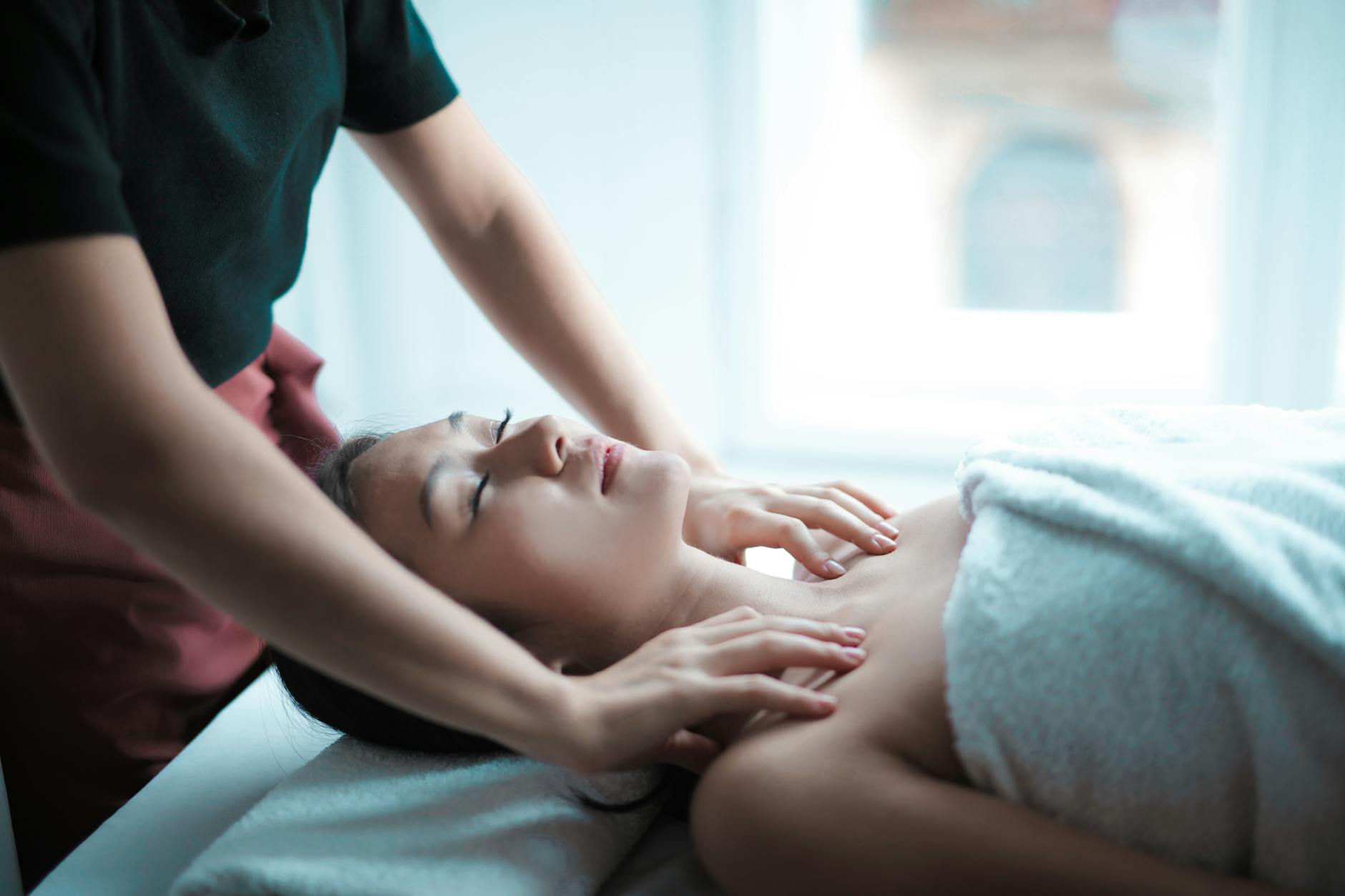
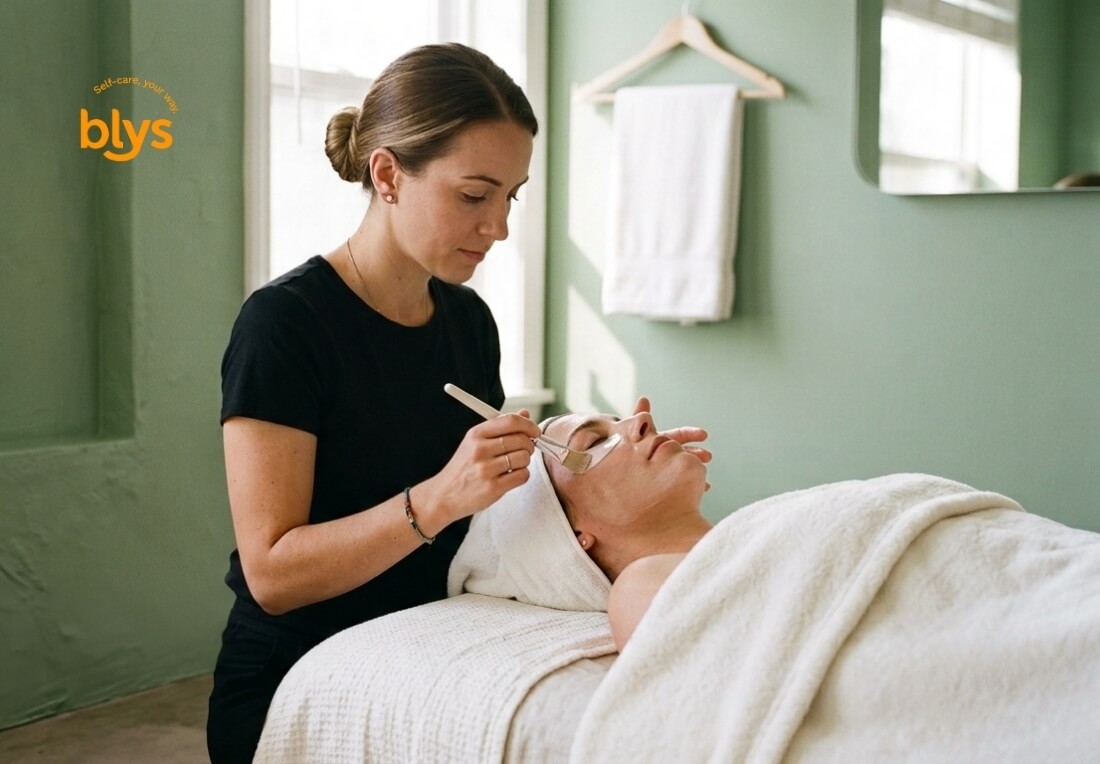
Whether someone calls themselves an esthetician or a beauty therapist, the daily work usually centers on facials, chemical peels, extractions, and waxing. Both roles are trained to read skin, spot issues that need flagging, and pick treatments that actually suit what’s in front of them rather than running the same routine on every client.
Client consultations work the same way under either title
Both roles start most appointments the same way: asking about skin history, current products, allergies, and what the client actually wants out of the session. That consultation habit isn’t tied to one job title. It’s just what good skincare work looks like, regardless of what’s printed on the business card.
Both show up in spas, salons, and mobile platforms like Blys
Job listings for estheticians and beauty therapists both turn up in day spas, salons, medical aesthetics clinics, and mobile beauty platforms, often for what is functionally the same role. If a posting mentions facials, skin consultations, and waxing in the same paragraph, the title next to it is often more about regional habit than any real difference in what you’d be doing.
Where they differ by state or market
The overlap stops being harmless the moment licensing, job listings, or a profile on Blys gets involved, because the two terms don’t actually mean the same thing everywhere.
“Esthetician” is the standard US term
In the US, esthetician is the term state licensing boards use, and it’s the title that shows up in job postings, training programs, and professional associations across the country. If you’re being trained, tested, or hired in the US, esthetician is the term doing the legal and professional heavy lifting.
“Beauty therapist” dominates in the UK, Australia, and other markets
Outside the US, beauty therapist is usually the standard term instead, covering a similar (and sometimes broader) scope of skin, body, and beauty treatments under different training and licensing systems entirely. Someone trained as a beauty therapist in another market isn’t automatically licensed to work as an esthetician in the US, and the reverse is also true, because the qualifications underneath the two titles aren’t built the same way.
Why the same job ends up with two different names
Language drifts differently across regions for reasons that have nothing to do with logic and everything to do with history, and skincare titles are no exception. The work looks similar because skin doesn’t change much depending on which country you’re standing in, but the words used to describe treating it took two separate paths a long time ago and never quite reconciled. If the history side of the career interests you more than the naming debate, the full career guide gets into where the role is headed next.
Licensing differences
This is the part state boards actually care about, and it pays to get this right before anything else about your career or your profile gets sorted out.
Esthetician licensing is regulated state by state
In the US, esthetician is a licensed occupation, and every state sets its own rules for training hours, curriculum, and the exam you need to pass before you can legally practice. There’s no single national esthetician license, so the specific hours and requirements depend entirely on where you’re planning to work.
Training hours vary more than most people expect
Some states require a few hundred hours of training before you can sit the licensing exam, while others ask for closer to double that, and the difference isn’t really about how seriously any one state takes skincare. It usually comes down to how a state has historically bundled esthetics in with cosmetology, and the paperwork inherited from decades ago is still setting the pace today. Once you know the hours your state actually requires, it’s a lot easier to plan around, and once you’re licensed, you can go ahead and set up a provider profile whenever you’re ready to start taking bookings.
“Beauty therapist” isn’t a US licensing category
State boards license estheticians, not beauty therapists, so if that’s the term on your certificate from training done outside the US, it won’t map onto a US license on its own, without some kind of additional testing or state-specific process. State cosmetology boards don’t really do a sense of humor about which title is on your paperwork, so confirm this with your specific state board rather than assuming your training abroad translates automatically.
Which term to use on your profile
Once the licensing side is sorted, the profile question is actually the easy part while setting up your account on Blys.
Match your license, not the internet
If you’re licensed and working in the US, esthetician is the term to use on your profile on Blys, since that’s what matches your license, what clients are searching for, and what the platform itself is built to recognize. Save “beauty therapist” for a market where it’s the term doing the actual legal work, and when you’re ready, sign up as a provider on Blys under the title that’s actually yours.
The right title helps clients find you faster
Clients searching for skincare treatments on Blys are typing the word their market actually uses, so a US esthetician using the correct US term shows up in the searches that matter, instead of getting lost behind a title clients in that market aren’t typing into the search bar. Once your license and your title line up, the rest of setting up your profile and taking bookings is the simple part.
The paperwork side of this is more tedious than complicated, and once your title actually matches your license, everything downstream (job applications, client trust, and your Blys profile) gets a lot less confusing to sort out. If you’re ready to put the correct title next to your actual qualifications, signing up as a provider on Blys gets you matched with clients searching for exactly what you do.
Sign Up as an Esthetician on Blys →
Frequently asked questions
Is esthetician the same as beauty therapist?
The day-to-day work overlaps closely, since both roles typically cover facials, skin treatments, and waxing. The difference comes down to which term your state or country actually licenses and recognizes, and in the US, that term is esthetician.
What is an esthetician career like in the US?
An esthetician career in the US usually starts with a state-approved training program, followed by a licensing exam, then work in a spa, salon, clinic, or through a mobile platform like Blys. Hours, pay, and specific requirements vary by state, so check your specific state board before committing to a training program.
Do I need a different license if I trained as a beauty therapist abroad?
Yes, in most cases. A beauty therapist qualification earned outside the US doesn’t automatically transfer into a US esthetician license, so check with the specific state board where you plan to work about what additional training or testing might be required.
Which term should I use for a beauty therapist career in the US?
If you’re licensed and working in the US, esthetician is the term to use professionally, on job applications, and on platforms like Blys, since that’s what matches licensing requirements and what clients in the US are actually searching for.