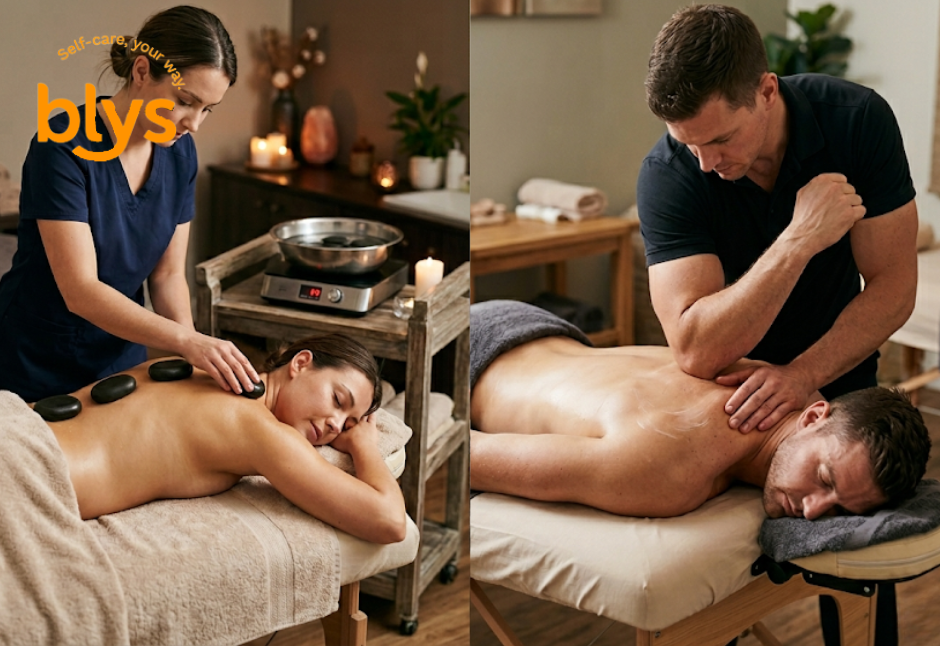
 Hot stone massage or deep tissue massage comes down to one real question: are you trying to relax, or are you trying to fix something specific? Hot stone massage uses heated stones to melt away tension and calm your nervous system. Deep tissue massage uses firm, targeted pressure to work through chronic knots and tightness. This guide breaks down exactly how they differ, what each session feels like, and which one fits what your body needs right now.
What Is a Hot Stone Massage?
Hot stone massage is a relaxation-focused treatment that uses smooth, heated basalt stones, warmed to around 50 to 60 degrees Celsius. Your therapist places the stones along key areas of tension, usually your back, shoulders, hands, and feet, then uses them to apply long, gliding strokes over your muscles. The heat penetrates deep into muscle tissue, which triggers your parasympathetic nervous system and shifts your body out of stress mode. Most people feel noticeably relaxed within the first fifteen minutes and may drift in and out of sleep. Our hot stone massage benefits guide goes deeper into the physiological effects if you want the full picture before deciding.
What Is Deep Tissue Massage?
Deep tissue massage works through the deeper layers of muscle and connective tissue using slow, firm strokes and sustained pressure. Unlike hot stone massage, there’s no heat involved. Your therapist uses their fingers, knuckles, forearms, or elbows to apply targeted pressure to areas of chronic tightness, working through adhesions and muscle fibers that have bound together over time. You may feel some discomfort as pressure builds on a tight spot, but it should never cross into sharp pain, and communicating your pressure preference keeps the session comfortable throughout. For a closer look at how deep tissue massage works and who it’s best suited for, our full guide covers the technique in more detail.
Hot Stone Massage vs. Deep Tissue: A Detailed Comparison
Once you know what each treatment is, the real decision comes down to the details. Here’s how hot stone massage and deep tissue massage actually differ once you’re on the table.
1. Techniques and Tools Used
Hot stone massage relies on heated basalt stones combined with long, flowing strokes. Your therapist glides the warm stones over major muscle groups, using the heat itself to loosen tight tissue before hands ever apply direct pressure. Deep tissue massage skips the heat entirely. Your therapist uses fingers, knuckles, forearms, and elbows to apply slow, sustained pressure directly into muscle and connective tissue, working through the layers a lighter touch can’t reach.
2. Pressure and Intensity Levels
Hot stone massage sits at the lighter end of the scale. The warmth does most of the work, so your therapist rarely needs to apply heavy pressure to get muscles to release. Deep tissue massage is built around pressure. It ranges from firm to intense, and it’s designed to reach chronic tension that hasn’t responded to gentler techniques. If pressure is a concern either way, tell your therapist before the session starts, not partway through.
3. Session Duration and Structure
Both treatments follow the same basic session lengths through Blys: 60, 75, 90, or 120 minutes. Pricing differs slightly by service, with deep tissue massage starting at $129 for 60 minutes and hot stone massage starting at $149 for 60 minutes, since heated stones add setup time and equipment cost. You’ll find full details on the pricing page, and both treatments have their own dedicated booking pages in the app, so switching your choice on the day is as simple as picking the other service.
4. Primary Benefits: Relaxation vs. Muscle Recovery
Hot stone massage is built around relaxation. The heat lowers cortisol, calms your nervous system, and boosts circulation, which is why it’s often chosen for stress relief and better sleep. Deep tissue massage is built around recovery. It works into scar tissue and adhesions, reduces chronic muscle tension, and supports faster healing after strain or overuse. Research published on PubMed backs both approaches, showing thermotherapy aids relaxation and pain relief, while sustained pressure techniques improve mobility in people with chronic tightness.
5. What You’ll Feel During the Session
During a hot stone massage, most people feel deeply relaxed within the first fifteen minutes and may drift in and out of sleep as the warmth spreads through tense muscles. During a deep tissue massage, you’ll likely feel firm, targeted pressure on tight spots, which can bring mild discomfort in the moment. That sensation should stay bearable throughout. If it tips into sharp pain, tell your therapist and they’ll adjust.
6. Recovery and After-Effects
Hot stone massage rarely leaves you sore. Most people leave feeling loose and calm, with the relaxation effects lingering for the rest of the day. Deep tissue massage can leave you tender for 24 to 48 hours, especially over areas that were particularly tight, before settling into improved mobility and reduced tension. Either way, drink water after your session, ease into activity for the next hour, and let your therapist know your pressure preference before you book again, since that feedback shapes your next appointment.
7. Best Suited For…
Choose hot stone massage if you’re dealing with everyday stress, poor sleep, or general muscle tightness and want deep relaxation over intense work. Choose deep tissue massage if you’re managing chronic pain, recovering from an intense workout, or dealing with stubborn knots that lighter techniques haven’t shifted. Still not sure? Lean toward deep tissue if there’s a specific problem you’re trying to fix, and hot stone if the goal is simply to unwind.
8. Who Should Avoid These Massages?
Hot stone massage isn’t recommended if you have diabetes, circulatory issues, heat sensitivity, or inflamed skin, since the heat can affect these conditions unpredictably. It’s also worth checking with your doctor first if you’re pregnant. Deep tissue massage should be approached carefully if you have osteoporosis, recently had surgery, or have a low pain tolerance, since the pressure involved isn’t suited to fragile or healing tissue. When in doubt for either treatment, a quick check with your doctor beforehand is the safer call.
Can You Combine Hot Stone and Deep Tissue in One Session?
Yes, and it’s more common than people expect. Many clients find that alternating between hot stone and deep tissue massage in the same session gives them the best of both worlds, calm and recovery, relaxation and targeted relief. A typical approach starts with heated stones to warm and loosen the muscles, then moves into firmer, targeted pressure once the tissue is more pliable. If you want to try this combined approach, mention it when you book through Blys so your provider can plan the session around both techniques.
Hot Stone vs. Deep Tissue for Back Pain
Back pain adds a specific wrinkle to the hot stone massage vs deep tissue massage decision, since the right choice depends on whether the pain is stress-related or tied to an underlying injury. Stress-driven tension often responds well to the heat and lighter pressure of hot stone massage, while pain from muscle strain or chronic tightness usually needs the targeted work deep tissue massage provides. For a full breakdown of which approach fits your specific back pain, read our guide to back pain.
Hot Stone vs. Deep Tissue for Stress, Anxiety and Sleep
If stress, anxiety, or poor sleep are driving you toward a massage, a hot stone massage is usually the stronger fit. The sustained heat lowers cortisol and shifts your body into a parasympathetic state faster than pressure-based techniques alone, which is why so many people describe it as the more calming of the two. Deep tissue massage can still support stress relief, particularly when tension has built up physically in your shoulders and neck, but its primary strength is muscle recovery rather than nervous system calm. If sleep and relaxation are the goal, start with hot stone and add deep tissue work only where you’re holding specific tension.
Hot Stone vs. Deep Tissue for Chronic Pain and Muscle Knots
Chronic pain and stubborn muscle knots call for deep tissue massage over hot stone, most of the time. Knots form when muscle fibers stay contracted and bind together, and breaking that up takes sustained, targeted pressure that heat alone can’t provide. Hot stone massage can still help as a warm-up, since loosening the surrounding tissue with heat often makes the deeper work less uncomfortable once your therapist moves into it. For knots specifically, our muscle knots guide goes into more depth on what to expect.
Hot Stone vs. Deep Tissue for Athletes and Sports Recovery
Athletes and anyone training hard usually get more out of a deep tissue massage. It works into the muscle fibers that tighten and shorten under repeated strain, helps clear built-up tension after intense sessions, and supports the kind of mobility that keeps performance consistent week to week. Hot stone massage still has a place here, particularly the day before a big event when the goal is calming an overstimulated nervous system rather than working through tight tissue. Many athletes book a deep tissue massage for active recovery weeks and switch to a hot stone when they need to wind down instead of digging in.
How Much Do These Massages Cost?
Pricing for both treatments through Blys starts at 60 minutes and scales up from there. Deep tissue massage starts at $129 for 60 minutes, and hot stone massage starts at $149 for 60 minutes, with the difference coming down to the extra setup and equipment that heated stones require. For a closer look at what affects the price, read our dedicated guides on the hot stone massage cost guide and deep tissue massage cost guide.
Frequently Asked Questions
Can you combine hot stone and deep tissue massage in one session?
Yes. Many providers combine the two by using heated stones first to warm and loosen muscles, then moving into firmer deep tissue work once the tissue is more responsive. Just mention it when you book so your provider can plan the session accordingly.
Which is better for chronic pain, hot stone or deep tissue massage?
Deep tissue massage is generally the better choice for chronic pain, since it works directly into the muscle layers and adhesions causing the tightness. Hot stone massage can support the process by loosening tissue beforehand, but it isn’t built to resolve chronic pain on its own.
Does deep tissue massage hurt?
It can feel intense, especially over particularly tight areas, but it shouldn’t cross into sharp pain. Some tenderness for 24 to 48 hours afterward is normal. If the pressure feels like too much during your session, tell your therapist, and they’ll adjust.
How often should you get a hot stone or deep tissue massage?
For general relaxation, once every three to four weeks is usually enough. If you’re managing chronic pain, recovering from intense training, or dealing with ongoing muscle tension, more frequent deep tissue sessions, closer to every one to two weeks, tend to bring better results.
Is a hot stone massage good for stress and sleep?
Yes. The heat from the stones lowers cortisol and calms your nervous system faster than most other massage techniques, which is why it’s a common choice for people dealing with stress, anxiety, or poor sleep.
Final Thoughts: Which Massage Should You Choose?
The hot stone massage vs deep tissue massage decision really comes down to what your body needs right now. If you’re chasing relaxation, better sleep, or relief from everyday stress, hot stone massage delivers that through warmth and lighter pressure. If you’re dealing with chronic pain, muscle knots, or recovery from intense training, deep tissue massage gets you there through targeted, sustained work. You don’t have to overthink it either. Pick the service that matches what your body needs most right now, and if you’d like a touch of both in one session, just add a note when you book so your provider knows to plan for it.
Either way, you can book a hot stone massage or book a deep tissue massage through the Blys app or website, with same-day or advance bookings available seven days a week from 6 am to midnight, wherever you need it: home, hotel, or workplace.
If you’re a massage therapist and want to bring hot stone or deep tissue massage to clients in your area, you can register as a provider on Blys and start accepting bookings on your own schedule.