You’ve been thinking about taking your skills on the road, visiting clients at home, at work, or in aged care facilities. You’re not alone. The demand for mobile physiotherapy is growing, and so is the opportunity for qualified practitioners to build flexible, rewarding careers outside the traditional clinic model.
Knowing how to become a mobile physiotherapist isn’t just about having the right degree. It involves understanding registration requirements, putting together a practical home visit setup, managing your own schedule, and finding a reliable way to connect with clients. Whether you’re fresh out of university or an experienced clinician looking for a change, this guide walks you through everything you need to know.
From qualifications and insurance to building your client base, here’s how to make the move into mobile physio work.
What Does a Mobile Physiotherapist Actually Do?
A mobile physiotherapist provides the same assessment, treatment, and rehabilitation services as a clinic-based practitioner; the key difference is that you travel to your client rather than waiting for them to come to you. Sessions typically take place in clients’ homes but can also be delivered in aged care facilities, workplaces, gyms, or community centers.
The caseload varies enormously. You might work with older Americans managing chronic pain or recovering from surgery, people with disabilities who find it difficult to access a clinic, postoperative patients in need of rehabilitation at home, or busy professionals who prefer a lunchtime visit to their office. That variety is one of the big draws for practitioners who find clinic work repetitive.
If you want a full picture of the day-to-day responsibilities that come with the role, our physiotherapist job description guide is a solid starting point. And if you’re still weighing up whether physiotherapy is the right career path at all, our physiotherapist career guide covers the broader landscape in detail.
Qualifications And Registration You’ll Need
To practise as a physiotherapist (known in the US as a physical therapist or PT) in the US, you need a valid state licence in every state where you practise. Licensing is state-specific, administered by each state’s physical therapy licensing board, and there is no single national licence. Most states require passing the National Physical Therapy Examination (NPTE), administered by the Federation of State Boards of Physical Therapy (FSBPT). Sports and mobile physical therapists should also check their state board’s rules on treating clients outside a fixed clinic setting, since some states have specific requirements around this.
Your Physiotherapy Degree
In the US, the entry-level qualification for physical therapists is a Doctor of Physical Therapy (DPT), a three-year postgraduate program following a relevant bachelor’s degree. DPT programs must be accredited by the Commission on Accreditation in Physical Therapy Education (CAPTE). Without a CAPTE-accredited degree, you cannot sit the NPTE or obtain a state license.
State Licensing And Ongoing Requirements
Once you hold your DPT and pass the NPTE, you apply for a licence through your state’s physical therapy board. Licence renewal requirements vary by state but typically include completing a set number of continuing education (CE) hours per renewal period. As a mobile physical therapist treating clients in their homes, your licence obligations are identical to those of a clinic-based practitioner. If you plan to work across state lines, the PT Compact allows eligible licensed PTs to practise in member states without obtaining a separate licence in each, which is worth checking if your service area spans a state border.
If you plan to accept Medicare or Medicaid clients, a provider number is required and the billing rules are more complex for home-based practice than for a registered clinic, so confirming the specific requirements with a billing specialist before accepting these clients is the right call.
How To Set Up Your Freelance Physiotherapist Practice
Once your qualifications, registration, and insurance are in place, the next step is setting up the practical side of your mobile practice. Before your first home visit, make sure you have the right equipment, admin systems, travel plan, and client processes in place. A solid setup helps you stay organized, look professional, and deliver a smooth experience from the start.
Step 1: Equipment And Your Kit
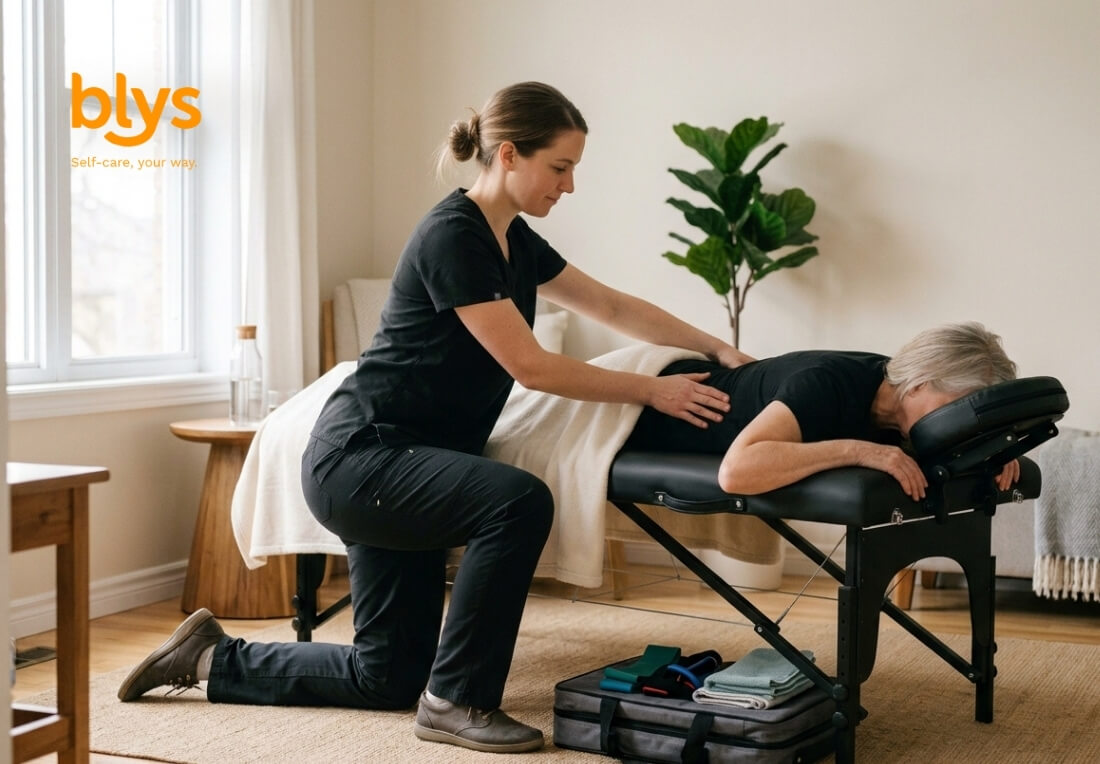
One of the genuine advantages of mobile physiotherapy is that you don’t need a fully kitted-out clinic. Most mobile physios work from a well-organized carry bag or kit that travels with them. Core items include:
- A portable treatment table
- Resistance bands, massage tools, and exercise props
- A goniometer and other basic assessment tools
- Your intake forms, consent documents, and clinical notes system
- A reliable vehicle with enough room for your kit
You don’t need to spend a fortune upfront. Start with the essentials and expand your kit as your client load grows and you get a clearer sense of what your particular caseload demands.
Step 2: Insurance And Business Registration
Professional indemnity insurance is essential for registration, but freelance physiotherapists often need more than that. Because you are treating clients in clients’ homes, it is also wise to consider public liability insurance to help cover incidents that may happen during a visit.
Before you begin, review your cover carefully with a broker who understands allied health so your policy fits the realities of mobile practice.
| Area | What it covers |
| Professional indemnity insurance | Claims linked to the treatment, advice, or clinical decisions you provide. |
| Public liability insurance | Incidents or injuries that may happen during a home visit. |
| Business registration | Sole proprietor, LLC, or other business structure registered in your state. |
| Tax and retirement | Your responsibility for quarterly estimated tax, self-employment tax, and retirement account contributions (SEP IRA or Solo 401(k)). |
| Invoicing and admin | The systems you use to bill clients and manage paperwork. |
| Practice management software | Tools that help organize bookings, notes, forms, and payments. |
If you plan to work independently, you will also need a reliable way to manage tax, superannuation, and invoicing. Many mobile physiotherapists use practice management software to keep bookings, clinical notes, consent forms, and payments in one place. Getting these systems set up early can save time, reduce admin stress, and help your practice run more smoothly as your client list grows.
Step 3: Scheduling And Travel Logistics
In mobile physiotherapy, your schedule needs to account for more than treatment time. Travel between appointments, traffic delays, parking, and setup time can quickly affect how many clients you can realistically see in a day. Without clear boundaries, it becomes easy to overbook and lose hours on the road.
To keep your day manageable, it helps to:
- Set a defined service area with realistic geographic limits
- Leave enough buffer time between appointments for travel and unexpected delays
- Group bookings by suburb or region where possible
- Factor in parking, building access, and time needed to set up and pack down
A well-planned schedule helps you stay punctual, reduce stress, and make your mobile practice more sustainable over time.
How To Find Clients As A Mobile Physiotherapist
Building a client base from scratch is one of the harder parts of going mobile. Word of mouth matters, but it takes time, and relying on it alone means uneven income in the early months. Many mobile physiotherapists accelerate their client growth by joining a platform that handles marketing, booking, and payment on their behalf.
Blys connects qualified allied health practitioners with clients across the US who are looking for mobile services delivered to their home or workplace. As a physiotherapist on the platform, you set your own availability, service area, and rates, and Blys takes care of the visibility and booking infrastructure so you can focus on your clinical work.
If you want to see what the client experience looks like from the other side, you can explore the mobile physiotherapy service through Blys to understand what clients are searching for and what they expect from a mobile session.
Beyond platform-based work, other channels worth investing in include a simple professional website, a Google Business Profile, and referral relationships with GPs and allied health practices in your area. Aged care facilities and NDIS coordinators are also active referral sources if your caseload leans in that direction.
What To Expect Day-To-Day As A Mobile Physio
The freedom of mobile physiotherapy is real but so are the trade-offs. Here’s an honest look at what a typical working week looks like once you’re up and running.
Most mobile physios do a mix of regular clients and one-off assessments. Regulars give you income stability; new clients keep the caseload fresh and interesting. Your diary will look different from a clinic role; you’re managing your own time entirely, which suits self-motivated practitioners and can feel overwhelming for those who thrive with external structure.
You’ll also be working in unpredictable environments. Homes vary enormously in terms of space, cleanliness, and the presence of other household members or pets. Good communication with clients before visits about the space they can set aside for the session and what equipment they may need to move makes a real difference to session quality.
Clinical documentation is non-negotiable, even when working independently. Keep clear records of assessments, treatment plans, and client progress. Digital notes that sync across devices make this far easier to maintain on the road, and they’re essential if a client’s care needs to be handed over or referred elsewhere.
Income can fluctuate, particularly in the early months. Build some financial buffer before you transition from clinic employment to full-time mobile work, and consider whether a mixed model is a lower-risk way to make the transition.
Ready To Take Your Practice On The Road?
Becoming a mobile physiotherapist is a genuinely achievable goal for any qualified, registered practitioner who wants more autonomy over how and where they work. The steps aren’t complicated: get your qualification, secure your registration, sort your business setup, build a practical travel kit, and find a reliable way to reach clients.
Platforms like Blys make the client acquisition side significantly easier, connecting you with people in your area who are actively looking for home visit physiotherapy. If you’re ready to explore what that looks like, learn more about offering mobile physiotherapy through Blys and take the first step towards a more flexible practice.