The questions most men have before a men’s massage or their first booking are not about the massage itself. They’re about what happens around the massage, what to wear, whether it’s normal to feel awkward, whether you’re supposed to talk, and what to do if something unexpected happens physically. These are reasonable things to want to know before you’re in the room with a stranger working on your back, and they don’t get answered in most booking flows because nobody wants to be the one to bring them up.
This answers your questions.
What to Wear and What’s Normal
What Do You Actually Take Off
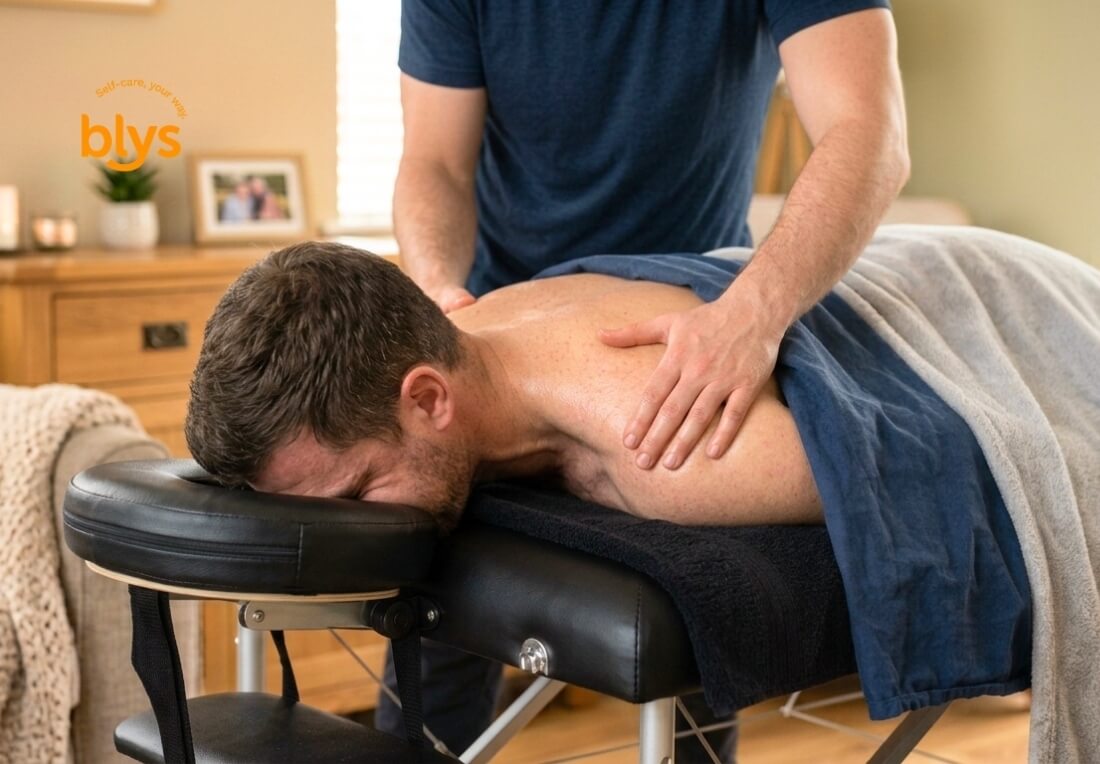
You undress to your comfort level, which for most massage types means undergarments on and everything else off. For a back or full body massage, the therapist needs access to the back, so the shirt comes off. For the lower body to be worked, shorts or trousers come off too. You’re draped with a sheet throughout the session, and only the area being worked is uncovered at any given time, the rest stays covered.
If you’d rather keep more on, that’s fine. Some men keep shorts on throughout. The therapist has worked with every variation and won’t comment either way.
Is It Weird if the Therapist Is a Woman
No, and this is one of those questions that feels like a big deal in advance and stops feeling like anything about thirty seconds into the session. Most massage therapists are women. Most male clients have female therapists. The dynamic is professional, the focus is on the work, and there’s nothing unusual about it, it’s the same as having a female doctor or dentist, with more pressure applied to the shoulders.
If you have a strong preference for a male therapist, you can request one when you book. Blys has both, and the booking platform lets you specify.
Do You Have to Make Conversation
No, you don’t have to. There’s a brief chat at the start about what you want to focus on and your pressure preference, and after that silence is the expectation rather than the exception. You’re not being rude by closing your eyes and not speaking, you’re being the ideal client.
If you find yourself compelled to fill the silence with conversation, that’s fine too. Most therapists are easy to talk to, have heard most things, and will match whatever energy you bring. But the expectation is silence, not conversation.
Common First-Timer Questions
You fall asleep, the therapist continues working, and if you snore, don’t worry, they’ve heard worse. Falling asleep is one of the most common things that happens during a massage and most therapists consider it a sign they’re doing their job. You might wake up briefly when the therapist moves you to a different position, which is momentarily disorienting and immediately fine.
What if the Room Feels Awkward at First
It does, for most people, for about five minutes. The beginning of a first massage involves a brief conversation, the room going quiet, and the slightly unfamiliar experience of lying still while someone works on your back. By ten minutes in, that feeling is gone, the session has its own rhythm and most people stop thinking about the situation and start feeling the results instead. If you go in expecting the first few minutes to feel a bit odd, they feel a lot less odd.
What if the Pressure Is Wrong
You can tell the therapist if the pressure is wrong. This is the one adjustment most first-timers don’t make because they don’t want to seem difficult, and it’s also the single most useful thing you can do to get more from the session. A quick “can you go a bit firmer” or “that’s a bit much” takes less than two seconds, gets acted on immediately, and most therapists would far rather know than spend the session guessing.
Etiquette Basics
Show Up Clean
Show up to a massage clean, ideally having showered that day, because it’s a close-contact service and the therapist is working on your skin for an hour. If you’ve come straight from the gym or from a warm environment, a quick rinse before the session is worth the effort, the same applies before a men’s facial, since clean skin at the start of any professional treatment gives the therapist a better baseline to work from.
Be Ready When the Therapist Arrives
An in-home booking through Blys means the therapist comes to you, so the “running late” problem is less common, but it’s still worth having the space clear and being ready when they arrive rather than making them wait while you sort things out. If the session is booked for 60 minutes, the clock starts when it starts, not when you’re ready.
Tell the Therapist What You Need
The conversation at the start of any massage session at home is your chance to direct the session, and it’s worth using. If your lower back is the problem, you can say so. If you’ve had a recent injury, you can mention it. If you want the whole session to focus on the neck and shoulders because your week was a disaster, that’s completely valid and extremely common. The therapist is there to address what you need, but they need to know what that is.
Phone on Silent
Put your phone on silent and face down, or leave it in another room, because you’re paying for an hour of your nervous system shifting into rest mode and a single notification that makes you reach for it undoes about ten minutes of that in approximately three seconds.
What to Expect During and After
During the Session
The first few minutes feel slightly unfamiliar, and then they don’t, and then you wonder why you waited this long. A relaxation massage works through long, flowing strokes across the back, shoulders, and legs, and the rhythm builds in a way that’s hard to describe until you’ve been on the receiving end of it. A remedial or deep tissue session is more focused, less flowing, more deliberate, spending time on specific areas and working through tension that’s been sitting there for a while.
After the Session
Most people feel noticeably more relaxed immediately after and sometimes slightly sore in the worked areas the following day, especially after a deeper session, this is normal and settles within 24 to 48 hours. Drinking water and skipping intense exercise for the rest of the day helps the body process the work properly.
Which Type to Book
If you’re not sure which to book, the decision comes down to whether there’s something specific you want addressed. Relaxation massage is the right starting point if you want to decompress, sleep better, or just give your body an hour of uninterrupted rest. It works through the whole body with flowing strokes and is the better choice when there’s no particular complaint driving the booking.
Deep tissue is the better choice when there is a complaint. It’s the right choice for a neck that’s been tight for months, a lower back that aches by Thursday every week, or shoulders that carry everything and release nothing. These respond to the more focused work that deep tissue delivers. Most men who haven’t had a massage before lean toward relaxation for the first session and switch to deep tissue once they realize how much more the focused work does, which usually happens around the second or third booking.
For chronic back or neck tension that’s been building for a while and hasn’t fully shifted with anything else, trigger point massage goes deeper than either by targeting the specific tight spots that refer pain elsewhere in the body. It’s the option worth knowing about if you’ve had the same tension in the same place for long enough that you’ve started to assume it’s just how your body is now, but it probably isn’t.
How Often to Book
One of the best men’s massage tips is this: don’t wait until something hurts to book. A monthly session for general wellbeing keeps the body in better shape than waiting for a crisis, and for specific issues like chronic neck tension, more frequent sessions initially get things under control faster. The most common mistake first-timers make is booking one session, noticing it helped, and then not booking again for six months, the second session builds on the first, and so on from there.
The questions that feel like a big deal before a first session stop mattering about thirty seconds in. Book your first men’s massage at home through Blys, available 7 days a week, 6 am to midnight across the US.