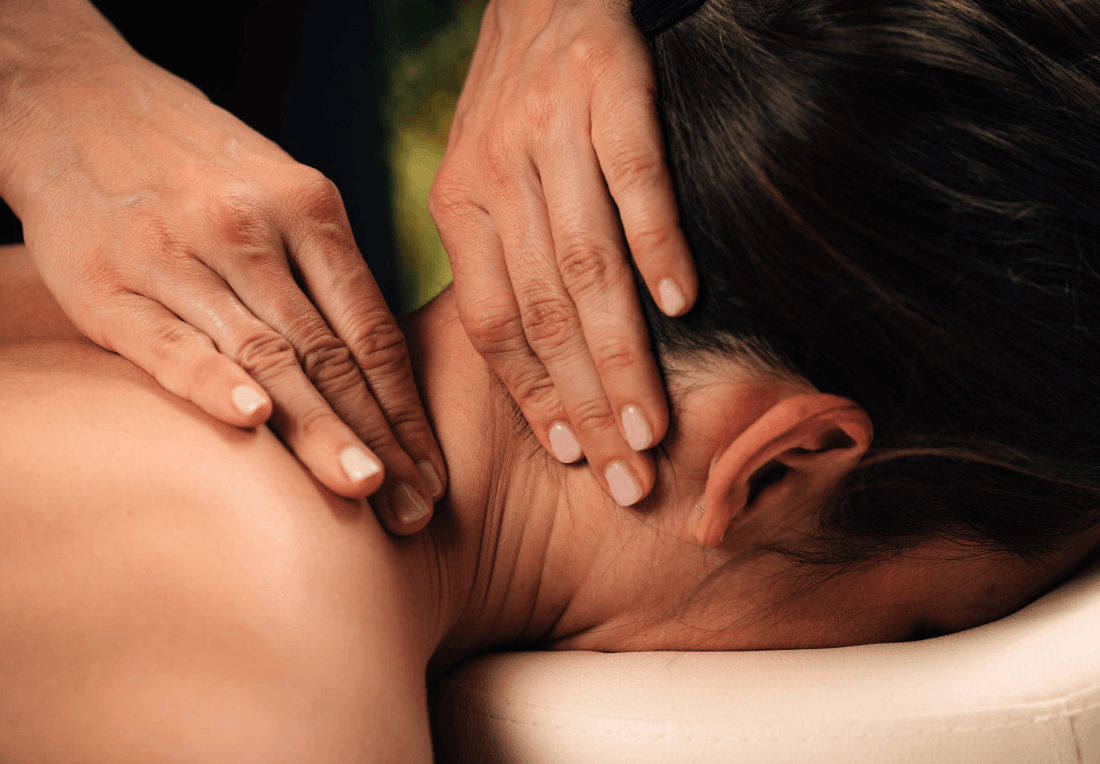
Upper crossed syndrome is a mix of tight chest and upper neck muscles and weak mid-back muscles that long hours at a desk build up, and it shows up as forward head posture, rounded shoulders and sometimes a neck hump. Your laptop has been giving you a crash course in leaning forward, and your neck has attended every class.
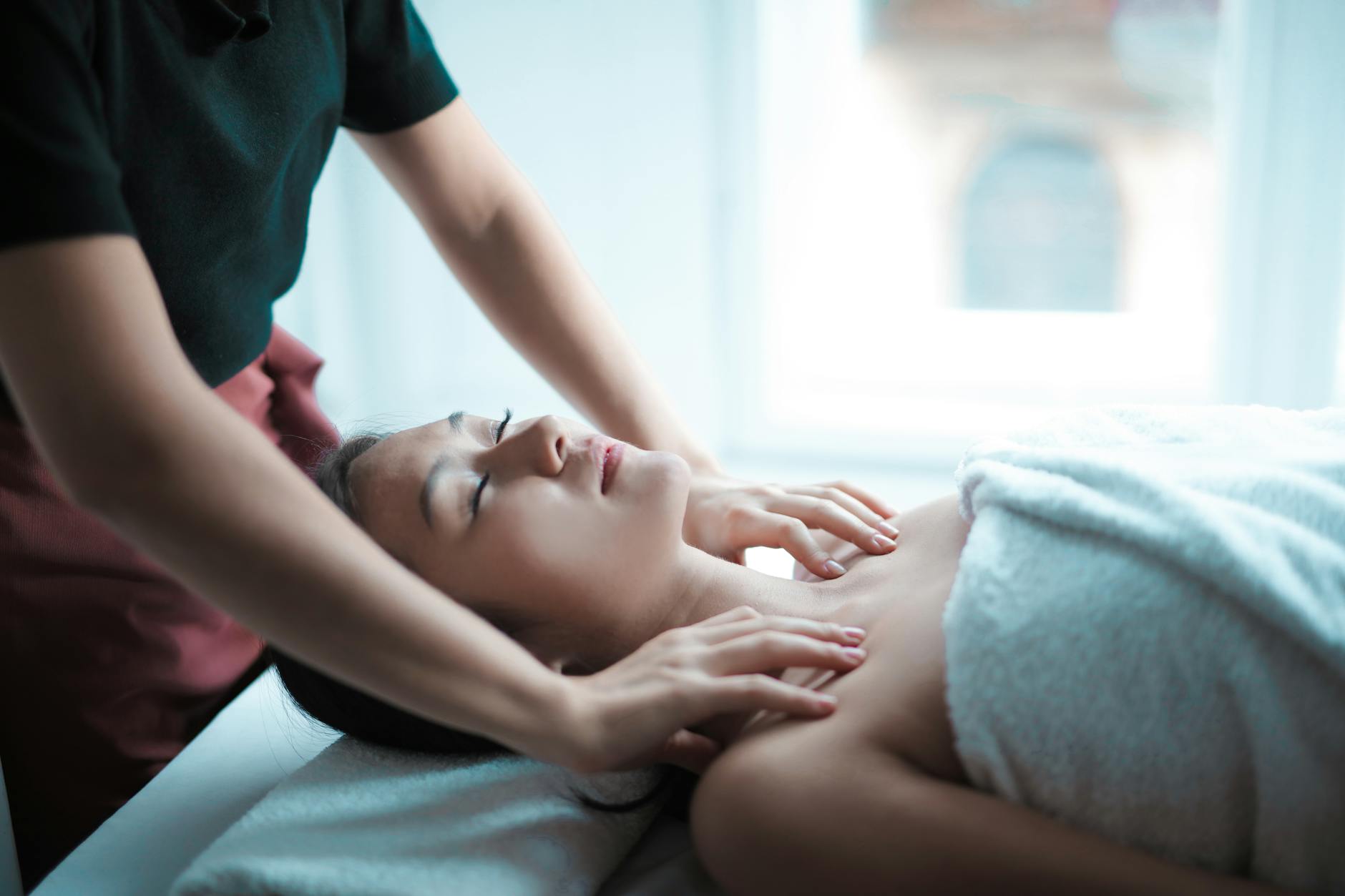
Massage can ease the tight side of that mix, and a therapist can come to your home after work or to your office. Therapeutic massage and myofascial release therapy work on the tight chest and shoulder muscles, Swedish settles the overall tension and assisted stretching opens the front of the body, while the weak muscles in your back still need exercise to wake up.
The Slouch Has a Name
Zoom calls turned every spare room into a posture experiment, and the results are in: sitting with your head ahead of your shoulders for years teaches your body to stay that way.
What Is Upper Crossed Syndrome?
Upper crossed syndrome is a mix of tight muscles at the chest and the back of the neck and weak muscles in the mid-back and the front of the neck, and the two sets cross over each other like an X, which gives the syndrome its name. It describes how muscles are working, and a doctor or physical therapist is the person who assesses it.
Overachievers in Front, Coffee Break in Back
The muscles in front are overachievers, always flexed and never rested, while the ones in the mid-back are on a permanent coffee break. Fascia, the connective tissue wrapped around those muscles, comes along for the ride, and myofascial release for tight tissue works on that layer. The table shows who’s who.
| Muscle group | Where it sits | Usually |
| Chest (pecs) | Front of the shoulders | Tight |
| Upper traps and levator scapulae | Top of the shoulders and sides of the neck | Tight |
| Muscles at the back of the neck | Base of the skull | Tight |
| Mid-back (rhomboids and lower traps) | Between and below the shoulder blades | Weak |
| Deep neck muscles | Front of the neck | Weak |
How Screens and Phones Build the Mix
Your phone gets a daily vote on where your head sits, and it always votes down. Add a laptop screen that’s too low, a keyboard that’s too far away and a day with few breaks, and the muscles you hold short learn to stay short while the ones you stop using fade. No single day does it, and eight hours a day over years does.
Where the Screen Goes in a Home Office
Most home setups are one kitchen table, one laptop and one chair that was never meant for eight hours, and the screen sits far too low. A laptop stand, a separate keyboard and a screen that reaches eye level change the angle your neck holds all day, and the couch laptop is the worst offender of all. A setup that lets your elbows rest by your sides and your eyes look straight ahead costs little and helps a lot, and it sits at the heart of massage for office workers who sit all day.
Your Car Seat Is a Desk Too
A long commute adds hours of the same shape: hands forward, head forward and shoulders rolled around a steering wheel. If you spend a lot of time behind the wheel, notice how your head sits against the headrest, and mention your commute in your booking notes, since a provider who knows your whole week plans the session around all of it.
Neck Hump, Hunched Back and Rounded Shoulders
A neck hump is a visible bump at the base of the neck, a hunched back is a deeper curve through the upper back and rounded shoulders roll forward, and the three often show up together. They overlap, so people use the terms interchangeably, and a doctor can tell you which one you’re seeing in the mirror.
Three Minutes at Your Desk: The Self-Check
You don’t need equipment for this, just a wall, a phone and a minute or two of honesty.
A Three-Step Self-Check
Run through this self-check in three steps:
- Stand with your heels, hips and upper back against a wall and let your arms hang. Does the back of your head touch the wall without you tipping your chin up?
- Prop your phone on a timer and photograph yourself from the side at your desk. Do your ear, shoulder and hip roughly line up, or does your head sit ahead of your shoulders?
- Type for a minute and notice your shoulders. If they’ve crept up toward your ears or rolled forward, you’ve found a clue.
None of these steps diagnoses anything, and they’re only a way to notice what your body does.
What to Do With What You Notice
Write down where it feels tight and how many hours you sit, because both go into your booking notes. A provider who knows you sit for eight hours and feel tight across your chest and the tops of your shoulders can plan the session around that, instead of guessing.
Matching the Massage to the Muscle
Massage for rounded shoulders works best when each style goes where it fits, from Swedish through myofascial release therapy to assisted stretching, and the table matches them up.
| Area | What’s going on | Massage that fits | What it involves |
| Whole back, neck and shoulders | General tension from sitting | Swedish | Long, flowing strokes across the back, neck and shoulders |
| Chest and front of the shoulders | Tight chest muscles pulling the shoulders forward | Therapeutic massage or myofascial release | Slow, firmer work on the chest and the connective tissue around it |
| Tops of the shoulders and back of the neck | Tight upper traps and neck muscles | Therapeutic massage or myofascial release | Focused work on those muscles |
| Front of the body | A closed-up chest and stiff front of the shoulders | Assisted stretching | Guided stretches that open the chest and shoulders |
| Mid-back | Weak muscles that need strengthening | Exercise, not massage | Movement from a physical therapist or trainer |
Therapeutic Massage and Myofascial Release for the Chest and Upper Traps
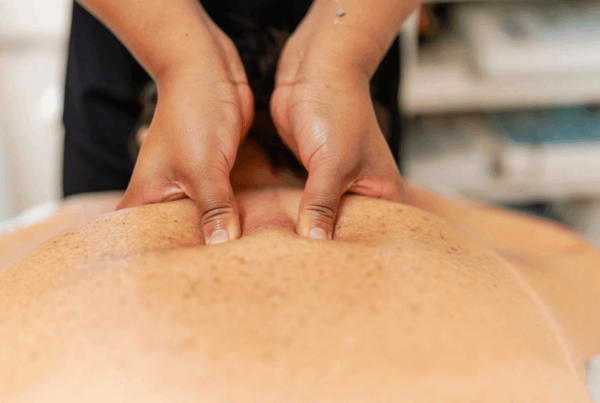
Therapeutic massage and myofascial release both work on the tight chest and upper trap muscles, with slow, firmer pressure on the muscle and the connective tissue around it. Your therapist spends time on the chest, which surprises people who expected a back massage, since the front of the body is where rounded shoulders begin. Myofascial work is slower and gentler than most people expect.
Swedish Massage for the Whole Back and Neck
Swedish massage uses long, flowing strokes at light to medium pressure, and it settles the general tension that builds across your back, neck and shoulders by the end of a workday. It’s the easy starting point if you’re not sure what you need, because your therapist adjusts the pressure as you go.
Assisted Stretching to Open the Front of the Body
Assisted stretching sessions use guided stretches that open the chest and the front of the shoulders, with your provider doing the pushing and you doing the breathing. It works well after massage has softened the tight areas, and it feels like a steady pull that you control with your breath.
Planning a Session Around the Mix
Settle first, work specifically next and open up last is a sensible order for this mix. Swedish eases the general tension, therapeutic or myofascial work goes into the chest and upper traps and assisted stretching finishes by opening the front of the body. Ask your provider whether they can combine styles in one visit or whether it’s better to arrange them on different days, since each style suits a different part of the mix.
What a Session Feels Like
Swedish feels like long, even strokes, therapeutic and myofascial work feel slower and firmer and assisted stretching feels like a steady pull. Chest work can feel unfamiliar, so say so if the pressure is too much and your provider will adjust. Any sharp or growing pain is a reason to stop, and a good session never needs you to grit your teeth.
What Massage Can’t Do
Massage is the pit crew and not the driver, and it does its best work when something else is doing the driving.
Can Massage Help Forward Head Posture and Rounded Shoulders?
Massage can ease tight muscles in the chest, neck and shoulders, and assisted stretching can open the front of the body, but massage alone doesn’t strengthen the weak mid-back muscles that hold you upright, so it works best alongside movement. No session can promise to change your posture, and anyone who does is promising more than a massage can deliver.
Why Movement Still Matters
The weak muscles in the mid-back and the front of the neck need exercise to switch back on, and a physical therapist or trainer can show you the moves that suit you. Office workers often get the most from sessions that sit beside movement, and that pairing is the whole idea.
A Workday Reset
Small habits between sessions beat one big effort, and none of them need a new chair.
| Moment | Small move |
| Start of the day | Raise your screen so the top sits near eye level |
| Mid-morning | Stand up and move for a minute |
| Lunch | Take a call as a walk, or step outside |
| Mid-afternoon | Bring your phone up to eye level instead of dropping your chin |
| End of the day | Close the laptop and leave the desk |
Pick two of these for a week and see which ones stick, since a habit you keep beats a list you admire. The best desk setup is the one that lets you leave the desk now and then, and a short chair massage session between meetings is one way to do it.
Sessions at Home or at the Office With Blys
A massage after work beats a second coffee, and it’s easier when the therapist comes to you.
After Work at Home
Bookings run from 6 am to midnight, seven days a week, so an after-work session at home fits around even a late finish. A 60-minute session at a clinic with 30 minutes of travel each way is a two-hour commitment after a long day. A 60-minute session at home is 60 minutes, and you stay on your own couch afterward, which is the point of mobile massage vs spa.
At the Office
Chair massage sessions take as little as 10 to 20 minutes, which fits between meetings, and your therapist brings the chair and handles the setup and pack-down. Each chair needs about 3 x 5 feet of space, so a quiet corner, a sign-up sheet and a spot away from the printer are all a team needs, and an office manager can hold the corner for the afternoon with one calendar invite. For a whole team of desk workers, corporate massage at your workplace brings a therapist to the office, and chair massage is the only meeting with a headrest.
What to Put in Your Booking Notes
Put your desk hours and where it feels tight in your booking notes, such as the chest, the tops of the shoulders or the back of the neck. Add the style you’d like, whether Swedish, therapeutic, myofascial or assisted stretching, so your provider arrives knowing what to focus on.
When to See Your Doctor First
This page is general information about posture and massage, and it isn’t medical advice. It doesn’t diagnose upper crossed syndrome or any other condition, and it doesn’t promise that massage changes your posture or removes a neck hump. A neck hump in older adults can have medical causes, so see your doctor about a hump that’s new, growing or painful, or one that comes with numbness, tingling or weakness.
If your workday has turned your shoulders into earmuffs, a session after work is an easy place to start, and the laptop can stay closed.