 What is remedial massage, and how is it different from the relaxation massage you might book after a stressful week or the deep tissue work your physical therapist has mentioned? If you’ve stared at a list of massage options and genuinely not known which one to choose, you’re far from alone.
Remedial massage is growing in popularity across the US, but the name alone doesn’t explain much. Many people assume it’s simply a firmer version of a standard relaxation massage, or that it’s the same thing as deep tissue work. It’s neither and choosing the right approach can make a real difference to how much benefit you actually get from a session.
This article explains exactly what remedial massage is, how it compares to relaxation and deep tissue massage, and the situations where it’s likely to be the right call for your body. Through a platform like Blys, you can book a vetted, insured provider to come directly to your home no commute, no waiting room, no wasted recovery time.
What Is Remedial Massage And What Does A Session Involve?
Remedial massage is a structured, outcome-focused form of massage therapy designed to address specific musculoskeletal problems. The name is the clue “remedial” comes from remedium, meaning a correction or cure. Rather than promoting general relaxation, it aims to identify and address the underlying cause of pain, tension, or restricted movement.
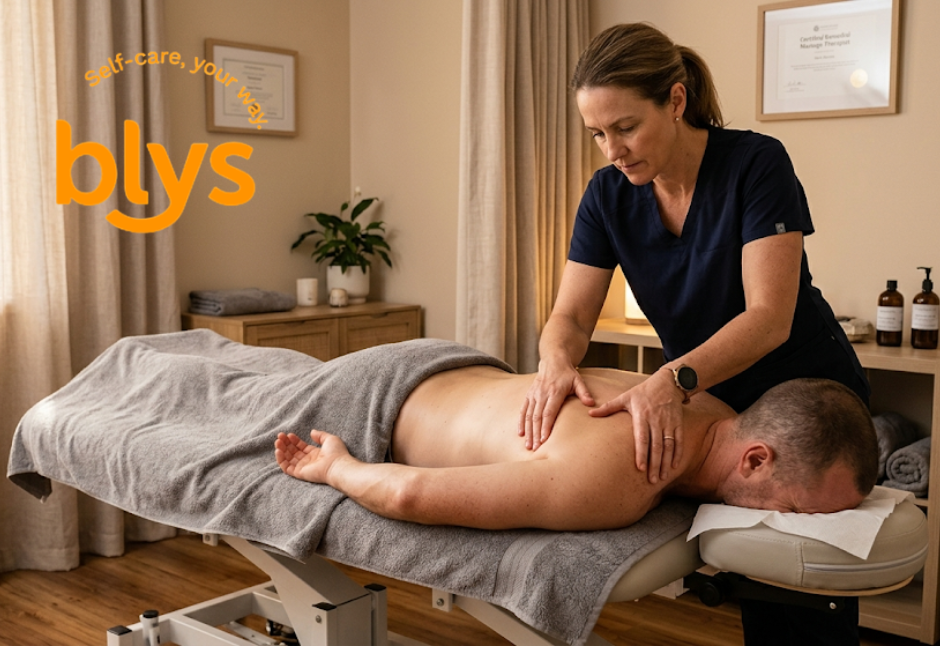
A session typically starts with a brief assessment. The provider will ask about your symptoms, posture, daily habits, and any injuries or conditions you’re managing. They use that information to shape the session selecting specific techniques, focusing on particular muscle groups, and adjusting pressure and depth based on what they find in the tissue.
Techniques commonly used in remedial massage include:
- Myofascial release sustained, gentle pressure to release tension in the connective tissue surrounding muscles.
- Trigger point therapy focused pressure on specific knots or tight spots within a muscle.
- Muscle energy techniques gentle active stretching to restore muscle length and range of motion.
- Deep tissue work slow, deliberate strokes targeting deeper muscle layers when the tissue warrants it.
The provider may also offer suggestions on stretching, posture, and movement habits to support your recovery between sessions.
Unlike a spa massage designed purely for relaxation, remedial massage is intended to produce a measurable, therapeutic outcome. It’s the kind of session where you leave with specific areas feeling different not just generally looser.
How Does Remedial Massage Differ From Relaxation And Deep Tissue Massage?
This is where most people get confused and it’s an understandable mix-up. The three types can feel similar on the surface, but they differ significantly in intent, structure, and application. The table below puts them side by side.
| Relaxation Massage | Deep Tissue Massage | Remedial Massage | |
| Primary goal | Reduce stress and promote calm | Release deep muscle tension | Address a specific musculoskeletal problem |
| Starts with assessment? | No | No | Yes |
| Pressure level | Light to medium | Medium to firm | Varies adjusted to the tissue |
| Techniques used | Long flowing strokes | Slow, deep strokes | Trigger point, myofascial release, stretching, deep tissue |
| Best suited for | General unwinding, stress relief | General deep tension, muscle tightness | Injury recovery, chronic pain, postural issues |
| May be covered by insurance? | Generally no | Generally no | Sometimes, with a licensed practitioner |
Relaxation Massage: When Switching Off Is The Goal
Relaxation massage commonly called Swedish massage uses light to medium pressure and long, flowing strokes designed to calm your nervous system, lower stress hormones, and leave you feeling settled. It isn’t trying to resolve anything specific. If you’re not dealing with pain or injury and simply want to decompress, this is the right call.
Deep Tissue Massage: Technique, Not Modality
Deep tissue massage describes a specific approach slow, deliberate pressure applied to reach deeper muscle fibers. If you’ve wondered whether deep tissue massage is supposed to hurt, the honest answer is that it can feel intense in tense areas, but shouldn’t feel damaging. It’s a technique, not a complete therapeutic system.
Remedial Massage: Outcome-Driven From The Start
Remedial massage is the broadest of the three. It draws on deep tissue work, trigger point therapy, myofascial release, and other methods all chosen based on an assessment rather than a fixed menu. The key difference from deep tissue massage is that it’s outcome-driven rather than technique-driven: the provider adapts to what your body needs, not the other way around.
If you’re weighing up mobile deep tissue massage at home versus a remedial session, the deciding factor is usually whether you need a structured, targeted response to something specific or whether you want the general releasing benefits of deep, firm pressure across the body.
When Is Remedial Massage The Right Choice For Your Body?
Here are the most common situations where remedial massage tends to deliver real, lasting results and why having a provider come to your home through Blys makes the whole process significantly easier.
Desk Job Tension And Postural Problems
If you work at a screen for long hours, the physical cost is familiar tight upper back, a stiff neck, shoulders that seem to live somewhere near your ears. These patterns develop because muscles adapt, unhelpfully, to sustained positions. Remedial massage can assess and address those specific patterns rather than just providing temporary relief that disappears overnight.
The at-home model makes this easier in practice. Book a session in the evening, stay in your own space, and rest properly after rather than sitting in traffic on the way home and wondering why you went to all the effort.
Recovering From A Soft Tissue Injury
Muscle strains, tendon issues, and sports-related injuries often respond well to remedial massage as part of a broader recovery plan. Research published via PubMed supports the role of soft tissue therapy in reducing delayed-onset muscle soreness and supporting recovery outcomes. Always check with your doctor or physical therapist before booking if you’re managing an active or recent injury.
Chronic Tension And Recurring Pain Patterns
If you’ve had the same tightness or ache in a particular area for weeks or months, a remedial approach is worth considering. General massage may provide short-term relief; remedial massage is designed to work on why that tension keeps returning.
Headaches With A Muscular Origin
Tension headaches and cervicogenic headaches those that originate in the neck are often linked to tightness in the upper back, neck, and suboccipital muscles. A provider trained in remedial techniques can target these areas specifically, which a relaxation session won’t do.
Why Booking A Remedial Massage At Home Changes The Outcome
Here’s something most content on this topic skips over: what you do immediately after a remedial session matters. The standard advice is to rest, hydrate, and avoid strenuous activity for a few hours. That’s hard to follow when you’ve just driven across town and still have to make your way home.
When you book through a platform like Blys, the provider comes to you. You stay in your own space throughout. Your nervous system doesn’t have to manage a commute, and you can genuinely rest after the session rather than rushing straight back into the day.
The providers you book through Blys are vetted, insured, and professional so you’re not trading quality for convenience. This is the core value of a booking platform built around the home service model: expert, outcome-focused care without leaving your front door.
For people managing ongoing conditions or recurring injuries, where consistency matters, this model is especially useful. Instead of fitting clinic appointments around a packed schedule, you book around your life. Local, trusted providers are available across the US, and booking takes minutes.
There’s also a comfort factor worth acknowledging. For anyone dealing with chronic pain or heightened sensitivity, traveling to and from a clinic adds physical and mental load before the session even begins. Receiving care at home removes that entirely and that’s a meaningful advantage most traditional booking options simply don’t offer.
If you’re ready to book, you can explore remedial massage services through Blys and find an expert provider available near you today.
The Right Massage Type Makes A Real Difference
Remedial massage isn’t just a firm massage with a clinical-sounding name. It’s a structured, assessment-led approach designed to address specific musculoskeletal problems and it’s meaningfully different from both relaxation and deep tissue massage, even when those techniques appear within the same session.
If you’re dealing with persistent tension, recovering from an injury, or managing the physical cost of long hours at a desk, a remedial session is a practical and direct next step. With professional providers available to come to your door through Blys, there’s no commute, no waiting room, and no rushing afterwards. Book a remedial massage at home and see what a targeted, outcome-focused session can actually do.