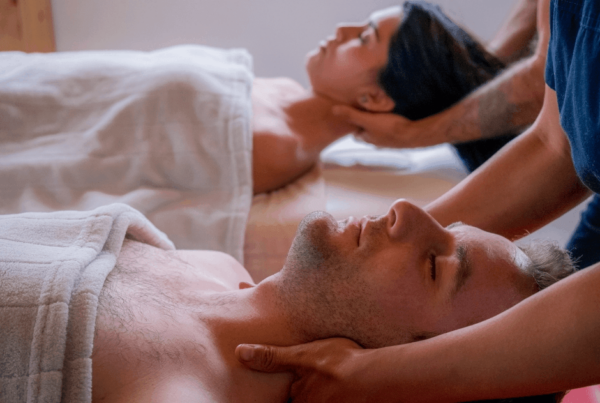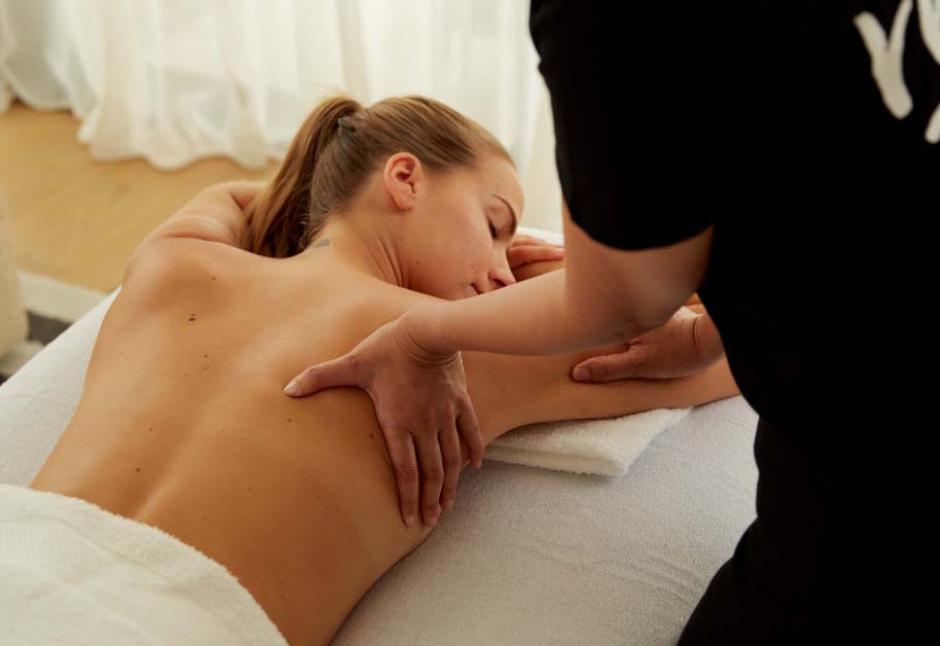
Book deep tissue for knots and firm pressure, Swedish relaxation for stress and lighter pressure, Thai for stiffness and mobility, sports if you train regularly, and prenatal if you are pregnant. Trigger point and myofascial release target specific tight spots. Most sit in the same $129 tier, so the choice is about pressure rather than price.
The booking screen lists a dozen options with almost identical prices, which makes the decision harder than it needs to be. This page sorts them by what they actually do.
Three questions that decide it
Price barely separates most of these. Six of them sit in the same tier. Answer these three and the list narrows to one or two.
- How much pressure do you actually want? This matters more than anything else and it is the question people skip. Firm is not better, it is different.
- Is the problem in one spot or spread out? A few identifiable sore points and a whole tight region call for different techniques.
- Do you want to lie still? Most of these are table massage with oil. Thai is not, and it surprises people.
At a glance
| Type | Best for | Pressure | From, 60 min |
|---|---|---|---|
| Remedial deep tissue massage | Knots and tension you can point to | Firm | $129 |
| Swedish relaxation massage | Stress and general soreness | Light to medium | $129 |
| Trigger point therapy | A few specific sore points | Firm, in short bursts | $129 |
| Myofascial release therapy | Stiffness and restricted movement | Gentle, sustained | $129 |
| Thai massage | Mobility, and being stretched | Firm, no oil, stay clothed | $119 |
| Sports massage | Recovery from regular training | Firm | $139 |
| Prenatal massage | Pregnancy, with its own protocols | Light to medium | $139 |
US dollars, standard base rates per person, before the 10% processing fee.
How this list was put together
Seven types, chosen and described against four rules.
- Only types you can actually book. Every one appears on the Blys US pricing page with a published rate, checked live on 27 August 2026.
- Descriptions come from the service pages, not from general knowledge about massage.
- Sorted by pressure, not by price. Six of the seven are within $20 of each other, so price is close to useless as a way to choose.
- No claims about treating conditions. This describes what each type involves and what people commonly book it for. It is not medical advice.
What every booking has in common
Whichever type you pick, a licensed therapist travels to your home, hotel or office and brings the table, towels or sheets, oil and music. You provide the space.
Sessions run 60, 75, 90 or 120 minutes. Every type above is available at every duration, and the per-minute rate improves as the session gets longer. You are not charged until a provider accepts the booking.
1. Remedial deep tissue massage
The firmest of the seven and the one most people mean when they ask for the knots worked out. Blys describes it as a strong treatment for muscles that are damaged, knotted, tense or immobile, and names a sore neck or back specifically.
Book it when you can point to the problem and want more targeted pressure. Add notes when placing your booking to let your therapist know where you need attention, then choose the level of pressure that feels right for you during the session. $129 for 60 minutes.
2. Swedish relaxation massage
The gentlest option, and a great first booking if you are new to massage or unsure what level of pressure you prefer. Blys describes it as a deeply restorative massage designed to reduce stress, soothe sore muscles and help you unwind.
It is the same price as deep tissue, so your choice can come down to the kind of experience you want rather than the cost. $129 for 60 minutes.
3. Trigger point therapy
A more targeted technique that may be used as part of a remedial massage, focusing on specific points of muscle tension rather than treating a whole area evenly. Blys says it aims to relieve pain and improve muscle flexibility.
Best suited if you can identify a few specific sore or tight spots. You can describe the areas you want your therapist to focus on in the notes when placing your booking, send them a message through the in-app chat beforehand, or simply let them know during the session. Pressure on individual trigger points can feel intense for short periods, so speak up if you want them to ease off. $129 for 60 minutes.
4. Myofascial release therapy
Gentle sustained pressure applied to connective tissue, used as part of a remedial massage. Blys says it releases tension and improves mobility, and that it can help with posture and range of motion.
Choose it when you feel stiff and restricted more than sore. The pressure is lighter than deep tissue and held for longer. $129 for 60 minutes.
5. Thai massage
A more active style of massage, and the lowest-priced option at $119 for 60 minutes. Blys describes it as a full-body treatment that combines stretching, pulling and rocking techniques to help relax tight muscles, release tension and improve mobility. No massage oil is used, and you will need to wear loose, comfortable clothing that allows you to move freely.
It is less about lying still and more about being guided through stretches and different positions. A good option if you are looking for mobility, flexibility and an assisted-stretching style of treatment rather than a traditional oil massage.
6. Sports massage
Designed around performance, recovery and muscle maintenance for people who are regularly active. Blys describes it as a targeted massage that can help relieve muscle soreness, improve flexibility and support recovery after physical activity.
Worth the extra $10 if your tightness or soreness is linked to training, lifting, running, sport or other strenuous activity rather than everyday desk tension. $139 for 60 minutes.
7. Prenatal massage
A massage adapted specifically for pregnancy, with positioning, pressure and techniques adjusted for comfort at different stages. Blys describes it as a gentle treatment designed to help ease pregnancy-related tension and promote relaxation.
Let your therapist know how far along you are when placing your booking, so they can prepare accordingly. $139 for 60 minutes.
How to choose
- If you are new to this, book Swedish relaxation. It is the same price as deep tissue and much easier to enjoy if you turn out to prefer lighter pressure.
- If you can point at the problem, book deep tissue or trigger point. Both are firm and both target rather than sweep.
- If you feel stiff rather than sore, book myofascial or Thai. Both work on movement instead of muscle.
- If you train, book sports. The $10 buys a therapist working to a recovery brief.
- Book 90 minutes for a large area. A full back, neck and shoulders session rarely fits comfortably in 60.
- Say what you want in the first two minutes. Every type here is adjustable in the room, and the therapist cannot read your tolerance.
What to expect in the room
| Type | Oil | Clothing | Works on | Can feel intense |
|---|---|---|---|---|
| Remedial deep tissue massage | Yes | Undressed to comfort, draped | Muscle | Yes |
| Swedish relaxation massage | Yes | Undressed to comfort, draped | Muscle | No |
| Trigger point therapy | Yes | Undressed to comfort, draped | Specific points | Yes, in short bursts |
| Myofascial release therapy | Yes | Undressed to comfort, draped | Connective tissue | No |
| Thai massage | No | Loose clothing, stay dressed | Joints and mobility | Sometimes |
| Sports massage | Yes | Undressed to comfort, draped | Muscle and recovery | Yes |
| Prenatal massage | Yes | Undressed to comfort, draped | Muscle, positioned for pregnancy | No |
Whichever type you book, Blys asks that you keep your underwear on during the treatment.
When to speak to a clinician first
This page describes what each type involves and what people commonly book it for. It is not medical advice, and Blys states that the contents of its website are for informational purposes only and should not be used as professional medical advice or consultation.
Speak to a doctor or physical therapist before booking if your pain follows an injury or a fall, runs down a limb, comes with numbness or weakness, or has not improved over several weeks. A massage therapist is not the right first call for any of those.
Frequently Asked Questions
What is the difference between deep tissue and Swedish massage?
Pressure. Blys describes deep tissue as a strong treatment for muscles that are damaged, knotted, tense or immobile, and Swedish relaxation as a deeply restorative massage that reduces stress and soothes sore muscles. Both cost $129 for 60 minutes in the US, so the choice is about how firm you want it, not about price.
Which massage should I book if I have never had one?
Swedish relaxation. It uses lighter pressure, it is the easiest to enjoy without knowing your own tolerance, and it costs the same as deep tissue. You can always ask for firmer pressure during the session.
Do I get undressed for a massage?
For most massage types, you can undress to your comfort level while keeping your underwear on, and you will stay draped throughout the session. For Thai massage, Blys asks you to wear loose, free-flowing clothing that does not restrict movement, and no oil is used.
How long should I book?
60 minutes suits one area such as back and shoulders. Book 90 if you want a full body session or the area is large, since the per-minute rate also improves. 75 and 120 minute sessions are available in every type.
Should a massage hurt?
Deep tissue and trigger point work can feel intense in short stretches, and that is normal. Sharp pain is not. Tell your therapist at the start where the problem sits and what is too hard, and again during the session if the pressure needs to change.