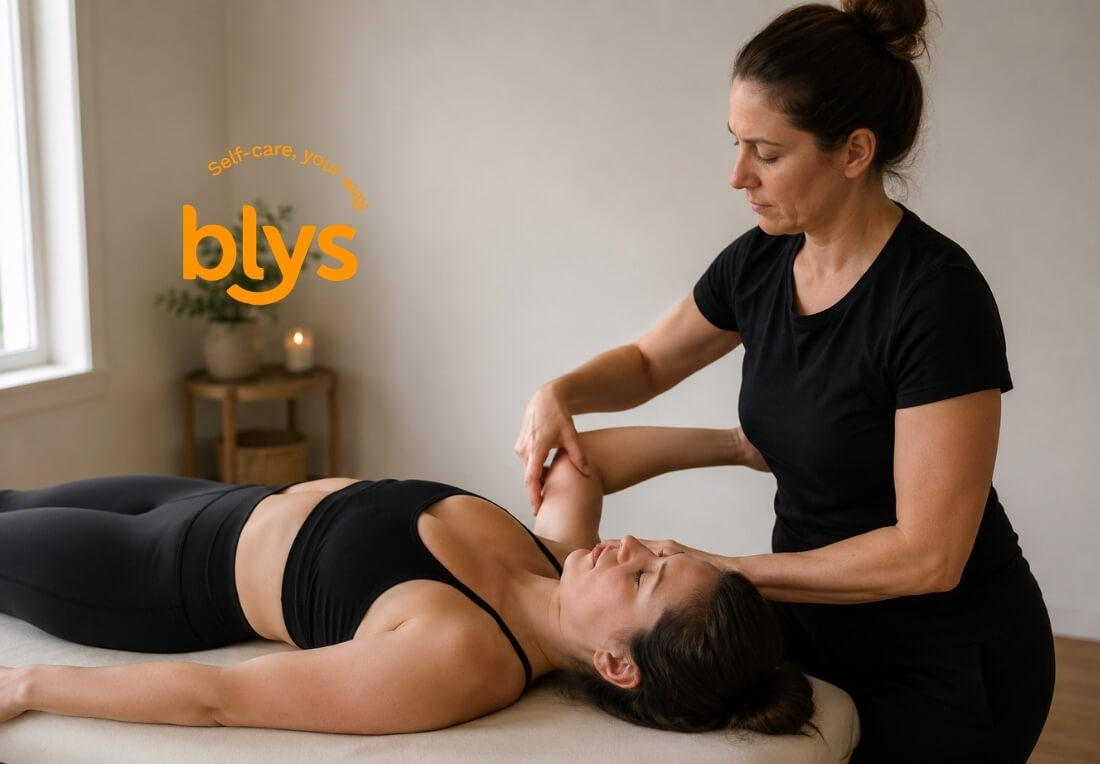
First-time myofascial release bookings come with a lot of questions. Will it hurt? What should I wear? Why do I feel strange afterwards? Is that soreness normal or have I done something wrong? The reason these questions come up so often is that working on fascia feels nothing like a regular massage, and nobody really explains that beforehand. The answers to all of these are simpler than the questions make them sound, and knowing what to expect before, during, and after a session means you get more out of it from the start. Here is the full picture of what before and after fascia release actually looks like.
What to Do Before Your Myofascial Release Session
Getting a few things right before your therapist arrives makes a real difference to how the session goes. None of it is complicated.
| Before your session | Why it matters |
| Add detailed notes in the booking | Your therapist reads these before arriving. “Lower back pain for six months, worse after sitting, tried physio” is more useful than “sore back.” |
| Drink water in the hours beforehand | Hydrated fascia releases more readily than dry fascia. This is not a metaphor. |
| Wear loose, comfortable clothing | Myofascial release is often performed through clothing. Tight jeans make the therapist’s job harder than it needs to be. |
| Clear the floor space | You need roughly 6.5 x 6.5 feet for the table. You can sort this before your therapist arrives rather than doing it together while they stand there. |
| Avoid a heavy meal immediately before | Not because of any dramatic reason, just because lying on a massage table after a large lunch is exactly as uncomfortable as it sounds. |
| Skip the foam roller that morning | Your therapist is going to do more targeted work than your foam roller anyway. Arriving with tissue that has not been aggravated gives them a cleaner starting point. |
What Happens During a Myofascial Release Session
If you have only had relaxation massage before, myofascial release will feel noticeably different, and it helps to know what you are walking into.
Myofascial Release What to Expect: Slow, Sustained Pressure
The defining quality of myofascial release is the pace. Your therapist applies slow, sustained pressure to a restricted area and holds it, sometimes for a minute or two at a single point, waiting for the tissue to soften and respond. This is the part that tends to surprise people the most. There is no rhythmic stroking, no gliding across the skin. Just pressure, held, and then gradually released as the tissue lets go.
This can feel like a whole lot of nothing for the first 30 to 40 seconds and then quite a lot of something after that. The sensation you are looking for is a dull ache that gradually softens under the pressure rather than an ache that keeps building. If it keeps building, tell your therapist. If it softens, you are in the right place.
What Emotional Release During Myofascial Release Feels Like
Some people experience an unexpected emotional response during a session, particularly when work is done on the hips, chest, or diaphragm. This is more common than most people expect, and it is worth mentioning so it does not catch you off guard.
The fascia has a close relationship with the nervous system, and tissue that has been holding chronic tension sometimes releases that tension in ways that go beyond the physical. People describe feeling suddenly tearful, unexpectedly calm, or occasionally a rush of an emotion they cannot quite name. None of this is unusual, none of it requires explanation, and your therapist has seen it before. You are not having a breakdown. Your body is letting something go.
Communication During the Session
Tell your therapist if the pressure is too intense, and mention it if you feel pain referring somewhere else during the session. Those referral patterns are useful diagnostic information, not a sign something is wrong. Your therapist adjusts the session based on what you tell them, so silence is not necessarily doing you any favors.
What to Expect After Myofascial Release
The post-session experience is where most people have questions, particularly if their body responds in a way they were not expecting.
After Myofascial Release Soreness: Is This Normal?
Yes. Some degree of soreness after myofascial release is normal and common, particularly after a first session or after work on an area that carries significant restriction. The tissue has been worked at a depth it is not used to, and the body takes a day or two to adjust , particularly if the session focused on chronic back pain or trigger points where the restriction runs deep. The soreness typically feels like the aftermath of a deep stretch or a hard workout, not sharp or localized pain.
If the soreness is significant, it usually peaks around 24 hours after the session and clears by 48. If it is still significant after 72 hours, mention it to your therapist.
Feeling Tired, Spacey, or Deeply Relaxed
Many people feel unusually tired after a myofascial release session, sometimes to a degree that surprises them. This is the nervous system downregulating after the session, and it is a sign that something real happened rather than a sign that something went wrong. Plan to have a quiet evening. This is not the day to go to the gym, attend three meetings, and cook an elaborate dinner. Your body is doing something useful and it deserves some space to do it.
The Session That Keeps Working
One of the interesting things about myofascial release is that the effects continue to unfold after the session ends. The tissue keeps remodeling for 24 to 48 hours, which means the full result often takes a couple of days to land. Do not judge a session by how you feel in the car on the way home. Judge it by how you feel the morning after, and the morning after that.
Myofascial Release Recovery: What to Do in the 24 Hours After
How you treat your body after a session affects how well the results hold.
Drink More Water Than Usual
Hydration supports the fascial tissue as it remodels after treatment. Drink more water than you normally would for the rest of the day and into the following day. This is one of those pieces of advice that is genuinely useful rather than just something therapists say to feel helpful.
Move Gently, Not Hard
Light walking, gentle stretching, and everyday movement support the work done in the session. Intense exercise, heavy lifting, or anything that significantly loads the areas worked on is best avoided for 24 hours. The tissue is in the middle of a process. Let it finish before loading it again.
Notice What Has Changed
Pay attention to how your body feels in the day or two after the session rather than dismissing any changes as minor. People often notice shifts they were not expecting, in areas that were not even the focus of the session, because the fascial system is connected throughout the body. If something has changed, it is worth noting for your therapist at your next session.
How Long Before You See Results from Myofascial Release?
This depends on what you are treating and how long the restriction has been there, but there are some general patterns worth knowing. If you are weighing up whether a myofascial release session at home is worth booking in the first place, this is usually the deciding factor.
After a Single Session
Most people notice some change after a first session, even if it is subtle. The area that was worked on feels different, the body feels more settled, or a pattern of tension that has been there for a while has softened. Some people notice a dramatic shift. Some notice very little immediately and then wake up the next morning feeling different. Both are normal.
After a Course of Sessions
For chronic restrictions that have been building for months or years, a course of three to five sessions tends to produce the most consistent and lasting results. Each session builds on the previous one, working progressively deeper into the restriction pattern rather than starting from scratch each time. This is why myofascial release works better as a regular practice than as an occasional one-off.
If you have been managing a persistent problem and want to understand what a full course of sessions could do for it, this is usually where the answer starts to become clear. What you find out in the first session usually answers most of the remaining questions.
Book a session through Blys, available 7 days a week, 6 am to midnight across Canada.