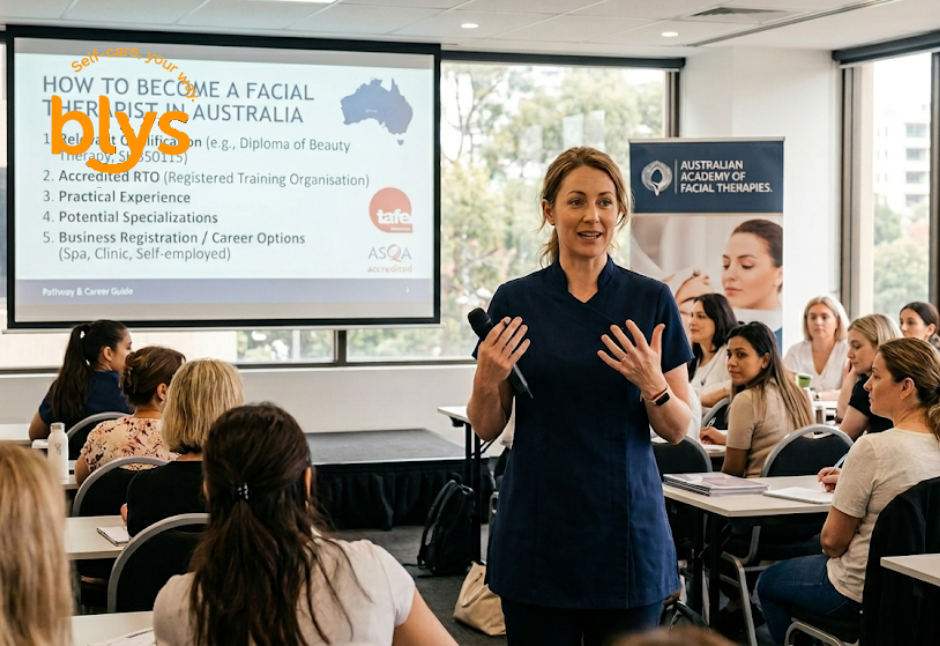
 Skin care is one of the fastest-growing sectors in the American wellness industry, and demand for trained facial therapists also known as estheticians or skin care specialists has never been stronger. Whether you’re drawn to high-tech facial treatments, holistic approaches to skin wellness, or the art of helping people feel confident in their skin, this profession offers genuine opportunity across a wide range of settings and business models.
What makes the US market particularly interesting right now is the rapid expansion of medical spas and results-driven skin care clinics, which has elevated the demand for estheticians who can operate at a clinical level. At the same time, mobile and freelance facial therapy continues to grow as clients increasingly value personalized, in-home services. The career pathways in front of a qualified facial therapist in the US have never been more varied.
If you’re exploring how to become a facial therapist in the US, the first thing to understand is that this profession is licensed practicing without the right credentials isn’t legally an option. This guide covers everything from training hours and state licensing requirements to the skills that separate good therapists from great ones, and where the career can realistically take you.
What Is A Facial Therapist And How Does The Terminology Work In The US?
In the United States, the term “facial therapist” is sometimes used informally but the formal licensing title is esthetician (also spelled aesthetician) or, in some states, skin care specialist. In states where cosmetology and esthetics overlap, some practitioners hold a cosmetology license that covers facial treatments as part of a broader scope.
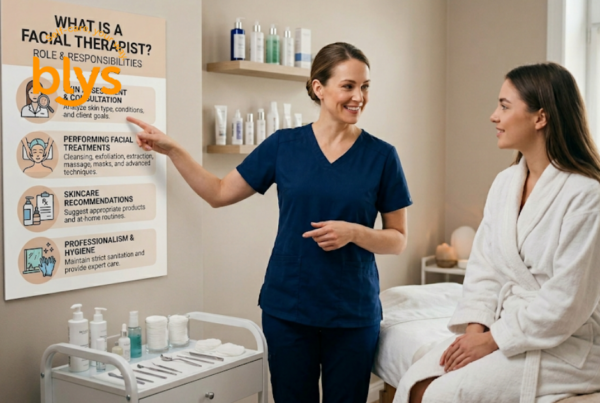
What is a facial therapist, in practical terms? Think of them as a skin care clinician who operates in the space between everyday beauty and clinical dermatology helping clients address concerns like dehydration, acne, hyperpigmentation, rosacea, and premature aging through targeted, evidence-informed treatment plans. A good esthetician is part analyst, part technician, and part client educator.
A question that comes up often: can a massage therapist give a facial? Not without additional esthetics training and a separate state license. The two disciplines have distinct licensing pathways, and practicing outside the scope of your license can carry legal consequences in most US states. Similarly, what facial cream do beauty therapists use in a professional context? In the US, licensed estheticians typically work with professional or cosmeceutical-grade lines SkinCeuticals, Dermalogica, PCA Skin, IMAGE Skincare, or Glymed Plus are common examples formulated with higher concentrations of active ingredients than retail products.
Facial therapists and estheticians in the US work across day spas, resort and hotel wellness facilities, medical spas (medspas), dermatology practices, plastic surgery offices, beauty salons, and as freelance or mobile practitioners. The range of settings reflects both the breadth of the role and the flexibility of the career.
Licensing Requirements Across US States
Facial therapy, officially esthetics is regulated at the state level in the US, which means licensing requirements vary considerably. However, the core structure is consistent: complete an approved training program, pass your state board exams, and obtain your license before you see a single paying client.
Training Hours By State
Most states require between 260 and 1,500 hours of esthetics training, depending on the licence type and state board rules. The variation is significant, so it pays to know exactly what your state requires before you enroll.
Some current examples:
- California: 600 hours for a cosmetician/esthetician license.
- New York: 260 hours one of the lower requirements nationally.
- Texas: 750 hours for an esthetician license.
- Florida: 260 hours for a facial specialist license.
- Oregon: 500 hours for an esthetician license.
States with higher hour requirements tend to include more clinical content: advanced skin treatments, chemical exfoliation, electrical modalities, and sometimes body treatments. Always verify current requirements with your specific state board before enrolling, as these figures are subject to legislative updates.
State Board Exams
After completing your state-approved program, you’ll need to pass both a written theory exam and a practical skills exam. Many states use exams administered by the National-Interstate Council of State Boards of Cosmetology (NIC), though some states — including California and New York administer their own board exams. Your school will typically walk you through the application and scheduling process, but it’s worth familiarizing yourself with the exam format well in advance of graduation.
Master Esthetician Or Advanced Licences
Several states offer a master esthetician or medical esthetician designation for practitioners who want to operate at an advanced or clinical level. Washington State’s master esthetician licence is among the most recognized, requiring an additional 650 hours of training beyond the standard esthetics licence and covering treatments like laser therapy, microneedling, and advanced chemical peels.
Other states, including Oregon and Virginia, have comparable advanced licence tiers. These designations open doors to medspa and clinical dermatology roles that the standard esthetics licence does not.
Where To Train And What Programmes Look Like
Esthetics training programs in the US are offered through cosmetology schools, community colleges, vocational schools, and specialist skin care academies. Tuition varies widely from around $3,000 to $15,000 or more depending on the school, location, and program length. Cost should not be the only factor in your decision; practical hours, instructor quality, equipment, and industry connections all matter significantly.
A strong esthetics program will cover skin anatomy and physiology, in-depth skin analysis and consultation skills, manual facial techniques, chemical exfoliation and peels, electrical modalities including galvanic, microcurrent, and LED, hair removal, body treatments, and salon and spa business management.
Look for programs accredited by the National Accrediting Commission of Career Arts and Sciences (NACCAS), which provides an additional benchmark of quality. Some states require NACCAS accreditation as a condition of program approval.
If you’re weighing the broader landscape of beauty and wellness careers alongside esthetics, our guide on the highest-paying jobs in the beauty industry puts facial therapy and esthetics in context alongside other pathways and earning levels.
Skills That Set Exceptional Facial Therapists Apart
Getting licensed is the foundation. What you build on top of that determines the kind of career you’ll have and the level of clients you’ll attract.
- Skin analysis: the ability to read skin accurately distinguishing between underlying conditions and visible symptoms is the core competency that drives treatment outcomes and client loyalty.
- Technical precision: facial massage, extractions, and tool-assisted treatments all require confident, practiced technique. This develops through supervised repetition and careful attention to feedback.
- Client communication: the ability to conduct thorough consultations, explain your treatment rationale clearly, and set realistic expectations is what transforms a one-time client into a repeat one.
- Ingredient knowledge: understanding how active ingredients work at a cellular level and which ingredients are contraindicated for certain skin conditions is increasingly expected at all levels of the industry.
- Business skills: particularly for those who plan to work independently managing client records, marketing your services, retaining clients, and tracking outcomes all contribute to a sustainable practice.
Building a strong client base takes time and intentional effort. Our guide on how to become a beauty therapist and get clients covers the client-building side of the profession in practical detail, with strategies that apply whether you’re working in a spa or going independent.
Career Pathways For US Facial Therapists
Once licensed, facial therapists in the US can pursue a wide range of career paths. Most begin in a day spa or salon environment to accumulate client hours, develop their technique, and build professional references before moving toward more specialized or independent work.
The medspa sector is one of the fastest-growing areas for estheticians in the US. Medical spas operate under physician oversight and employ licensed estheticians alongside medical staff to deliver treatments like laser skin resurfacing, chemical peels, microneedling, and injectables. Working in a medspa environment typically requires a master or advanced licence and a strong comfort level with clinical protocols but it also tends to offer higher earning potential and exposure to cutting-edge technology.
Mobile and freelance facial therapy is also expanding quickly, with clients across major US cities increasingly requesting in-home professional facial services. This model offers flexibility, direct client relationships, and the ability to set your own schedule an attractive combination for experienced therapists looking to transition away from an employed setting.
Resort, cruise, and destination spa roles offer yet another direction often with accommodation, competitive pay packages, and the opportunity to build experience in premium service environments. And for therapists who reach a point of wanting to shape the profession rather than just practice it, brand education, school instruction, and continuing education development are all viable long-term directions.
Continuing Education And Professional Development
Most US state esthetics licences require continuing education hours for renewal typically between four and sixteen hours every one to two years, depending on the state. While this may seem like an administrative requirement, it is genuinely valuable: it keeps you current on new treatments, ingredient science, safety protocols, and technology, all of which move quickly in this industry.
Professional associations worth joining include ASCP (Associated Skin Care Professionals) and the ISPA (International Spa Association). Both provide resources, professional liability insurance access, industry news, and networking opportunities that support long-term career growth. ASCP in particular is widely used by independent estheticians as a route to affordable and comprehensive professional insurance.
For therapists who want to ground their practice in evidence, research published through PubMed/NCBI covers the physiology behind facial massage, the mechanisms of common actives, skin barrier function, and more. Developing a habit of reading peer-reviewed research is what separates technically skilled therapists from those who can genuinely educate their clients and justify their treatment choices.
Wrapping Up
Becoming a facial therapist in the US starts with earning a state esthetics license a non-negotiable step in a regulated profession. From there, the career options are genuinely wide: spa and salon work to build your foundation, medspa and clinical roles for those drawn to advanced treatments, and mobile or independent practice for therapists who want flexibility and direct client relationships.
The investment in quality training, the right licence, and ongoing education pays compounding dividends throughout your career. Whether your goal is a position at a high-end medspa, a flexible freelance practice, or eventually running your own skin studio, a solid licensing foundation and a commitment to continued learning opens the door to all of it.