Pain between shoulder blades often comes from the muscles that sit there, the rhomboids and the mid-back, working overtime during long hours at a screen, and trigger point or deep tissue massage can ease those muscles. It’s the one spot you can’t reach and can’t stop thinking about. A few signs mean a doctor comes before a therapist, and they get their own section below.
A local therapist booked through Blys comes to your home or your office, so you keep your lunch break for lunch, and trigger point massage therapy goes straight to the tender spots.
What Causes Pain Between the Shoulder Blades?
Desk work causes pain between the shoulder blades by keeping the muscles in that area switched on for hours, which tires them out the way holding a bag at arm’s length tires your arm.
The Rhomboids and Mid-Back Muscles
The rhomboids are two thin muscles that run from your spine to the inner edge of each shoulder blade, and they work with the mid-back muscles to hold your shoulder blades back and in. At a desk, a screen and a keyboard pull your shoulders forward all day, and these muscles hold the line against it without a break. That’s why the ache often sits in the same spot and flares at the end of a long day, and it’s the usual picture behind rhomboid pain.
How Long Hours at a Screen Overwork Them
Muscles tire when they hold a position for hours, and they can develop trigger points, which are tight, tender spots that ache when pressed and sometimes send a dull ache into nearby areas, the focus of trigger point massage and how it works. A desk day keeps your mid-back holding the same position for hours with almost no change, so the muscles get little rest and plenty of work. If your neck and shoulders ache too, neck pain and shoulder pain from desk work share the same roots.
Other Everyday Causes of Upper Back Pain
A desk isn’t the only place the mid-back picks up extra work. Carrying a heavy bag on one shoulder, sleeping in a twisted position, long drives and a weekend of lifting or gardening can all add to upper back pain, and they often stack on top of a desk week. If your ache follows one of these, mention it to your therapist, since it helps them plan the session.
Desk Habits That Add to It
A few common desk habits pile extra work onto the mid-back, including a head that creeps forward as the day goes on, the heart of upper crossed syndrome and desk work, and the table pairs each one with a simple fix.
| Habit | What it does to your mid-back | A simple fix |
| Screen too low | Pulls your head and shoulders forward | Raise the screen so the top sits near eye level |
| Keyboard too far away | Keeps your arms reaching and your shoulder blades stretched apart | Bring it close enough that your elbows rest by your sides |
| Hours without a break | Holds the same muscles in the same position | Stand and move for a minute every so often |
| Mouse arm out to the side | Gives one shoulder blade a part-time job | Keep the mouse close to the keyboard |
| Phone held low | Rounds your upper back toward your chest | Lift the phone to eye level |
Red Flags: See a Doctor Before Any Massage
This is the section most massage posts skip, and it’s the one that matters most, so it comes early.
Call 000 for These Signs
Call 000 if pain between your shoulder blades comes with chest pain or pressure, shortness of breath, pain spreading to your jaw or arm, a cold sweat, nausea or feeling faint, or if the pain is sudden and severe. Don’t wait for a massage appointment and don’t book one, because these signs need emergency care.
See a Doctor First for These Signs
See a doctor before any massage if the pain follows a fall or injury, comes with a fever or unexplained weight loss, brings numbness, tingling or weakness in your arms or legs, keeps getting worse, doesn’t change with movement or rest, or wakes you at night. Pain between the shoulder blades has many possible causes, and a tight muscle is only one of them.
What to Tell Your Doctor
Tell your doctor when the pain started, where exactly it sits, what makes it better or worse, whether it comes and goes, and any other symptoms, however unrelated they seem. A short list in your phone beats trying to remember it in the appointment, and it helps your doctor sort a tight muscle from something else.
What This Page Is and Isn’t
This page is general information about desk-related upper back pain and massage, and it isn’t medical advice. It doesn’t diagnose any cause of pain, and it doesn’t promise that massage will fix it. Massage suits muscle tightness once a doctor has ruled out anything else, so check with your doctor first if you have any red flag or any doubt.
Massage for Upper Back Pain: Which Style Fits
Massage for pain between shoulder blades comes in three styles that fit this ache, from trigger point massage therapy to deep tissue work, and each one does something different, so the table lines them up.
| Massage | What it involves | Best for |
| Trigger point massage | Steady pressure held on tender spots in a muscle | A sore, specific spot you can point to |
| Deep tissue massage | Slow, firm strokes through the deeper muscle layers | A broad, stubborn ache across the mid-back |
Trigger Point Massage for Rhomboid Pain
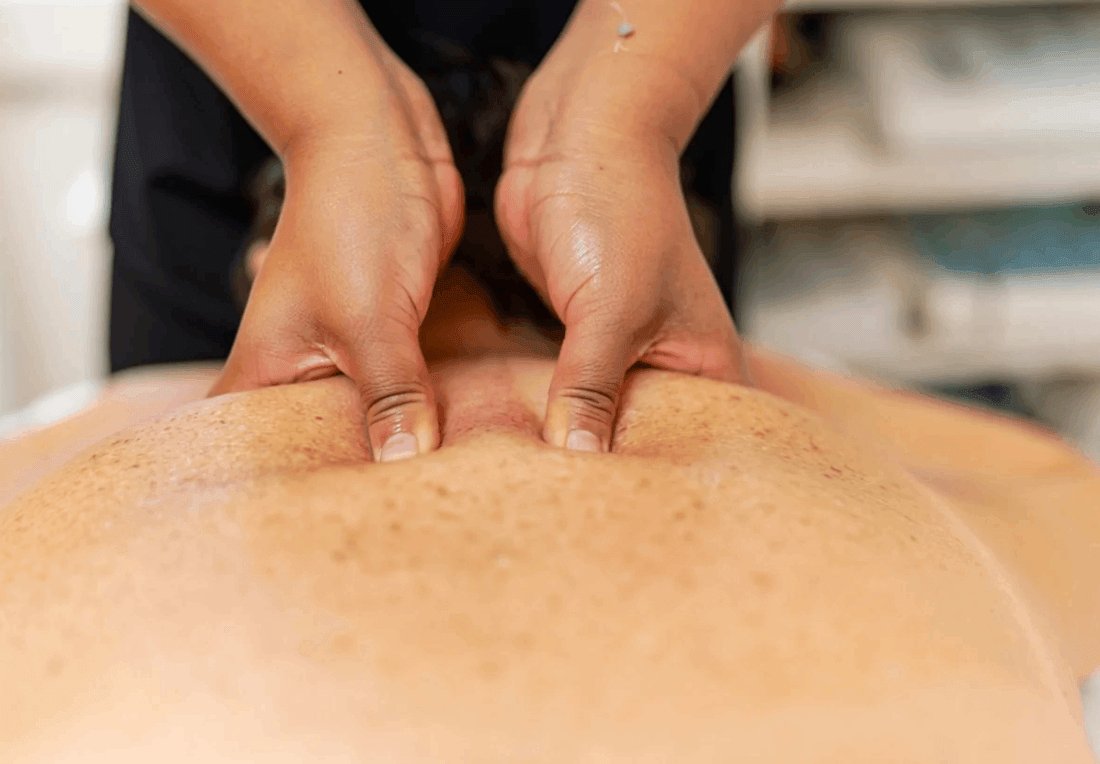
Trigger point massage uses steady pressure held on the tender spots in a muscle, and it suits rhomboid pain because the ache usually sits in a spot you can point at. Your therapist finds the tender point, holds the pressure and releases, and it can feel like a deep, sharp-edged ache that eases as they hold. A session can happen at home or at your office.
Deep Tissue Massage for the Mid-Back
Deep tissue massage uses slow, firm strokes through the deeper muscle layers, and it suits a broad, stubborn ache across the mid-back. For a desk-related ache, your therapist works firmly on the rhomboids and the muscles around the shoulder blades, with some attention to the chest and neck that pull against them. The pressure builds slowly, and your therapist checks in as they go, so you can ask for firmer or lighter at any point. If you’re not sure whether deep tissue or trigger point suits you, say so in your booking notes, and your provider can talk you through the options.
Can Massage Help Pain Between Shoulder Blades?
Massage can ease tight, overworked muscles between the shoulder blades, which is often part of the picture, but it doesn’t change the desk habits that overwork them, and it only suits you once you and your doctor have ruled out any red flag. Think of massage as a way to settle the muscles, and think of the desk fixes as the way to stop them getting overworked again. No session can promise to make the pain go away for good.
Moves to Ask a Physiotherapist About
Massage settles the muscles, and movement helps keep them from getting overworked again, so ask a physiotherapist which moves suit your back. Common starting points include shoulder blade squeezes, gentle upper back extensions over a chair and chest stretches, and a walk around the block counts too. The right moves depend on you, so a quick chat with a physiotherapist beats a video from the internet.
What a Session Feels Like
A good session feels like a firm, working ache that eases as your therapist holds or moves, and it should never feel sharp, sudden or frightening. Tell your therapist where it hurts and how firm you like it, and speak up if the pressure is too much, since the aim is a deep ache that lets you breathe and not a test of how much you can take.
How to Prepare for a Session
Note where the ache sits, jot down how long you sit each day and have water nearby. Ask your therapist what to wear for your style, and clear a spot for the table, which needs about 6.5 x 6.5 feet, while your therapist brings fresh linen and towels. A short note about what makes the pain better or worse helps them plan.
Desk Setup Tips for the Days Between Sessions
Small changes at your desk do more than any one hour on a table, and none of them need a new chair.
A few changes add up quickly. Raise your screen so the top sits near eye level, bring your keyboard and mouse close, and keep your elbows by your sides so your shoulder blades aren’t stretched apart. Take a standing break every so often, even for a minute, and if you work from home, take your laptop off the couch. A chair with support for your lower back helps too, since a slumped lower back drags the mid-back with it.
The best desk setup is the one that lets you leave the desk now and then, and a short chair massage session between meetings is one way to make that happen.
Working From Home Without a Desk
A kitchen table, a laptop on a pillow and a couch that swallows you are a mid-back’s worst enemies, and most home setups need only three changes. Put the laptop on a stand or a pile of books, add a separate keyboard and mouse and use a chair with a firm back, then sit near a window so you remember to move. The couch is for the evening, and the desk, however makeshift, is for the day.
Arranging a Session at Home or the Office With Blys
Your lunch break exists for lunch, not for a round trip across town, so a therapist who comes to you keeps it intact.
At the Office
A 15-minute chair massage at the office uses a quarter of a lunch hour, while a clinic with 15 minutes of travel each way uses half of it before you’ve sat down. Chair massage sessions take as little as 10 to 20 minutes, your therapist brings the chair and handles the setup and pack-down, and each chair needs about 3 x 5 feet of space. For a team, corporate massage at your workplace brings a therapist to the office, and nobody leaves the building to get a turn.
At Home After Work
Bookings run from 6 am to midnight, seven days a week, so an after-work session at home fits around a late finish. A 60-minute session at a clinic with 30 minutes of travel each way is a two-hour commitment after a long day. A 60-minute session at home is 60 minutes, and you stay on your own sofa afterward, which is the argument in mobile massage vs spa.
What to Put in Your Booking Notes
Put where the pain sits, how many hours a day you spend at a desk and the style you’d like in your booking notes, whether trigger point or deep tissue. Add anything your doctor has told you, so your therapist arrives knowing what to focus on and what to avoid.
The best massage fits into a Tuesday without anyone noticing you were gone, and a session at home or at work is the easiest way to get there.
Keep Your Lunch Break: Arrange Trigger Point Massage at Work or Home →