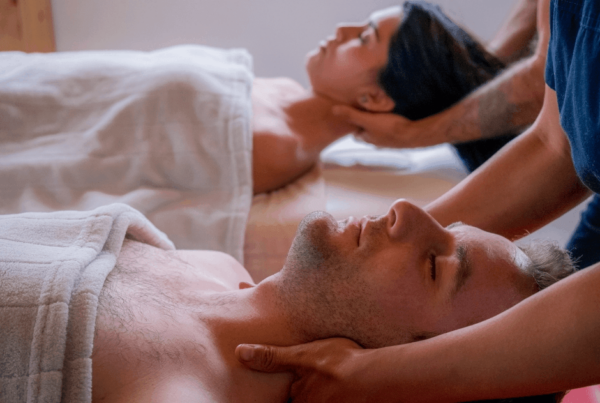
Postpartum massage is one of those things most new mothers want but rarely manage to access not because the desire isn’t there, but because getting out of the house in the first weeks after birth is genuinely hard. You’re feeding around the clock, running on broken sleep and waiting for your body to catch up. A trip to a clinic feels like a logistics operation before you’ve even begun.
This guide covers what it actually does for your recovery, when it’s safe to start and how booking through Blys means you can access expert care without the car trip. Because the best recovery support is the kind you can actually use.
The lower back tension from hours of feeding. The aching shoulders from lifting and carrying. The swelling in your legs that nobody warned you about. These aren’t minor inconveniences to power through they’re your body asking for real support. The good news is that support exists, and it’s more accessible than most new mothers realise.
Whether you gave birth two weeks ago or two months ago, here’s what to know.
What Does A Postpartum Massage Session Actually Involve?
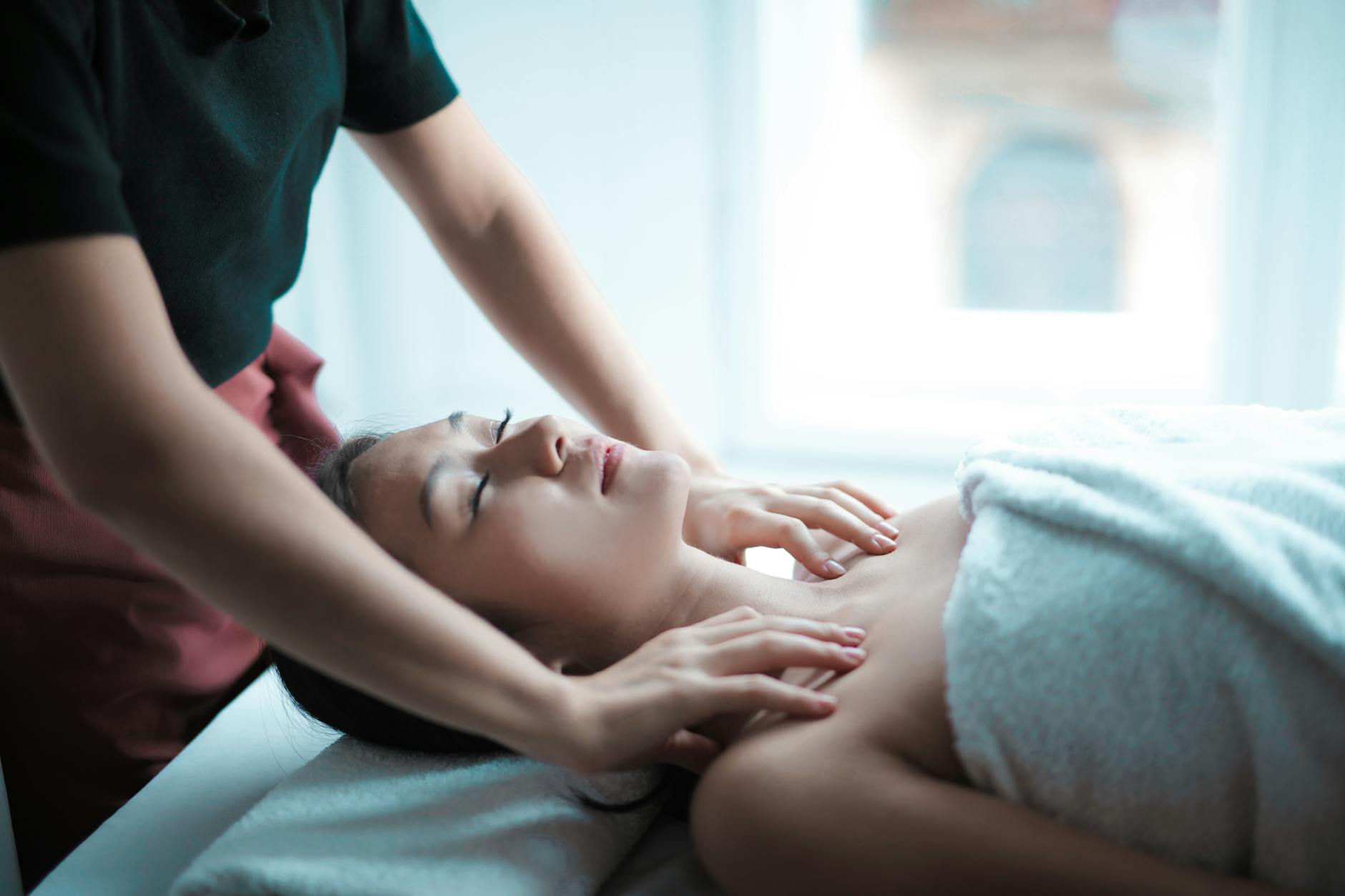
A session is designed specifically for the body after childbirth not a standard massage with a few minor adjustments. It takes into account everything your body has been through: hormonal shifts, stretched abdominal muscles, the physical demands of labor and the specific tension that builds up from feeding in fixed positions for hours at a time.
The focus areas are predictable, because new motherhood creates predictable strain. Lower back, shoulders, hips and neck carry the load. Providers you book through Blys who specialize in postpartum work will ask about your birth experience, your feeding setup and any specific discomfort before they begin adapting their approach to your recovery stage rather than delivering a generic session.
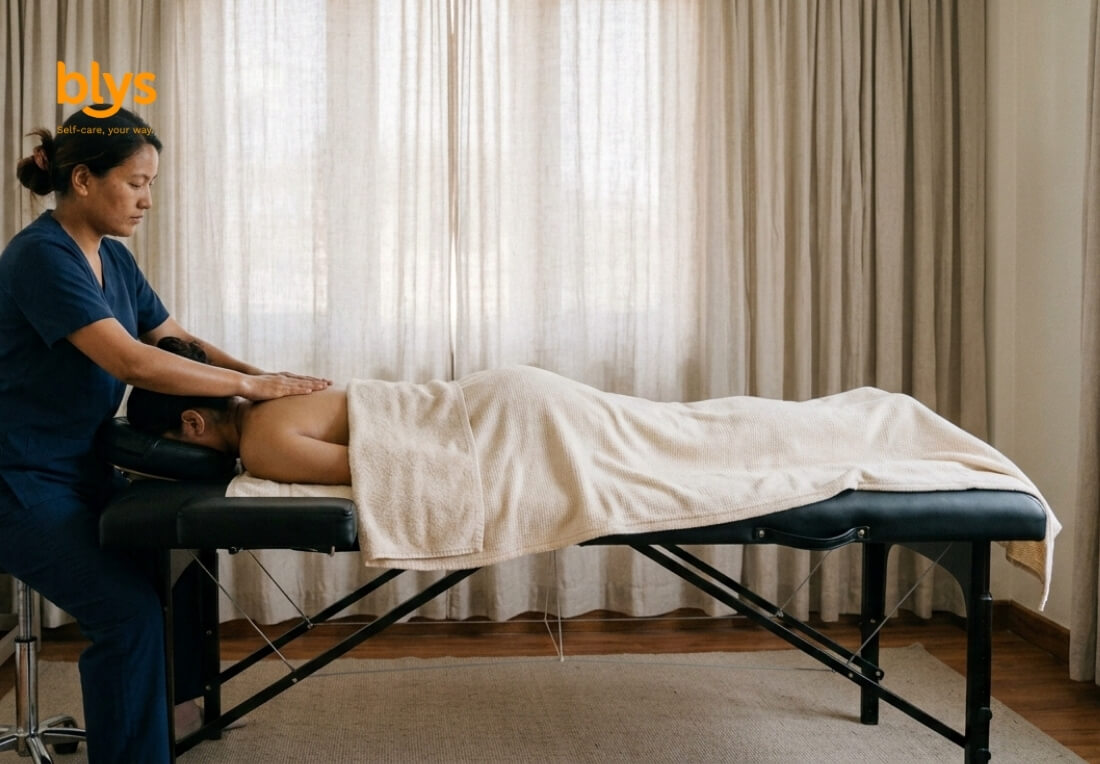
A typical session runs between 60 and 90 minutes. When a provider arrives, they’ll take a few minutes to discuss what you’ve been experiencing before they set up either on a portable massage table or working with your bed or floor space, whichever suits you better. There’s nothing to prepare beyond finding a quiet window in your day. You remain in control throughout, can pause or redirect the session at any point, and your baby can be close by the whole time.
One advantage of at-home booking that most guides skip over: your provider can actually see how you’re using your space your feeding chair, your bed height, how you’re holding and settling a baby and factor that into the session. That context simply isn’t available in a clinic.
If you explored the benefits of prenatal massage during your pregnancy, this is the natural continuation of that care, adapted to where your body is right now.
When Is It Safe To Start And Does It Matter How You Gave Birth?
The honest answer is: it depends on how your birth went and that’s completely normal. Every recovery is different, and there’s no single timeline that suits everyone. What matters most is getting the go-ahead from your OB-GYN or midwife and listening to your body.
Here’s a practical guide based on your birth type:
- After A Vaginal Birth: Most providers suggest waiting one to two weeks, once initial soreness has eased and there are no open wounds or complications. Check with your OB-GYN or midwife first if anything about your recovery feels uncertain and if they’ve already given you the all-clear for light activity, booking makes sense.
- After A Cesarean Section: Abdominal work typically waits six to eight weeks. But the tension that builds in your upper back, neck and shoulders from feeding positions can often be addressed much earlier. Providers you book through Blys adapt every session to your healing stage and incision site. Medical clearance from your doctor or midwife before booking is essential.
- Why Earlier Tends To Be Better: The first few months of recovery are when postpartum massage delivers the most impact. Tension patterns that develop after birth are relatively fresh and easier to shift leave them too long and they can become chronic holding patterns that take significantly more work to address. Once your healthcare provider has given the go-ahead, there’s no benefit in waiting.
Research indexed on PubMed supports the use of massage therapy in the postpartum period for reducing anxiety, improving sleep quality and managing musculoskeletal discomfort in new mothers.
Does Postpartum Massage Actually Support Recovery Or Is It Just Relaxation?
The physical benefits go well beyond relaxation, and the evidence backs that up. There’s a tendency to frame massage as a luxury something you do when life is easy, not when you’re in the thick of newborn survival mode. But that framing undersells what it actually does.
For new mothers, it’s one of the most practical physical interventions available: targeted, responsive and designed to work with a body that has just been through something significant.
The physical benefits go well beyond relaxation, and the evidence backs that up:
- Muscle Tension And Pain: New motherhood creates specific, repetitive strain the same neck-forward feeding posture, the same hip loading from carrying, the same shoulder tension from lifting a baby dozens of times a day. Left unaddressed, these patterns compound. A targeted session works on the source, not just the symptom. Unlike general stress tension, post-birth muscular strain has specific, identifiable patterns and experienced providers know exactly where to look.
- Hormonal Balance: After birth, estrogen and progesterone drop sharply, and cortisol your primary stress hormone tends to spike in response to sleep deprivation and the demands of caring for a newborn. Massage supports cortisol regulation while promoting serotonin and dopamine release, both relevant to mood and emotional steadiness. According to the Mayo Clinic, postpartum depression affects up to 1 in 7 new mothers physical interventions that support hormonal balance are a genuine addition to a broader care picture.
- Fluid Retention And Swelling: Fluid retention is common after birth, particularly in the lower legs and feet. Lymphatic drainage techniques used in postpartum sessions help move excess fluid and reduce visible swelling.
- Sleep Quality: Reduced physical tension has a direct effect on sleep not necessarily more hours, but deeper and more restorative rest in the windows you do get. Lower cortisol after a session plays directly into this. For many mothers, improved sleep is one of the most immediately noticeable effects after a first session.
The at-home difference is real here too: when the session ends, you stay exactly where you are. No getting dressed, no driving home in a relaxed state. You rest in your own space, which is exactly where your body wants to be.
Clinic Visit Or Provider To Your Door: Which Actually Works For New Mothers?
Getting to a clinic or spa in the weeks after birth isn’t as simple as booking a time slot. You’re navigating feeds, a recovering body and the full weight of newborn life often without the extra support that makes a short trip anywhere feel manageable. The comparison below makes the case clearly.
For most new mothers, the answer is straightforward: at home, every time:
| Clinic Visit | At-Home Via Blys | |
| Travel required | Yes, you drive, park and wait | No, your provider comes to your door |
| Scheduling | Fixed appointment slots | You choose around feeds and naps |
| After the session | Get dressed and drive home | Stay exactly where you are |
| Equipment | At the venue | Provider brings everything, including a portable table |
| Post-cesarean suitability | Difficult when mobility is limited | Yes, no travel or stairs required |
| Booking | Phone or clinic website | Online in minutes through Blys |
Blys is a booking platform that connects new mothers with vetted, insured professionals who come directly to your door. Many mothers find that a single session shifts tension they’ve been carrying for weeks and the difference in how they feel the following day is noticeable enough to book again.
You book online in minutes, choose a time that works around feeds and naps, and a trusted local provider arrives with everything they need including a portable massage table if required. No commute. No parking lot. No timing a feed to make a 2pm appointment across town.
This isn’t just a convenience difference. In the early weeks after birth, when mobility is limited and leaving the house requires a level of planning that doesn’t match the reality of newborn life, at-home access is often what makes care possible at all. For mothers recovering from a c-section in particular, a home booking isn’t a preference it’s the option that actually works.
Providers you book through Blys are experienced in at-home postpartum sessions. They arrive, set up, adapt to your space and leave it exactly as they found it.
If you’re still pregnant and thinking ahead, it’s worth reading about whether prenatal massage is safe many of the same local providers offer continuity of care from prenatal through to postpartum recovery. You can explore prenatal and postpartum massage services through Blys and book when you’re ready.
Your Recovery Doesn’t Have To Wait
Recovery after birth takes time, takes support and if you’re honest rarely gets enough of either. Postpartum massage is one of the most practical, evidence-backed ways to give your body what it actually needs during that period.
Through Blys you can access it without arranging childcare or leaving your home. Get the green light from your healthcare provider, and take it from there.