Jaw clenching often comes with a tight jaw, sore temples and a stiff neck, and TMJ massage works on the muscles around the jaw, neck and head to ease that tension, though it doesn’t treat a TMJ disorder, and a dentist or doctor should look at anything beyond tight muscles. Your jaw has been in a meeting since 9 a.m., and nobody told it the meeting ended.
Jaw massage is external work only, and a local therapist can bring head massage at home in the evening, when clenching has usually been building all day.
Why Is My Jaw Always Tight?
Your jaw is always tight when the muscles around it stay switched on for hours, and clenching is the most common reason. Many people clench their jaw while they concentrate, scroll or stew over an email, and some clench or grind in their sleep, so jaw clenching often goes unnoticed for years.
Signs You’re Clenching Your Jaw
A few signs turn up again and again in people who clench:
- A tight or sore jaw, especially first thing in the morning
- An ache around the temples or in front of the ears
- A dull headache at the sides or the back of the head
- A tired feeling in the cheeks when you chew
- Teeth that feel sensitive or look worn, which is a dentist’s department
- Catching yourself with your teeth pressed together mid-afternoon
Zoom face is a real thing: the polite smile on top and the clenched jaw underneath.
Clenching, Grinding, Clicking and Tension Headaches
Clenching is pressing your teeth together or tightening your jaw, and grinding is rubbing your teeth together, often during sleep. Clicking or popping in the jaw is common and can come and go. Tension headaches often sit at the temples or the back of the head, and they can show up alongside a clenched jaw and a tight neck. A dentist can check your teeth for wear, and a doctor can look into headaches that worry you.
Why Do Stress and Jaw Clenching Go Together?
Stress often goes with clenching, because tension in the mind can show up as tension in the body, and the jaw is a popular place for it to settle. Clenching is multitasking nobody asked for. Long screen hours, tight deadlines and poor sleep can all add to it, and a busy day can leave your jaw working long after the day is over.
How Your Neck and Shoulders Feed Jaw Tension
The jaw, the neck and the shoulders share a very small office with surprisingly thin walls, so tension in one usually finds its way into the others. Most jaw advice stops at the jaw, but this part is where a lot of the answer sits.
The Link Between Your Jaw and Neck
The muscles of the jaw, face and neck sit close together and work as a team, so tension in one area can show up in another. When your neck and shoulder muscles are tight from a long day, the muscles around your jaw often feel it too, and a sore jaw and a stiff neck turn up together more often than you’d expect.
Forward Head Posture and Jaw Tension
When your head drifts forward toward a screen, the muscles at the back of your neck and the tops of your shoulders work harder, and the muscles around your jaw can pick up extra tension as well. That’s the same desk-built habit behind upper crossed syndrome and desk work, and easing the neck and shoulders is part of easing the jaw.
What the Neck Link Means for Massage
A therapist who works on your jaw usually works on your neck, shoulders and upper back as well, because the muscles work together. Tell your therapist about any clenching, grinding or headaches, as well as where your neck and shoulders feel tight, so the session covers the whole area and not only the jaw.
When to Call a Dentist, a Doctor or 911
Most jaw tension is muscle-related, but a few signs mean a dentist or doctor comes first, and this is the part most massage posts skip.
Call 911 for These Signs
Call 911 if jaw pain comes with chest pain or pressure, shortness of breath, pain spreading to your arm or shoulder, a cold sweat, feeling faint or nausea. Jaw pain can be a sign of a heart problem, so don’t arrange a massage and don’t wait it out.
See a Dentist or Doctor for These Signs
See a dentist or doctor if your jaw locks open or closed, if you can’t open your mouth fully, or if you have sudden swelling, a fever, numbness in your face or pain after an injury or a blow to the jaw. Also see one if your teeth are worn, cracked or very sensitive, if you have ear pain or changes in your hearing, or if you get sudden, severe or unusual headaches.
What This Page Is and Isn’t
This page is general information about jaw tension and massage, and it isn’t medical or dental advice. It doesn’t diagnose a TMJ disorder or any other condition, and it doesn’t claim that massage fixes one. Massage can ease tight muscles, and your dentist or doctor decides what’s behind your symptoms, so check with them first if you have any red flag or any doubt.
What TMJ Is, and What It Isn’t
TMJ stands for the temporomandibular joint, the joint on each side of your face, just in front of your ears, that connects your jaw to your skull. People often use TMJ to mean jaw pain in general, while a TMJ disorder is a diagnosis that a dentist or doctor makes.
Is It a TMJ Problem or Jaw Muscle Tension?
A sore, clicking jaw can come from tight muscles around the joint, from the joint itself or from both, and you can’t tell which by feel alone. Only a dentist or doctor can say whether you have a TMJ disorder, so a check-up comes before any massage plan. Your dentist knows your teeth and your shoulders know your stress, and massage works on the muscles without claiming to fix the joint.
Jaw Massage and Head Massage: What a Session Covers
Massage for TMJ, also called jaw massage, works on the muscles around the jaw from the outside, and it usually includes the temples, neck and shoulders too.
Jaw and Temple Massage
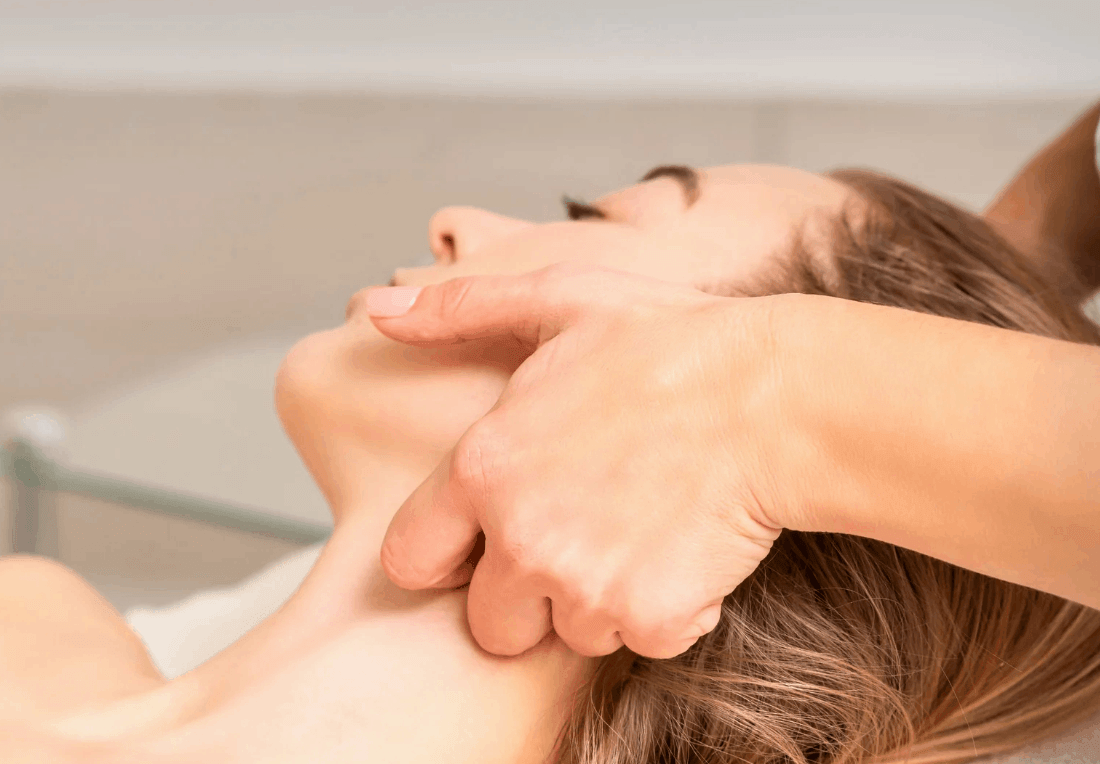
In TMJ massage, jaw work uses slow, gentle pressure on the chewing muscles at the side of the face and the muscles at the temples, and it feels like a steady, careful press and not a rub. Your therapist works around the joint in front of your ear and checks in as they go, so tell them if anything feels sore or too firm.
Neck and Shoulder Work
Neck and shoulder work often does as much for jaw tension as work on the jaw itself, since tight upper back and neck muscles feed the jaw. Your therapist works on the back of the neck, the tops of the shoulders and the base of the skull, and the pressure can vary from light to firm depending on what you like.
Head Massage for Jaw Tension and Headaches
Head massage sessions work on the scalp and the muscles around the head, and you can ask your provider what’s included for your session, since some focus on the scalp and temples and others add the neck and shoulders. It suits people whose clenching comes with a tight scalp, a temple ache or a dull headache, and it’s a rare appointment where doing nothing is the assignment.
Trigger Point Massage for Jaw and Neck Muscles
Trigger point massage therapy holds steady pressure on tender spots in a muscle, and the muscles of the jaw and neck can have a few too. The spot can feel like a deep ache while your therapist holds, then ease as they release, and you can ask them to go lighter at any point, which is the whole idea behind trigger point massage and how it works. The table sets the two styles side by side.
| Style | What it involves | Suits |
| Head massage | Gentle work on the scalp, temples and surrounding muscles | A tight scalp, temple ache and a headachy feeling |
| Trigger point massage | Steady pressure held on tender spots | A sore spot in the jaw or neck you can point to |
What Massage Can and Can’t Do for TMJ and Teeth Grinding
TMJ massage can ease tight muscles around the jaw and neck, and it can’t stop you grinding your teeth or treat a TMJ disorder.
Can Massage Help TMJ?
Massage can ease tight muscles around the jaw, temples, neck and shoulders, which often go with jaw clenching, but it doesn’t treat a TMJ disorder, and a dentist or doctor should check anything beyond muscle tension. Think of massage as a way to settle the muscles while your dentist or doctor deals with the cause of the jaw clenching.
Massage for Teeth Grinding: What to Expect
Massage for teeth grinding means easing the tension in the muscles that grinding and clenching tire out, and it doesn’t stop the grinding itself. If you grind your teeth, a dentist can check for wear and talk to you about options such as a night guard, and your therapist works alongside that care and never in place of it, with gentle jaw and neck work or trigger point massage therapy on tight spots.
Who Does What: Your Dentist, Your Doctor and Your Therapist
Your dentist looks after your teeth and the joint, your doctor looks into headaches and other symptoms and your therapist works on the muscles. Tell your therapist what your dentist or doctor has said, and tell your dentist that you’re having massage, so everyone knows the plan.
What Happens in a Jaw Massage Session
A jaw massage session is quieter and slower than most people expect, and it follows a clear order.
Before the Session: The Conversation
Your therapist asks where you feel it, whether you clench or grind, how often you get headaches, how long you spend at a screen and anything your dentist or doctor has said. Say if you’ve had any of the red flag signs above. Your answers decide how much time goes on the jaw and how much on the neck and shoulders.
During the Session: Positions and Pressure
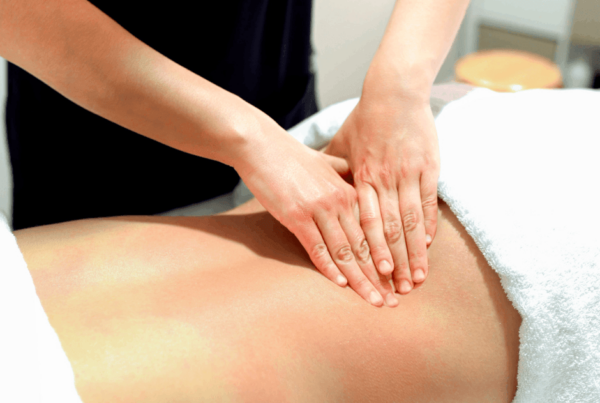
You usually lie face up, with your therapist working at the head of the table on the jaw, temples, scalp, neck and shoulders, and sometimes turn onto your front for the upper back. Please keep your underwear on and lie under a sheet or a towel, and your therapist uncovers only the area they’re working on. The pressure is light to firm, never sharp, and you can ask for lighter or firmer at any point.
After the Session: What to Do Next
Some people feel looser right away, and some feel a little tender over the next day, like after a new workout. Drink water if you like, move gently and keep to your normal routine, and tell your therapist or dentist if your jaw pain gets sharper or spreads.
How Often Do People Get Jaw Massage?
Your dentist or doctor and your therapist decide how often makes sense, and it depends on how long the tension has been there and what keeps feeding it. On Blys you can set sessions to repeat and ask for the same provider each time, so the person arriving already knows your jaw, your habits and what worked last time.
Easy Habits for Between Sessions
Small habits between sessions do more than any single hour on a table, and none of them need a gadget.
Lips Together, Teeth Apart
Lips together, teeth apart is the resting position your dentist wishes you’d put on a sticky note. Your teeth shouldn’t touch when you’re not eating, and your tongue can rest gently on the roof of your mouth. Check in at set moments, such as every time your phone buzzes or every time you sit down, and unclench if you’ve drifted.
A Workday of Small Resets
The table gives each part of your day a small move, and none of them take more than a minute.
| Moment | Small move |
| Morning | Notice whether your jaw is tight and let it hang loose for a moment |
| Mid-morning | Look away from the screen and drop your shoulders |
| Lunch | Unclench, and yes, you just did |
| Afternoon | Stand up, roll your shoulders and let your head sit over your body |
| Evening | Close the laptop and give your face a break |
Chewing, Nail Biting and Other Jaw Workouts
Chewing gum, biting your nails and chewing on pens all give the jaw extra work it doesn’t need. Easing off them gives your jaw a rest, and a calm evening routine before bed, without screens, helps if you clench at night. If you wake with a sore jaw or someone has told you that you grind your teeth, ask your dentist about a night guard.
Desk and Neck Habits
Raise your screen so the top sits near eye level, bring your keyboard close and keep your shoulders loose, since a head that sits forward adds to the load on the neck and jaw. Stand and move every so often, and try to get through a video call without clenching.
Evening Sessions at Home With Blys
Evenings are when the jaw finally gets to stand down, and a therapist who comes to you makes that easy.
Why an Evening Session at Home Works
Clenching often builds through the day, so an evening session of head massage at home catches your jaw and neck at their most tired, and a session at home means you stay in your own space and can go straight to bed or the couch afterward. Bookings run from 6 am to midnight, seven days a week, so a late finish at work doesn’t rule it out.
What to Expect When Your Therapist Arrives
Your therapist brings the table, fresh linen, towels and massage oil or lotion, and you only need to clear about 6.5 x 6.5 feet of floor. You’re not charged until a provider confirms your booking, and same-day times depend on availability. A quiet, dimly lit room is all the space you need.
What to Put in Your Booking Notes
Put where you feel it, whether you clench or grind, how often you get headaches, how many hours a day you spend at a screen and the style you’d like in your booking notes, whether head massage or trigger point. Add anything your dentist or doctor has told you, so your therapist arrives knowing what to focus on and what to avoid.
Once your dentist or doctor has checked your jaw, an evening session at home is an easy way to look after the muscles, and your jaw can finally clock out.
Clenching All Day? Arrange an Evening Head Massage at Home →
Frequently Asked Questions: Jaw Massage and TMJ
These are the questions people type into search once their jaw starts complaining.
Why does my jaw click?
Clicking or popping in the jaw is common, and it can come from the joint, the muscles around it or both. If it’s painful, gets worse or comes with locking, see a dentist or doctor, who can tell you what’s behind it.
What helps jaw pain from stress?
Many people find it helps to notice and release clenching during the day, keep their lips together and their teeth apart, take screen breaks and wind down in the evening. A dentist or doctor can look into jaw pain that doesn’t settle, and massage can ease tight muscles alongside that care.
Is jaw massage safe?
Gentle, external jaw massage from a trained therapist is a common way to ease tight muscles, and your therapist checks in as they go. Check with your dentist or doctor first if you have jaw pain, any red flag sign, a recent injury or dental work, and tell your therapist what they said.
Can head massage help jaw tension?
Head massage can ease tight muscles in the scalp, temples and neck that often go with a clenched jaw, but it doesn’t treat a TMJ disorder. If your jaw pain is severe, new or comes with other symptoms, see a dentist or doctor first.
Does clenching cause headaches?
Clenching and tension headaches often turn up together, and a tight jaw and neck can go along with a dull headache at the temples. A doctor can look into headaches and work out what’s behind them, especially if they’re new, severe or sudden.
How do I know if I grind my teeth in my sleep?
Clues include a sore jaw or a dull headache when you wake, teeth that look worn or feel sensitive, or a partner who hears grinding at night. A dentist can check your teeth for wear and talk about options such as a night guard.