 If you’ve ever left a facial or body treatment feeling completely transformed and thought, “I want to do that for a living,” you’re not alone. Beauty therapy is one of the US’s most in-demand wellness careers, and for good reason. It blends technical skill with genuine human connection, and no two days look exactly the same.
But what is a beauty therapist’s job description, really? Whether you’re researching the role for the first time or weighing up your options before enrolling in a course, it helps to understand exactly what the work involves before you commit. This post breaks down the core responsibilities, the environments beauty therapists work in, the skills that make the role rewarding, and what career progression can look like over time.
From detailed skin consultations to waxing, body treatments, lash extensions, and ongoing client care, beauty therapy is far more varied than many people expect from the outside.
What Is a Beauty Therapist?
A beauty therapist is a trained professional who provides a range of cosmetic and skin-focused treatments to clients. Their work sits at the intersection of aesthetics, wellness, and client care. Unlike dermatologists or cosmetic nurses, beauty therapists typically focus on non-invasive treatment services designed to improve the appearance and feel of skin, hair, and nails without medical procedures.
In the US, beauty therapists generally hold a Certificate III or Certificate IV in Beauty Therapy, or both, delivered through a registered training organisation (RTO). Some professionals also complete a Diploma of Beauty Therapy, which opens doors to more advanced treatments and supervisory or management roles. Training combines practical, hands-on hours with industry knowledge covering anatomy, physiology, product chemistry, and client communication.
Some advanced treatments, such as laser and intense pulsed light (IPL) therapies, require additional certifications on top of core beauty therapy qualifications. Regulatory requirements vary by state and territory, so it’s worth checking the rules in your area before pursuing those specializations. The Australian Beauty Industry Alliance is a good resource for keeping up with industry standards and professional benchmarks.
Core Responsibilities of a Beauty Therapist
The day-to-day responsibilities of a beauty therapist shift depending on their specialization, employer, and client base. Most roles, however, share a common set of duties that every trained therapist can expect to encounter.
Skin and Body Treatments
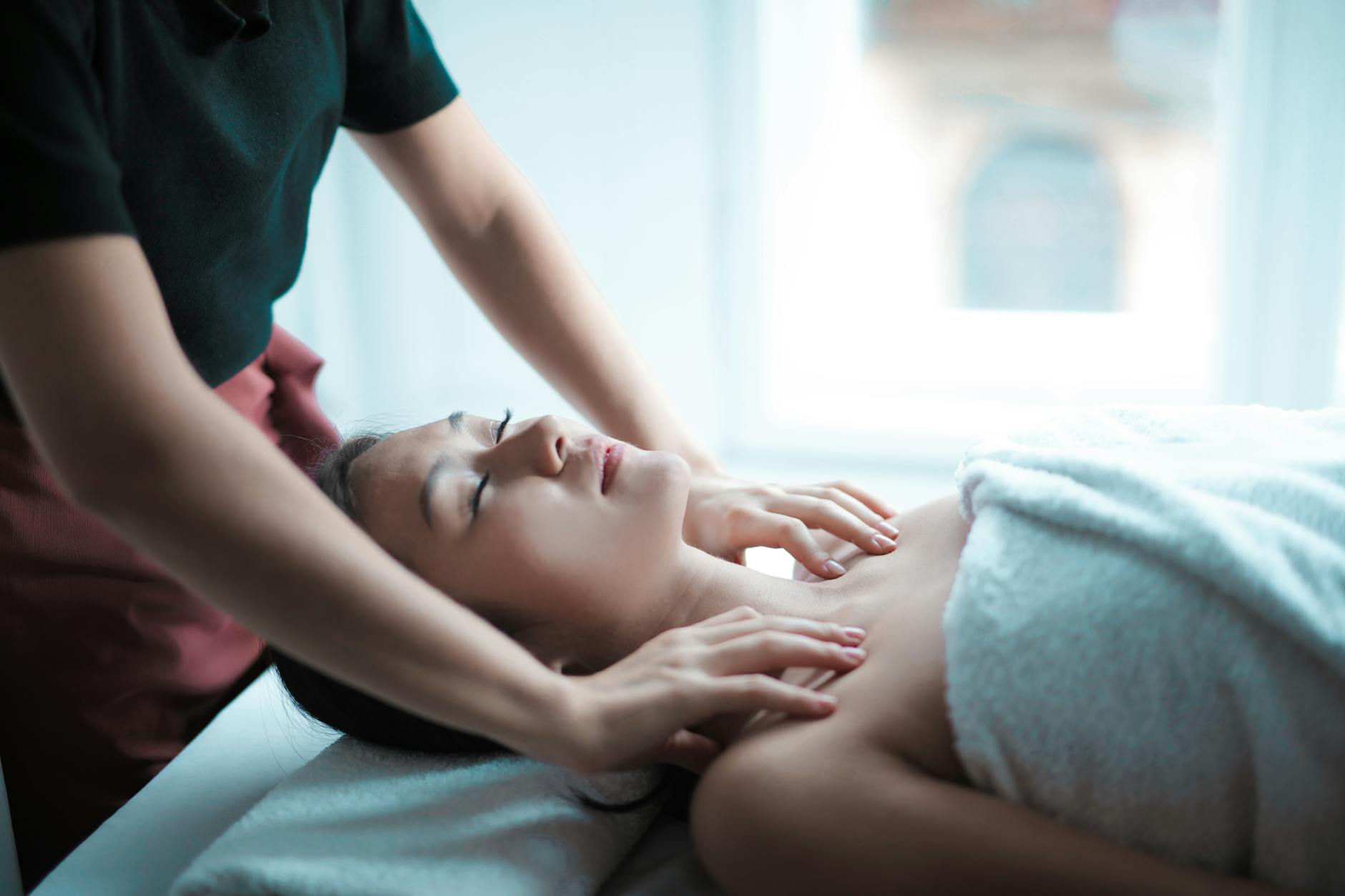
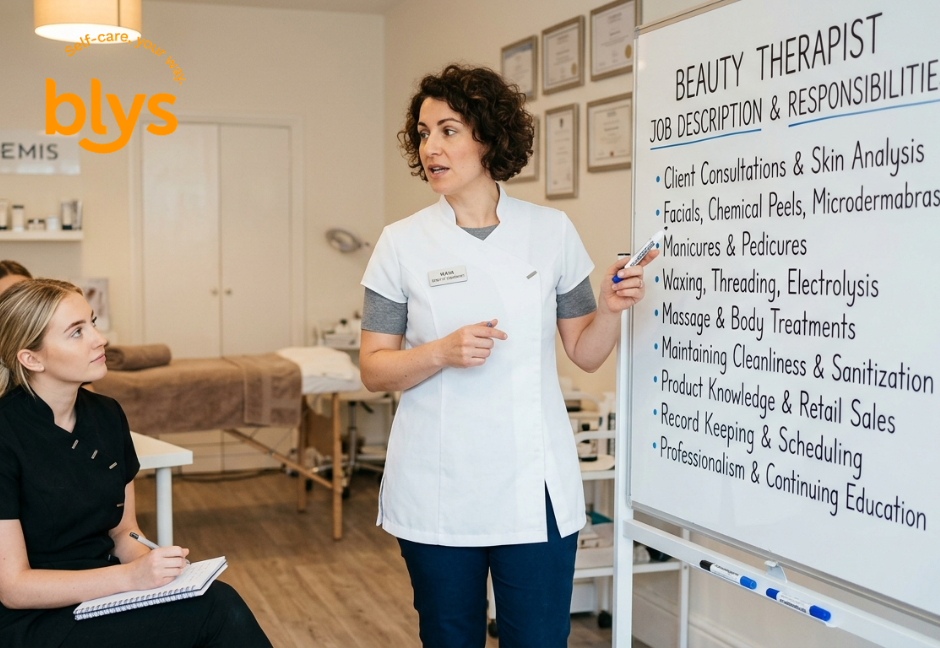
Delivering hands-on treatments is at the heart of the role. A beauty therapist job description typically includes services across areas such as:
- Facials and skin treatments, including deep cleansing, exfoliation, extraction, and hydration therapies
- Waxing, threading, and other forms of hair removal
- Body wraps, scrubs, and relaxation massages
- Manicures and pedicures, including nail art and gel applications
- Lash and brow treatments such as tinting, shaping, lifting, and extensions
- Make-up application for events, photoshoots, or day-to-day client requests
Some beauty therapists also deliver more advanced offerings, such as chemical peels, microdermabrasion, or LED light therapy, depending on their level of training and the scope of services at their workplace. In medispa environments, therapists may work alongside dermatologists or cosmetic nurses on more intensive treatment plans.
Client Consultations and Ongoing Care
Consultation is a key part of beauty therapy. Before treatment begins, therapists review the client’s skin concerns, health history, allergies, and goals to make sure the service is safe and suitable.
Client care also continues after the appointment. Beauty therapists often recommend home care, explain aftercare, and suggest products that suit the client’s needs.
| Part of Client Care | What It Involves | How It Supports the Client Experience |
| Initial consultation | Reviewing skin condition, health history, allergies, and treatment goals | Helps the therapist choose treatments that are safe and suited to the client |
| Setting expectations | Explaining results, treatment limits, and what to expect | Gives clients a clearer idea of the service and builds trust |
| Aftercare advice | Sharing skincare tips, home routines, and post-treatment instructions | Helps clients protect their skin and maintain results after the appointment |
| Follow-up support | Checking progress and adjusting future treatments if needed | Shows continued care and helps improve results over time |
| Client records | Documenting services, reactions, products used, and recommendations | Keeps future appointments more consistent, safe, and personalised |
This level of care helps build trust and encourages repeat bookings. It also allows therapists to track progress, adjust treatments when needed, and give clients a more personalized experience over time. When clients feel understood and well looked after, they are more likely to return and recommend the therapist to others.
Salon Operations and Hygiene Standards
Behind the scenes, beauty therapists are responsible for maintaining a clean, hygienic, and safe working environment. Infection control protocols are non-negotiable in any professional salon or clinic setting.
Operational duties typically include:
- Sterilising tools and equipment between every client
- Setting up and breaking down treatment rooms before and after each appointment
- Restocking treatment products and consumables
- Managing appointment bookings and client record systems
- Contributing to retail sales by recommending and selling professional skincare products
In smaller salons, therapists may also take on reception duties, handle social media content, or assist with stock ordering. In larger facilities, these tasks are more likely to be divided between team members.
Where Do Beauty Therapists Work?
One of the most appealing aspects of a beauty therapy career is the variety of work environments available. You’re not locked into a single setting once you qualify — there are genuine options to suit different lifestyles, career goals, and preferred client types.
- Day Spas and Wellness Centres: A common starting point for newly qualified therapists. These settings often focus on relaxation and holistic treatments in a calm, unhurried environment.
- Beauty Salons: High-volume environments where you might see multiple clients per day across a broad range of services. Fast-paced and good for building technical speed.
- Skin Clinics and Medispas: Settings that often require additional certifications and may involve working alongside dermatologists, cosmetic nurses, or plastic surgeons.
- Hotels and Resorts: Many luxury properties operate in-house spas. Great for therapists who enjoy working in premium service environments, including those open to seasonal or travel-based roles.
- Mobile Beauty Services: A growing segment of the industry. Mobile therapists bring professional treatments directly to clients in their homes, hotels, or offices.
- Freelance or Self-Employed: Many experienced therapists eventually move into running their own business, either from a rented chair in a salon or as an independently operating therapist.
Platforms like Blys connect qualified beauty therapists with clients who book in-home services a flexible way to build a client base without the overheads of running a physical space.
Skills and Qualifications You’ll Need
Technical proficiency is the foundation, but it’s rarely the whole picture. The beauty therapists who build lasting careers tend to be just as strong in their interpersonal skills as they are in their treatment delivery.
On the technical side, you’ll need competency across the core treatment areas covered in your training, a solid understanding of skin anatomy and physiology, and the ability to adapt techniques to suit individual clients. Knowledge of ingredients, product formulations, and contraindications is essential, particularly as you progress into skin-focused or advanced treatment roles.
On the softer skills side, the most successful beauty therapists tend to:
- Listen actively and ask the right questions during consultations
- Explain products and treatment recommendations clearly, without overwhelming clients
- Remain calm and reassuring with anxious or first-time clients
- Manage their time well across back-to-back appointments
- Maintain accurate records and follow up appropriately between visits
- Handle complaints or concerns professionally and without defensiveness
Physical stamina is worth mentioning too. Beauty therapy is a hands-on role and therapists often spend long periods standing. Building good posture habits and ergonomic awareness from the start of your career helps protect your body over the long term.
If you’re mapping out your training and career pathway, the beauty therapist career guide for the US is a helpful place to start. It covers qualifications, career stages, and what to expect as you move through the industry.
How the Mobile Beauty Model Is Changing the Role
Mobile beauty therapy has grown significantly over the past few years, and it’s reshaping what a beauty therapist job description can look like. Clients increasingly prefer professional treatments delivered to their home, hotel, or workplace rather than travelling to a salon. For therapists, this shift opens up a genuinely flexible way to work.
The core responsibilities of a mobile beauty therapist mirror those of a salon-based role: consultations, treatment delivery, hygiene protocols, and client care. The key differences are logistical. You’re responsible for transporting your own equipment, managing your own schedule, and building your professional reputation through client reviews and word of mouth.
The business side of mobile work also requires some adjustment. Pricing, insurance, travel considerations, and client communication all become your responsibility in a way they aren’t when you’re employed by a salon. It’s a different kind of challenge, but one that many therapists find rewarding once they’ve built momentum.
If the idea of working independently appeals to you, it’s worth reading about how to become a mobile massage therapist — the practical considerations for setup, equipment, and client management are closely aligned with what a mobile beauty therapist can expect.
Getting Started in Beauty Therapy
A beauty therapist role is more varied, technically demanding, and client-focused than many people realise before they enter the industry. From detailed skin consultations and hands-on treatments through to hygiene management and ongoing client care, it’s a career that requires genuine skill across multiple areas.
The good news is that there’s no shortage of pathways once you’re qualified. Whether you’re drawn to working in a luxury day spa, building a loyal clientele in a local salon, or taking the flexible route as a mobile beauty therapist, the industry has real options at every stage.
If you’re ready to explore working with clients on your own terms, see how Blys supports beauty therapists and find out whether the platform suits where you want to take your career.