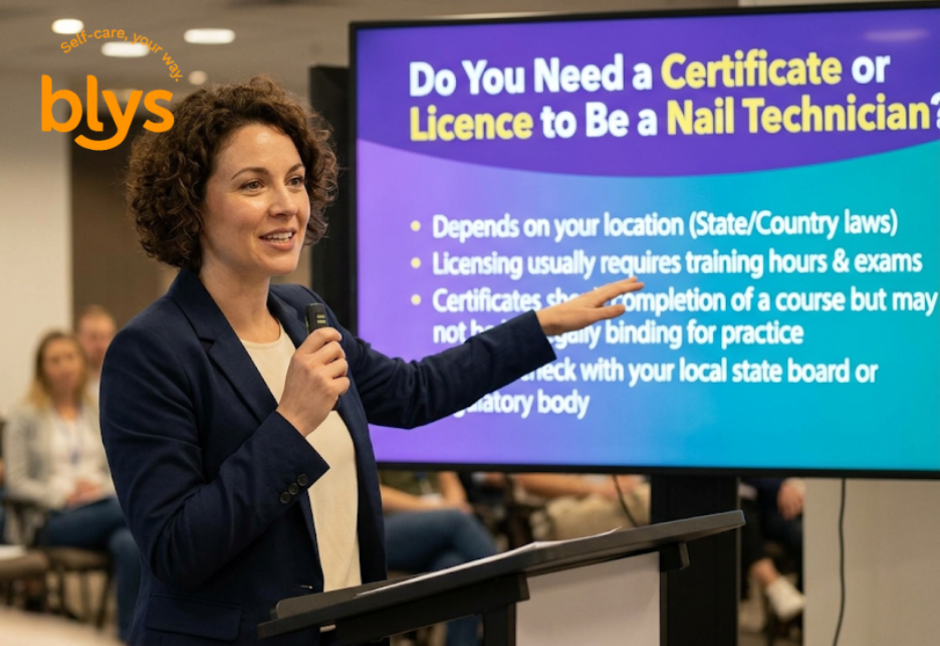
 If you’re interested in becoming a nail technician in the US, it’s natural to wonder what qualifications you actually need before you can start working. The answer isn’t always the same for everyone. Requirements vary significantly from state to state, depending on the services you plan to offer and whether you want to work in a salon, run your own business, or offer mobile appointments. Still, proper training matters no matter which path you take.
Getting the right qualification is about more than meeting basic expectations. It helps you build the practical skills needed to work safely, follow sanitation standards, understand client care, and feel confident with real treatments from day one. It can also improve your chances of finding work, getting insured, and building trust with future clients.
In this guide, we’ll break down what qualifications you may need to become a nail technician in the US, where to study, how long training usually takes, and what you can expect once you start. That way, you can make a clear and informed decision before you commit to a program or career path.
Is There a Legal Requirement to Be a Licensed Nail Technician in the US?
Unlike some other countries, the US takes a more structured approach to nail technician licensing, and in most states, holding a valid state-issued licence is a legal requirement before you can work professionally. Regulation sits at the state level, which means the specific rules, required training hours, and exam requirements differ depending on where you plan to work.
Every state has a cosmetology or barbering board that oversees nail technician licensing. In most cases, you’ll need to complete a state-approved nail technology or cosmetology program, pass a written exam, and in many states, pass a practical skills exam as well. Some states also require you to be at least 16 or 18 years old and hold a high school diploma or GED.
A few states, including Connecticut and Massachusetts, have historically had different or less standardised licensing requirements, but the overall trend across the country is toward consistent, enforceable licensing. Even in states with lighter-touch oversight, most reputable salons won’t hire unlicensed technicians, and insurance providers typically require proof of licensure before covering you for professional liability.
The practical reality is this: in the US, licensing isn’t optional in most places. It’s the foundation of a legitimate nail technician career.
What Qualifications Do You Need to Be a Nail Technician?
The path to becoming a licensed nail technician in the US involves completing a state-approved training program, then passing your state licensing exams. Most states require between 300 and 600 hours of nail technology training, though some states require more if you’re pursuing a cosmetology licence rather than a nail-specific one.
Training programs are offered through cosmetology schools, community colleges, and dedicated nail technology academies. To make sure your program qualifies for licensing, look for schools accredited by the National Accrediting Commission of Career Arts and Sciences (NACCAS) or your state’s cosmetology board.
What Does a Nail Technology Program Cover?
A state-approved nail technology program gives you the core knowledge and hands-on skills needed to work professionally.
It typically covers:
- Nail anatomy and skin structure
- Manicure and pedicure techniques
- Gel, acrylic, and gel-polish application
- Nail art and design
- Sanitation, disinfection, and infection control
- Client consultation and aftercare
- Safe handling of nail products and chemicals
- State laws and regulations governing nail services
This curriculum helps you build a strong foundation in both technical skills and professional practice, so you can work confidently and legally with clients from the start.
Do You Need Anything Beyond a Nail Technology Licence?
For most nail technicians, a state-issued nail technician licence is the standard requirement to begin working in the industry. It gives you the core skills, safety knowledge, and legal standing to offer nail services in a salon or mobile setting.
Some technicians choose to pursue a full cosmetology licence, which covers a broader range of services including hair and skin treatments. While this requires significantly more training hours, it can open up more employment opportunities across different salon environments.
Many nail technicians also take specialist short courses in areas such as nail extensions, hard gel systems, BIAB, advanced e-file techniques, and nail art. These aren’t always required for licensing, but they can strengthen your skill set, expand your service menu, and help you stand out in a competitive market.
If you’re interested in eventually managing a salon or running your own business, some states also offer salon owner or manager licensing pathways that may be worth exploring as your career grows.
Where Can You Study Nail Technology in the US?
Nail technology programs are available through cosmetology schools, community colleges, vocational schools, and private beauty academies across the country. When choosing a program, the most important step is confirming it’s approved by your state’s cosmetology board. Completing an unapproved program could mean your hours don’t count toward your licence application.
You can find state board information and approved school lists through the National-Interstate Council of State Boards of Cosmetology (NIC), which administers licensing exams in many states and maintains resources for prospective students.
Many schools offer flexible study options, including part-time enrollment and evening classes, which can make it easier to study alongside work or family commitments.
When comparing programs, look at:
- Whether practical, hands-on training is included alongside classroom instruction
- The student-to-instructor ratio during practical sessions
- Whether the program includes a supervised client work component
- Access to professional-grade tools and products
- The school’s licensing exam pass rates
It’s also worth asking whether the school offers any job placement support or industry connections after you graduate.
How Long Does It Take to Become a Nail Technician?
The time it takes varies depending on your state’s hour requirements, the program you choose, and your study schedule. For most students, the process is manageable, but it does take commitment to build the technical ability and client confidence needed to work professionally.
While the training and licensing process can often be completed within a year, becoming fully comfortable in the role usually continues well beyond the classroom.
Typical Program Length
Most nail technology programs take between three and nine months to complete, depending on your state’s required training hours and whether you’re studying full-time or part-time. States requiring around 300 hours can be completed more quickly under an intensive schedule, while states requiring 500 or more hours will naturally take longer. After completing your program, you’ll need to apply for your state licensing exam, which adds some additional time to the process.
Different Study Formats
Training providers offer different delivery formats, which can affect how long the program takes. Some private academies offer accelerated schedules for students who can commit to a full-time timetable. Community college programs may run over a longer period but often provide more structured learning and more supervised practical hours, which can be valuable when you’re still developing your technique.
What Happens After You Qualify
Completing your training and passing your licensing exam doesn’t mean you’ll instantly feel confident with every service. Most newly licensed nail technicians still need time to build their speed, consistency, and client-handling skills, particularly for more complex treatments like acrylic full sets, gel extensions, and detailed nail art. These are hands-on skills that improve with regular practice.
Many new technicians start out working in a salon, where they can build experience with a steady flow of real clients, before moving into self-employment, mobile work, or more specialised services.
Understanding the Job Beyond Training
It’s also worth thinking about what the role involves day to day before you commit to a program. If you plan to offer mobile nail services, you’ll need to consider travel logistics, portable equipment, client expectations, and the physical demands of working on the go. Getting a realistic picture early on can help you decide whether the role is the right fit. For a clearer look at what the job involves in practice, read this guide on what a nail technician does.
Do You Need Insurance as a Nail Technician?
A state licence is only part of the picture. Insurance matters too, especially when you’re working directly with clients, professional tools, and chemical products. General liability insurance and professional liability (errors and omissions) coverage are widely considered essential for nail technicians in the US. Claims can arise from accidents, allergic reactions, treatment complications, or advice given during an appointment.
This applies whether you work from a salon, a home studio, or as a mobile technician. Mobile nail services carry the same treatment risks as any fixed location, and many insurers require proof of a valid state licence before offering coverage.
It’s also important to be aware of your obligations under OSHA (Occupational Safety and Health Administration) standards, which govern workplace chemical safety and ventilation requirements relevant to nail salons. The Professional Beauty Association (PBA) offers additional guidance on safe handling of nail products, including acrylics, gels, and solvents. Understanding these standards is a core part of responsible professional practice, and a quality training program should cover this thoroughly.
Getting Started as a Registered Nail Technician
Becoming a licensed nail technician in the US is a well-defined process, and in most states, it’s a legal requirement before you can work professionally. Completing a state-approved nail technology program and passing your licensing exams is the recognised path into the industry, and from there, ongoing training and specialisation can take your career in any direction you choose.
If you’re ready to explore what a career in mobile nail services looks like, take a look at our nail technician career guide or browse Blys nail services in the US to see the kind of work our technicians do every day.