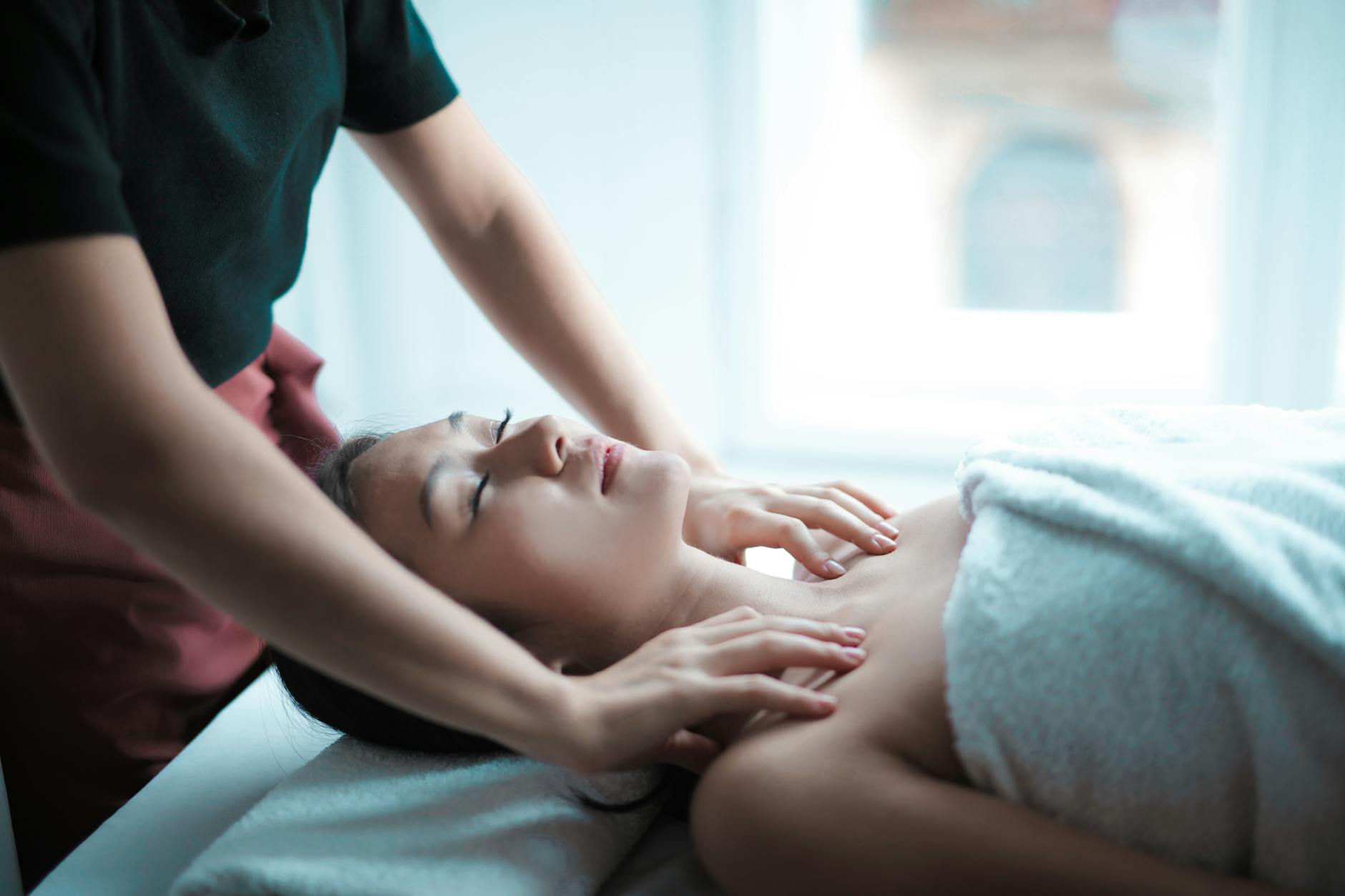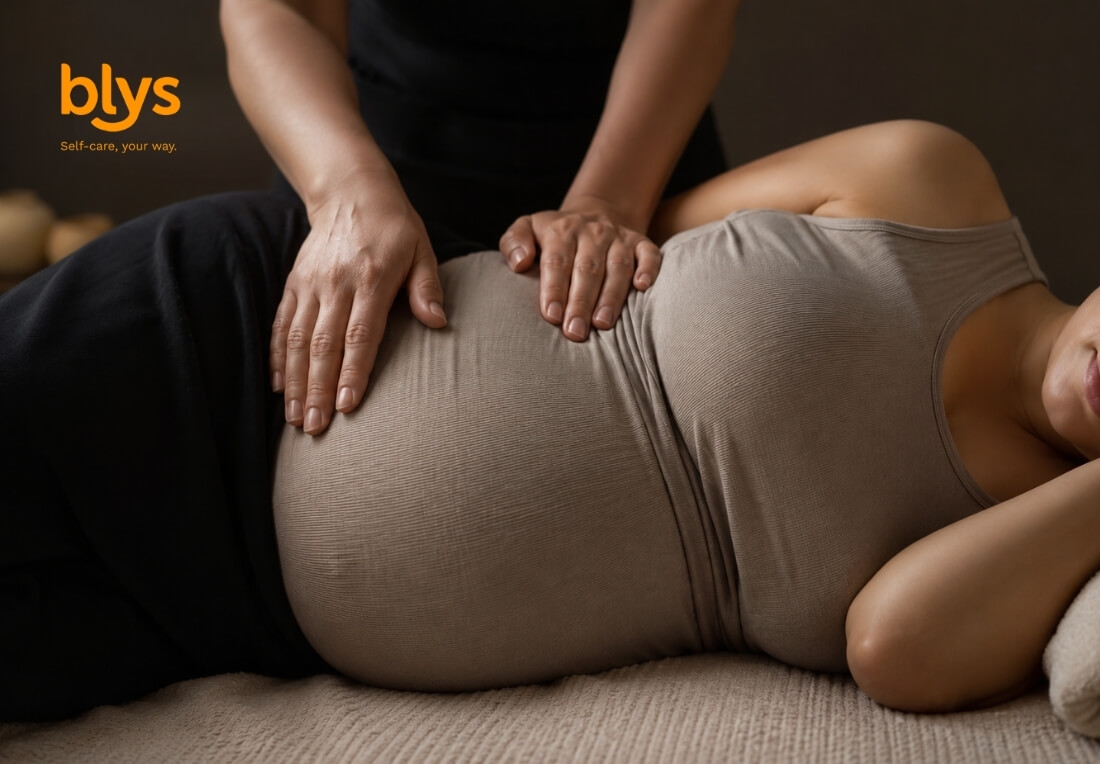
Pregnancy massage by trimester means adjusting technique, positioning, and pressure to match what your body needs at each stage, since a technique that works well in the second trimester may not be appropriate in the first or third. Your body changes constantly during pregnancy, bringing physical discomfort, hormonal shifts, and emotional ups and downs. Prenatal massage offers natural relief from common symptoms like back pain, swelling, fatigue, and tension, but only when the approach matches your trimester. This guide breaks down what’s safe and effective at every stage, from early pregnancy through your final weeks.
Quick answer: Massage is generally considered safe in all three trimesters when performed by a licensed prenatal therapist, though many providers wait until after 12 weeks as a precaution. First-trimester massage stays light and avoids the abdomen. Second-trimester massage targets lower back and hip tension. Third-trimester massage focuses on side-lying positioning, swelling relief, and labor preparation.
Prenatal Massage Trimester Guide: Quick Reference
| Trimester | What’s Safe | Positioning | Main Focus |
| First (weeks 1-12) | Light, gentle Swedish massage | Side-lying or seated | Relaxation, stress relief |
| Second (weeks 13-27) | Targeted therapeutic massage | Side-lying with support pillows | Back, hip, and leg tension |
| Third (weeks 28-40) | Gentle, positioning-focused massage | Side-lying only, never flat on back | Swelling, sleep, labor prep |
First Trimester Massage: What’s Safe and What to Avoid
Massage in the first trimester focuses on gentle relaxation rather than therapeutic pressure, and a few areas need to be avoided entirely during this stage.
Is massage safe in the first trimester?
Massage during the first trimester is considered safe when performed by a licensed prenatal therapist. Some professionals still choose to avoid massage in the first 12 weeks as a precaution, even though no direct evidence links massage to pregnancy loss. According to the American Pregnancy Association, prenatal massage can be beneficial when done correctly by trained providers who understand pregnancy-specific precautions. Always check with your OB-GYN before starting massage therapy this early.
What’s appropriate in the first trimester
Light-pressure Swedish massage is the most recommended option during this stage. The neck, shoulders, and head respond well to soft strokes that relieve tension without overstimulating the body, which suits the fatigue and heightened sensitivity common in early pregnancy.
What to avoid or modify in the first trimester
The abdominal area should be avoided completely, along with pressure points around the wrists and ankles linked to uterine stimulation. Deep tissue work and firm pressure have no place in a first-trimester session, the goal here is calm, not correction.
Massage techniques best suited
Gentle, flowing strokes focused on the upper body work best. Your body is already working hard to support early development, so the massage should support rest rather than push for therapeutic change.
Second Trimester Massage: The Most Comfortable Window
The second trimester is often called the “honeymoon phase” of pregnancy, and it’s typically the most comfortable window for prenatal massage.
Recommended massage techniques
A licensed prenatal therapist uses gentle yet precise pressure to release tension from the lower back, hips, and glute areas often strained by a growing bump. Lymphatic-style light massage can also ease mild swelling in the feet, ankles, and hands. Every technique should be adjusted to your specific stage of pregnancy.
Positioning shifts starting around 20 weeks
Side-lying with support pillows becomes the standard positioning around this point, ensuring no pressure on your belly or the vena cava, the major vein that carries blood back to your heart. This shift matters more as your bump grows and lying flat becomes both uncomfortable and less safe.
What the second trimester focus shifts to
As morning sickness fades and energy returns, the focus moves from relaxation alone toward targeted relief. Round ligament pain, sciatic discomfort, and mild leg swelling are common at this stage, making it a prime window for therapeutic, targeted massage.
Benefits for mom and baby
Massage during the second trimester is supported by research, not just relaxation folklore. A systematic review found it helps reduce anxiety and depression, significantly lowering cortisol while increasing serotonin and dopamine. One study of 84 women showed that regularly massaged pregnant women experienced less back and leg pain, reduced cortisol and norepinephrine, and elevated mood-boosting neurotransmitters. These hormonal shifts also correlated with fewer labor complications and healthier newborn outcomes, including better birth weights.
Third Trimester Massage: Consistent Support in the Final Stretch
As your baby’s growth accelerates in the third trimester, massage shifts toward managing pressure, swelling, and sleep disruption rather than general relaxation.
Positioning in the third trimester
Side-lying positioning becomes essential, never flat on your back, to avoid compressing the vena cava. Skilled therapists avoid deep pressure on specific acupressure points that may stimulate uterine contractions during this stage.
Third trimester massage benefits
Third-trimester massage eases lower back pain by relieving tension in the lumbar and pelvic muscles, reduces leg cramps, and helps with fluid retention. Better circulation supports improved sleep and helps regulate your nervous system, which matters as insomnia and shortness of breath become more common in these final weeks.
What the research says about third-trimester massage
[TODO: citation pending confirmation from pregnancy-massage-trimester’s original source] Research supports a connection between prenatal massage and positive labor outcomes. A 2010 review found that women who received massage during pregnancy experienced lower anxiety, reduced pain medication usage, and shorter labor times. Other studies indicate massage and acupressure during labor may help manage pain and decrease labor duration.
Third trimester focus areas and precautions
Focus areas include the lower back, hips, and swollen extremities, always adjusted around your changing shape and comfort level. Precautions matter more here than at any other stage, given the proximity to labor and the physical strain your body is under.
Safety precautions
During the third trimester, safety takes center stage. Avoid lying flat on your back to prevent vena cava compression, side-lying is safer and more comfortable. Skilled therapists avoid deep pressure on certain acupressure points linked to uterine contractions. Always choose a licensed pregnancy massage therapist experienced in working with pregnancy clients, and speak up during your session if anything feels uncomfortable, your comfort and safety come first.
Why Prenatal Massage Should Be Trimester-Specific
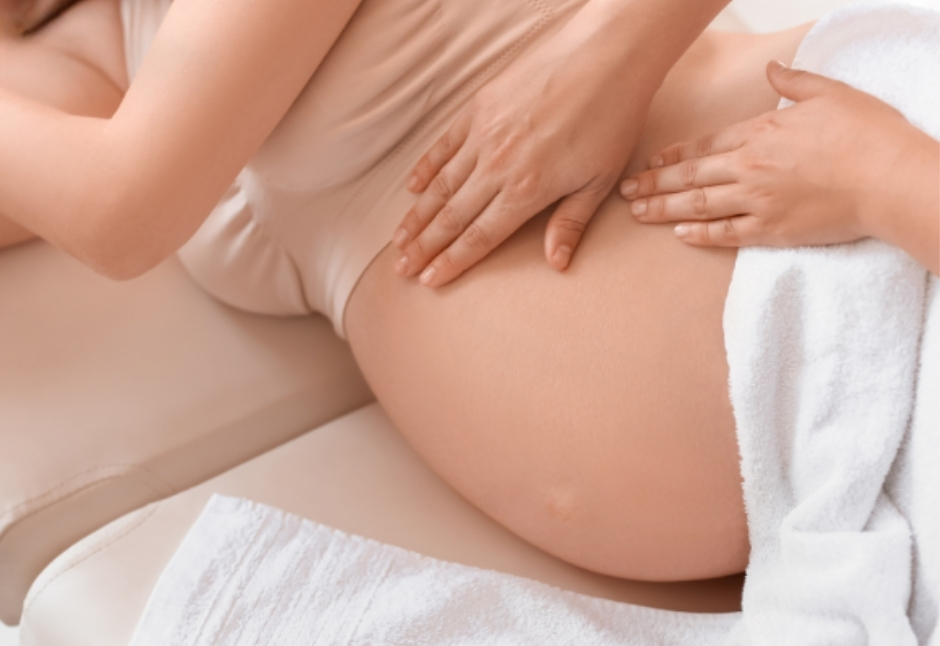
Pregnancy isn’t a one-size-fits-all experience, and neither is prenatal massage. Each trimester brings different physiological and hormonal changes that affect your comfort, mobility, and overall wellbeing. A massage that works well in the second trimester may not suit you early on or closer to your due date. First-trimester massage stays light, focused on relaxation while avoiding certain reflex points. Second-trimester massage can target muscle tension in the lower back, hips, and legs while improving circulation. Third-trimester massage requires adjusted positioning and a focus on easing pelvic pressure, swelling, and sleep disruption. Using trimester-specific techniques reduces discomfort while avoiding strain or injury, ensuring the massage complements your body’s needs rather than working against them.
When to Start Booking and How Often Should You Get a Pregnancy Massage?
The ideal frequency for prenatal massage depends on your trimester, overall health, and how your body responds, but general guidelines can help you plan. In the first trimester, monthly sessions can help manage stress and early fatigue if your OB-GYN approves, though some choose to wait until the second trimester entirely. In the second trimester, sessions every two weeks are a popular choice for ongoing relief and improved circulation as your body carries more weight. In the third trimester, weekly massage can help ease lower back pain, swelling, and poor sleep as you near your due date. You can always adjust frequency based on how you’re feeling, more frequent sessions may help if you’re managing heightened stress, sciatica, or sleep issues. Speak with your OB-GYN before starting any massage routine to confirm it’s a safe choice for your specific pregnancy.
The Trimester Shapes Everything: Match Your Care to Where You Are
Every stage of pregnancy asks something different of your body, and your massage should reflect that. What feels supportive in week 8 may not be appropriate in week 32, and what your body needs in the final stretch is different from what it needed at the start. Matching your care to exactly where you are, rather than following one generic approach for all nine months, is what makes pregnancy massage genuinely effective rather than just relaxing.
What to Expect from Your In-Home Pregnancy Massage
Getting a prenatal massage with Blys is simple, convenient, and designed to make you feel completely at ease. Instead of driving to a clinic or spa, a licensed, insured mobile therapist comes to your home with everything needed for a safe, relaxing session, including a professional massage table, fresh linens, and pregnancy-safe pillows and bolsters for proper support. You can enjoy your massage in the comfort of your own space, whether that’s your bedroom, living room, or wherever feels most relaxed, with no need to rush out afterward or deal with post-massage traffic. Booking is easy through the Blys website or app, and every therapist is licensed, insured, and experienced in prenatal massage, including techniques tailored to each trimester.
Support That Grows With Blys
Pregnancy is a journey filled with constant change, and your body deserves care that keeps up with every stage. From early fatigue to late-term pressure and swelling, each trimester brings new challenges, and massage can adapt to meet those changing needs with comfort and safety in mind. Taking time for self-care isn’t a luxury during pregnancy, it’s a vital part of staying balanced and supported. With Blys, professional care is just a few clicks away, with trusted support from experienced therapists without ever having to leave your home.
Frequently Asked Questions
Can I get a massage in my first trimester if I feel fine?
Yes, if your OB-GYN approves. Some providers prefer to wait until after 12 weeks as a precaution, even though no direct evidence links massage to pregnancy loss.
Is it safe to lie on my stomach during a pregnancy massage?
No. Side-lying or seated positioning is used throughout pregnancy, especially from the second trimester onward, to avoid pressure on your belly and the vena cava.
How is pregnancy massage different from a regular massage?
Pregnancy massage uses lighter pressure, avoids specific areas like the abdomen and certain acupressure points, and relies on side-lying positioning with supportive pillows rather than the techniques used in a standard massage.
Do I need my doctor’s approval before booking?
It’s always recommended, especially in the first trimester or if you have any pregnancy complications. Your OB-GYN can confirm massage is a safe choice for your specific pregnancy.
Can massage help induce labor in the third trimester?
Massage isn’t a labor-inducing technique, but research links it to shorter labor times and reduced pain medication use when received regularly throughout the third trimester, likely due to lower stress and better relaxation heading into labor.